
Book Review: "One Way Street" by Walter Benjamin
4/5 - I finally got around to reading this in its entirety...

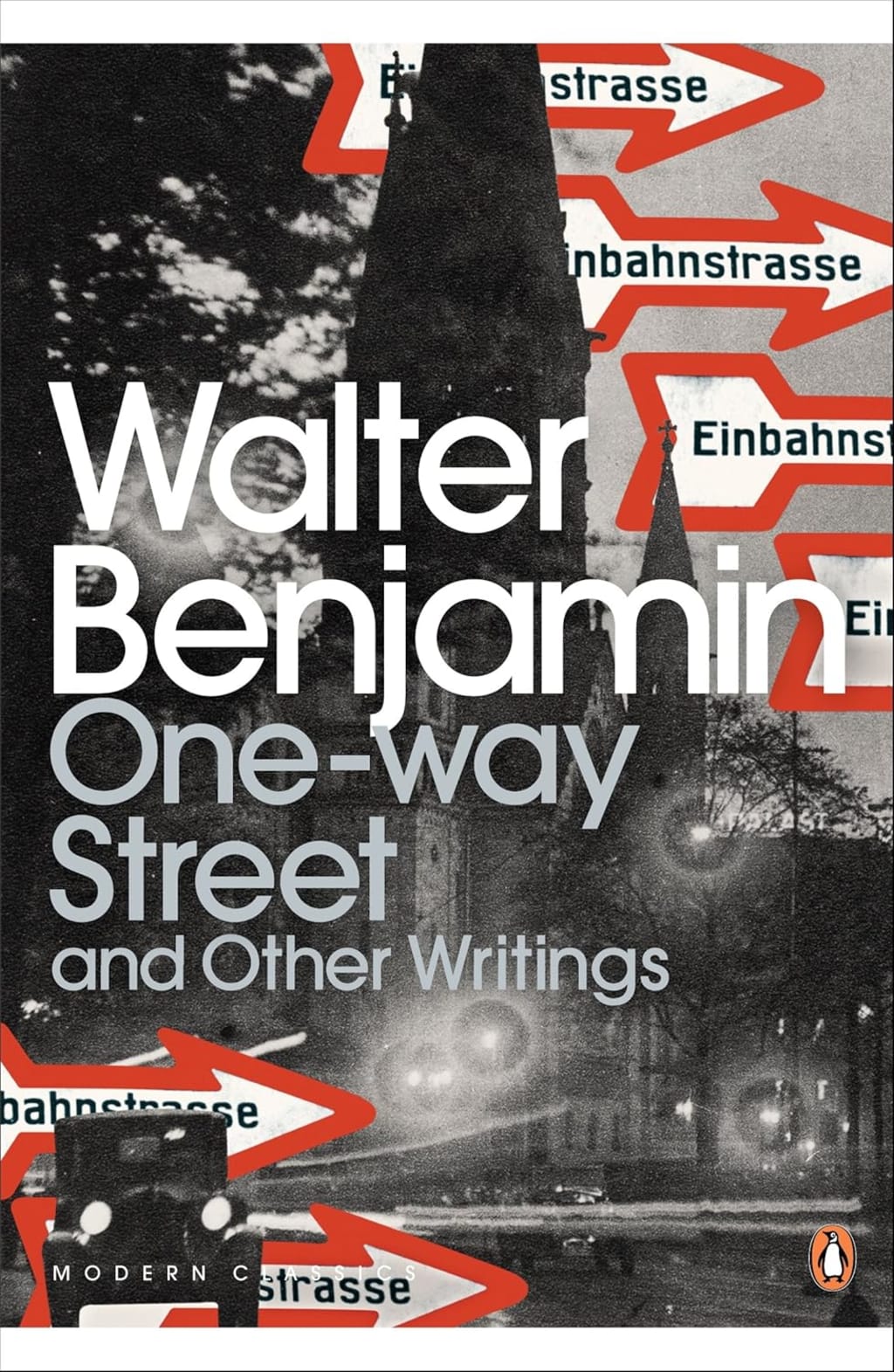
It’s been a long time since I’ve heard the name Walter Benjamin and even then it was only briefly in a philosophy class some years ago. I honestly never read his stuff because I had read one essay before and found it too senseless and wordy. Once my philosophy lecturer had been through the essay I think I was pretty much all Benajmin-ed out. I had seen the book “One Way Street” many times though and I had always thought that now that I’m a little older and can tolerate more, I should definitely give it a go. And so, I gave it a go and now here we are.
The essay entitled “Hashish in Marseilles” sees Benjamin deal with weird consciousnesses and realities. And in this personal account of his experience with hashish, Benjamin explores how altered states of consciousness disrupt conventional perceptions of time and space. He suggests that these experiences can reveal hidden truths about the world and the self, challenging bourgeois norms. I think this is a brilliant essay and it has some real questions in there to explore for the reader. I wouldn’t suggest taking any substances, but it is interesting to think about the philosophical impacts of them.
In one of the seminal essays entitled “The Critique of Violence”, Benjamin critiques the relationship between law and violence, arguing that legal systems are inherently violent because they enforce order through coercion. He contrasts this with “divine violence,” which he sees as a purer, non-coercive form of justice that transcends legalistic boundaries. Whilst I think this is interesting, I also think that this essay is badly written. When you read it you’ll see what I mean. Ideas are all over the place and the writing is simply too messy and wordy - as if it doesn’t want to get its point across.
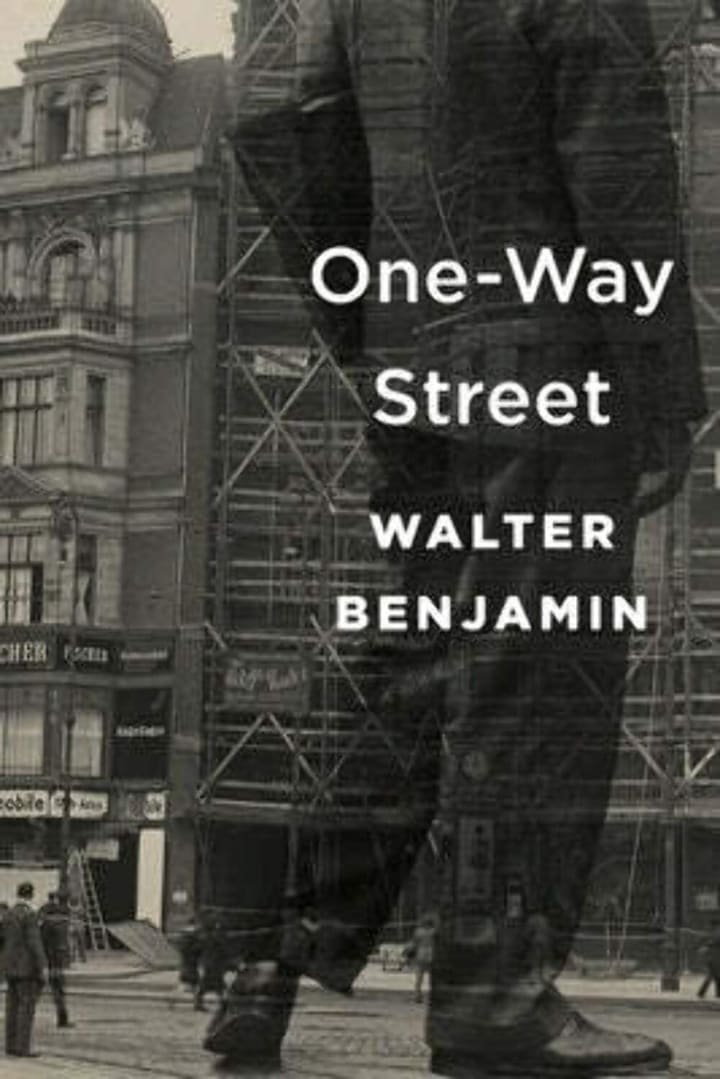
In an essay entitled “To the Planetarium” Benjamin contrasts the awe-inspiring, collective experience of early cosmic exploration with the alienation brought by modern astronomy. The essay reflects on how technological advancements, while expanding knowledge, often disconnect humans from the mystical and communal aspects of the universe. This is one that goes well with the one regarding substances and consciousness. Let’s not forget that substances are not only of our own times, they are from times far before us.
The essay “The Newspaper” was quite hard hitting because Benjamin critiques newspapers as purveyors of fleeting, surface-level knowledge that fails to engage readers deeply. He argues that the constant consumption of news fragments the reader’s understanding of the world, leading to a passive and uninformed populace. In our day and age in which news is shoved into our faces at every angle, I think this is probably one of the most important ones to read in the whole book. It truly gives us an insight to what people thought when this book was actually written and then, we can compare it to our own time in which it has only become worse.
We then also have an essay entitled “Imperial Panorama” which deals with the illusions of reality which are given to us by the rich and powerful. In this essay, Benjamin describes the imperial panorama as a metaphor for the way bourgeois society consumes reality. He critiques how such mediated experiences present a sanitised, controlled version of the world, distancing the viewer from the true complexities and sufferings of life. It may not be what everyone likes to hear, but it is something that is worth a few thoughts.
In his essay “Construction Site” Benjamin analyses how the construction and design of urban spaces are used to control and direct human behaviour. He argues that modern cities are designed to maintain social order and discipline, often at the expense of individual freedom and spontaneity. Whilst I think this is a weird point in which we must argue for city planning and such, I do think that his focus on freedom is warranted seeing how all the major urban cities in England tend to look the same to me. However, this is an essay, like “The Critique of Violence” that does have some strange and winding ideas.
All in all, I thought this book was a lot easier than I was initially making it out to be and fortunately, I did actually enjoy my time reading it. Tackling Walter Benjamin essays was one of those things on my long reading list and though I am glad to have got that out of the way, I think I have also learnt quite a bit about his philosophies.
About the Creator
Annie Kapur
I am:
🙋🏽♀️ Annie
📚 Avid Reader
📝 Reviewer and Commentator
🎓 Post-Grad Millennial (M.A)
***
I have:
📖 280K+ reads on Vocal
🫶🏼 Love for reading & research
🦋/X @AnnieWithBooks
***
🏡 UK
Keep reading
More stories from Annie Kapur and writers in Geeks and other communities.
Book Review: "The Book Makers" by Adam Smyth
I have been waiting a long time to read this book. As we speak, I am typing this up on my iPad shortly after moving cities. So far, so good - thanks for asking. Anyways, I first heard about this book whilst in Waterstones and there was some sort of display featuring books about books and this was on it. After this, I couldn’t get the book out of my head, I kept seeing it everywhere and though I didn’t really have the funds to be getting it, I got it anyway. Going through this book has helped me learn about bookmaking and it’s almost 600 year history. But of course, that doesn’t mean everything was all sunshine and rainbows.
By Annie Kapurabout a year ago in Geeks
The Rachels - 2025
Much to my surprise, I have kept a list of the films I‘ve seen this year. I daresay it isn’t complete. There will be films that snuck in on a late night in front of the TV that I would’ve forgotten to note. Or others, that I went to watch at the cinema, but then had a red wine and promptly forgotten about. But it’s not a bad approximation of the films I’ve seen this year. In total, there are 53 films listed, so an average of one a week and one for good luck.
By Rachel Robbins28 days ago in Geeks
Why Jessica Alba’s Honest Company has shut down its app — and where your diaper subscription is going
The Honest Company — founded by Jessica Alba in 2012 with a mission to provide clean and sustainable baby and household products — has shut down its app and stopped all product sales through its website.
By Dena Falken Esq4 days ago in Geeks


Comments (1)
I have only read 'Illuminations,' and this is definitely on the list. I like many of his conclusions, esp. about newspapers. Thank you!