
Book Review: "Nocturnes" by Kazuo Ishiguro
5/5 - false narrators, existentialism, music and passion...

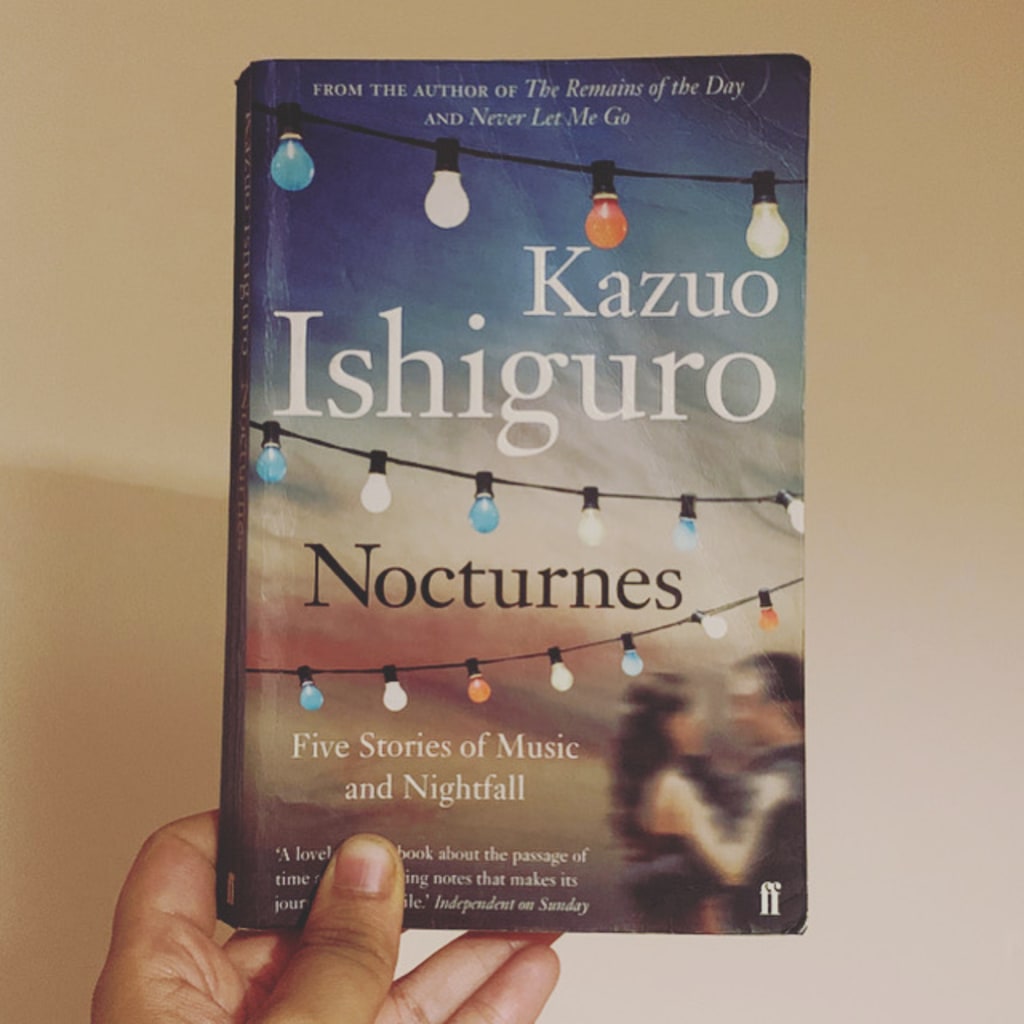
There is no doubt about the fact that Kazuo Ishiguro is possibly one of the greatest writers of the 20th/21st centuries and that he has contributed to the evolution of modern literature in countless ways with his magnum opus Remains of the Day which has since become a classic British Novel and his book of dystopia, Never Let Me Go. He has also written some absolutely incredible books, some I have read more recently than others including, but not limited to: A Pale View of the Hills, The Unconsoled and, the intensely beautiful An Artist of the Floating World. Kazuo Ishiguro returned to the awe-inspiring emotionla dystopia he had created in Never Let Me Go to write his latest novel, Klara and the Sun which, in my opinion, was absolutely brilliant. I simply cannot wait to see what the Nobel Prize for Literature winner does next. But for now, this review is about his book: Nocturnes.
I loved reading this. Every story is connected as a 'variation on a theme' which works even better because every story is about music and musicians. As we know, Kazuo Ishiguro has a big love for music (and has even professed to being a huge Bob Dylan fan, which is only another reason why I like Ishiguro) and, with Ishiguro's love of existential regret, each story has its own atmosphere of a strange depression twisted with a darkly comic tone that makes you think of the line "you can either laugh or cry about it". The unfulfilled nature of each of the lives of the musicians carries the story along, showing us a deep and introspective love and passion for what they do and a failing upon the world stange, something they cannot simply seem to reach. Expectations come crashing down around them and yet, there is a sense of hope that makes the story worth reading, the passion that never dies and the way Ishiguro writes intertwines with this deep sadness and creates a hyper-realistic character of despair, failings but unrelenting belief in the fact that something might change any second now.
The first story is set in the classic Ishiguro style, in a cafe where two people talk and make a deal about serenading one of the men's wives in a gondola in order to try to save a relationship. You might think that is incredibly simple, but what Ishiguro is able to do with that is insane. As you move through each of the seemingly separate stories, you see familiar characters pop up in them, characters whom you knew from earlier on - characters that you now learn the circumstances about after their story has ended. One of themes here is unreliability as well, the unreliability of the narrator since their state of mind is not fully there means that the character who is returning in another story may not have had the exact same circumstances explained in the story by the main character - or that the main character themselves pops up again and has a somewhat different view on life.
Ishiguro's narrators are best to take with a pinch of salt, as we know, almost all of them being somewhat unreliable. The final story is really quite out there compared to the rest, but honestly after you have read the rest of the anthology it makes perfect sense as to why this would be the final one. Human connection and the idea of the false narrator come out so much more in the last story, especially at the cusp of the ending in which we realise that the whole idea of the narrator telling us a story may have just been a fallacy after all.
About the Creator
Annie Kapur
I am:
🙋🏽♀️ Annie
📚 Avid Reader
📝 Reviewer and Commentator
🎓 Post-Grad Millennial (M.A)
***
I have:
📖 280K+ reads on Vocal
🫶🏼 Love for reading & research
🦋/X @AnnieWithBooks
***
🏡 UK
Keep reading
More stories from Annie Kapur and writers in Geeks and other communities.
Book Review: "A History of the World in 10 1/2 Chapters" by Julian Barnes
As you probably know already, Julian Barnes is one of my favourite authors ever. My favourite book by him was Arthur and George before his epic The Man in the Red Coat came out and then, that was my favourite. Julian Barnes has a very particular way of writing, with a strange sense of humour, a brave social critique and often characters who are going through the depths of emotional or existential turmoil, even Julian Barnes' short stories have and intense impact on the soul. The most recent Julian Barnes book I have read was called The Lemon Table and it was a book of short sotries. It was absolutely fantastic. Now that I'm engaging in more of his short stories - I can honestly say that this man can pretty much write anything well.
By Annie Kapur4 years ago in Geeks
Marvel Zombie
The last entry into our 2025 superhero projects catalogue is Marvel Zombies. This was a show that was anticipated by absolutely no one and it disappeared from the public consciousness as quickly as it was released. There was nothing special about the project that made it a must see, or a must remember. In fact if anything it's a must forget.
By Alexandrea Callaghan25 days ago in Geeks
The Life of Chuck
Life of Chuck really assembled an interesting and wonderful team of creatives, to the point where I really don’t care what the movie is actually about. Mike Flanagan, Tom Hiddleston, Stephen King, Matthew Lillard, Karen Gillis, seriously this list is incredible. We even have Offerman doing a voiceover. So just based off of the list of people involved I knew I wanted to see this movie.
By Alexandrea Callaghan6 days ago in Geeks




Comments
There are no comments for this story
Be the first to respond and start the conversation.