
Book Review: "Nadja" by André Breton
4/5 - A dream-like surrealist love affair...

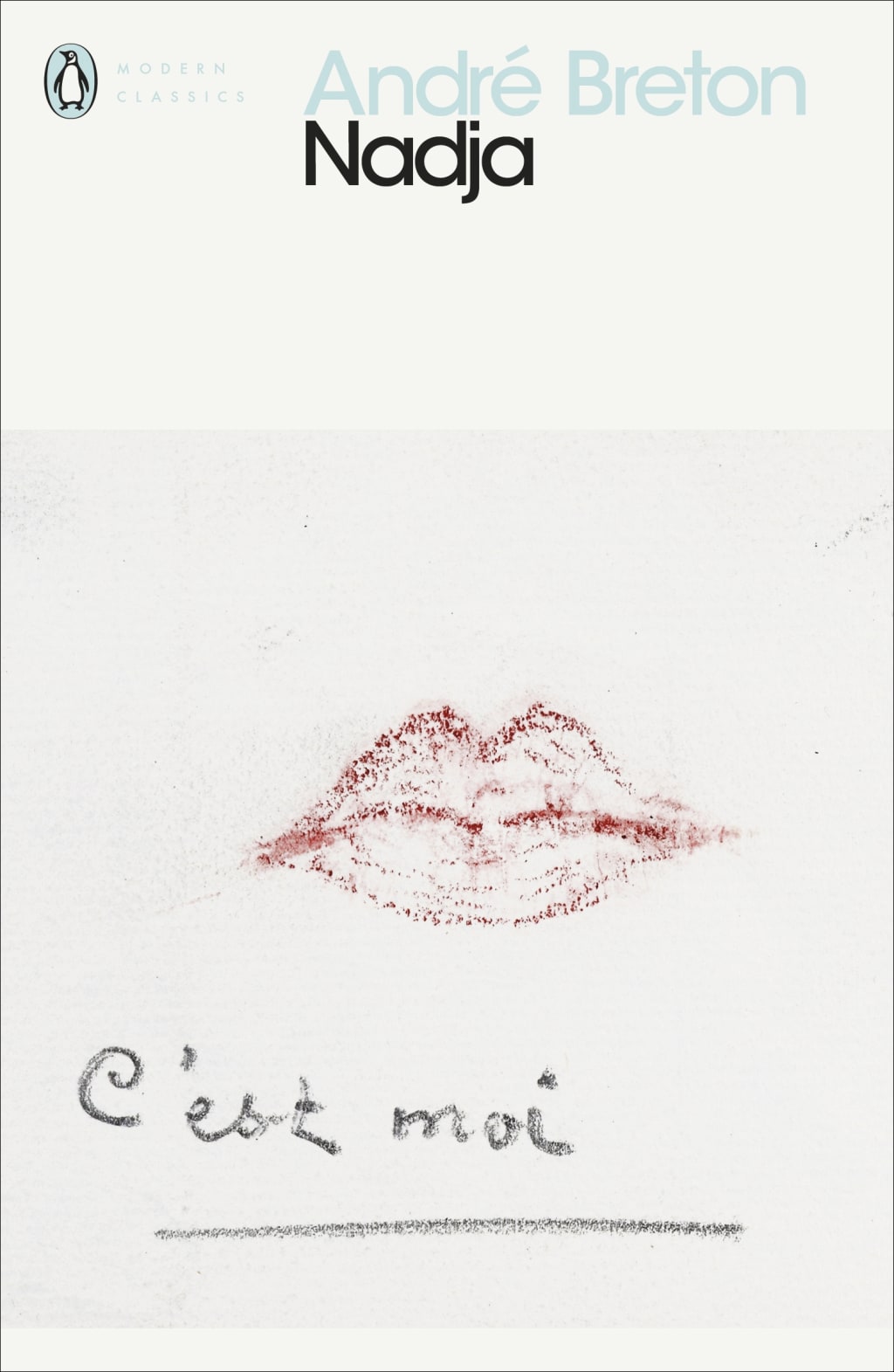
“Nadja” by André Breton was publish in 1928 as a part of the French Surrealist Movement and is often considered as one of the forefront books of the era. It is said to be part autobiography and the last sentence of the book is often regarded to be one of the greatest quotations on Surrealism as it says: “Beauty will be CONVULSIVE or will not be at all.”
There are several quotations in this book that comment on beauty as a part of the Surrealist movement and though it is not the most beautiful book I have ever read, it is definitely explanatory of its cause. It wants beauty to be unstoppable but it also wants to be soulful and colourful. One of the quotations I love is this one towards the latter part of the book:
“Beauty is like a train that ceaselessly roars out of the Gare de Lyon and which I know will never leave, which has not left. It consists of jolts and shocks, many of which do not have much importance, but which we know are destined to produce one Shock, which does...The human heart, beautiful as a seismograph…”
Beauty is personified, it is metaphorical and it is never really definite in any sense. A definition of beauty, to this book and to its writer/narrator seems absolutely impossible. The impasse between appearance and the soul is a gentle and often fragile one where the narrator treads lightly in his affair with another person. But, without giving the game away, it is not all fun and games. It is hard-hitting emotion and discovering what is underneath the appearance to focus on the beauty of the soul.
I love the quotation about the fountain in which the narrator explains the key difference between what is ‘pretty’ and what is ‘beautiful’. Have a look at this quotation:
“We are in front of a fountain, whose jet she seems to be watching. 'Those are your thoughts and mine. Look where they all start from, how high they reach, and then how it's still prettier when they fall back. And then they dissolve immediately, driven back up with the same strength, then there's that broken spurt again, that fall ... and so on indefinitely.”
‘Prettiness’ is explained as something tangible and something very physical. It does not conjure up the same emotions and depths as the quotations on analysing beauty - as in the previous quotation. I find that this differentiation makes a huge impact on the way the reader understands the narrator and what he appreciates in a romantic partner.
Beauty has always been linked to sorrow and/or madness in literature and in this book, it is just as common but in this case as well, there is a link to sorrow and madness in which beauty is considered the thing we have to look for rather than the thing that drives someone to commit certain acts. I have seen in literature that it normally works as beauty being the causation rather than beauty being the thing that the narrator/character is searching for. I mean, just take a look at this beautiful quotation on ‘exterior rejection’ and beauty:
“Unless you have been inside a sanitarium you do not know that madmen are made there, just as criminals are made in our reformatories. Is there anything more detestable than these systems of so-called social conservation which, for a peccadillo, some initial and exterior rejection of respectability or common sense, hurl an individual among others whose association can only be harmful to him and, above all, systematically deprive him of relations with everyone whose moral or practical sense is more firmly established than his own?”
Identity, beauty, love and romance are just part and parcel of this short but sweet book of an affair that tried its best to survive through its meaning. The narrator wants us to understand that there is more to life than just ‘prettiness’ and that ‘pretty’ and beautiful are not only two different things, but they cannot be used interchangeably. But we will forever be haunted with the message concerning the very beginning of the book, the question that is hardly ever answered but only hinted at throughout the narrative: “Who am I?”
About the Creator
Annie Kapur
I am:
🙋🏽♀️ Annie
📚 Avid Reader
📝 Reviewer and Commentator
🎓 Post-Grad Millennial (M.A)
***
I have:
📖 300K+ reads on Vocal
🫶🏼 Love for reading & research
🦋/X @AnnieWithBooks
***
🏡 UK
Keep reading
More stories from Annie Kapur and writers in Geeks and other communities.
The Dark Knight (2008)
In this article, we will be looking at 2019’s book “1001 Movies to See Before You Die” and going through each film in a random order that I have chosen. We will be looking at what constitutes this film to be on the list and whether I think this film deserves to be here at all. I want to make perfectly clear that I won’t be revealing details from this book such as analyses by film reporters who have written about the film in question, so if you want the book itself you’ll have to buy it. But I will be covering the book’s suggestions on which films should be your top priority. I wouldn’t doubt for a second that everyone reading this article has probably watched many of these movies anyway. But we are just here to have a bit of fun. We’re going to not just look at whether it should be on this list but we’re also going to look at why the film has such a legacy at all. Remember, this is the 2019 version of the book and so, films like “Joker” will not be featured in this book and any film that came out in 2020 (and if we get there, in 2021). So strap in and if you have your own suggestions then don’t hesitate to email me using the address in my bio. Let’s get on with it then.
By Annie Kapur5 years ago in Geeks
IShowSpeed: The Boy Who Turned Chaos Into a Global Voice
Darren Jason Watkins Jr. was never supposed to be ordinary. Even as a kid growing up in Cincinnati, he carried a kind of restless electricity—loud, unpredictable, emotional, and impossible to ignore. Long before the world knew him as IShowSpeed, he was simply Darren, a teenager trying to find his place in a world that didn’t always understand him.
By Haroon Pasha6 days ago in Geeks


Comments
There are no comments for this story
Be the first to respond and start the conversation.