
Book Review: "Mumbo Jumbo" by Ishmael Reed
5/5 - A brilliantly allegorical novel of the Black Liberation Movement in the 60s and 70s.

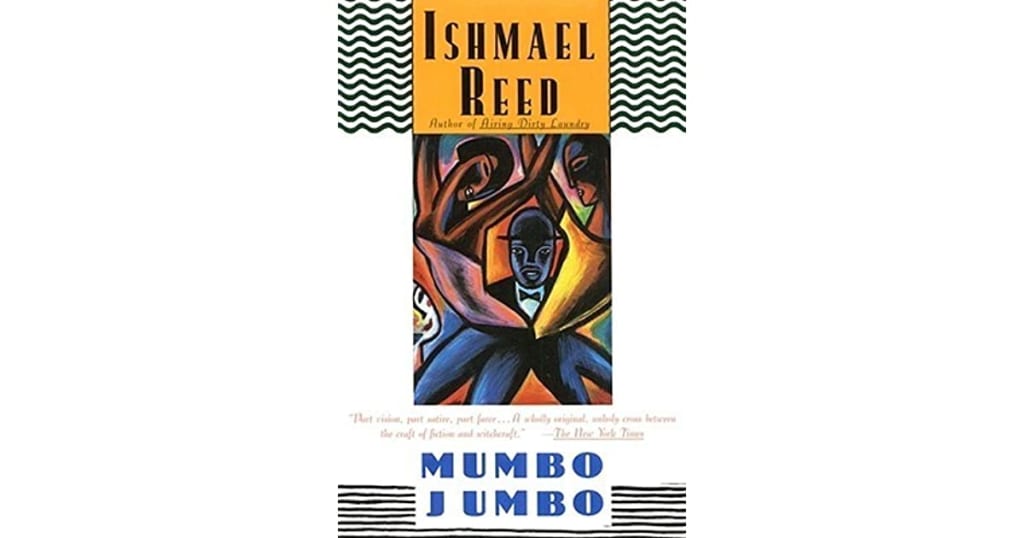
Ishmael Reed is a writer who James Baldwin called “great” and since the 1960s, he has been writing satirical works criticising American Popular Culture. I was reading “Mumbo Jumbo” as a part of my random read for Black History Month and honestly, I don’t think I have been more impressed with free expressionist Black Liberation Literature since I first read James Baldwin or the speeches of Malcolm X. Throughout the book, there are references made the the socio-political culture of Black people in Harlem and the aspect of forced monotheism and control. It is a way of controlling the new Jazz and polytheistic movement in which, you guessed it, the Knights Templar try to prevent people from listening to music and expressing themselves. It is one of the smartest novels I have ever read. The main character searches for a book and tries to return treasures looted from different countries to their homes. Not only that, but there are a great amount of Black Cultural Civil Rights’ stars that appear throughout the novel including: Claude McKay, W.E.B Du Bois, Countee Cullen, James Weldon Johnson, Wallace Thurman and, you guessed it, Malcolm X.
Allegories including references to the Bible and to Ancient Greek Mythology covers the book and even practices of Voodoo, Jewishness and the identity of the monotheists and polytheists is related to as much as race politics.
The book shows us the Afrocentric nature of Harlem and that way in which this entire space is being oppressed through every walk of life from religion to music to free expression etc. It makes references to the Bible through the Henri Gamache theory that Moses was Black. But the novel itself tries to rearrange itself constantly, relying on confusion as if it is trying to hide from the reader in the way it moves between various mediums of writing. It goes from script to letters to sketches etc. and never really settles on its own format. This is done on purpose and so, the reader is constantly being thrown off and pushed around. We are never allowed to settle down and we are never allowed a break. It is a brilliant feature of the book and keeps the reader on their toes all the time.
Some people have said that maybe this book is a large metaphor for the protest about the Vietnam War and depends on the way in which protest gains and losses momentum. The beat of the book is absolutely fantastic and when you read it, it makes a lasting impact of the progression of African American Literature in the 60s and 70s. It is an amazing book, one of which I have never really read the likes of before.
This is my favourite passage from the entire book:
“. . . Faust was an actual person. Somewhere between 1510 and 1540 this "wandering conjurer and medical quack" made his travels about the southwest German Empire, telling people his knowledge of "secret things." I always puzzled over why such a legend was so basic to the Western mind; but I've thought about it and now I think I know the answer. Can't you imagine this man traveling about with his bad herbs, love philtres, physics and potions, charms, overcharging the peasants but dazzling them with his badly constructed Greek and sometimes labelling his "wonder cures" with gibberish titles like "Polyunsaturated 99 1/2% pure." Hocus-pocus. He makes a living and can always get a free night's lodging at an inn with his ability to prescribe cures and tell fortunes, that is, predict the future. You see he travels about the Empire and is able to serve as a kind of national radio for people in the locales. Well 1 day while he is leeching people, cutting hair or raising the dead who only have diseases which give the manifestations of death, something really works. He knows that he's a booker adept at card tricks, but something really works. He tries it again and it works. He continues to repeat this performance and each time it works. The peasants begin to look upon his as a supernatural being and he encourages the tales about him, that he heals the sick and performs marvels. He becomes wealthy with his ability to do The Work. Royalty visits him. He is a counsellor to the king. He lives in a castle. Peasants whisper, a Black man, a very bearded devil himself visits him. That strange coach they saw, the black horses. They say that he has made a pact with the devil because he invites the Africans who work in various cities throughout the Empire to his castle. “
Brilliant, isn't it?
About the Creator
Annie Kapur
I am:
🙋🏽♀️ Annie
📚 Avid Reader
📝 Reviewer and Commentator
🎓 Post-Grad Millennial (M.A)
***
I have:
📖 280K+ reads on Vocal
🫶🏼 Love for reading & research
🦋/X @AnnieWithBooks
***
🏡 UK
Keep reading
More stories from Annie Kapur and writers in Geeks and other communities.
A Filmmaker's Guide to: Existentialism
In this chapter of ‘the filmmaker’s guide’ we’re actually going to be learning about literature and film together. I understand that many of you are sitting in university during difficult times and finding it increasingly hard to study and I understand that many of you who are not at university or not planning on it are possibly stuck of what to do, need a break or even need to catch up on learning film before you get to the next level. This guide will be brief but will also contain: new vocabulary, concepts and theories, films to watch and we will be exploring something taboo until now in the ‘filmmaker’s guide’ - academia (abyss opens). Each article will explore a different concept of film, philosophy, literature or bibliography/filmography etc. in order to give you something new to learn each time we see each other. You can use some of the words amongst family and friends to sound clever or you can get back to me (email in bio) and tell me how you’re doing. So, strap in and prepare for the filmmaker’s guide to film studies because it is going to be one wild ride.
By Annie Kapur5 years ago in Geeks
Marvel Zombie
The last entry into our 2025 superhero projects catalogue is Marvel Zombies. This was a show that was anticipated by absolutely no one and it disappeared from the public consciousness as quickly as it was released. There was nothing special about the project that made it a must see, or a must remember. In fact if anything it's a must forget.
By Alexandrea Callaghan18 days ago in Geeks
Toxic Movie Cast Salaries Revealed: Yash, Nayanthara & Kiara's Massive Paychecks Uncovered
The teaser for Yash's upcoming film Toxic has become a massive hit. Fans are now curious about the cast's paychecks, so here's a look at how much Yash, Nayanthara, and Kiara are earning.
By Dena Falken Esq3 days ago in Geeks


Comments
There are no comments for this story
Be the first to respond and start the conversation.