
Book Review: "Koba the Dread" by Martin Amis
3/5 - a strange yet, passionate take-down of Communism...


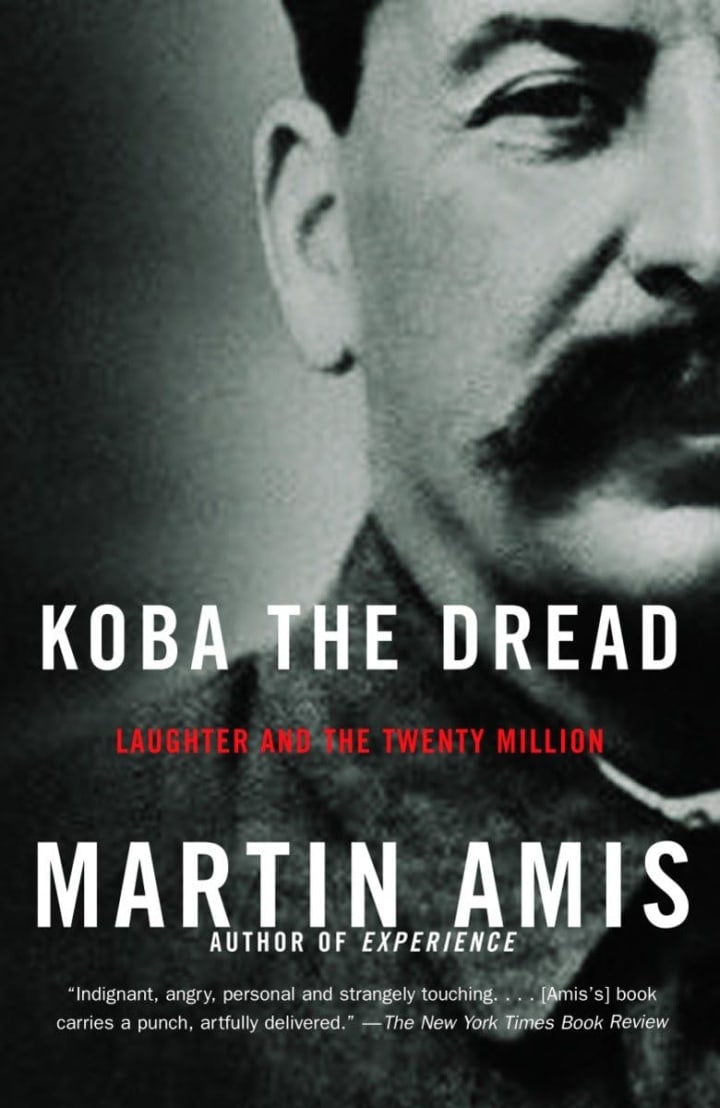
I know, this book is a rather contentious one. But forgive me, it's late April 2025 and I've been reading a lot of contentious stuff lately. Slated in various newspapers and magazines, Koba the Dread is the second installment in a series which started with Experience (which I read back during COVID) and though it is hated, it is probably much better in terms of explaining itself. Focusing on the horrors of Communism in Russia, Martin Amis rips into the mid-20th century Western intelligentsia who professed that the ideas coming over from Russia were great, popular and useful for society. Of course they weren't. Taken from Stalin's own nickname 'Koba', this book really does cut deep into the bleeding heart of Communism with not only insult and analysis, but also with dark humour.
Covering how during his Oxford days, mid-20th Century ideas about Communism politicised everything whilst also causing a bit of a rift with his friend, Christopher Hitchens - Martin Amis seeks to get the reader to understand the situation in England in which the Western university liberals were adopting Communist values (in a similar sort of way that is happening today): shaking off religion, calling for the fall of the upper classes (irony being that they were probably part of those classes themselves) and for some reason honestly respecting the murder of the Russian royal family.
One of the ideas that I thought was especially interesting which Amis covers about the way in which the Bolsheviks work is the 'politicisation of sleep'. It was 'another opportunity to feel like a Bolshevik' in dreams. I know, it's not just weird but in some ways it is anti-science, but the Communists aren't exactly very good at science, are they? Well, that's the thing: it goes on to state why Stalin himself hated intellectualism (boo hoo for the Western university liberals) - he hated them because he wasn't them. I think we all forget that Stalin was not very intelligent and didn't really do anything very well until he came on to the Communist throne and that's only because he started killing people he didn't like in path with everyone before him.
Lenin's famine was also another part I liked how Amis explained. The failings of Lenin was not the point, but the deliberacies of Lenin was the whole deal. Lenin deliberately starved the poor and caused a famine, leading to the deaths of more people during his few years than in the entirety of the Civil War. (This is not me talking, it is lifted from the book and if it's wrong then that's on Martin Amis). Once the camps opened, there seems to have been a quota of people to kill which makes it even worse. Amis goes back to explain Lenin's story and how his brother was executed but honestly, I can't help but feel that anyone who would be reading a book like Koba the Dread probably already knows this story quite well. That part seems like a bit of filler more than anything else.
As the book goes on, it uses books like The Gulag Archipelago to detail the horrors of Stalin's nightmare-fuelled rule. I have always thought this one thought: there are very few human beings that embody the term 'evil' like Joseph Stalin. Very few. He not only did what he did but there are people alive and kicking today that still think of him as a hero. It's terrifying. I read The Gulag Archipelago some years ago and it was the edition where Dr Jordan Peterson did the foreword. I also read another edition which comes in separate 'volumes' (one abridged and one unabridged). I was mortified - it was just simply horrifying. Martin Amis uses this book to evaluate the Western Intelligentsia's claim that there is some good in the philosophies on which Communism is built. The consensus: no there isn't. There never was.
When it comes to things I'm not so sure about in this book there's the claim that Trotsky was brave and a nice guy. I don't think we're really hitting the mark with that one. The author states that Stalin's manipulation was more extreme than Hitler's which is honestly correct and that's mainly because Stalin silenced people he didn't like by throwing them into a Gulag in the middle of the night. But when it comes to relative intelligence regarding both politics and the people, we have to admit Stalin and Hitler had about the same amount of intelligence: basically none. Stalin only tolerated certain writers because he couldn't understand how they could ignite the soul - these were writers such as Boris Pasternak and definitely at least the start of Gorky's career until he bowed to serve Stalin by himself.
I think Martin Amis probably didn't need to weave through his own life story and conversations with his father in this book because it is meaty with ideas already. Also, some of the ideas are a bit all over the place, not particularly the best writing he has ever done. But if some reviews are stating the book is self-indulgent then if you've read The Rub of Time or even my review on the anthology, you'll know it's a classic marker of a nonfiction work by Martin Amis. It barely bothers me anymore.
About the Creator
Annie Kapur
I am:
🙋🏽♀️ Annie
📚 Avid Reader
📝 Reviewer and Commentator
🎓 Post-Grad Millennial (M.A)
***
I have:
📖 280K+ reads on Vocal
🫶🏼 Love for reading & research
🦋/X @AnnieWithBooks
***
🏡 UK
Keep reading
More stories from Annie Kapur and writers in Geeks and other communities.
Book Review: "Here" by Richard McGuire
I was looking for new and experimental books to read and so I found this one by Richard McGuire. It's April 2025 and I looked through this book in the library - I was surprised to find that it was laid out completely differently to how I thought it would be laid out. Instead of a straight story, it is a series of pictures of a certain place from different times in history. Often these are overlaid atop each other. For example: the background will be a drawing of the place from 8'000 BCE but then it would be overlaid with squares and rectangles in which things are taking place in the 1980s and the 1990s, in the 1870s and even the future. Throughout this review I'll try to post some photos to show you what it's like.
By Annie Kapur8 months ago in Geeks
Marvel Zombie
The last entry into our 2025 superhero projects catalogue is Marvel Zombies. This was a show that was anticipated by absolutely no one and it disappeared from the public consciousness as quickly as it was released. There was nothing special about the project that made it a must see, or a must remember. In fact if anything it's a must forget.
By Alexandrea Callaghan27 days ago in Geeks
British Passports
A British passport is often seen as a simple requirement for international travel, but its significance goes far beyond airport security checks and border stamps. It represents legal identity, citizenship, and a long history shaped by the United Kingdom’s evolving relationship with the world. From its origins to its modern design and practical value, the British passport reflects both tradition and change. In today’s global landscape, where mobility, security, and national identity intersect, the British passport remains an important document with cultural, political, and personal meaning. The Origins of the British Passport Passports in Britain date back several centuries, though they did not resemble the standardized booklets used today. Early versions were letters issued by the Crown, requesting safe passage for travelers. Over time, as international travel increased and borders became more regulated, the need for a formal identification system grew. By the early 20th century, passports had become standardized documents, influenced by international agreements following World War I. These developments laid the foundation for the modern British passport, aligning it with global travel norms while retaining distinct national features. Design and Symbolism The design of a British passport has always carried symbolic weight. Traditionally featuring a deep burgundy cover, the passport displayed the royal coat of arms, reinforcing its connection to the monarchy and the state. This design became widely recognized around the world and associated with European Union membership. In recent years, changes to the passport’s appearance have sparked public discussion. The updated design emphasizes British heritage, featuring historical figures, cultural icons, and technological achievements within its pages. These illustrations serve not only as security features but also as a visual narrative of the nation’s past and present. Beyond aesthetics, modern British passports include advanced biometric technology. Embedded chips store personal data and facial recognition information, enhancing security and reducing the risk of fraud. Citizenship and Eligibility Holding a British passport is a confirmation of citizenship, but eligibility is not always straightforward. British nationality law includes several categories, such as British citizens, British Overseas Territories citizens, and British nationals (overseas). Each status carries different rights and privileges, particularly when it comes to residency and travel. For most applicants, citizenship is acquired by birth, descent, or naturalization. Naturalization involves meeting residency requirements, demonstrating knowledge of life in the UK, and showing proficiency in the English language. The passport, once issued, becomes a tangible recognition of this legal status. Global Mobility and Travel Access One of the most practical aspects of a British passport is the level of international access it provides. British passport holders can travel to a large number of countries without requiring a visa in advance, making it a valuable document for business travelers, tourists, and students alike. While visa-free access can change depending on international relations and policy updates, the British passport has consistently ranked among the stronger passports globally. This mobility reflects the UK’s diplomatic relationships and longstanding ties with many countries around the world. Security, Responsibility, and Renewal With its benefits come responsibilities. British passport holders are expected to safeguard their documents, report loss or theft promptly, and ensure that their passport remains valid for travel. Many countries require passports to have several months of validity remaining, making timely renewal essential. The UK government has modernized the application and renewal process, offering online services that simplify submissions and tracking. Despite these improvements, applicants are encouraged to plan ahead, especially during peak travel seasons when processing times may increase. Passports in a Changing Political Landscape Political changes have influenced how British passports are perceived, both domestically and internationally. Shifts in immigration policy, border control, and international agreements have all played a role in shaping public conversations around citizenship and identity. For some, the British passport represents continuity and heritage. For others, it reflects adaptation to new global realities. Regardless of perspective, the document remains a key link between individuals and the state, symbolizing both rights and obligations. Cultural and Personal Significance Beyond legality and logistics, a British passport often carries deep personal meaning. For first-time applicants, it can symbolize independence or the beginning of global exploration. For naturalized citizens, it may represent years of effort and a sense of belonging. Families often pass down passports through generations, each one holding memories of journeys taken, milestones reached, and connections formed across borders. In this way, the passport becomes more than an administrative tool—it becomes a record of personal history. Looking Ahead As technology advances and global travel evolves, passports will continue to change. Digital verification, enhanced biometrics, and streamlined border processes are likely to shape the future of travel documents. The British passport will adapt alongside these developments, balancing security, convenience, and identity. What remains constant is its role as a bridge between the individual and the wider world. Whether used for travel, identification, or simply stored safely at home, the British passport continues to carry significance beyond its pages. Final Thoughts A British passport is more than a booklet issued by the government. It reflects centuries of history, evolving national identity, and the practical realities of global movement. From its symbolic design to its legal importance, the passport stands as a reminder of how closely personal freedom and national policy are connected. In a world where borders and identities are continually redefined, the British passport remains a powerful symbol of citizenship, responsibility, and opportunity.
By Saboor Brohi 6 days ago in Geeks



Comments
There are no comments for this story
Be the first to respond and start the conversation.