
Book Review: "Hitch-22" by Christopher Hitchens
5/5 - a life-changing narrative of one man's journey into the heart of humanity...

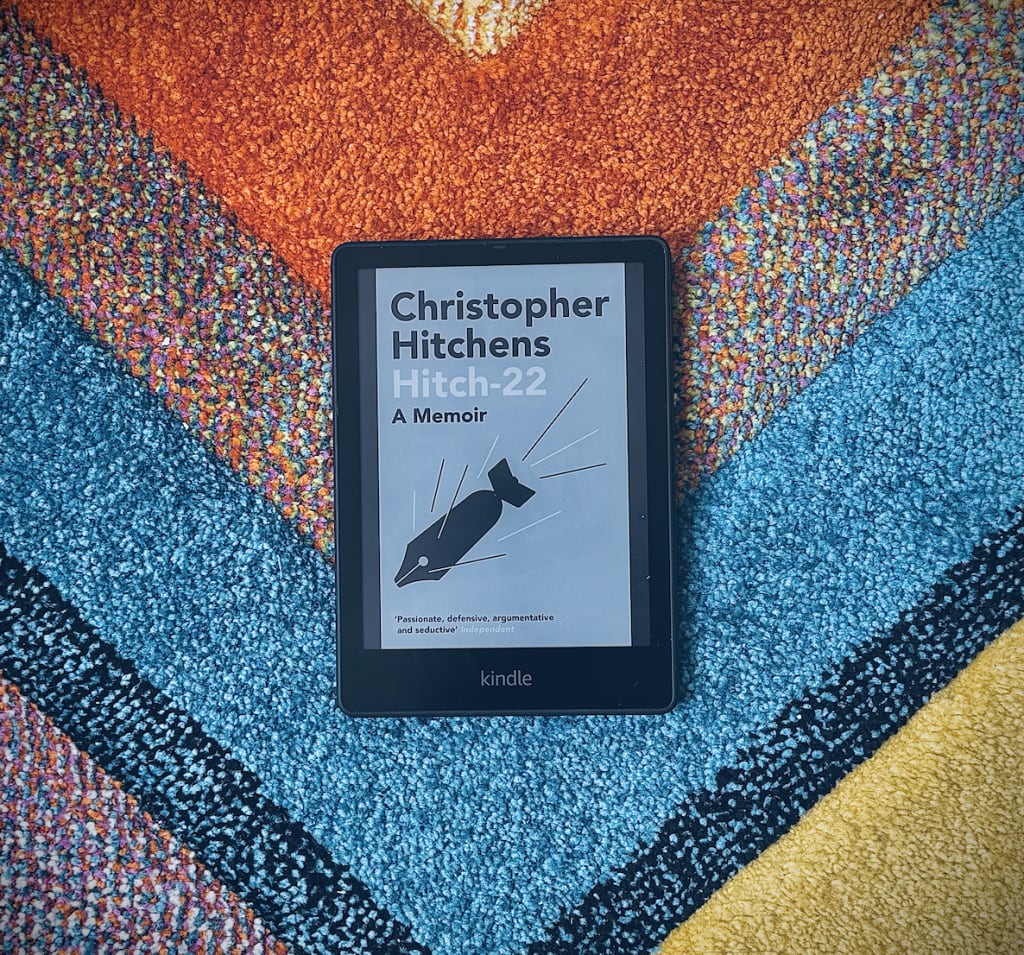
“Flaubert was right when he said that our use of language is like a cracked kettle on which we bang out tunes for bears to dance to, while all the time we need to move the very stars to pity.”
- Hitch-22 by Christopher Hitchens
There is no TL;DR - read the whole thing or, I don't know - go and get yourself some cake and coffee.
Yes, I'm back to reading some Christopher Hitchens. Many of his works are available on Kindle Unlimited and so, I am taking this opportunity to read as many as possible just in case they get taken off. Hitch-22 is actually pretty sad. In the foreword, Hitchens talks about being sixty one years' old and having lived this great life, but he also has stage four cancer and doesn't know if he will make it to his next birthday. For those of us who remember when he died, I believe he was in fact sixty-two. I was quite shocked by some of the stuff in this book and rightly so. From the way in which he addresses the idea of orbituary to opening up about his mother's death, Christopher Hitchens goes on one final exploration around the world of philosophy.
I think at first glance, when Christopher Hitchens starts talking about death, one would expect him to discount his atheism at this point and profess to some sort of belief in something. But even in his time of dying, Hitchens plays it cool and stands by himself, offering us a glimpse into the world of death that has surrounded him for a longer time than the reader would think. With a quip on the obituary reading practice and then self-slaughter of Ernest Hemingway and a coverage on his past through Pat Kavanaugh and Julian Barnes, Hitchens gives us a reason to believe that he still feels a trepidation, a discomfort, but also a sense of longing and a realisation when it comes to entering the 'undiscovered country'. Apart from his reference to Kingsley Amis (below), he makes an analysis on his own mother's self slaughter for a lengthy period. This even includes moments of reflection upon lines found both in Hamlet and the song "Old Man River".
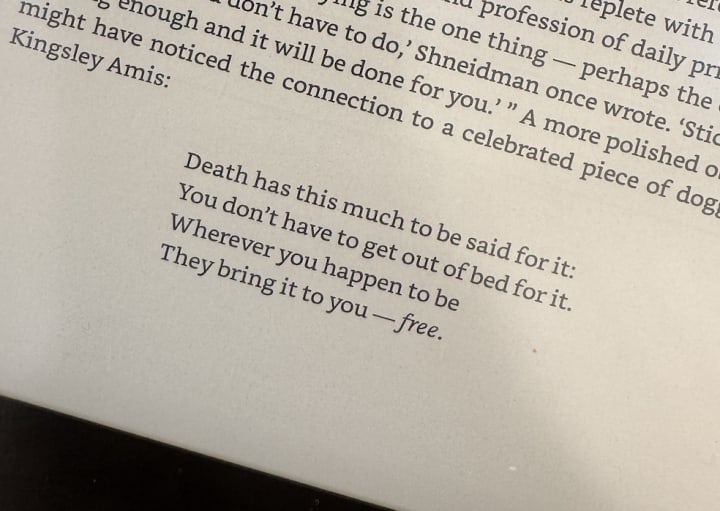
As the book goes on, I have to admit though it wasn't as interesting as Hitchens' investigation into death, he does cover the beginnings of his career as a commentator and an orator. He also looks at the political climate of the time, interspersing various references to one of my personal favourite novels: Brideshead Revisited by Evelyn Waugh. It's not really just because I love that book that I felt this was just incredible, but also the way Hitchens was able to weave in these various references with such ease. I think during the time the man was alive, we perhaps should have appreciated this particular talent a bit more.
On top of this, learning that Che Guevara was buried under a Bolivian Airstrip by the CIA after having his fingerprints removed by cutting off his hands was quite shocking to me - but also understandable.

There is also an entire chapter on whether he should refer to himself as 'Chris' or 'Christopher' which is incredible. He talks about the University Challenge and the way in which he didn't like the sound of 'Chris' but took it anyway when people referred to him as that name early on. He stops accenting it though and begins introducing himself as 'Christopher'. I can see it. 'Christopher' does sound better than 'Chris' in this instance. I'm not sure however, that this subject and side-story needed an entire paragraph to itself.
There are various chapters on the impact of other people upon the life of Christopher Hitchens. These people such as the poet James Fenton (who perhaps has succeeded in writing one of the most depressing poems I read when I was a teenager, it's called In Paris With You and Christ is it melancholy, especially when he reads it himself), and the late Martin Amis prove to be not only influences, but friends with these entire histories with the guy. He talks about Martin Amis and the Times Literary Supplement, and tells stories about their time together. This is deeply personal and often very interesting. He talks again about the great Kingsley Amis and how both he and his son had a talent for the satirical. He includes people like Clive James and Craig Raine, rattles off facts and quotes, relations and references by Gore Vidal and Marcel Proust. He was a walking showcase of literary power and I freaking loved every minute of it. Then it happened: "This is Thomas Pynchon speaking." - How many people can say they've been around Thomas Pynchon? He is notoriously private.
There's Ian McEwan, references to Milan Kundera and lots of satire and thoughts upon the British 1960s. Christopher Hitchens really did create a grand autobiography when it comes to his famed adventures into journalism, criticism, education and politics.
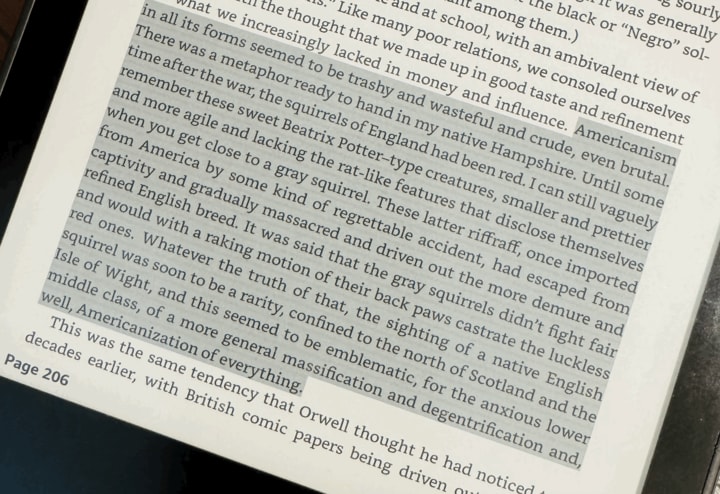
Of course, then there's the way in which Hitchens talks about America and Americanisation. He goes through a metaphor which is relative to the Beatrix Potter animals and again, it is told in that classic Hitchens style which depicts satire and harsh reality side-by-side. He refers to people like WH Auden, Oscar Wilde and PG Wodehouse to demonstrate his inner-thoughts about America and how Oscar Wilde actually thought the country was lovely. He looks at how the Beatles and The Rolling Stones had only become as famous as they are now witnessed as because they had gone over to America and become successful there. He talks about everything from going to Chicago to how haunting the song "Leaving on a Jet Plane" is. The lens of American culture ever-expanding as he travels on. From the Mexican border, to Juarez, to New Orleans and further - another thing I want to know up to this point is how many times the word "Trotskyist" appears in the text.
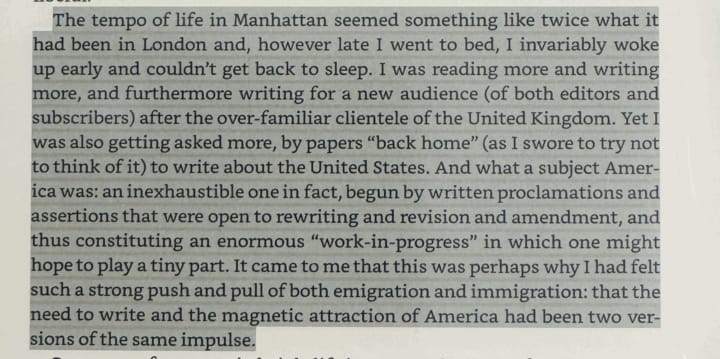
It is however, the descriptive nature of Christopher Hitchens' autobiography that constantly grasps at the ropes of my attention. My mind ignites at some of these phrases as they are explosively good. One of the best examples of this is the way Hitchens weaves together atmosphere and experience in his writing upon Manhattan. He starts on the outer space of the state of New York, dipping into the culture of how Americanisation is based pretty much on the mythologies of the state. Focusing in his starts to give us hints and pieces about his time then, and then before he name-drops more iconic people as being his friends, he hits us with this awe-inspiring paragraph about the city of Manhattan. It is London, if London were to be super-charged by a rocket. This is perhaps my favourite paragraph in the whole book.
There is also an entire chapter dedicated to Salman Rushdie. Christopher Hitchens discusses Midnight's Children with his classic descriptive language, atmospheric prose and critical eye for appreciation of great literature when he sees it. He weaves in references of explicit language and obviously, touches on the harsh realities concerning the response to Salman Rushdie. One Rushdie himself led once again when he was stabbed on stage by an extremist. Hitchens becomes critical of the state of Iran in pushing back women's rights to before they even existed and becoming harsh and unloving with its own people. This is where Hitchens turns his attentions to one of the most controversial and contentious books ever published: The Satanic Verses. He moves through the critical analysis of the context of the novel with great ease, touching on the stupidity of the Ayatollah's fatwa against Rushdie. I was upset to learn that John Berger was not a supporter of Rushdie in this time and I hope that in his lifetime, he went back on that decision before he died.
Hitchens talks about how New York bookstores stopped displaying the book and how Arthur Miller declined Susan Sontag's invitation to read from the book with a lot of writers doing the same, scared because they were Jewish. Susan Sontag however, was not afraid of anything at all. The phrase I have most associated with Hitchens comes to light in this section: "Cowardice is horribly infectious." The censorhip by force argument rattles around and the fact that Salman Rushdie would often disguise himself even around London means that the fear of acknowledgement was palpable to say the least. Hitchens' most scathing rebukes of organised religion come to light here. Especially as in the chapter Something of Myself, Hitchens refers to his favourite real life heroines as being the women of Afghanistan. Especially the brilliant and headstrong, Azar Nafisi. If you haven't read her book already, please do so. It is called Reading Lolita in Tehran. Yeah, I know. She is a badass.
I love the fact that in the chapter about himself, Hitchens would have loved to be Oscar Wilde, because I always saw him as more of a Evelyn Waugh sort of type. I always saw Stephen Fry as Oscar Wilde. He mentions wanting to be Emile Zola as well, and I can see where that is coming from too. But alas, Larkin is his favourite poet - and you all know how I feel about Larkin. I just think he is massively overrated and over-studied.
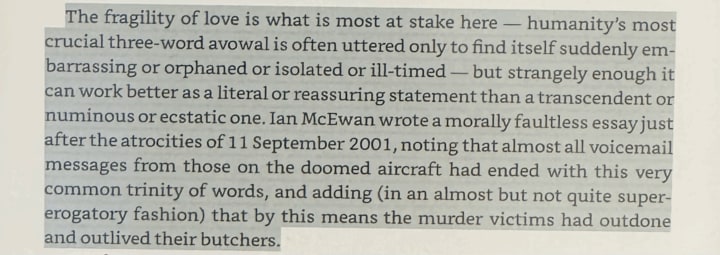
All in all, I found this book to be brilliant and so insightful. I can't believe I haven't read this before. But before I leave you and obviously you're hoping that I shut up - I will give you this one paragraph from late in the book where Christopher Hitchens writes about his family, but also talks about the fragility of love and how the words 'I love you' present something quite special about human nature. Just take a look:
Thanks for sticking around,
Annie
About the Creator
Annie Kapur
I am:
🙋🏽♀️ Annie
📚 Avid Reader
📝 Reviewer and Commentator
🎓 Post-Grad Millennial (M.A)
***
I have:
📖 280K+ reads on Vocal
🫶🏼 Love for reading & research
🦋/X @AnnieWithBooks
***
🏡 UK
Keep reading
More stories from Annie Kapur and writers in Geeks and other communities.
Vacuum Cleaning and Meditations
As a continuation of the opinions I made in my article "UniversityGPT: In Defence of Gen-Z" I would like to expand on a topic that interested me. I could not find the placement for it in the first article as it would have made it far too convoluted and lengthier than anyone would have cared to read. I have called this article "Vacuum Cleaning and Meditations" because of the fact I clarified the ideas of the piece whilst vacuum cleaning. The entirety of that point will make sense as we read on into the main arguments.
By Annie Kapur8 months ago in Geeks
Marvel Zombie
The last entry into our 2025 superhero projects catalogue is Marvel Zombies. This was a show that was anticipated by absolutely no one and it disappeared from the public consciousness as quickly as it was released. There was nothing special about the project that made it a must see, or a must remember. In fact if anything it's a must forget.
By Alexandrea Callaghan26 days ago in Geeks
Superstar Sanjay Dutt & Filmmaker Rahul Mittra get a rousing welcome in Nepal
Kathmandu witnessed a surge of excitement as Bollywood star Sanjay Dutt, accompanied by close friend and noted filmmaker actor Rahul Mittra, arrived in Nepal for a culturally significant visit that blended spirituality, heritage, public interaction and personal camaraderie.
By Dena Falken Esq3 days ago in Geeks




Comments (2)
You really brought the book to life without making it feel distant or academic. The way you move between personal reactions and Hitchens’ reflections made it feel like a conversation.
I have read all of the late-Hitchens I could find, and I'm glad glad you are a fan, especially with your look at the Rushdie case and the recent hearing on his attacker. "The ropes of my attention" is a fantastic phrase, by the way. May steal it for a book or story. And confession time: I have avoided that Waugh book despite having read almost everything else by the man. It lingers on my shelf like a beacon of my old Catholicism. And check your spelling: "onfly"? And, you might like this: https://youtu.be/ogx7DdXIcIM?si=o5j5kpUCHa8dBGhN