
Book Review: "Good Behaviour" by Molly Keane
5/5 - such an important book...


It's not everyday I go outside but when I do, I like to pop into the bookshop and see what's on offer. On a two-for-one there were these lovely Virago Modern Classic books and so, of course I picked up Molly Keane's Good Behaviour, a book I have been needing to read for a while. From chapter 1, I was captivated because of the dark humour and undercurrent of satire. I feel like this is a book every woman should read before she takes anyone's shit. It is a brilliant look at how growth is massively impacted by the way in which we see others of our own kind - especially the main character's mother. This book was brilliant.
Aroon is an upper-class Anglo-Irish woman who, in the first chapter, serves her mother a rabbit dish that not only her mother doesn't enjoy - but it is lethal. It causes her mother to die soon after eating it. Aroon makes sure that everything is perfect throughout this process, especially everyone's behaviour - making it seem like a darkly comical event but, it makes sense when we read the rest of the book. The one thing the reader can see is that this sense of 'good behaviour' can often be present to hide genuine cruelty. The first chapter really sets everything up and honestly, even though she is seen as an unreliable narrator, I still found her fascinating.
We then get a flashback on to Aroon's childhood, family and how she grew up. The St Charles family once held status, land, and pride, but the estate is falling apart. Though Aroon remembers it with nostalgia, the reader sees neglect, dysfunction, and emotional coldness. The children aren't allowed to eat at the table and must eat bland and quite disgusting food (i.e: porridge). I was quite shocked by the mother, who neglected her children so much, and that she was described as not being much better than the terrible nannies.
Her father is Hubert Dublin, a former cavalry officer. He is adored by Aroon but incapable of warmth or responsibility. He is also athletic, handsome, and prefers his horses and hounds to his children. The author is definitely trying to show us how shallow the aristocratic sense of masculinity can be. He is more interesting in everything else, especially his silly activities, even over his children and so it becomes an exercise in futility to get to know them as they get older. However, it doesn't stop our main character from trying to get his attention and validation - that's purely because it is her father and she has been implicitly told to behave that way. Honestly, this was quite sad.

Mrs St Charles (her mother) is elegant, cruel, and emotionally absent. She values appearances above all and despises weakness, including Aroon’s sensitivity. Therefore, we can see that Aroon has been trained to repress emotion, resulting in her adult inability to perceive reality. This is part of the 'good behaviour' code in which Aroon is taught that her emotional weakness means nothing in reality and that the world is actually cruel and disregarding - making her shut down upon entrance. I think the mother is probably more cruel than the father because at least he is just ignorant - the mother actively trains this into her daughter. I mean, the more I learned about the mother the more I understand the first chapter.
Her brother, Hubert is passionate, charismatic, adored by Aroon, and secretly gay. His relationship with his friend Richard is clear to the reader but invisible to Aroon. She is repressed and thus, doesn't recognise these things in the same way we usually would if we had lived and been active in a diverse society - encouraged to mingle with everyone like normal people would. When Hubert dies in a hunting accident, Aroon romanticises him as “perfect,” but she can't see the truth. The irony is that the more Aroon idealises Hubert, the more she reveals her own blindness to the reality of everything. This is only exemplified when she believes Richard is courting her when he's actually just grieving for his love.
There's so much more to this book where we actually see the family system and 'good behaviour' idea collapse in real time but the big question here is how much the whole 'good behaviour' regime has impacted our main character. Her father's death, her requirement to keep up the family name, her failed marriage, and how the whole book ends up back at the beginning. It all makes sense, horribly so.
About the Creator
Annie Kapur
I am:
🙋🏽♀️ Annie
📚 Avid Reader
📝 Reviewer and Commentator
🎓 Post-Grad Millennial (M.A)
***
I have:
📖 280K+ reads on Vocal
🫶🏼 Love for reading & research
🦋/X @AnnieWithBooks
***
🏡 UK
Keep reading
More stories from Annie Kapur and writers in Geeks and other communities.
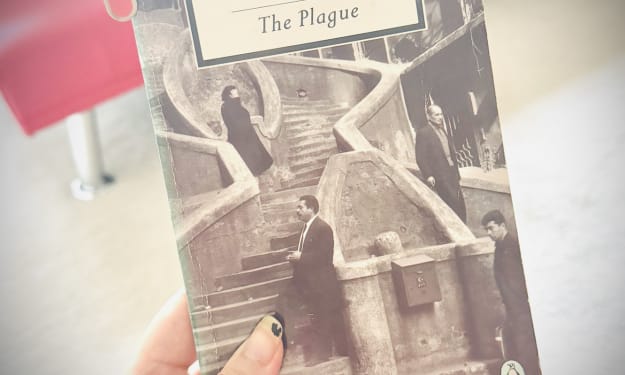
Book Review: "The Plague" by Albert Camus
Albert Camus is one of those writers I don't read often and the reason for that is because there's so much talk about his works on the internet already, sharing my views may be like beating a dead horse. Well, I first read The Plague some years ago and back then, I have to admit I didn't think much of it - but since I've returned with a little bit more time - I've managed to reread it, revisit my old thoughts and make sure I've become clear with my point of view. Here's my point of view very clearly: I don't think much of The Plague still, and I don't think it is Albert Camus best effort at a philosophical novel. However, I am quite understanding when it comes to the fact that this book is important to modern literature.
By Annie Kapur2 months ago in Geeks
Marvel Zombie
The last entry into our 2025 superhero projects catalogue is Marvel Zombies. This was a show that was anticipated by absolutely no one and it disappeared from the public consciousness as quickly as it was released. There was nothing special about the project that made it a must see, or a must remember. In fact if anything it's a must forget.
By Alexandrea Callaghan17 days ago in Geeks
Everything We Know About 'Dune 3' So Far
When Dune: Part Two concluded, Denis Villeneuve did not simply finish a story—he detonated one. The film’s ending left audiences exhilarated, disturbed, and quietly unsettled as Paul Atreides finally embraced the role destiny had been forcing upon him. Victory came swiftly, but so did dread. The holy war had begun, and Paul knew it.
By David Cook3 days ago in Geeks



Comments
There are no comments for this story
Be the first to respond and start the conversation.