
Book Review: "Books of Jacob" by Olga Tokarczuk
4/5 - an ambitious alternative look at history as a present tense fragmentation packed full of bias...

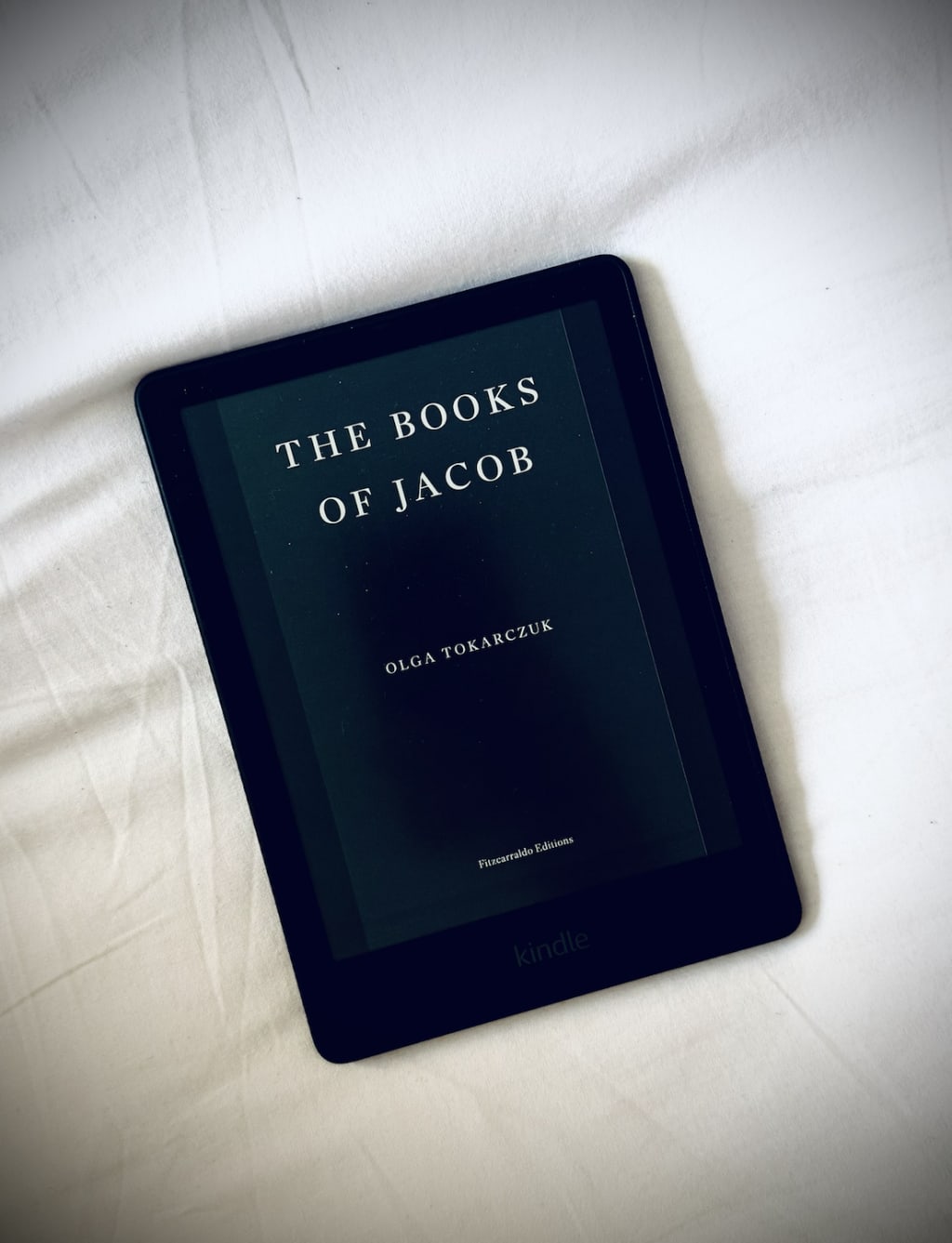
I think by now we all realise that Olga Tokarczuk is probably one of the most prolific writers of the age. My most recent read of one of her books has been The Empusium which has quite a few references to a popular Thomas Mann novel. I've also read Drive Your Plow Over the Bones of the Dead which was pretty good too. Now, I've got on with Books of Jacob which I admit took me longer to read that I had hoped because I was reading it in between other books rather than just on its own. Let's take a look at what this book is all about...
Okay so the book starts off in 1752 in Eastern Galicia and ends in World War 2 in Poland - so that's the first thing we need to know. I was actually quite surprised by how precise 1752 was as a year but it became more clear as I read on. The novel is then arranged as seven 'books' starting with the 'Book of Fog' and on top of that the pages are actually numbered backwards in the paperback version (I read mine on my Kindle and so, the page numbers were just percentage completions - I didn't actually see this but I have heard about it. If you've read this book, did this numbering system make it more confusing to read or did it have no impact?). The scenes are quite short and many are written in the present tense rather than the past, challenging our idea that history was once in the past to present us with the idea that once, these things were happening right now.
Jacob Frank is the main character and proclaims himself to be the messiah. He definitely fits the bill in the sense that he is charismatic and manipulative, often resembling more of a cult leader than a messiah if you will. There are many short reflections of him that give us conflicting opinions about his nature. One of these involves the idea of whether this man was legitimately a messiah figure or whether he was a guy just trying to pull the wool over everyone's eyes. Now, this sort of reminded me of a book I'd read recently on Heidegger in which many people today still think he is a 'charlatan' (including myself) hiding his mediocrity with big words and obscure writing. I mean, it's very close to the way the author presents Jacob in the book.
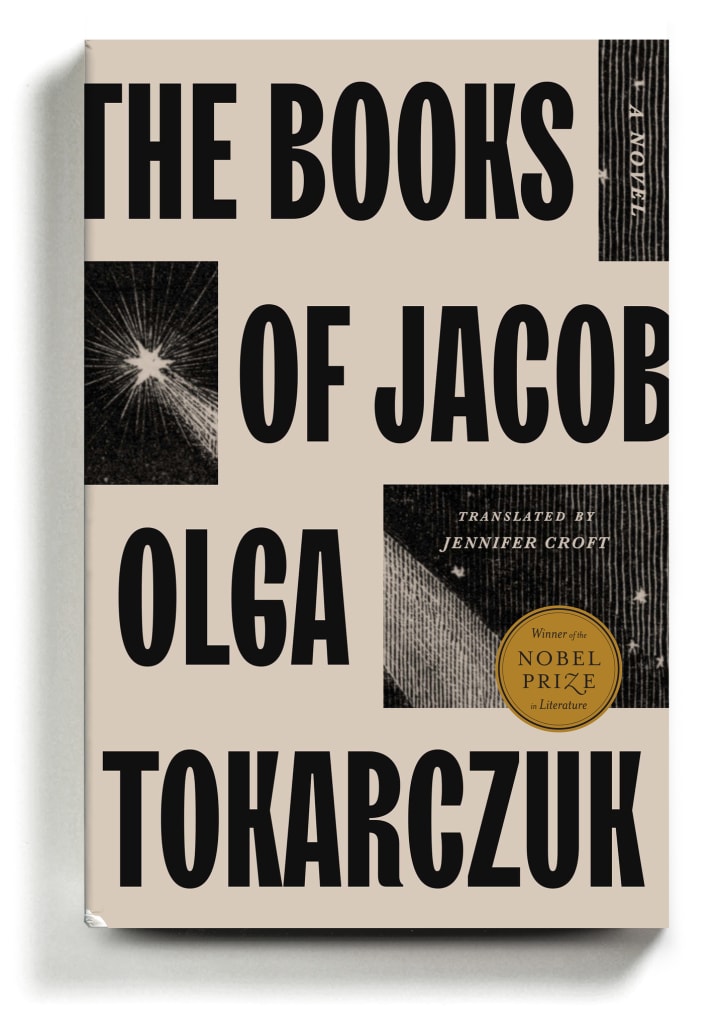
One of the key themes throughout the book I realised was how limited history actually is. The book isn't told in a straight story but rather looks like it has been found. There are fragments from various people including religious leaders, family members and tons of others - they are all speaking from different places and perspectives and a lot of the fragments are riddled with either misinformation or very clear biases for and against. I mean, if this doesn't tell us about the way in which we ourselves have written history then I don't know what will. One of these fragments even includes a woman called Yente who is Jacob's grandmother who speaks from limbo.
Jacob gets things a bit upside-down when he pushes the idea that his followers shouldn't really serve a moral law anymore but instead serve their own desires. They should want spiritual rebellion rather than reaching heaven for doing good things. Now I understand this is supposed to probably be a critique of atheism but honestly, it was a bit too on-the-nose that this guy was going to transgress into a tyrant. I liked the idea of it though because it was clever. However, to see it wouldn't work meant only reading the few pages it started in - I don't know how those people in that present with this guy who was making new structures of belief - couldn't see that very well until things got bad. It seemed obvious to the outsider, but maybe it always seems obvious to the outsider.
As Frankism begins to sweep across Europe, we get this guy having private meetings with the Hapsburgs. However, it doesn't last long and thus, there are pogroms, arrests, heresy trials, ideological disputes. Jacob Frank ends imprisoned, in exile, and dies in poverty. I find this to be both ironic and kind of expected.
I haven't really told you about everything that happens in this book and because it is so long, that would probably take forever. But I enjoyed reading it. Even though at times it did feel like it was a bit off-beat and sometimes it felt like it was dragging on a point for too long, far past when the reader had understood it and wanted the next piece of information - I did feel like it was quite an ambitious book. However, I also think I'll leave Olga Tokarczuk alone for now.
About the Creator
Annie Kapur
I am:
🙋🏽♀️ Annie
📚 Avid Reader
📝 Reviewer and Commentator
🎓 Post-Grad Millennial (M.A)
***
I have:
📖 300K+ reads on Vocal
🫶🏼 Love for reading & research
🦋/X @AnnieWithBooks
***
🏡 UK
Keep reading
More stories from Annie Kapur and writers in Geeks and other communities.
Book Review: "Love in a Wych Elm and Other Stories" by H.E Bates
I haven't read much H.E Bates. I think it's been roughly five or six years at least since I read Fair Stood the Wind for France. H.E Bates can be a quite interesting writer and when I noticed the book in the library which was labelled under short story anthologies - I couldn't help but think if it would be any good. For those of you who don't know, Bates was an author during the mid-20th century and wrote a whole host of novels and anthologies. For some reason this is only my second reading of any of his works. And so, let's take a look at Love in a Wych Elm and Other Stories by H.E Bates.
By Annie Kapur9 months ago in Geeks
History of The Three Stooges (Part I: The Beginnings and Columbia Pictures - 1920s-1936)
I have been itching to write about The Three Stooges on Vocal for close to two years, but I couldn't figure out how to do it. I wanted to do it by third Stooge, but that's a bit complicated. I know this much. I was about eight or nine years old when I first saw The Three Stooges. I remember one of my local channels had the Stooges on for hours, and I tried my damnedest to be up for those shorts. I remember that the Family Channel actually had an hour of the Stooges on from 11PM to midnight, and it was the entire library on during that time.
By Clyde E. Dawkins4 days ago in Geeks
The Hidden Philosophy of FAR: Regina Spektor's Most Underrated Album Explained
Most pop albums are about love or heartbreak. Regina Spektor's Far is about something stranger: what it feels like to be human inside systems that quietly turn people into machines.
By ANTICHRIST SUPERSTAR5 days ago in Geeks


Comments (3)
Such a thoughtful and nuanced review—thank you for breaking it down so clearly. I haven’t read Books of Jacob yet, but your reflection on fragmented history and unreliable narrators really pulled me in. If you have a moment, I’d love for you to check out some of my own writings too. Always open to sharing thoughts with fellow readers!
And I think I'll pick her up again. I've read "Flights" and own a copy of "Plow...," but I've left this one hanging at the library. Interesting breakdown of this one, AK.
But when we think about it, every religion is just a popular cult, lol. Loved your review!