
Book Review: "Agatha Christie" by Lucy Worsley (Pt.4)
5/5 - a fantastic final section, some of the most compelling writing in the whole book...

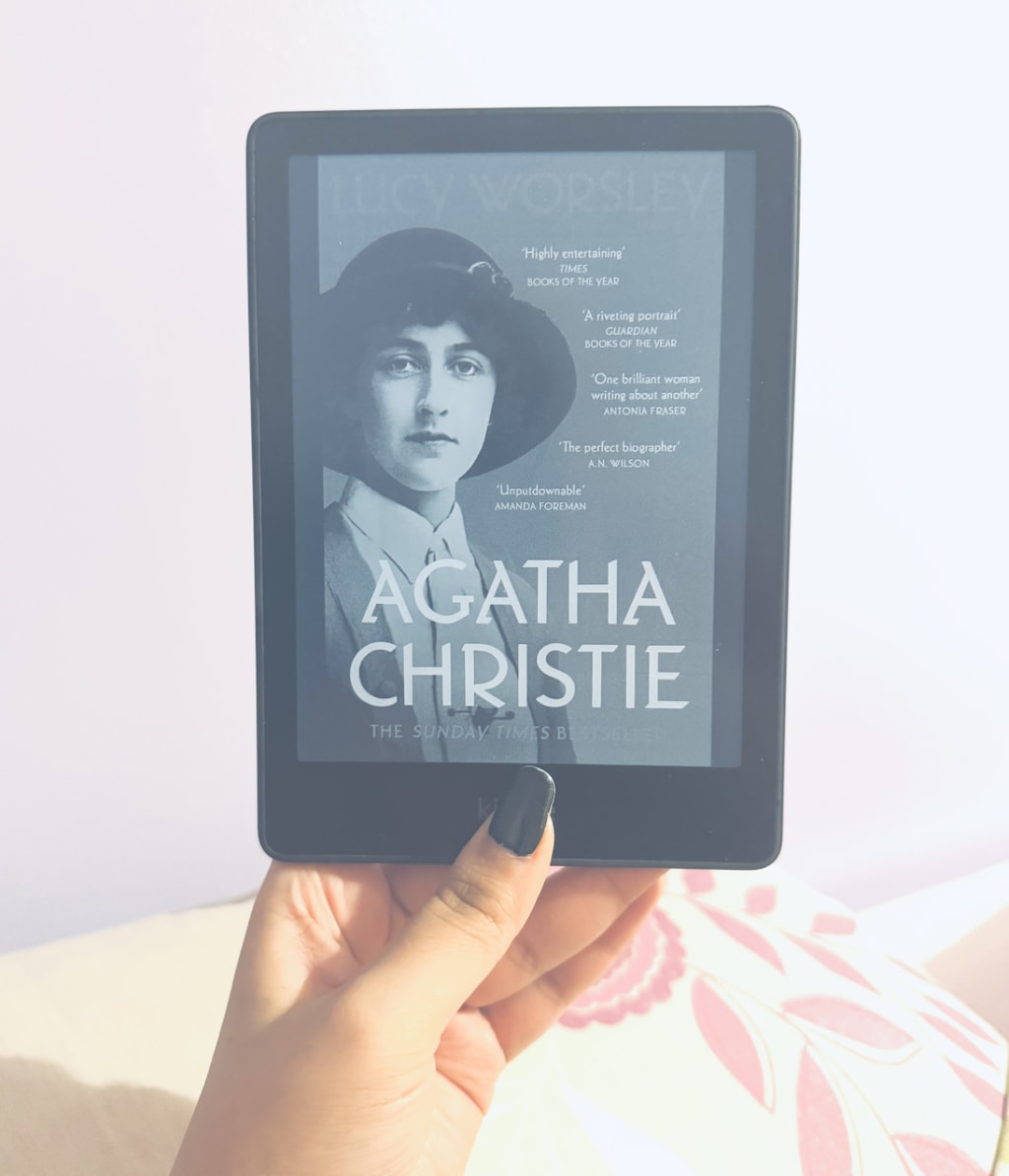
This review covers chapter 31 through to chapter 41 (the end of the book).
***
So, first of all, Rosalind gets remarried (I definitely didn't see that one coming) to a man named Anthony Hicks. But that's not really the story, it's a representation of Agatha's life returning to something more normal and her daughter being up and about again, in some spirits. Agatha's life really returns to normal when she continues writing and though, in the chapters we cover, it is seen that she slows down her productivity - she definitely doesn't do anything to decrease the sales.
Lucy Worsley addresses the writing gap in England with 'angry young men' not looking too favourably on women, especially women who are a little bit more successful than they are. From Kingsley Amis to Dashiell Hammett, there is misogyny everywhere in literature. But that doesn't deter Agatha from continuing to write and publish. Close to the release of her 50th novel, Penguin Books releases all copies of her books and they break records. One million copies are sold in a single day. Agatha now gets to work on an autobiography.
We are taken through the life of Agatha Christie's plays, especially working up to The Mousetrap. We get an inside look at the way in which many people of the stage who met Agatha stated that she was not, in fact, as shy as people kept making her out to be. It seemed though, her apparent shyness was actually quite liked by others. She could create silences and allow for thought. Max would state that this shyness was normally useful, and many people admired her for it. As she continued to write plays into the 1950s, there was another play going on the stage that was about to shock the world: A Taste of Honey, written by a 19-year-old girl named Shelagh Delaney. It would feature Black and homosexual characters. Lucy Worsley makes a point of stating that though these women wrote about different topics and genres, they would occupy the same space in the theatre - they were both women who were becoming more and more successful by the day. They would out-do every man around them.
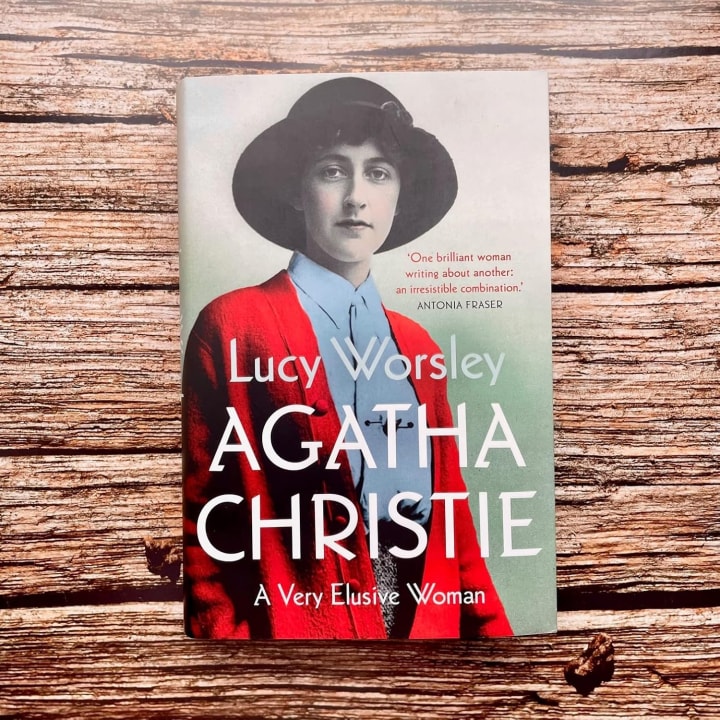
As Agatha Christie starts to age though, many are feeling she is losing her mental facilities. Lucy Worsley suggests that Agatha has dementia and yet, due to stigma and lack of definitive research - there was no formal diagnosis. Agatha would spend the next years celebrating both 80th book and 80th birthday and fighting off Rosalind's objection to playing a play about dodging taxes in London (of which Rosalind was actually correct). Lucy Worsley's writing of Agatha Christie's later years are perhaps some of the most compelling in the whole book. The portrait we get is of a woman who refused to slow down just because of her age. A woman whom we never really knew whether she was a feminist or not. She definitely spoke like an anti-feminist but the character of Miss Marple is a feminist icon herself. Actions speak louder than words.
The final chapters concern the death of Agatha Christie who died without it seems, much suffering. Max asked people not to say anything so the press would not hound the family. When the funeral rolled around, Agatha was buried in January, 1976 - everyone would realise how well-loved this writer was once the lights around the West End were dimmed in her honour. Lucy Worsley takes us through the continuing impact of this writer - the National trust which now owns her property and the legacy left behind by her works and those who get enjoyment from them. My personal favourite Agatha Christie book would have to be Hallowe'en but that's probably obvious. Through Agatha's own autobiography, we learn a lot about her. Through Rosalind's commitment to preserving her mother's memory, we learn even more. When Rosalind dies in 2004, we can also see there are many, many people committed to preserving her memory all over the world. It is quite remarkable.
I have thoroughly enjoyed this book and I look forward to reading more works by Lucy Worsley. I would highly recommend this to anyone who wants to learn absolutely anything about Agatha Christie. Sometimes we forget these larger-than-life women are simply also women. Lucy Worsley does well to remind us that they belong to all of us - all women everywhere.
About the Creator
Annie Kapur
I am:
🙋🏽♀️ Annie
📚 Avid Reader
📝 Reviewer and Commentator
🎓 Post-Grad Millennial (M.A)
***
I have:
📖 300K+ reads on Vocal
🫶🏼 Love for reading & research
🦋/X @AnnieWithBooks
***
🏡 UK
Keep reading
More stories from Annie Kapur and writers in Geeks and other communities.
Book Review: "Agatha Christie" by Lucy Worsley (Pt.3)
This review covers chapter 24 through to chapter 30 *** The back and forth of whether to marry Max is described by Lucy Worsley as troubling for Agatha. She was aware of the mistake she made by marrying Archie and didn't want to make the same one. Max hadn't told his father, whom he lived with, of the engagement - but was adamant he wanted to marry a woman almost fifteen years' older than him. The differences between Archie and Max are again, made even more pronounced by the fact that Archie wanted to play golf and be away from Agatha and Max wanted to read her Ancient Greek Poetry and be around her always. Lucy Worsley paints us a picture of Agatha's life through these two men - one of which treated her badly, the other who is a shy, but gentle person.
By Annie Kapura day ago in Geeks
Goodbye, Mr. Duvall
It is turning out to be an interesting year. I was in the middle of teaching a class when a pop-up appeared on the screen announcing the death of Mr. Robert Seldon Duvall (yes, that was his full name). I was in the middle of a discussion on the obsession we have with winning when it comes to sports (the Winter Olympics was a theme), and I felt as though things were coming full circle. We had already lost Gene Hackman last year, and along with that titan, it feels though one particular golden age has closed off to be replaced by...?
By Kendall Defoe 7 days ago in Geeks
Send Help (2026) - A Movie Review
You call being stuck on a desert island horrible? Send Help crashed-landed in theaters in 2026. Linda Liddle has been overlooked in the office for too long. After a plane crash, Linda and her malicious boss, Bradley Preston, are stranded on a desert island. The battle of office ranks continues as they fend for themselves and search for help.
By Marielle Sabbag6 days ago in Geeks



Comments
There are no comments for this story
Be the first to respond and start the conversation.