
Book Review: "A Good School" by Richard Yates
5/5 - A beautifully written intense novel of growing up in the Second World War...

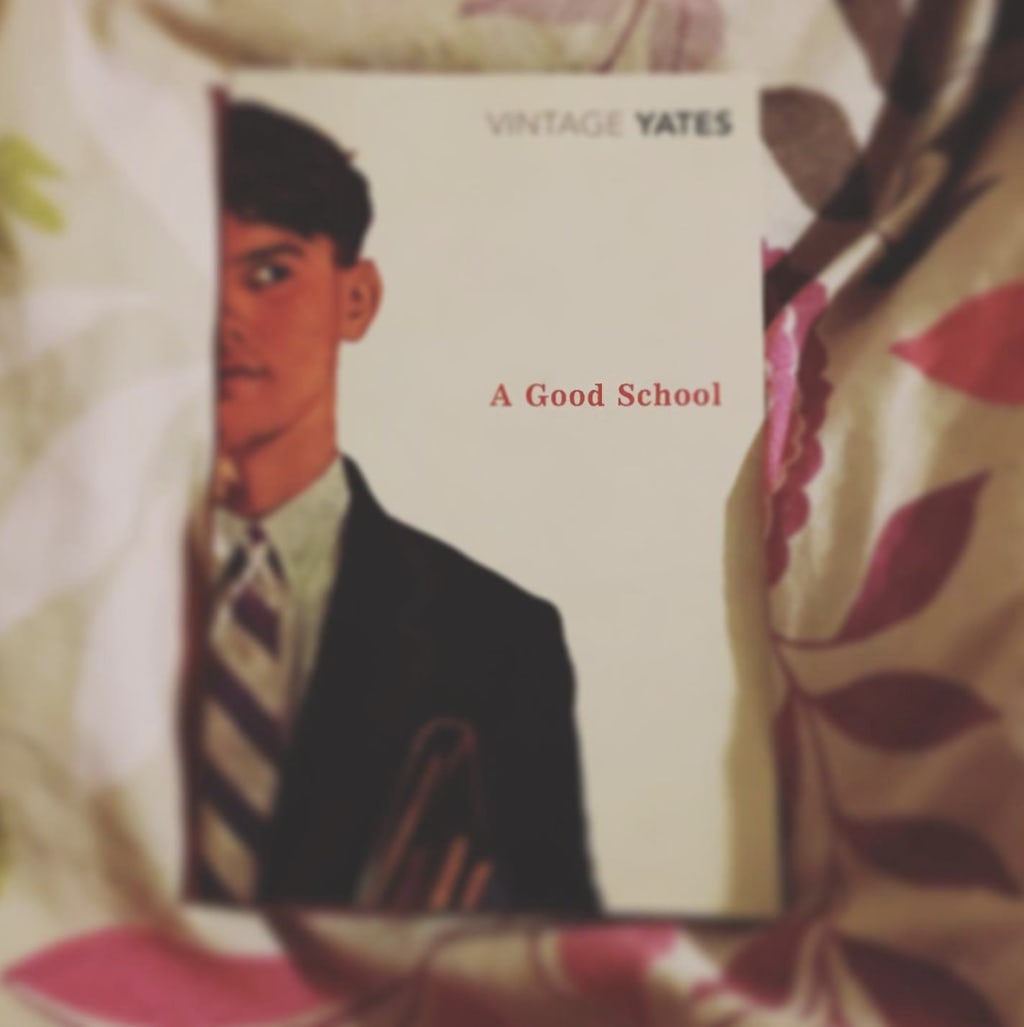
"A Good School" is a novel by Richard Yates, author of the famed text "Revolutionary Road". Yates is normally known for his half-romanticist, half-realist style that captures both the raw emotion, melancholy and splendour of real life situations in which he is able to insert a cast of characters which we cannot help but become involved with. This is also true for the novel "A Good School" in which we meet a whole load of students studying at a boarding school when World War 2 and Pearl Harbour both break out. The novel becomes this battle between detachment, the want to feel involved and this deep-seated symbolism of feeling displaced and dislocated. The character of William Grove being one of the most relatable characters in the book, he experiences deep-seated trauma at the hands of his classmates who taunt and bully him day-in day-out.
The language of the novel is brilliant. Not only do we get these almost eavesdropping styles of dialogue but we seem to be almost omniscient in the book, seeing into each room and hearing these strange and tense conversations going on. For example: we feel as if we are meant to be somewhere else or not even listening at all when Terry and Jim have some sort of argument about living in the same room - it ends with Jim swearing at Terry. In some incidents regarding Edith, we feel as if we have stepped into the wrong room at the wrong time and that is pretty much the magic of Richard Yates' writing.
The situations in which these boys are in is both extremely sheltered and extremely frightening. You realise that these boys have no idea what is going on outside in the real world and yet, you still feel sorry for them because some of them, like Britt, are self-absorbed and so focused on their own state of perfectionism that the war seems really far away even though it continuously gets closer. Through the school newspaper, the main character of William Grove tries his luck on reporting on the issues of the war but he constantly faces setbacks. I believe that this is a form of symbolism for his character - someone who does not quite fit in anywhere. He wants to be outside but cannot, but when he has to be inside the group he is rejected by his peers. It is a lose-lose situation and yet, he must sit back and make the best of it.
I believe it is one of Richard Yates' best attempts at a novel about the young. The writing is just incredible, take a look at this passage from the afterword, which coincides with the kind of writing you will find in the novel though perspective is altered:
"If my father had lived I would certainly have thanked him for paying my way through Dorset Academy. I know he never trusted the place, and for that reason I would have persisted if he shrugged off my thanks. I might even have told him - and this would have been only a slight exaggeration - that in ways still important to me it was a good school. It saw me through the worst of my adolescence as few other schools would have done, and it taught me the rudiments of my trade. I learned to write by working on the Dorset Chronicle, making terrible mistakes in print that hardly anybody ever noticed. Couldn't that be called a lucky apprenticeship? And is there no further good to be said of the school, or of my time in it? Or of me? I will probably always ask my father such questions in the privacy of my heart, seeking his love as I failed and failed it when it mattered; but all that - as he used to suggest on being pressed to sing "Danny Boy", taking a backward step, making a little negative wave of the hand, smiling and frowning at the same time - all that is in the past."
A brilliant book, written as, I believe, a semi-autobiography - it shows us that no matter whether the adolescent is rich or poor, no matter what kind of school they go to - they all go through the same social consciousness. They all experience the downfalls of the teenaged years and they all eventually try as they may, pick themselves up and dust themselves off - ready to go somewhere new.
About the Creator
Annie Kapur
I am:
🙋🏽♀️ Annie
📚 Avid Reader
📝 Reviewer and Commentator
🎓 Post-Grad Millennial (M.A)
***
I have:
📖 300K+ reads on Vocal
🫶🏼 Love for reading & research
🦋/X @AnnieWithBooks
***
🏡 UK
Keep reading
More stories from Annie Kapur and writers in Geeks and other communities.
A Filmmaker's Review: "Westfront, 1918" (1930)
G.W Pabst was a director who is probably most associated with being a filmmaker of the German conscience during the times of great turmoil like the war. The director who also is most associated with being part of the German 'talkies' and really did push the boat out when it came to script, realism and what you could and could not depict on the screen. In the film "Westfront, 1918" (1930), G.W Pabst attempts to depict the very realistic insights of human turmoil in Germany during the first World War. The series of different characters go through their own woes.
By Annie Kapur5 years ago in Geeks
Pan’s Labyrinth
Pan’s Labyrinth was released on December 29, 2006. In the summer of 1944 in Francoist, Spain eleven-year-old Ofelia and her pregnant but sick mother, Carmen, journey to live with Carmen’s new husband, Captain Vidal. Carmen is bedridden and Ofelia finds time to explore. One night she is visited by a fairy who takes her to a faun. There, she discovers she is the lost princess Moanna and will have to complete three tasks before the full moon in order to return to her kingdom. I have been recommended this film countless times and I finally saw it on Netflix. My neighbor liked how I referred to it as a Spanish Narnia. One fact about this film is in Spanish it is called El Laberinto del Fauno which translates in English to The Labyrinth Of The Faun. Despite the English title it was released as, it has nothing to do with the faun called Pan in Greek Mythology which I had originally thought but that did not sway my interest in the slightest. I only found myself imagining I was a little girl again and going on an adventure.
By Melissa Clark5 days ago in Geeks


Comments
There are no comments for this story
Be the first to respond and start the conversation.