
Book - Grit: The Power of Passion and Perseverance
A Deep Dive into Angela Duckworth’s Exploration of Success Beyond Talent

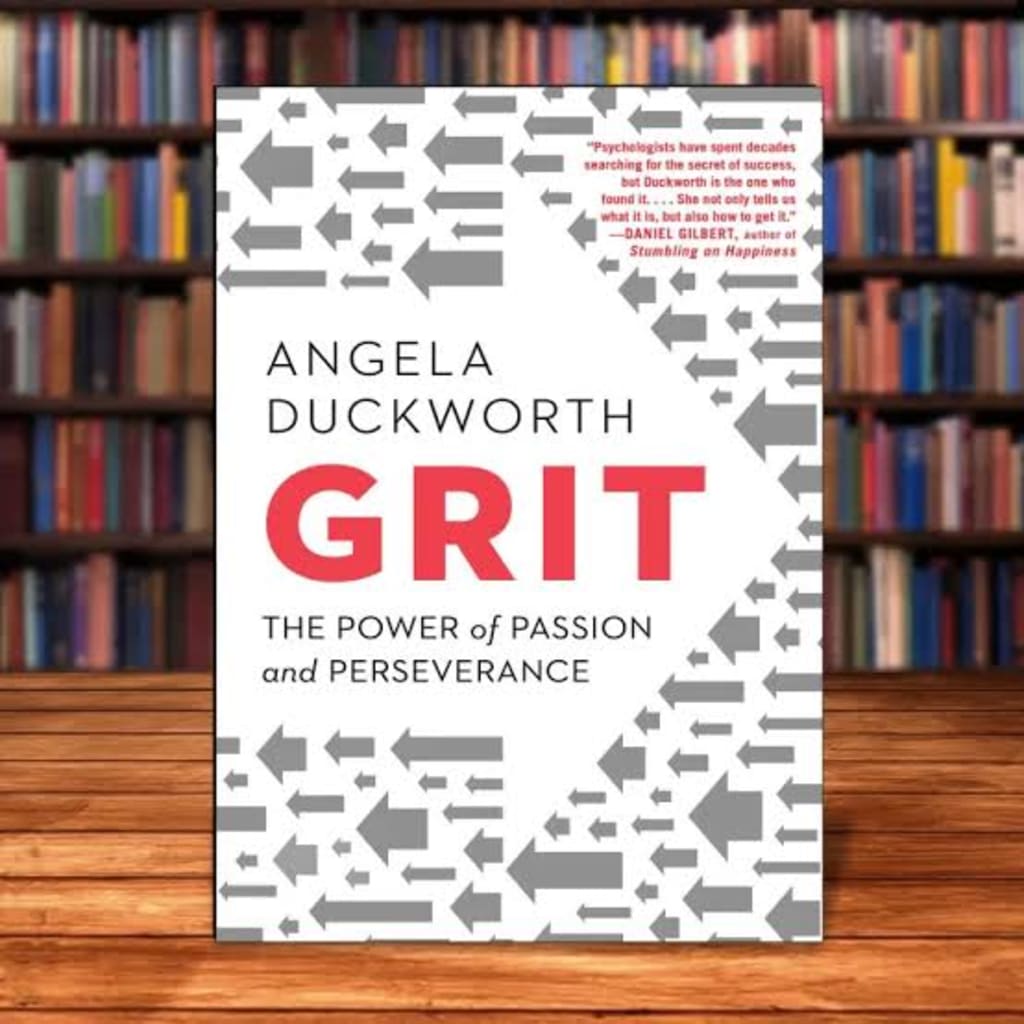
In her groundbreaking book Grit: The Power of Passion and Perseverance, Angela Duckworth, a psychologist and researcher, challenges the conventional belief that talent alone drives success. Through a blend of scientific research, personal anecdotes, and compelling case studies, Duckworth argues that grit—a combination of passion and perseverance—is a critical determinant of achievement. Published in 2016, the book draws on her extensive research into why some individuals succeed while others falter, even when they possess similar levels of intelligence or ability. Duckworth’s central thesis is that sustained effort, fueled by a deep commitment to long-term goals, often outweighs innate talent in predicting success across various domains, from education to business to sports.
The book introduces the concept of grit as a measurable trait, which Duckworth quantifies through her “Grit Scale,” a tool designed to assess an individual’s level of passion and perseverance. She explores how grit can be cultivated through deliberate practice, a growth mindset, and supportive environments. The book also delves into real-world examples, such as the resilience of West Point cadets, the determination of spelling bee champions, and the persistence of successful entrepreneurs, to illustrate how grit manifests in action. Duckworth emphasizes that grit is not about relentless hard work without purpose but about aligning effort with a meaningful, enduring passion. While the book has been praised for its accessible style and actionable insights, some critics argue it may overemphasize individual effort while underplaying systemic factors like socioeconomic barriers. Nonetheless, Grit remains a compelling read for anyone seeking to understand the psychological underpinnings of achievement and how to foster resilience in themselves or others.
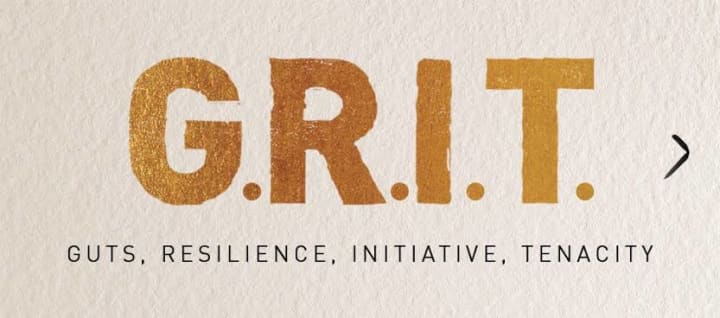
Detail
Angela Duckworth’s Grit: The Power of Passion and Perseverance is a transformative exploration of what drives success, offering a refreshing perspective that shifts the focus from innate talent to the power of sustained effort. Duckworth, a professor of psychology at the University of Pennsylvania, draws on her academic research and personal experiences to argue that grit—defined as a blend of passion for a goal and the perseverance to pursue it over time—is a stronger predictor of success than talent or IQ. Her work challenges the cultural obsession with “natural” ability, suggesting that consistent, purposeful effort can lead to extraordinary outcomes, even for those who don’t start with exceptional gifts.
The book begins with Duckworth’s own journey, from her early career as a teacher in New York City public schools to her pivot into psychology research. She noticed that her most successful students weren’t always the smartest but were often the ones who kept working through challenges. This observation led her to study high achievers across diverse fields, from military cadets at West Point to National Spelling Bee competitors. Through these studies, she developed the concept of grit, which she measures using her Grit Scale—a questionnaire that evaluates an individual’s consistency of interests and perseverance of effort. The scale has been used in various settings, including schools and workplaces, to predict who is likely to succeed in demanding environments.
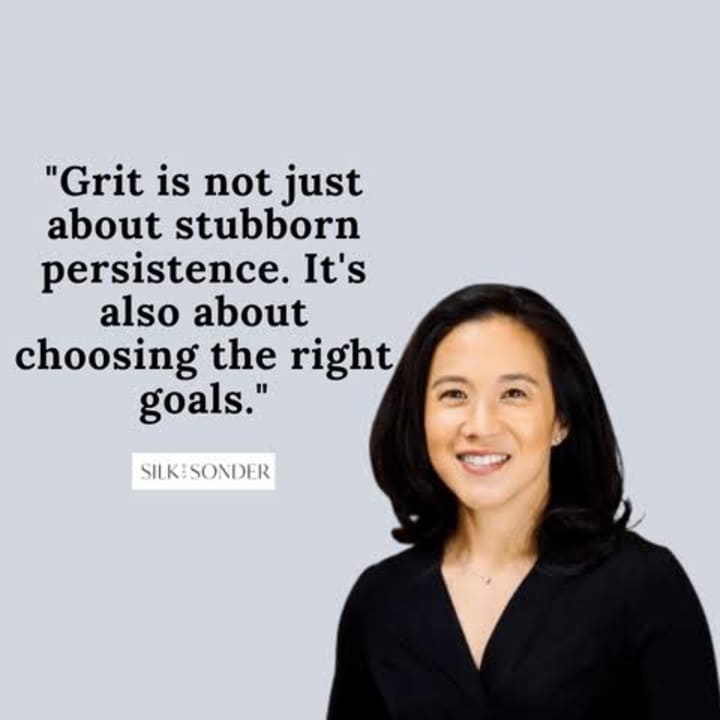
One of the book’s strengths is its use of vivid storytelling to illustrate grit in action. Duckworth profiles individuals like Jamie Dimon, CEO of JPMorgan Chase, who credits his success to relentless problem-solving, and Pete Carroll, the NFL coach, who emphasizes a philosophy of “always competing.” These stories underscore that grit is not about short bursts of effort but about maintaining focus on long-term goals, even in the face of setbacks. For example, Duckworth describes how West Point cadets who score high on the Grit Scale are more likely to complete the grueling training program, not because they are physically superior but because they refuse to give up.
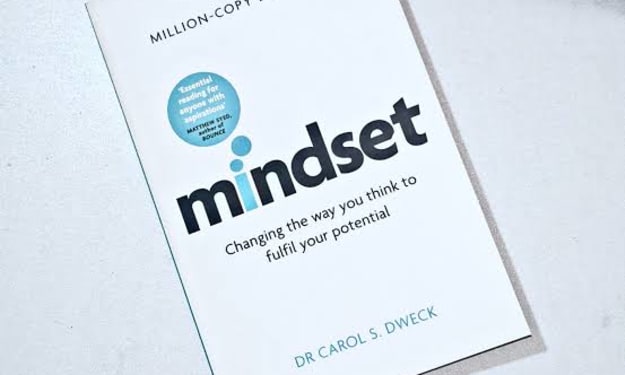
Duckworth also explores the science behind grit, drawing on psychological theories like Carol Dweck’s growth mindset, which posits that believing in the potential for improvement fosters resilience. She emphasizes that grit can be developed through deliberate practice—a structured approach to skill-building that involves setting specific goals, seeking feedback, and pushing beyond one’s comfort zone. Parents, educators, and leaders, she argues, can foster grit by creating environments that reward effort over immediate results and encourage a sense of purpose.
However, Grit is not without its critiques. Some scholars and reviewers have pointed out that Duckworth’s focus on individual traits like grit may downplay systemic factors, such as access to resources or socioeconomic disparities, that significantly influence outcomes. For instance, a student from an underprivileged background may exhibit immense grit but still face insurmountable barriers. Duckworth acknowledges these limitations to some extent, noting that grit is not a cure-all but a critical piece of the success puzzle.
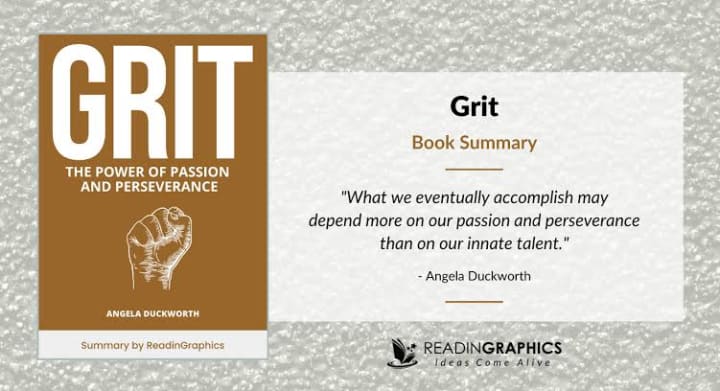
The book also offers practical advice for cultivating grit in oneself and others. Duckworth suggests identifying a “top-level goal”—a unifying purpose that guides smaller decisions—and breaking it into manageable steps. She advocates for embracing challenges as opportunities to grow and surrounding oneself with supportive mentors or peers who reinforce perseverance. For parents and educators, she provides strategies like praising effort rather than talent and modeling resilience through one’s own behavior.
At over 300 pages, Grit is both accessible and thought-provoking, blending rigorous research with relatable anecdotes. Duckworth’s writing is engaging, making complex psychological concepts digestible for a general audience. The book’s impact extends beyond individual readers, influencing educational reforms and workplace training programs that prioritize resilience and long-term commitment.
In conclusion, Grit: The Power of Passion and Perseverance is a compelling case for rethinking how we define and achieve success. By highlighting the role of sustained effort and passion, Duckworth offers a roadmap for anyone striving to reach their potential. While it may not fully account for systemic inequalities, its insights into the psychology of achievement make it a valuable resource for individuals, educators, and leaders alike. Whether you’re a student facing academic challenges, a professional navigating a competitive field, or a parent fostering resilience in your child, Grit provides a powerful reminder that perseverance, paired with purpose, can move mountains.
About the Creator
Am@n Khan
I'm educational storyteller passionate about turning knowledge into engaging narratives.
I write about topics like science, history and life skills.
Contact
WhatsApp : +923336369634
A Knight of the Seven Kingdoms Series Review (Season 1)
As one of the biggest properties in fantasy, A Song of Ice and Fire remains immensely popular with audiences. After reaching far into the past with House of the Dragon, a second spin-off was on the cards. A Knight of the Seven Kingdoms serves up a bite-sized slice of action and drama, but it still claims a spot among the best small-screen titles.
By Robert Cain16 days ago in Geeks
Best CRM Software for Small Businesses Compared
Small businesses typically begin managing customers using email threads, spreadsheets, and accounting software. That approach works while the number of customers remains small, but the moment a company begins handling dozens of active opportunities or managing recurring client relationships, operational visibility begins to deteriorate. Sales conversations are lost in inboxes, follow-ups become inconsistent, and leadership has limited insight into pipeline health.
By Maxwell Lord3 days ago in Geeks



Comments
There are no comments for this story
Be the first to respond and start the conversation.