
Blue Velvet: A Haunting Masterpiece That Defies Time and Convention
David Lynch’s Cult Classic Continues to Captivate, Shock, and Unveil the Depths of Human Psyche

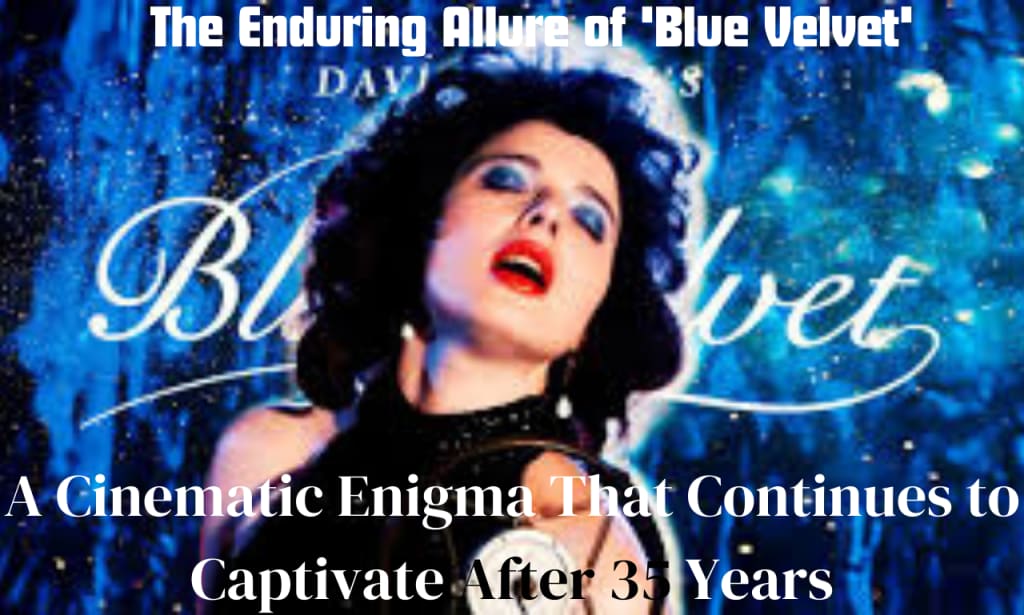
David Lynch’s Blue Velvet, released over 35 years ago, remains a haunting cinematic masterpiece. Its audacious blend of neo-noir, surrealism, and psychological horror captivates audiences, transcending the boundaries of conventional storytelling. This film isn’t just a movie—it’s an experience that delves into the darker recesses of the human psyche, challenging viewers to confront their own fears and desires.
A Tale of Dualities: Innocence Meets Depravity
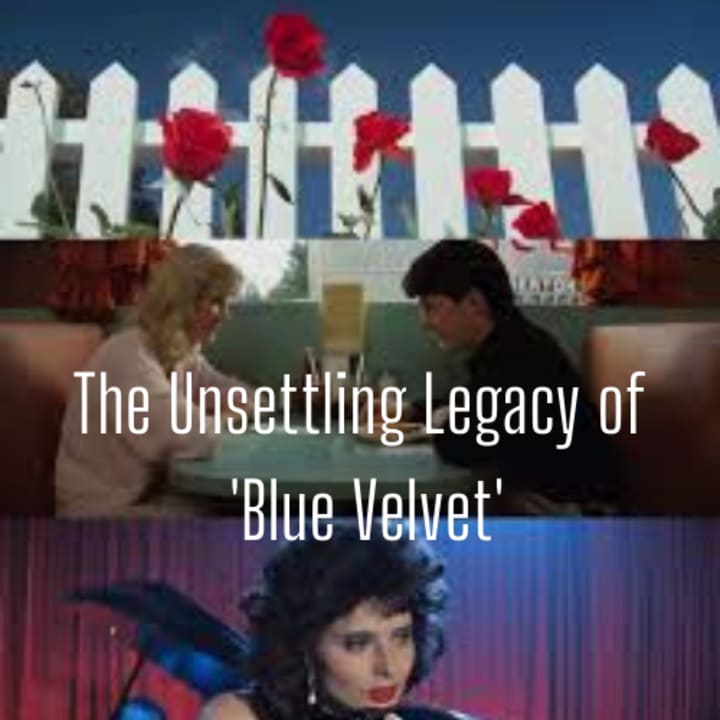
Lynch’s storytelling is anchored in duality, a recurring theme in Blue Velvet. The idyllic backdrop of 1950s-inspired Americana—with its picket fences, manicured lawns, and cheerful optimism—is merely a facade. Beneath this picturesque exterior lies a world of corruption and depravity.
The juxtaposition of light and darkness is unsettling yet compelling. Lynch masterfully disorients the viewer, making us question the very nature of reality. The seemingly angelic characters reveal sinister depths, while the grotesque moments carry an odd beauty, creating an immersive tension that mirrors the complexity of human nature.
A Mystery Beyond the Plot
At its core, Blue Velvet begins with a mystery: the discovery of a severed ear in a quiet field by college student Jeffrey Beaumont (Kyle MacLachlan). This gruesome find sets off a chain of events that lead Jeffrey into the shadowy world of Dorothy Vallens (Isabella Rossellini), a nightclub singer entangled in an abusive relationship, and Frank Booth (Dennis Hopper), a psychopathic villain driven by primal urges.
While the narrative may appear to follow a conventional whodunit structure, the real mystery lies within the characters’ psyches. Lynch uses this framework to explore themes of power, vulnerability, and the boundaries of morality. The result is a psychological deep dive that resonates long after the credits roll.
The Voyeur Within Us All
Lynch’s exploration of voyeurism is one of the most provocative aspects of Blue Velvet. Jeffrey’s initial curiosity about the severed ear evolves into a darker compulsion as he spies on Dorothy’s troubled existence. This voyeuristic element doesn’t just implicate Jeffrey; it implicates us, the audience, as well.
By watching the film, we become complicit voyeurs, drawn to the unfolding drama and the raw human emotions it unveils. Lynch challenges us to examine why we’re fascinated by such unsettling stories. Are we detectives seeking truth, or are we merely spectators reveling in the chaos of others’ lives?
Frank Booth: A Villain Like No Other
Dennis Hopper’s portrayal of Frank Booth is unforgettable. As one of cinema’s most terrifying villains, Frank is a creature of pure chaos and unfiltered id. His volatile presence looms large over the film, a constant reminder of the lurking darkness within us all.
Hopper’s raw, visceral performance brings Frank to life in a way that feels both horrifying and disturbingly real. His portrayal elevates the film, making it as much a study of unchecked power and primal instincts as it is a tale of suspense.
Timeless Aesthetic, Enduring Relevance
While Blue Velvet was released in the 1980s, it feels timeless. Lynch’s meticulous attention to detail—retro-inspired costumes, dreamlike cinematography, and surreal imagery—creates an otherworldly aesthetic that transcends its era.
The film’s themes of hidden desires, power dynamics, and the fragility of innocence remain deeply relevant today. In an age where curated online personas often mask deeper truths, Blue Velvet serves as a poignant reminder of the complexities and contradictions that define humanity.
Why Blue Velvet Still Resonates
Three and a half decades after its release, Blue Velvet continues to captivate and unsettle audiences because it dares to explore uncomfortable truths. It refuses to provide easy answers or tidy resolutions. Instead, it forces us to confront our own fears, desires, and moral ambiguities.
Lynch’s ability to balance horror and beauty, intimacy and distance, creates a cinematic experience that is as thought-provoking as it is emotionally charged. Whether you view it as a psychological thriller, a surreal meditation on human nature, or a neo-noir masterpiece, Blue Velvet defies categorization.
A Legacy That Haunts and Inspires
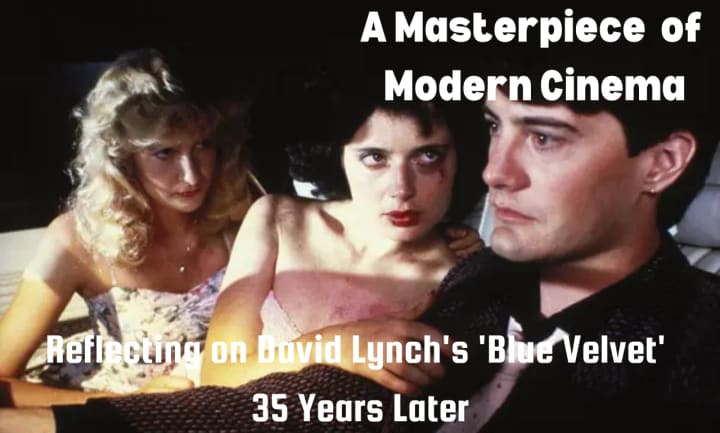
The enduring power of Blue Velvet lies in its ability to resonate on multiple levels. It is a film that must be experienced rather than merely watched. Lynch’s vision—a confrontation with the hidden darkness we all carry—makes it a cornerstone of modern cinema.
In a world where superficial appearances often dominate, Blue Velvet reminds us to look deeper, to embrace the complexities of life, and to acknowledge the beauty and terror that coexist within us all.
About the Creator
mureed hussain
Hi, I’m a creative writer passionate about health & wellness, love, longevity, aging, and pet care. With extensive Quora experience, I craft engaging posts, thoughtful questions, and insightful answers.
Find me at>>[email protected]
Keep reading
More stories from mureed hussain and writers in Geeks and other communities.
The Simpsons’ Shocking Response to LA Wildfire Ignites Viral Buzz
The Simpsons, the iconic animated family that has entertained audiences for decades, is no stranger to timely satire and cultural commentary. Yet, their latest reaction to the devastating Pacific Palisades wildfire has left fans and critics alike in shock, sparking heated discussions and going viral across social media platforms.
By mureed hussainabout a year ago in Geeks
A Knight of the Seven Kingdoms Series Review (Season 1)
As one of the biggest properties in fantasy, A Song of Ice and Fire remains immensely popular with audiences. After reaching far into the past with House of the Dragon, a second spin-off was on the cards. A Knight of the Seven Kingdoms serves up a bite-sized slice of action and drama, but it still claims a spot among the best small-screen titles.
By Robert Cain14 days ago in Geeks
History of The Three Stooges (Part I: The Beginnings and Columbia Pictures - 1920s-1936)
I have been itching to write about The Three Stooges on Vocal for close to two years, but I couldn't figure out how to do it. I wanted to do it by third Stooge, but that's a bit complicated. I know this much. I was about eight or nine years old when I first saw The Three Stooges. I remember one of my local channels had the Stooges on for hours, and I tried my damnedest to be up for those shorts. I remember that the Family Channel actually had an hour of the Stooges on from 11PM to midnight, and it was the entire library on during that time.
By Clyde E. Dawkinsa day ago in Geeks
Bomb Scare
It was 2027, and the world never thought it would happen. A missle hit the United States, but it wasn't where they had anticipated. A little town in the northeast was hit by a missile strike, they didn't know why, and they didn't know exactly where it hit, but they did know it was a coastal community, somewhere between Maine and Delaware.
By Gregory Payton7 days ago in Fiction



Comments
There are no comments for this story
Be the first to respond and start the conversation.