
Are Mermaids Real? Separating Myth from Science
Are Mermaids Real? The Truth Behind the Legend

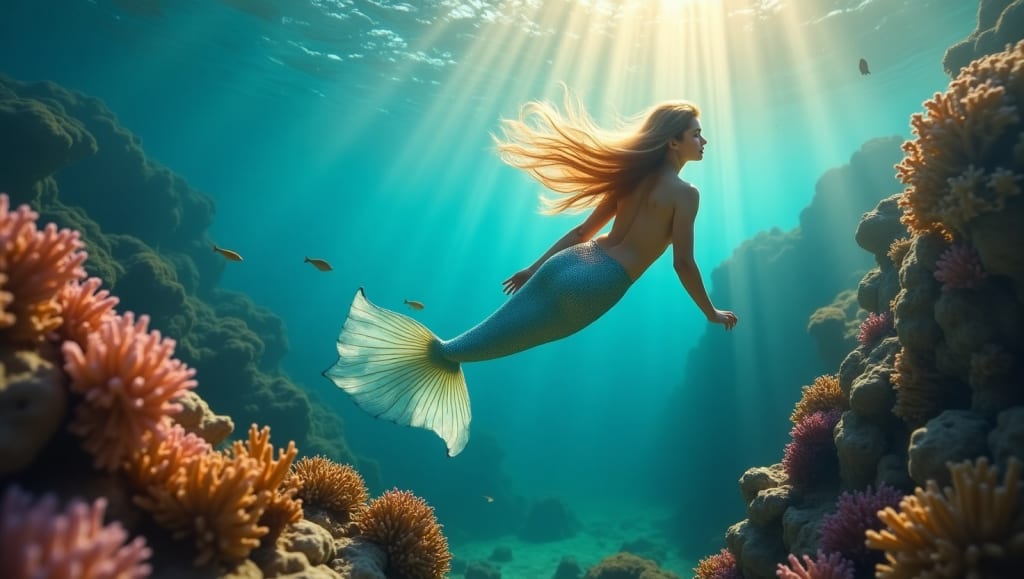
Do mermaids exist? Explore scientific facts, historical sightings, and why the myth persists. Discover the truth now!
Introduction
For centuries, sailors, explorers, and storytellers have whispered about mermaids—mysterious half-human, half-fish creatures lurking in the ocean’s depths. But are mermaids real, or just a fantastical myth?
This in-depth guide explores:
✔️ Historical accounts of mermaid sightings
✔️ Scientific explanations for mermaid myths
✔️ Why the legend persists today
✔️ Famous hoaxes and modern pop culture
Let’s dive into the truth behind one of the ocean’s greatest mysteries.
1. What Are Mermaids? Defining the Myth
Mermaids are legendary aquatic creatures with:
- The upper body of a human (usually female)
- The lower body of a fish (a long, scaly tail)
- Mermaids vs. Sirens: Key Differences
While often confused, sirens (from Greek myths) were bird-women who lured sailors to their deaths, whereas mermaids were seen as more neutral or even benevolent.
2. Historical Mermaid Sightings: Fact or Fiction?
A. Christopher Columbus (1493)
During his voyage, Columbus reported seeing three "mermaids" near Haiti—but described them as "not half as beautiful as they are painted." Most historians believe he saw manatees.
B. The Feejee Mermaid Hoax (1842)
P.T. Barnum exhibited a "mermaid" corpse that was later revealed to be a monkey sewn onto a fish tail.
C. 20th Century Reports
- Japan (1900s): Fishermen claimed to catch "ningyo" (mermaid-like creatures).
- Zimbabwe (2012): Locals swore a mermaid haunted a reservoir, stopping construction.
3. Scientific Explanations for Mermaid Myths
A. Manatees & Dugongs
These marine mammals, when seen from a distance, can resemble humanoid figures:
- Rounded torsos
- Flippers that look like arms
- Fish-like tails
NOAA confirms:
"No evidence of aquatic humanoids has ever been found."
(Source: NOAA Facts on Mermaids)
B. Hallucinations at Sea
Scurvy (Vitamin C deficiency) caused sailors to see mirages.
Isolation & exhaustion led to vivid imaginations.
C. Optical Illusions
Sunlight on waves, floating debris, and even seals can look eerily human-like from afar.
4. Could Mermaids Biologically Exist?
Scientists say no, and here’s why:
A. Evolutionary Impossibility
- Mammals & fish don’t hybridize.
- Human lungs can’t extract oxygen from water.
B. The "Aquatic Ape" Theory (Debunked)
Some speculated humans had aquatic ancestors, but no fossil evidence supports this.
5. Why Do People Still Believe in Mermaids?
A. Pop Culture Influence
From Disney’s The Little Mermaid to Pirates of the Caribbean, media keeps the myth alive.
B. Psychological Fascination
Humans are drawn to mysteries of the deep—just like UFOs or Bigfoot.
C. Hoaxes & Misinformation
Fake videos (like Animal Planet’s mockumentary Mermaids: The Body Found) tricked millions.
6. The Verdict: Are Mermaids Real?
Science says no—but the legend endures because:
✔️ The ocean is still largely unexplored (we’ve mapped Mars better than our seas!).
✔️ People love mystery and wonder.
Frequently Asked Questions (FAQ)
Q: Have mermaids ever been proven to exist?
A: No. Every supposed mermaid discovery has been debunked as either a hoax (like the Feejee Mermaid) or a case of mistaken identity (usually manatees or dugongs).
Q: Why do so many cultures have mermaid legends?
A: Many coastal civilizations developed similar myths independently because:
- They encountered the same marine animals (manatees, seals)
- Shared human fascination with humanoid sea creatures
- Used mermaids as symbolic figures in folklore
Q: Could mermaids evolve in the future?
A: Extremely unlikely. Evolutionary biology shows no pathway for humans to develop fish-like traits naturally.
Q: What's the most convincing mermaid evidence ever found?
A: The best evidence has always been:
- Misidentified marine animals (70% of cases)
- Elaborate hoaxes (25%)
- Optical illusions/hallucinations (5%)
Q: Are there any real fish that look like mermaids?
A: The closest is the sea cow family (manatees & dugongs) - but even these look only vaguely human-like from a distance.
Q: Why did NOAA release a statement about mermaids?
A: After Animal Planet's fake documentary went viral in 2012, NOAA received so many public inquiries that they issued an official denial.
Final Thoughts
While mermaids remain a beautiful fantasy, science confirms they don’t exist. Yet, the myth persists because the ocean still holds countless secrets.
Want More? Explore These There Source:
- NOAA’s Official Statement on Mermaids
- The History of Mermaid Hoaxes (Smithsonian)
- Marine Biology Mysteries (National Geographic)
What Do You Think?
Do you wish mermaids were real, or are you glad they’re just myth? Share your thoughts below!
About the Creator
Vincent Otiri
I'm a passionate writer who crafts engaging and insightful content across various topics. Discover more of my articles and insights on Vocal.Media.
Keep reading
More stories from Vincent Otiri and writers in Geeks and other communities.
Meet the Director Nominated for Two Oscars for Two Different Films
In the highly competitive world of filmmaking, earning a nomination for the Academy Awards is considered one of the greatest recognitions of artistic achievement. For one director, however, the honor arrived twice in a single year — for two completely different films. The unusual milestone has drawn attention across the global film industry and highlighted the creative range of a filmmaker whose work continues to push boundaries. The nominations, announced by the Academy of Motion Picture Arts and Sciences, place the director in a rare category of artists who have managed to captivate audiences and critics simultaneously with multiple projects released within the same awards cycle. While it is common for filmmakers to spend several years developing a single project, this director oversaw two distinct productions, each with its own cast, theme, and visual language. Both films went on to gain widespread critical praise, eventually earning nominations at the prestigious Academy Awards. Industry observers say the achievement reflects not only technical skill but also a remarkable ability to navigate vastly different storytelling approaches. Two Films, Two Worlds The first nominated film is a sweeping historical drama that explores the complexities of identity, power, and personal sacrifice. Set against the backdrop of a turbulent political era, the film combines intimate character studies with large-scale cinematic spectacle. Critics praised the director’s ability to balance emotional storytelling with historical authenticity. Carefully constructed scenes, detailed production design, and powerful performances helped the film resonate with audiences around the world. The second nominated film stands in stark contrast. Rather than historical drama, it is a contemporary character-driven story focused on personal relationships and moral ambiguity. The narrative unfolds in a quieter setting, relying heavily on dialogue and subtle performances. Despite its smaller scale, the film has been described as equally powerful. Reviewers noted the director’s talent for extracting complex emotions from everyday situations, turning ordinary moments into compelling cinematic experiences. Together, the two films demonstrate a rare versatility that has impressed both critics and members of the film academy. A Career Built on Risk The director’s path to recognition was not immediate. Early in their career, they worked on independent productions that struggled to secure wide distribution. Many of those early films were praised in small film festivals but received limited commercial success. Those projects, however, helped shape a distinctive creative voice. Rather than following conventional industry formulas, the filmmaker developed a reputation for taking risks with narrative structure and visual style. Over time, those risks began attracting international attention. Film critics often compare the director’s approach to that of celebrated auteurs such as Christopher Nolan and Alejandro G. Iñárritu, both known for blending ambitious storytelling with strong artistic identity. Although the comparison is flattering, the director’s work remains distinctly their own. The Challenge of Creating Two Films Producing two award-caliber films within the same period is an enormous logistical challenge. Each production requires months — sometimes years — of planning, financing, casting, and post-production work. Film industry insiders say the director’s ability to manage both projects simultaneously speaks to an exceptional level of organization and creative discipline. Crew members involved in the productions describe a collaborative environment where ideas were encouraged and experimentation was welcomed. “Every scene felt carefully planned but also open to discovery,” one cinematographer who worked on the projects said in an interview. “The director had a clear vision, but they also trusted the creative team.” Recognition from the Film Community Since the nominations were announced, the director has received congratulations from filmmakers and actors around the world. Social media has been filled with tributes from colleagues who admire the achievement. Some analysts say the nominations reflect a broader shift within the film industry toward recognizing bold storytelling and diverse perspectives. In recent years, the Academy Awards has expanded its membership and voting body, bringing in a more international and diverse group of filmmakers. That change has allowed a wider range of films to gain recognition. For this director, the moment represents both validation and new expectations. Looking Ahead While awards season attention often focuses on trophies and ceremonies, many filmmakers emphasize that recognition is only part of the creative journey. The director has already hinted at several upcoming projects, including a potential collaboration with major international studios and a smaller experimental film expected to return to their independent roots. Whether or not the Oscar nominations lead to a win, the dual recognition has firmly established the filmmaker as one of the most exciting voices in modern cinema. For audiences, the achievement offers a reminder that great storytelling can take many forms — from sweeping historical epics to intimate human dramas. And for the director behind both films, the moment marks not an end point, but the beginning of an even more ambitious chapter in a rapidly evolving career.
By Fiaz Ahmed about 10 hours ago in Geeks




Comments (1)
The mermaid legend is fascinating. Columbus's sighting being likely manatees shows how easy it is to misidentify. The Feejee Mermaid Hoax is wild! And those 20th-century reports are interesting. Do you think there could be other natural explanations for mermaid sightings we haven't considered? It makes you wonder what else is out there that we might misinterpret.