
All Happy Families (2024)
No apologies – I liked this film

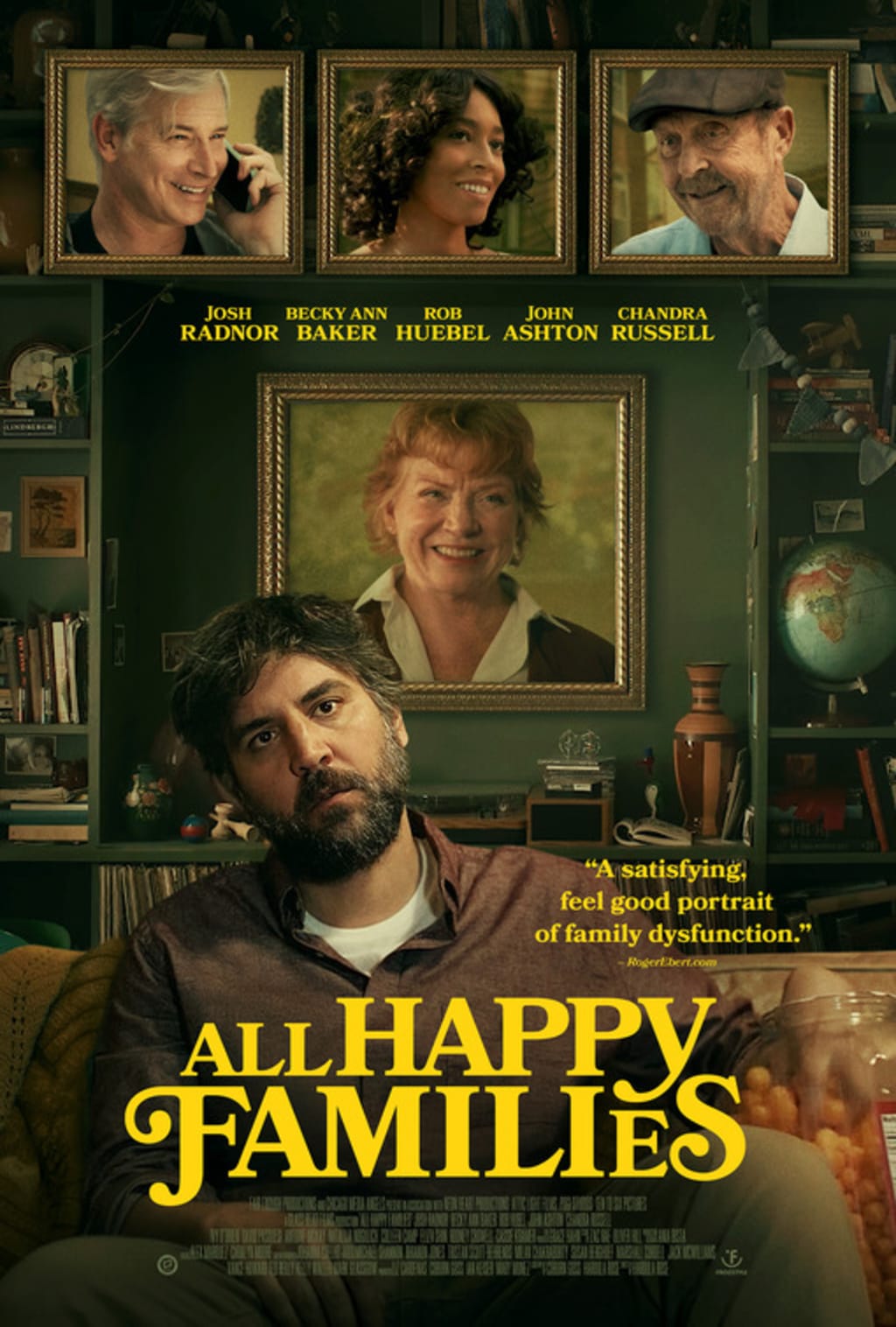
I wasn’t going to write about my weekend viewing. My partner and I went to see All Happy Families (2024), and at the end of the film, we didn’t rave about it, but nor did we sit in the car and tear it to pieces. We were, however, both smiling. It was what the Guardian describes as ‘likeable’ – a solid three star piece of date-worthy entertainment. I didn’t think I had anything to say about it. However, at the end of the date, there was one scene we both commented on…

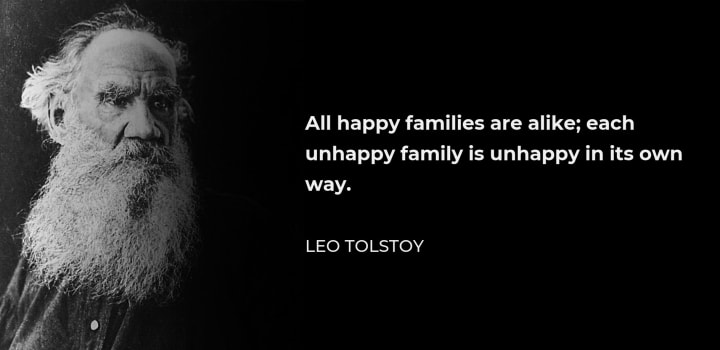
The film titles start with the a quote from Tolstoy’s Anna Karenina:
All happy families are alike, but each unhappy family is unhappy in its own way.
This could set us up for trauma, misery, drama. Instead the opening scene features the not-so-subtle metaphor of a plumber (called Philip Love and played by Antoine McKay) showing Graham Landry (Josh Radnor) a decaying rat in the decaying pipes of his family home. Something is wrong in the very foundations of this house, a family home, that needs refitting, refurbishing and repurposing. But also, the comic tones means that the audience isn’t going to worry too much.
The family – mother, Sue (Becky Ann Baker), father, Roy (John Ashton) and eventually the starry older brother with his successful TV career, Will (Rob Huebel) descend to help with the renovations so that the bottom half of the house can be rented out.
This family is unhappy in a number of simmering, tense ways. A father who gambles, a mother who feels under-appreciated and unnoticed, sibling rivalry between Graham and Will, both with struggling careers, a granddaughter, Evie (played by Ivy O’Brien) who needs to be truly seen.
It is not, however, a family beset by tragedy and horror. This is not a difficult watch. It is instead a familiar discomfort of miscommunication and the undercutting of being able to rely on each other through a lack of attention. They appear to love each other, tolerate each other, just not always liking each other. All actors provide the right level of upset without descending into misery. And the family is held together by the charm and resilience of the mother/grandmother with her big, warm heart and nerves of steel.
It leaves the viewer with a sense that the family will survive – just about – that they will also continue to be happy and unhappy in their own particular and peculiar ways.

And then there was the scene that both of us felt the need to comment on. It was an apology from Granddad to Granddaughter. It was a tender, brief moment – flowers for a teenage girl.

When I got home, it sent me googling for other apologies on screen. But they are few and far between. Instead, my google search was full of the apologies of actors, producers and directors. The usual trite apologies, more about career-saving, rather than acknowledging pain inflicted. Apologies about personal growth, centred on the apologiser's ego rather than their victims' upset.
So many in Hollywood have been found to have so much to apologise for. And maybe this is why the real unequivocal “I did something wrong and I am sorry” apology is so rare on screen. For that reason I really want to commend the writers (Coburn Goss and Haroula Rose) for that moment, that offered real hope and lessened the pain.
Love is the very opposite of never having to say your sorry.
This is an unassuming film with natural performances, easy-going story-telling. And I’m not sorry I went to see it.
If you've enjoyed what you have read, please consider subscribing to my writing on Vocal. If you'd like to support my writing, you can do so by a regular subscription or leaving a one-time tip. Thank you.
About the Creator
Rachel Robbins
Writer-Performer based in the North of England. A joyous, flawed mess.
Please read my stories and enjoy. And if you can, please leave a tip. Money raised will be used towards funding a one-woman story-telling, comedy show.
Keep reading
More stories from Rachel Robbins and writers in Geeks and other communities.
Marvel Zombie
The last entry into our 2025 superhero projects catalogue is Marvel Zombies. This was a show that was anticipated by absolutely no one and it disappeared from the public consciousness as quickly as it was released. There was nothing special about the project that made it a must see, or a must remember. In fact if anything it's a must forget.
By Alexandrea Callaghan15 days ago in Geeks
Angelina Jolie in Alice Winocour's Paris 'Couture' Film Official Trailer
"It's a shout of rage, of liberation." HanWay Films debuted the first official trailer for Couture, a French film about the Paris fashion industry. This premiered at TIFF 2025 last year and other festivals and will be debuting in French cinemas this February. Though there's still no US release expected anytime soon as it didn't get many good reviews (58% on RT). Angelina Jolie stars as an American filmmaker named Maxine who arrives in Paris for Fashion Week on a life-and-death journey, facing challenges and self-discovery. The triptych story follows three women in Paris, including a young fresh face model named Ada, and a make-up artist working in the shadows of the catwalks. A "powerful & intimate journey of self-reflection & resilience set against the electric backdrop of Paris Fashion Week." Written & directed by French César nominated writer / director Alice Winocour, the film stars mega famous actress Angelina Jolie as Maxine Walker, with Louis Garrel, Anyier Anei, Ella Rumpf, Guillaume Marbeck, & Garance Marillier, also featuring Vincent Lindon. This only looks like it's worth a watch for anyone who is deeply into the fashion industry.
By Dena Falken Esq3 days ago in Geeks
Violence Begets
"Any last words, cowboy?" "None you'd understand, sodbuster." "Funny. That's Marshall Sodbuster to you. But I meant some last nugget that would help us in the adjudication of the myriad offenses counted against you and your gang. I wasn't asking for penitence."
By Adam Diehl3 days ago in Fiction



Comments (5)
Nicely done as usual Rachel! It sounds like a very good flick!
Sounds like nice if not exceptional fare, well-reviewed.
Great concise review which tells me what I need to know.. that is it not for me. That said, you may have just tempted me to check it out...
Well written review, Rachel. Sometimes we need films like this, that aren’t some complex but filled with varying emotions. As Melissa Ingoldsby mentioned the apology scene seems to the highlight. That would be the tearjerker feel-good scene. Touching on “love is never having to say you’re sorry.” I agree with you and that love is exactly the opposite. I guess in the film, Love Story, what they were trying to say is that you don’t have to say sorry because when you’re in love you just automatically forgive the one you love. But what they were forgetting to look at is that in order to have real closure the one who hurt the person has to acknowledge what they did and apologize for it. Great writeup, as usual. I always enjoy reading your reviews.
Great review. I liked how you picked out the apology part as it seems special