
A KING'S RANSOM FOR SHERWOOD: DECONSTRUCTING RIDLEY SCOTT'S 'ROBIN HOOD' (2010)
A Gritty Reimagining of Legendary Outlaw

The legend of Robin Hood, the outlaw hero who steals from the rich to give to the poor, has been a cultural touchstone for centuries. From ballads sung around medieval campfires to countless adaptations across literature, film, and television, the tale of the noble bandit resonates with enduring appeal. In 2010, seasoned director Ridley Scott, known for his epic historical dramas such as 'Gladiator' and 'Kingdom of Heaven', took on the mantle of reinterpreting this iconic story with 'Robin Hood'. This wasn't the swashbuckling, Errol Flynn-esque Robin of old; Scott's iteration offered a grittier, more historically grounded origin story, exploring the sociopolitical landscape that birthed the legend. This article delves into the various facets of this ambitious project, examining its narrative, cast, production, reception, and ultimate legacy.
Plot:
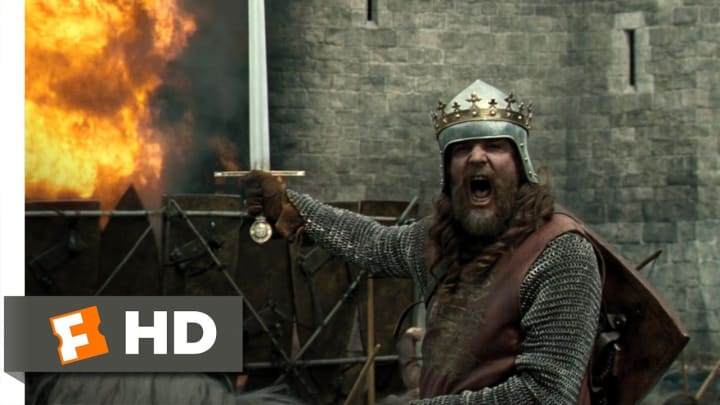
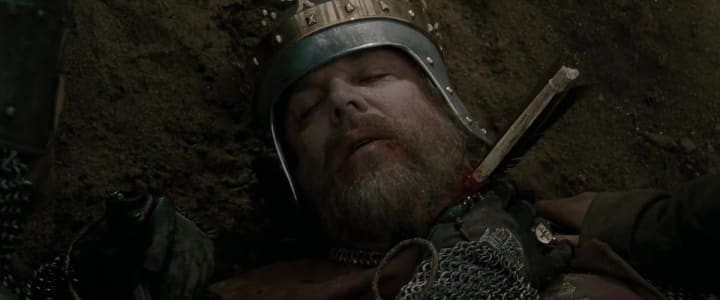
Scott's 'Robin Hood' deviates significantly from the traditional narrative. Instead of opening with Robin already the leader of a band of merry men, the film begins with Robin Longstride (Russell Crowe), an archer in the army of King Richard the Lionheart (Danny Huston). Following Richard's death during the siege of Chalus Castle, Robin and a handful of his fellow soldiers desert the army. Their journey back to England is interrupted when they stumble upon the dying Sir Robert Loxley (Douglas Hodge), a knight carrying the King's crown to London. At Loxley's request, Robin agrees to return the crown and sword to his father, Sir Walter Loxley (Max von Sydow), in Nottingham.
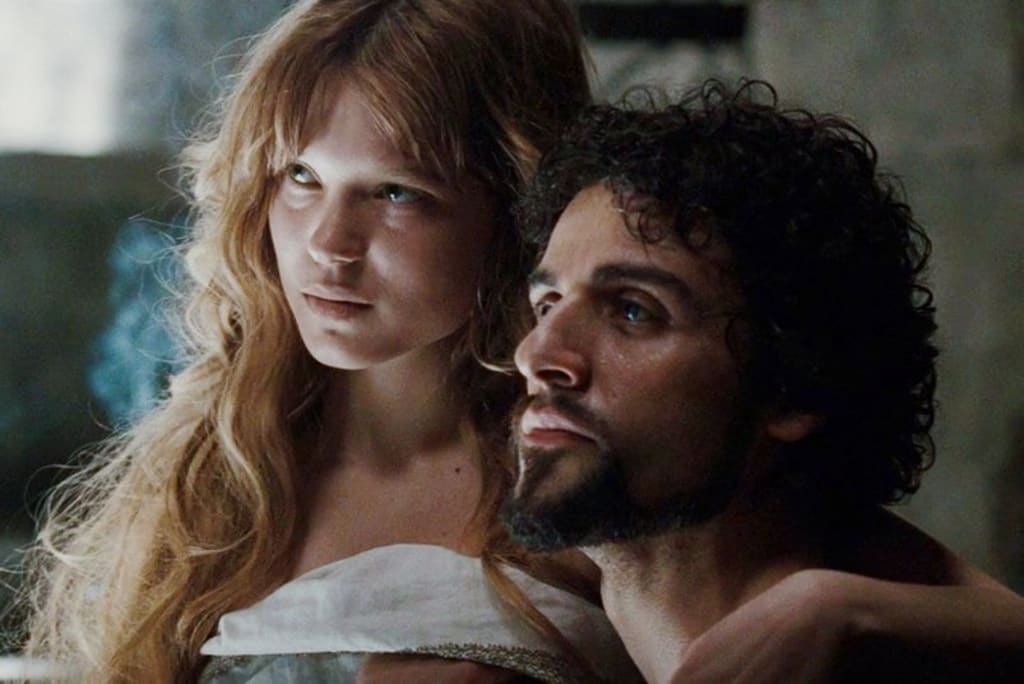
Arriving in England, Robin impersonates the deceased Loxley, delivering the crown to a newly crowned and largely unpopular King John (Oscar Isaac). He is pressured to continue the charade by Sir Walter, who sees Robin as a protector for the family and the land. Robin quickly finds himself caught in a web of political intrigue involving King John's manipulative advisor, Godfrey (Mark Strong), a former mercenary in the service of the French who is secretly plotting to destabilize England and pave the way for a French invasion.
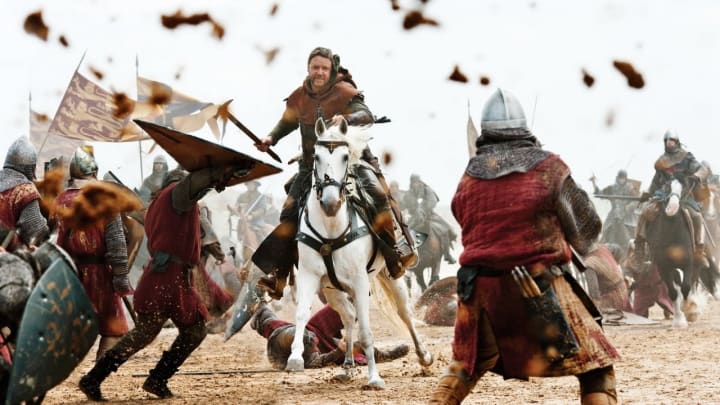
The film gradually unveils Robin's connection to the Magna Carta, a historical document central to the plot. He advocates for greater rights and freedoms for the common people, ideas considered treasonous by King John. As Godfrey's treachery unfolds, Robin rallies the people of Nottingham and, eventually, the northern barons against the corrupt King. The climax sees a brutal battle on the shores of England, preventing the French invasion. While victorious, Robin and his allies are branded outlaws by King John for refusing to swear fealty. The film concludes with Robin taking refuge in Sherwood Forest, thus setting the stage for the more familiar legends of Robin Hood.
The narrative style is deliberate and paced, focusing on the political machinations and social unrest of the time. While action sequences are present, they are often chaotic and brutal, emphasizing the realism of medieval warfare. The film's twist lies in its reimagining of Robin's origins, presenting him not as a nobleman wronged, but as a commoner who rises to become a champion of the people.
Cast:
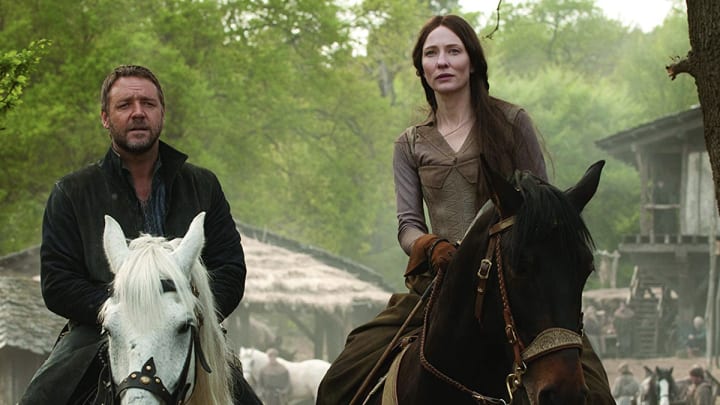
The film boasts a stellar cast, headlined by Russell Crowe as Robin Longstride/Loxley. Crowe brings a gravitas and physicality to the role, portraying Robin as a battle-hardened soldier burdened by responsibility and driven by a sense of justice. His performance is more restrained and introspective than previous Robin Hood portrayals, focusing on the character's internal struggles and moral compass.
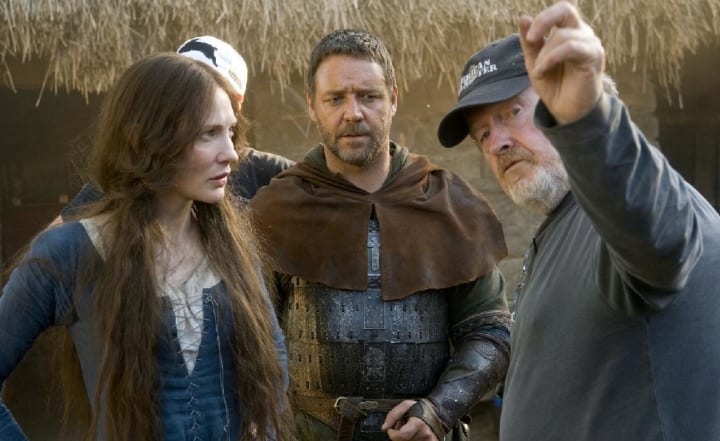
Cate Blanchett plays Lady Marian Loxley, the widow of Sir Robert. Blanchett injects a strong and independent spirit into the character, portraying Marian as a capable and resourceful woman who runs the Loxley estate and supports her community. Their on-screen chemistry, while not overtly romantic, is palpable and underscores the deep connection between Robin and Marian.
Mark Strong shines as Godfrey, the ruthless and treacherous villain. Strong is adept at playing morally ambiguous characters, and his portrayal of Godfrey is chilling and manipulative, making him a truly formidable adversary. Oscar Isaac, as King John, portrays a petulant and insecure monarch easily swayed by his advisors, highlighting the instability of the English crown. Max von Sydow, as Sir Walter Loxley, delivers a moving performance as a wise and compassionate father figure.
The supporting cast, including William Hurt as William Marshal and Danny Huston as King Richard, adds depth and complexity to the political landscape.
Reviews:
'Robin Hood' garnered mixed reviews from critics and audiences. Many praised the film's visual spectacle, Crowe and Blanchett's performances, and the attempt to provide a more grounded and historically accurate portrayal of the legend. However, some critics felt the film was too long and lacked the swashbuckling adventure and romance associated with previous Robin Hood adaptations.
Positive reviews highlighted Scott's masterful direction and the film's epic scope. Critics appreciated the detailed world-building and the emphasis on the political and social context of the time. Crowe's performance was generally lauded, with many praising his ability to portray both the physical prowess and the emotional depth of the character.
Negative reviews criticized the film's pacing and perceived lack of excitement. Some felt that the film spent too much time establishing the political backdrop and not enough time developing the characters and their relationships. The ending, which sets up a sequel that never materialized, was also criticized as being anticlimactic.
Audience reception was similarly divided. While many appreciated the film's realism and scale, others found it lacking in the charm and adventure they expected from a Robin Hood movie. The absence of the traditional Merry Men (apart from brief appearances) was also a point of contention for some viewers.
Production:
The production of 'Robin Hood' was a complex and ambitious undertaking. The film was initially conceived as 'Nottingham', a project that would have focused on the Sheriff of Nottingham as the protagonist, with Crowe playing both Robin Hood and the Sheriff. However, this concept was eventually scrapped in favor of a more traditional Robin Hood origin story.
The film's development was plagued by delays and script revisions. Several writers worked on the project, and the final screenplay was a collaborative effort. The budget was estimated to be around $200 million, making it one of the most expensive Robin Hood films ever made.
Writing and Casting:
The writing process was a turbulent one, with multiple rewrites and revisions. The initial script, focusing on the Sheriff of Nottingham, was deemed too unconventional by the studio, leading to a complete overhaul. The final screenplay, credited to Brian Helgeland, Etan Cohen, and Ridley Scott, aimed to blend historical accuracy with the familiar Robin Hood mythology.
The casting process was relatively straightforward. Russell Crowe was attached to the project from the beginning, initially in the dual role of Robin Hood and the Sheriff of Nottingham. Cate Blanchett was cast as Lady Marian, bringing her considerable talent and screen presence to the role. Mark Strong was a natural choice for the villainous Godfrey, having previously worked with Scott on 'Body of Lies'. Oscar Isaac, then a relatively unknown actor, was cast as King John, a decision that proved to be inspired.
Principal Photography:
Principal photography began in March 2009 and lasted for several months. Filming took place in various locations in England and Wales, including Windsor Great Park, Sherwood Forest, and Freshwater West beach in Pembrokeshire. The production team faced numerous challenges, including adverse weather conditions and logistical difficulties.
One humorous anecdote from the set involves Russell Crowe's affinity for improvisation. During a scene where Robin rallies the people of Nottingham, Crowe reportedly ad-libbed a speech that was so impassioned and inspiring that it brought tears to the eyes of some of the extras. Scott, impressed by Crowe's performance, decided to include the ad-libbed lines in the final cut.
Production Design:
The production design of 'Robin Hood' is meticulously detailed and strives for historical accuracy. The sets are gritty and realistic, depicting the harsh living conditions of medieval England. The costumes are equally impressive, reflecting the social hierarchy and the practical needs of the characters.
The visual aesthetics of the film are dark and atmospheric, creating a sense of foreboding and political unrest. Cinematographer John Mathieson's use of natural light and earthy tones enhances the film's realism and immerses the viewer in the medieval world.
Sound Design & Music:
The sound design of 'Robin Hood' is immersive and impactful, creating a realistic and visceral experience. The sounds of battle, the creaking of ships, and the rustling of leaves in Sherwood Forest all contribute to the film's atmosphere.
The musical score, composed by Marc Streitenfeld, is grand and epic, reflecting the scale and ambition of the film. The score blends traditional orchestral elements with folk melodies, creating a unique and evocative soundscape.
Visual Effects:
The visual effects in 'Robin Hood' are generally well-executed, enhancing the film's visual spectacle without overpowering the narrative. The large-scale battle sequences, in particular, benefit from the use of CGI, creating a sense of scale and chaos. The CGI is subtly integrated into the film, ensuring that it doesn't detract from the realism of the medieval setting.
Influences:
'Robin Hood' draws inspiration from various sources, including historical accounts of the Magna Carta and the reign of King John. The film also references previous Robin Hood adaptations, while simultaneously attempting to subvert the familiar tropes. Ridley Scott's own previous historical dramas, such as 'Gladiator' and 'Kingdom of Heaven', also served as influences, particularly in terms of the film's epic scale and gritty realism.
Scientific Knowledge :
While 'Robin Hood' is not a science fiction film, it incorporates some basic scientific principles related to archery, weaponry, and siege warfare. The film accurately depicts the mechanics of archery, showing how archers used different types of bows and arrows to achieve different effects. The film also portrays the use of siege engines and other military technologies of the time.
Marketing, Release & Box Office:
The marketing campaign for 'Robin Hood' was extensive, leveraging Russell Crowe and Cate Blanchett's star power and Ridley Scott's reputation as a master filmmaker. The trailers emphasized the film's epic scale and action-packed sequences, appealing to a broad audience.
The film was released worldwide in May 2010, opening at number one in many territories. Despite the mixed reviews, 'Robin Hood' was a commercial success, grossing over $320 million worldwide. While not a blockbuster on the scale of some of Scott's other films, it proved that the legend of Robin Hood still had box office appeal.
Critical Responses:
In conclusion, Ridley Scott's 'Robin Hood' (2010) is a complex and ambitious film that offers a different perspective on the familiar legend. While the film's attempt to provide a more grounded and historically accurate portrayal of Robin Hood was appreciated by some, others found it lacking in the charm and adventure of previous adaptations. The film's mixed critical reception and divided audience response ultimately prevented it from becoming a classic, but it remains a visually stunning and thought-provoking reimagining of one of the world's most enduring folk tales. It stands as a testament to the enduring power of the Robin Hood legend and the enduring appeal of historical epics, even if it didn't quite hit the bullseye with everyone.
About the Creator
Xavier
Global news reporter covering science, tech, environment, Entertainment & sports. Delivering balanced insights to inform and inspire readers worldwide. Sometimes a poet.
Dante's Peak (1997) - A Movie Review
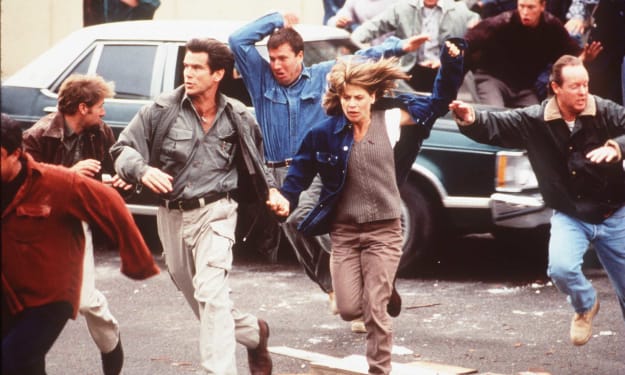
We need to escape now before the volcano erupts! Dante’s Peak is a 1997 film. Harry Dalton, a volcanologist, arrives in a small town where there have been signs of an active volcano. As he scopes the town, he discovers a dormant volcano that isn’t long until it awakens.
By Marielle Sabbag4 days ago in Geeks


Comments (1)
Nice work! I really enjoyed this. Keep up the good work.