
A Filmmaker's Guide to: "The Assassination of Jesse James by the Coward Robert Ford" (2007)
An Appreciation of Cinema (Pt.9)


In this chapter of ‘the filmmaker’s guide’ we are going to explore some of the films that have changed our outlook of the possibilities in cinema in some way, shape or form. These can include, but are not limited to: revolutionary cinematography, narratives that challenge the social structure and the common view, trademark styles of auter cinema, brilliant adaptations of novels and other works, films of philosophical value and films that touch our hearts and souls with their incredible underlying messages and morals. Within each of the films in this chapter there is a certain something that makes them special and a certain something that makes them linger long after we have watched them for the first time. Lasting impressions are difficult to create, but I think that the films we will briefly touch on in this chapter are some of the films we will never ever forget.
“The Assassination of Jesse James by the Coward Robert Ford” (2007) dir. by Andrew Dominik

One of the most visually beautiful films of the 2nd Millennia, this film has everything an emotive film should have. There are these incredible moments of complete silence in the film, shots of facial expressions that remain unmatched in the films after it. The movie itself is a brilliant example of high-drama and high-intensity without making it cliché or over-the-top. It’s a masterpiece in its design with the shots of the assassination and aftermath being some of my own personal favourites in western cinematic history. It is basically the new-age western blended with the modernism of dramatic cinema, intense emotion and the kind of feeling you get from watching something along the lines of “Titanic” (1997). It creates the same feelings and thus, it redesigned, re-evaluated and revamped the meaning of the American Western Film.

First shown at the Venice Film Festival on September 2nd 2007, it was then released nineteen days later to the general public and immediately gained recognition amongst critics as being a film filled with great and intense performances by the leading men: Brad Pitt, Casey Affleck and Sam Rockwell. It was nominated for two Academy Awards including the award for Best Cinematography and Best Supporting Actor for Casey Affleck. It won the Chicago Film Critics Award for Best Cinematography and the Dallas-Fort Worth Critics Award for the same category. With Best Cinematography for the film also being won at the Houston and Florida Film Critics Awards, you could honestly tell that the cinema style of the film was something to behold and it was all thanks to Roger Deakins. The National Board of Review and the Society of Film Critics gave the Best Supporting Actor Award to Casey Affleck. As did the San Fransisco Film Critics and Satellite Movie Awards. But, it was definitely Roger Deakins’ cinematography that took the majority of the awards for that movie, it was something unrivalled and picturesque, even in the depiction of death he just could not go wrong.
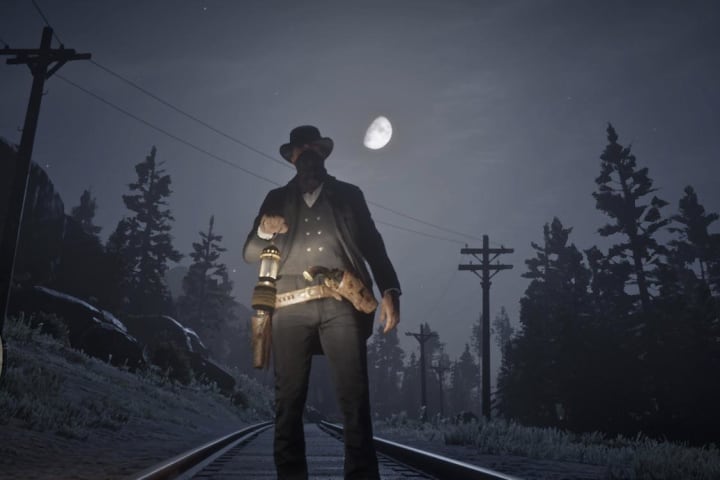
He was ashamed of his persiflage, his boasting, his pretensions of courage and ruthlessness; he was sorry about his cold-bloodedness, his dispassion, his inability to express what he now believed was the case- that he truly regretted killing Jesse, that he missed the man as much as anybody and wished his murder hadn't been necessary. Even as he circulated his saloon he knew that the smiles disappeared when he passed by. He received so many menacing letters that he could read them without any reaction except curiosity. He kept to his apartment all day, flipping over playing cards, looking at his destiny in every King and Jack. Edward O'Kelly came up from Bachelor at one P.M. on the 8th. He had no grand scheme. No strategy. No agreement with higher authorities. Nothing but a vague longing for glory, and a generalised wish for revenge against Robert Ford. Edward O'Kelly would be ordered to serve a life sentence in the Colorado Penitentiary for second degree murder. Over seven thousand signatures would eventually be gathered in a petition asking for O'Kelly's release, and in 1902, Governor James B. Ullman would pardon the man. There would be no eulogies for Bob, no photographs of his body would be sold in sundries stores, no people would crowd the streets in the rain to see his funeral cortege, no biographies would be written about him, no children named after him, no one would ever pay twenty-five cents to stand in the rooms he grew up in. The shotgun would ignite, and Ella Mae would scream, but Robert Ford would only lay on the floor and look at the ceiling, the light going out of his eyes before he could find the right words.
- Narrator, "The Assassination of Jesse James by the Coward Robert Ford"(2007)

About the Creator
Annie Kapur
I am:
🙋🏽♀️ Annie
📚 Avid Reader
📝 Reviewer and Commentator
🎓 Post-Grad Millennial (M.A)
***
I have:
📖 280K+ reads on Vocal
🫶🏼 Love for reading & research
🦋/X @AnnieWithBooks
***
🏡 UK
Keep reading
More stories from Annie Kapur and writers in Geeks and other communities.
A Filmmaker's Guide to: "The Third Man" (1949)
In this chapter of ‘the filmmaker’s guide’ we are going to explore some of the films that have changed our outlook of the possibilities in cinema in some way, shape or form. These can include, but are not limited to: revolutionary cinematography, narratives that challenge the social structure and the common view, trademark styles of auter cinema, brilliant adaptations of novels and other works, films of philosophical value and films that touch our hearts and souls with their incredible underlying messages and morals. Within each of the films in this chapter there is a certain something that makes them special and a certain something that makes them linger long after we have watched them for the first time. Lasting impressions are difficult to create, but I think that the films we will briefly touch on in this chapter are some of the films we will never ever forget.
By Annie Kapur5 years ago in Geeks
Marvel Zombie
The last entry into our 2025 superhero projects catalogue is Marvel Zombies. This was a show that was anticipated by absolutely no one and it disappeared from the public consciousness as quickly as it was released. There was nothing special about the project that made it a must see, or a must remember. In fact if anything it's a must forget.
By Alexandrea Callaghan26 days ago in Geeks
Sentimental Value
Sentimental Value has shown up well during awards season, and it has a stellar cast. It has been one of my most anticipated watches this year and now that the Oscars are breathing down my neck I have finally made time to actually see it. After meeting the main cast members I got even more excited to see it.
By Alexandrea Callaghan6 days ago in Geeks
Smart phones, Humans and Aliens.
WARNING. I will be tapping into one of your favorite creative tensions: The absurdity of humans worshipping their glowing rectangles as if they were tiny oracles. There’s something deliciously poetic about that contradiction, and it lends itself beautifully to an instructive proviso.
By Novel Allen5 days ago in Poets


Comments
There are no comments for this story
Be the first to respond and start the conversation.