
7-Zip Fixes Bug That Bypasses Windows MoTW Security Warnings – Patch Now
7-Zip, one of the most popular open-source file archivers, has addressed a high-severity vulnerability in its latest patch that could allow attackers to bypass the Mark of the Web (MoTW) security feature in Windows.

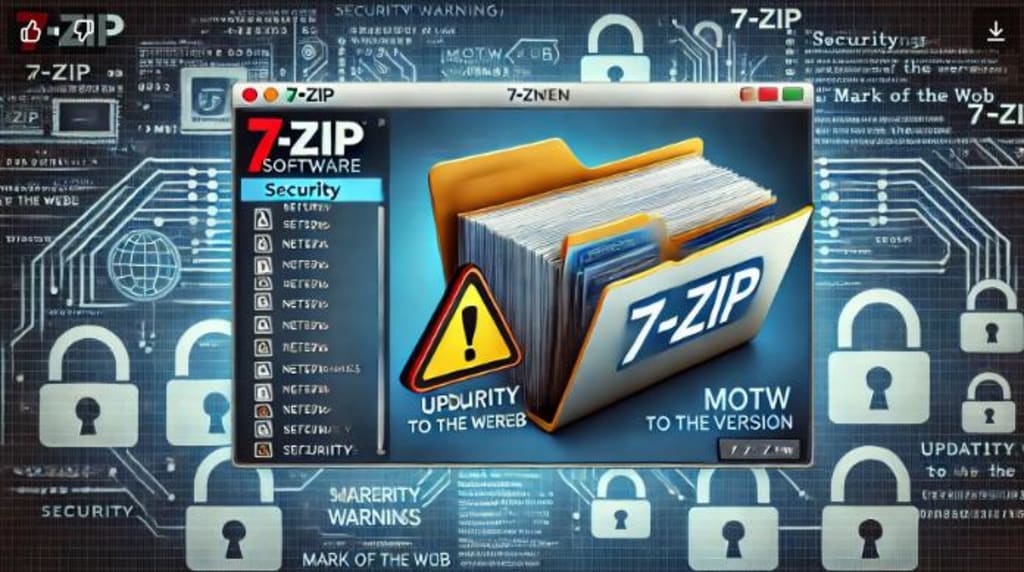
7-Zip, one of the most popular open-source file archivers, has addressed a high-severity vulnerability in its latest patch that could allow attackers to bypass the Mark of the Web (MoTW) security feature in Windows. This flaw, tracked as CVE-2025-0411, poses significant risks by enabling malicious code execution on users' computers when extracting files from nested archives.
Understanding the Mark of the Web (MoTW)
The Mark of the Web is a security feature introduced by Microsoft to provide an additional layer of protection when handling files from potentially untrusted sources. Files downloaded from the internet or received from untrusted sources are tagged with the MoTW flag (also known as 'Zone.Id'), which informs Windows and associated applications to treat these files with caution. When a file with MoTW is executed, users are alerted with security warnings about potential risks, such as malware infections, allowing them to take necessary precautions. This flag is particularly important for preventing the execution of malicious files. When users open files with the MoTW flag, Windows, web browsers, and other software impose security restrictions. For instance, Microsoft Office will open documents in Protected View, automatically enabling read-only mode and disabling all macros. This ensures that users are protected from potentially harmful scripts and executable content that could compromise system security.
The Vulnerability: CVE-2025-0411
The recently patched vulnerability in 7-Zip could allow attackers to exploit nested archives (archives within archives). When users extract files from these nested archives, the MoTW flag is not correctly propagated, bypassing the intended security warnings. This leaves users vulnerable to malicious code execution without triggering the usual security measures. According to Trend Micro’s advisory, the flaw enables remote attackers to execute arbitrary code on compromised systems if the target interacts with malicious files, either by visiting a malicious website or opening a crafted file. This could allow attackers to perform various malicious activities, including stealing sensitive information, installing ransomware, or launching other forms of malware.
The Role of 7-Zip Patch
7-Zip has swiftly addressed this critical issue by releasing version 24.09 on November 30, 2024. This update ensures that MoTW flags are appropriately propagated for files extracted from nested archives, thereby restoring the intended security protections. Without this patch, users who extract files from nested archives could inadvertently bypass security warnings, leaving their systems exposed to potential threats. By updating to the latest version, users can ensure that all extracted files are marked correctly with the MoTW flag, reinforcing Windows’ security mechanisms against exploitation.
Risks of Delayed Patching
One of the significant concerns surrounding this vulnerability is that 7-Zip does not feature an automatic update mechanism. This absence means many users may continue using older, vulnerable versions of the software, putting them at risk of exploitation by threat actors. Given the frequent use of 7-Zip for extracting files from compressed archives, such security flaws can easily be weaponized to deliver malware. Threat actors could exploit this vulnerability to execute scripts, drop malicious payloads, or infiltrate systems with ransomware. These types of attacks are increasingly sophisticated, making it imperative for users to stay vigilant and ensure they are using the most secure versions of software.
Previous Exploits Using MoTW Bypass
The MoTW bypass vulnerability has been a favored tool for malicious actors to bypass Windows security mechanisms. Recent instances include:
DarkGate Malware: Exploited CVE-2024-38213 to install malware disguised as legitimate software like Apple iTunes and NVIDIA drivers. This bypass was used by attackers to circumvent SmartScreen protection, leading to infections with various types of malware.
Water Hydra/DarkCasino: Used CVE-2024-21412 to distribute the DarkMe remote access trojan (RAT), targeting financial trading forums and other communities. This allowed attackers to steal sensitive data and maintain access to compromised systems undetected.
These examples highlight how critical it is for users to remain up-to-date with patches that address such vulnerabilities. By promptly addressing these flaws, software developers like 7-Zip play a vital role in mitigating potential security risks.
Immediate Action Required
To protect against potential threats, users should update to the latest version (24.09) immediately. Security patches are crucial for safeguarding sensitive data and system integrity from evolving cyber threats.
Conclusion
7-Zip's latest update successfully addresses the critical MoTW bypass vulnerability, ensuring that files extracted from nested archives are safeguarded against exploitation. However, with no auto-update feature, manual updates are necessary to maintain security. Users are advised to act promptly to avoid falling victim to malicious attacks exploiting this flaw.
About the Creator
WIRE TOR - Ethical Hacking Services
WIRE TOR is a Cyber Intelligence Company that Provides Pentest & Cybersecurity News About IT, Web, Mobile (iOS, Android), API, Cloud, IoT, Network, Application, System, Red teaming, Social Engineering, Wireless, And Source Code.
Keep reading
More stories from WIRE TOR - Ethical Hacking Services and writers in Geeks and other communities.
HPE Investigates Breach Claims Amid Allegations of Source Code Theft
Hewlett Packard Enterprise (HPE) is under scrutiny following a claim by a hacking group, IntelBroker, that they accessed and stole sensitive information from the company's developer environments. The tech giant, known for its innovation in enterprise solutions, has launched an investigation while asserting that no concrete evidence of a breach has been found.
By WIRE TOR - Ethical Hacking Servicesabout a year ago in Geeks
A Knight of the Seven Kingdoms Series Review (Season 1)
As one of the biggest properties in fantasy, A Song of Ice and Fire remains immensely popular with audiences. After reaching far into the past with House of the Dragon, a second spin-off was on the cards. A Knight of the Seven Kingdoms serves up a bite-sized slice of action and drama, but it still claims a spot among the best small-screen titles.
By Robert Cain5 days ago in Geeks
Invincible Power Rankings
The world of Invincible isn’t built on clean heroics or simple good-versus-evil lines. It’s a universe where cities fall in minutes, loyalties shatter without warning, and strength isn’t just about who can throw the hardest punch — it’s about who survives when entire civilizations go to war. Some fighters look unstoppable until they face someone faster. Others seem secondary until the body count starts rising. And then there are the beings so overwhelmingly powerful that every battle feels less like a fight and more like a reckoning.
By Top Ranked8 days ago in Geeks




Comments
There are no comments for this story
Be the first to respond and start the conversation.