
What Happens to Your Brain When You Play Minecraft Every Day?
The Neuroscience Behind Blocks and Creativity

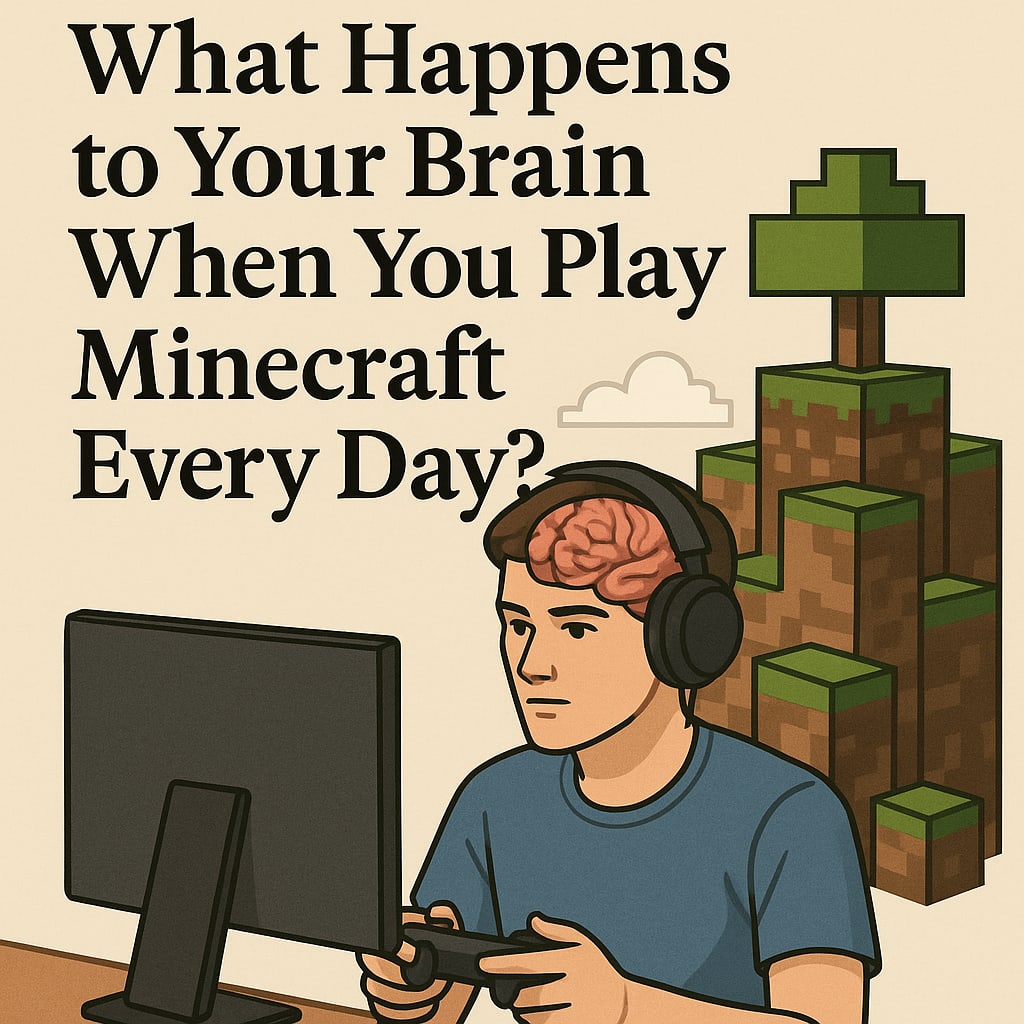
In recent years, Minecraft has evolved from a simple sandbox game into a global cultural phenomenon. With over 140 million monthly active users, it's more than just a way to pass time—it's shaping how a new generation learns, creates, and interacts with digital worlds. But have you ever wondered what really happens to your brain when you play Minecraft games every day?
The Neuroscience Behind Blocks and Creativity
Research suggests that Minecraft stimulates the brain in multiple dimensions. From spatial reasoning and memory enhancement to problem-solving and creativity, the game challenges the brain in a dynamic way. Studies from institutions like the University of Oxford have shown that players who engage in open-ended gaming environments like Minecraft tend to show increased levels of cognitive flexibility and lateral thinking.
Memory and Spatial Awareness
As players build structures, explore complex caves, or survive the night, they rely heavily on memory and spatial orientation. Scientists liken this to the way we develop navigation skills in real life. Regular players—especially young ones—often display improved ability to recall visual and spatial details.
This is especially relevant for any gamer looking to improve real-world problem-solving abilities. The game's open-ended structure encourages experimentation, trial and error, and forward planning—all critical cognitive skills.
Emotional Benefits: Reducing Anxiety and Boosting Confidence
Minecraft’s peaceful mode or creative building sessions can have a calming effect, similar to mindfulness exercises. Therapists have even incorporated the game into sessions for children with autism or ADHD. It allows them to express emotions, plan interactions, and feel in control—offering a safe environment where they can explore without pressure.
The Social Side of Minecraft
With multiplayer servers and countless online communities, Minecraft is also a powerful social tool. Whether you’re collaborating with friends or joining massive public servers, the game fosters teamwork, communication, and digital citizenship. In a time when online interaction is becoming the norm, knowing how to behave and communicate respectfully in virtual environments is more important than ever for every gamer.
Minecraft as an Educational Tool
One of the lesser-known yet incredibly impactful aspects of Minecraft is its growing role in education. Schools around the world are beginning to integrate Minecraft: Education Edition into their classrooms to teach everything from mathematics and history to computer programming and environmental science.
By presenting information in an interactive and immersive environment, students engage with the material on a deeper level. Rather than simply reading about the water cycle, for instance, students can build it, manipulate it, and see its effects firsthand. This experiential learning is proven to improve both retention and enthusiasm for learning.
In a world where traditional education methods often fail to capture the attention of tech-savvy younger generations, games like Minecraft are bridging the gap. Teachers report higher levels of student engagement and collaboration when Minecraft is part of the curriculum. For a gamer, the idea that their favorite hobby can align with real-world education goals is both empowering and exciting.
Enhancing Logical Thinking and Programming Skills
Minecraft also serves as a foundation for learning basic programming concepts through its redstone mechanics and various modding tools. Redstone allows players to build complex circuits, triggering doors, traps, light sensors, and more. These mechanics are grounded in real-world electrical engineering principles.
More advanced players even dive into Minecraft’s modding community, learning programming languages like Java or using platforms like Scratch to create mini-games within the game itself. This early exposure to coding has led many to pursue careers in software development, game design, or engineering.
Even if you're not looking to become a developer, understanding how logic gates work or how automation functions can translate into valuable skills—ones that employers in our increasingly digital economy highly prize.
A Gateway to Digital Creativity and Storytelling
Minecraft is more than just blocks and biomes. It’s a powerful platform for digital storytelling and world-building. Players have recreated cities, constructed full-scale replicas of iconic movie locations, and even built interactive adventure maps that rival commercial game releases in quality and creativity.
Many YouTubers and streamers built their careers around Minecraft by telling stories within the game’s universe—creating machinima-style series, role-playing scenarios, or educational tutorials. In doing so, they didn’t just entertain millions—they learned about video editing, narrative development, voice acting, and audience engagement.
Whether you're creating your own mini-game, writing dialogue for NPCs, or building immersive lore-filled worlds, Minecraft offers the tools to develop and showcase your creativity in ways few other games can match.
The Therapeutic Power of Building Worlds
In an era marked by stress, overstimulation, and digital burnout, Minecraft stands out as a rare safe haven. The act of mining resources, shaping terrain, and designing structures is meditative for many players. It provides a sense of control, progress, and accomplishment that can be hard to come by in real life.
Therapists and mental health professionals increasingly recognize the therapeutic potential of gaming when used intentionally. Some have begun using Minecraft as a tool to work with patients who have difficulty expressing themselves, such as children on the autism spectrum or those dealing with trauma. The game’s low-pressure environment allows for exploration, emotional expression, and constructive goal-setting—all within a world that the player controls.
Is There a Downside?
Like anything, moderation is key. Excessive play, especially without breaks, can lead to eye strain, disrupted sleep patterns, and reduced physical activity. That’s why experts recommend setting time limits and incorporating regular pauses to ensure a healthy gaming routine.
Final Thoughts
So, what happens to your brain when you play Minecraft every day? The answer is surprisingly positive—if played in moderation. It can make you more creative, better at solving problems, and even improve your memory. But most importantly, it offers a joyful, imaginative escape that so many people need in today’s fast-paced world.
Whether you're a casual player or a hardcore gamer, it might just be time to embrace the blocks.
About the Creator
How Fortnite Became More Than Just a Game
When Fortnite launched in 2017, it was widely seen as just another multiplayer video game. Nearly a decade later, that view no longer fits reality. Fortnite has grown into a global digital platform that blends gaming, creativity, entertainment, and social interaction. This transformation did not happen overnight, and it did not rely on hype alone. Instead, it was driven by consistent innovation, community involvement, and a shift in how people use online spaces.
By Games Mode Ona day ago in Gamers
Rsvsr Unlock Big Rewards with GOP 3’s Jackpot Wheels
In Governor of Poker 3, winning doesn’t always come from the perfect hand or outsmarting your opponent at the table. Sometimes, the biggest surprises—and the richest rewards—come from something far simpler: a spin of the wheel. GOP 3’s Jackpot Wheels—including the Golden, Diamond, Ruby, and Emerald Wheels—offer players an exciting, chance-driven way to earn chips, spins, and rare in-game items.
By Billo Nali7 days ago in Gamers



Comments
There are no comments for this story
Be the first to respond and start the conversation.