
THE USE OF DRONES IN OLYMPIC COVERAGE
Revolutionizing Olympic Coverage:The Role of Drones in Capturing the Action.

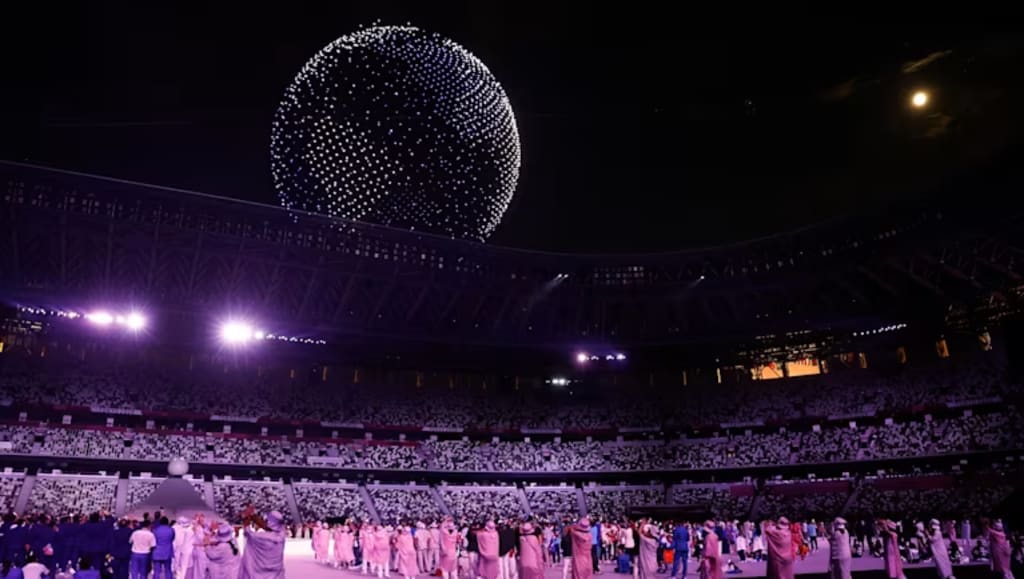
The Olympic Games, a global celebration of athletic excellence, rely heavily on innovative broadcasting technologies to bring the excitement of the event to millions worldwide. Among the most transformative technologies in recent years is the use of drones for coverage. These aerial devices have revolutionized how the games are filmed, offering viewers unprecedented perspectives, enhancing storytelling, and ensuring comprehensive event coverage.
(I)Enhanced Visual Storytelling
Drones have redefined the visual language of Olympic broadcasting. Traditional cameras, whether handheld or mounted on cranes, have limitations in terms of angles and mobility. Drones overcome these challenges, offering dynamic, sweeping aerial views that capture the scale and grandeur of the venues. For instance, during the Tokyo 2020 Olympics, drones provided breathtaking panoramas of the city’s landmarks integrated with live sports coverage, enriching the viewer’s experience.
In disciplines like rowing, cycling, and marathons, drones excel in tracking athletes over long distances. Their ability to hover, move swiftly, and adjust angles ensures continuous coverage without disrupting the athletes. In equestrian events, for instance, drones offer a bird's-eye view of the entire course, showcasing the athlete's strategy and the horse's movement simultaneously.
Moreover, drones are instrumental in telling the story of the Olympics beyond the sporting events. Aerial shots of the Olympic Village, opening and closing ceremonies, and cultural performances help portray the event's spirit and connect viewers emotionally to the host nation.
(II)Technical Advantages
The agility and versatility of drones provide a distinct edge over traditional filming methods. Equipped with high-definition cameras and stabilization technologies, drones capture crystal-clear footage even during rapid movements. They are particularly effective in outdoor events, where traditional camera setups may be limited by terrain or logistics.
For example, during the Winter Olympics, drones have been used to film events like skiing and snowboarding. They can follow athletes down slopes or trails at high speeds while maintaining steady and immersive shots. Similarly, in aquatic sports, drones provide overhead shots of swimmers and synchronize their movements with precision, offering viewers a unique perspective of the race.
Drones are also cost-effective compared to helicopters, which were traditionally used for aerial shots. They consume less fuel, are easier to deploy, and require minimal crew for operation. This economic efficiency has allowed broadcasters to allocate resources to other areas of production, enhancing overall coverage quality.
(III)Safety and Accessibility
One of the key reasons drones have become a staple in Olympic broadcasting is their ability to operate in challenging environments. Unlike manned helicopters, drones can fly closer to the action without posing significant risks to the crew or athletes. Their small size and maneuverability allow them to navigate through confined spaces, such as indoor arenas, with ease.
In the context of the COVID-19 pandemic, drones also offered a contactless solution for capturing footage. This minimized the need for large camera crews and helped maintain social distancing protocols while ensuring comprehensive coverage.
Furthermore, drones provide coverage in scenarios where other equipment would be impractical. For example, in high-altitude events or extreme weather conditions, drones can operate efficiently, capturing footage that would otherwise be impossible to obtain.
(IV)Challenges and Considerations
Despite their advantages, the use of drones in Olympic coverage is not without challenges. The most significant concern is safety. A malfunctioning drone can pose risks to athletes and spectators, particularly in crowded venues. Stringent regulations and meticulous planning are required to ensure safe operations.
Noise is another consideration. While modern drones are quieter, their presence can still be distracting in sports requiring concentration, such as archery or gymnastics. Organizers and broadcasters must carefully plan drone routes and operational timings to minimize disturbances.
Privacy concerns also arise with the use of drones, particularly in capturing footage of athletes or locations outside the competition areas. Ensuring ethical use and adhering to privacy regulations is paramount to maintaining the integrity of Olympic broadcasting.
(V)Future Prospects
The use of drones in Olympic coverage is expected to expand further as technology evolves. Advances in AI and automation will likely enhance their capabilities, enabling drones to make real-time decisions about angles and movements. Improved battery life and quieter operation will address some current limitations, making them even more versatile.
Drones equipped with augmented reality (AR) capabilities could overlay real-time statistics, athlete information, or 3D graphics directly into the broadcast. This would provide viewers with a more interactive and informative experience, merging the excitement of the games with data-driven insights.
Additionally, as 5G networks become more widespread, drones will benefit from faster data transmission, enabling ultra-high-definition live streaming without delays. This will further enhance the quality of Olympic broadcasts and bring viewers closer to the action.
In The End
The use of drones in Olympic coverage has transformed how audiences experience the games. By offering unique perspectives, improving safety, and reducing costs, drones have become indispensable in modern sports broadcasting. While challenges like safety and privacy require careful management, the potential for innovation is immense. As technology continues to evolve, drones will play an even greater role in showcasing the Olympic spirit and bringing the magic of the games to viewers around the world.
About the Creator
Badhan Sen
Myself Badhan, I am a professional writer.I like to share some stories with my friends.
Keep reading
More stories from Badhan Sen and writers in Gamers and other communities.
HOW TECHNOLOGY HAS TRANSFORMED OLYMPIC BROADCASTING
The Olympic Games, a global spectacle celebrating athletic excellence, have undergone a profound transformation in their broadcasting over the years. From limited local radio coverage to worldwide, multi-platform experiences, advancements in technology have revolutionized how the Olympics are delivered to audiences around the globe. These changes have enhanced accessibility, improved viewer engagement, and offered unprecedented coverage of the events.
By Badhan Senabout a year ago in Gamers
The Future of Gaming with Cross Platform Game Development
The gaming industry is evolving faster than ever, and one major reason behind this shift is cross platform game development. Players today expect games to work smoothly across mobile, PC, console, and even web platforms without losing quality or performance. For developers and publishers, this approach is no longer optional. It is becoming a practical way to reach a wider audience, reduce development effort, and stay competitive in a crowded market. As technology advances, cross platform game development is shaping how games are built, launched, and experienced worldwide.
By gammming world 3 days ago in Gamers
U4gm Smarter Temple Runs in PoE 2: Hotfix 0.4.0d Explained
Path of Exile 2 players have been buzzing about Hotfix 0.4.0d—and for good reason. This patch didn’t just tweak numbers; it fundamentally changed how the Vaal Temple works, making it more strategic, more rewarding, and more engaging.
By Dangyc Dinga day ago in Gamers
Ludacris and Nelly draw backlash over bookings at MAGA-coded music festival
Ludacris and Nelly headlining a mostly right-wing event is good for them. It’s also great for the genre of hip hop. The two rap veterans have showcased their talents on other stages. Why can’t they perform for mostly MAGA folks and grab that bag?
By Skyler Saunders3 days ago in Beat


Comments (1)
Great article and there always seems to be good and bad in everything like the use of drones or something similar.