
THE OLYMPICS AS A STAGE FOR POLITICAL PROTEST AND HUMAN RIGHTS ISSUES
The Olympics:A Global Platform for Political Protest and Human Advocacy.

- One of the most iconic instances of political protest at the Olympics occurred at the 1968 Summer Games in Mexico City. The event was overshadowed by the actions of American sprinters Tommie Smith and John Carlos, who raised their fists in a Black Power salute during the medal ceremony. Smith and Carlos were protesting racial inequality and discrimination in the United States. Their actions were a bold statement against systemic racism and became an enduring symbol of athlete activism. This protest resonated globally and drew attention to the Civil Rights Movement in the U.S., making the Olympics a powerful forum for raising awareness about social justice issues.
- However, the 1968 protest was not without consequences. Smith and Carlos faced significant backlash and were expelled from the Games, as their actions were deemed politically inappropriate by the International Olympic Committee (IOC). Despite the sanctions, their protest highlighted the power of athletes to use their platform to address political and human rights concerns, setting a precedent for future Olympic protests.
- The Olympics continued to serve as a stage for political protest throughout the 20th and 21st centuries. In 1980, the U.S. led a boycott of the Summer Olympics in Moscow to protest the Soviet Union’s invasion of Afghanistan. In retaliation, the Soviet Union boycotted the 1984 Summer Games in Los Angeles. These boycotts, though not direct protests by athletes themselves, illustrated how the Olympics could be used to make political statements on the global stage. The boycott movements had significant geopolitical implications, with countries using the Games to express discontent with the actions of others.
- Beyond boycotts, the Olympics have been a venue for human rights issues related to host countries. The 1936 Berlin Olympics, for example, became infamous as a propaganda tool for Nazi Germany. Adolf Hitler sought to use the event to promote his vision of Aryan supremacy and showcase Nazi Germany’s power and prestige. Despite Hitler’s attempts to exclude Jewish athletes from the Games, African American sprinter Jesse Owens won four gold medals, disproving Nazi racial theories. Owens’ victory served as a powerful counter-narrative to Nazi ideology, and his participation highlighted the intersection of sports and politics, as well as the ongoing struggles for racial equality.
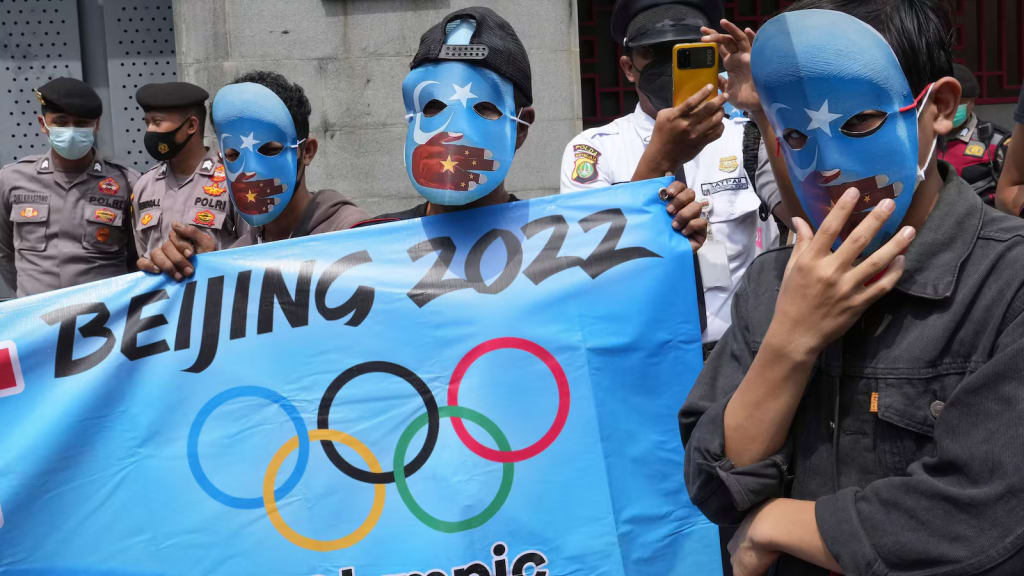
- More recently, the Beijing 2008 Summer Olympics were marked by widespread human rights concerns. The Chinese government faced international criticism for its policies in Tibet, the imprisonment of political dissidents, and restrictions on freedom of speech. Many human rights activists called for a boycott of the Games to pressure China to address these issues. During the Games, athletes and protestors used the event to raise awareness about human rights violations in China. For instance, some athletes wore symbolic pins or made gestures during their events to show solidarity with Tibet and to protest China's political actions. The Beijing Games were a reminder of how international events like the Olympics can shine a spotlight on human rights abuses and bring global attention to issues that might otherwise be overlooked.
- Similarly, the 2014 Sochi Winter Olympics in Russia were overshadowed by the country's controversial anti-LGBTQ+ laws. The Russian government faced international condemnation for enacting legislation that banned the promotion of "gay propaganda" in public spaces. The event became a flashpoint for LGBTQ+ rights, with athletes, activists, and spectators using the Olympics to protest Russia's policies. Some athletes wore rainbow-colored clothing or accessories as a sign of solidarity with the LGBTQ+ community, while others called for a boycott of the Games to pressure the Russian government to change its policies. The protests surrounding the Sochi Olympics further demonstrated how the Olympics have become a global stage for human rights advocacy.
- The role of the Olympics as a platform for political protest and human rights issues has raised important questions about the relationship between sports and politics. The IOC, which is tasked with maintaining the political neutrality of the Games, has often struggled to balance its goal of preserving the integrity of the event with the realities of global politics. Critics argue that by maintaining political neutrality, the IOC may inadvertently silence athletes and prevent them from using their platform to address pressing human rights concerns.
- In recent years, however, the IOC has taken steps to allow greater freedom of expression for athletes while still maintaining a commitment to the Games’ apolitical nature. The organization has introduced new guidelines that permit athletes to express their views on social and political issues, as long as they do so in a way that does not disrupt the competition or violate the rules of the Games. This shift reflects the growing recognition that the Olympics are not merely about sports, but are intertwined with the broader socio-political landscape.
- In conclusion, the Olympics have consistently served as a powerful stage for political protest and the advocacy of human rights. From the Black Power salute of 1968 to protests against human rights violations in China and Russia, the Games have witnessed a wide range of political actions that have drawn attention to issues of race, inequality, freedom, and justice. As the Olympic Games continue to evolve, it is likely that athletes and activists will continue to use this global platform to speak out on issues of human rights and political significance.
About the Creator
Badhan Sen
Myself Badhan, I am a professional writer.I like to share some stories with my friends.
Keep reading
More stories from Badhan Sen and writers in Gamers and other communities.
THE ROLE OF THE OLYMPICS IN ADVANCING WOMEN'S RIGHT IN SPORTS
The Olympics, as one of the most prestigious global sporting events, have played a significant role in advancing women's rights in sports. From its early days as a predominantly male competition to its modern, more inclusive form, the Olympic Games have served as a platform for social change, gender equality, and the empowerment of women in the world of sports. Over the decades, the Games have reflected, and sometimes propelled, the evolution of women's rights within society. This essay explores the role of the Olympics in advancing women's rights, examining key milestones, challenges, and the ongoing struggles for gender equality in sports.
By Badhan Senabout a year ago in Gamers
U4gm Energy Shield, Spirit, and Skill: Witch Meta Explained
If you’ve been diving into Path of Exile 2 lately, you’ve probably noticed that some Witch builds just feel… unstoppable. Fast clears, consistent DPS, and solid survivability seem baked into the top-tier setups. The secret isn’t a single skill or flashy item—it’s a combination of Energy Shield, Spirit stacking, and skill scaling, carefully balanced to create a meta-defining powerhouse.
By Billo Nali5 days ago in Gamers
The Ever-Evolving World of PC Gaming
For more than thirty years, PC gaming has quietly shaped how people interact with digital worlds. What began as simple text commands typed into blinking screens has evolved into richly detailed universes filled with complex characters, competitive environments, and creative expression. While consoles and mobile devices continue to attract large audiences, PC gaming remains distinct because it grows alongside the technology that supports it rather than being limited by fixed hardware cycles.
By Hawaiian Malia6 days ago in Gamers


Comments (1)
Olympics have always been a powerful platform for activism.