
THE ROLE OF THE OLYMPICS IN ADVANCING WOMEN'S RIGHT IN SPORTS
Empowering Women Athletes:The Olympic Movement's Impact on Gender Equality in Sports.

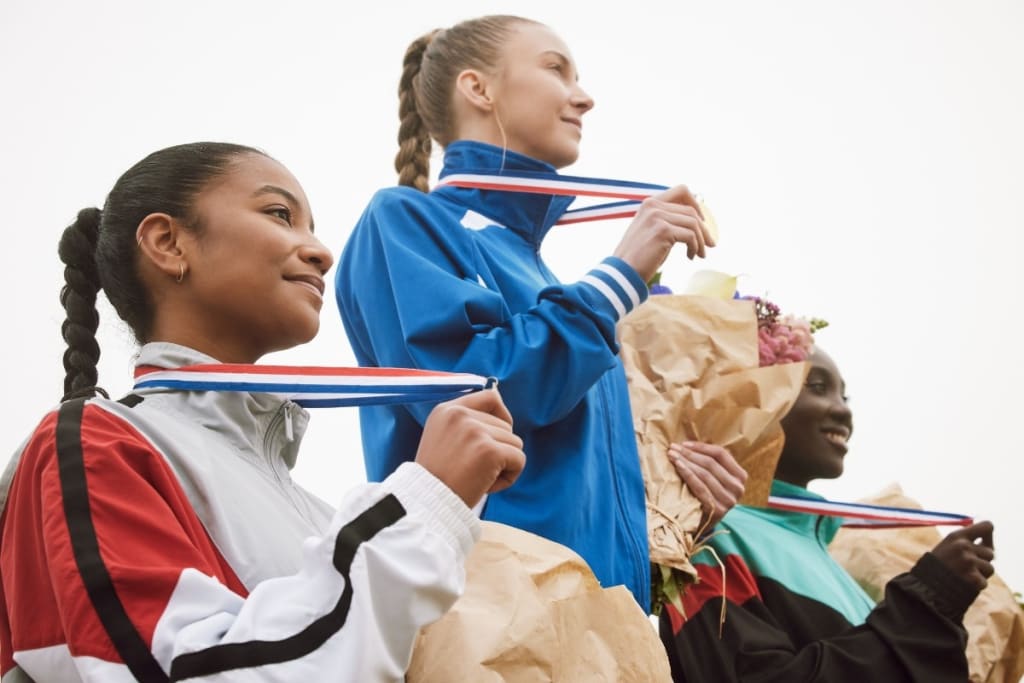
The Olympics, as one of the most prestigious global sporting events, have played a significant role in advancing women's rights in sports. From its early days as a predominantly male competition to its modern, more inclusive form, the Olympic Games have served as a platform for social change, gender equality, and the empowerment of women in the world of sports. Over the decades, the Games have reflected, and sometimes propelled, the evolution of women's rights within society. This essay explores the role of the Olympics in advancing women's rights, examining key milestones, challenges, and the ongoing struggles for gender equality in sports.
Early Exclusion and the Struggle for Inclusion
For much of its history, the Olympics were a male-dominated institution. The first modern Olympic Games, held in 1896 in Athens, did not allow women to compete. This exclusion was based on prevailing societal beliefs that women were too fragile or incapable of participating in such intense physical activities. It was only in the 1900 Paris Games that women were first allowed to compete, but their participation was limited to just a few events: tennis, golf, and croquet. The Olympics, at this stage, did not see women’s sports as legitimate or worthy of the same attention as men's.
The exclusion of women from many events continued for decades, and even when women were included, they were often relegated to a smaller number of events, reinforcing the idea that sports were predominantly a male domain. However, the presence of women in the Olympic Games, even in limited numbers, was a critical first step in breaking down the gender barriers in sports.
Key Milestones in Advancing Women’s Rights
The slow but steady inclusion of women in the Olympics marked the beginning of a broader movement toward gender equality in sports. The 1920s and 1930s saw a few more women’s events being added to the Games, but it wasn’t until the 1960 Rome Olympics that women were allowed to compete in track and field events, a major breakthrough. The inclusion of women in the same track and field events as men brought visibility and legitimacy to women athletes, encouraging many young women worldwide to take up sports.
A significant turning point in the 20th century was the 1972 passage of Title IX in the United States, which mandated gender equality in education and athletics, including at the collegiate level. Title IX had a ripple effect globally, influencing the inclusion of more women in competitive sports, particularly at the Olympic level. The result was a dramatic increase in female athletes participating in the Games.
One of the key milestones for women's participation in the Olympics occurred in 1980 and 1984 when the Summer Olympics were held in Moscow and Los Angeles, respectively. In 1980, the Games saw the inclusion of women’s Olympic events in the previously male-dominated sport of boxing. Four years later, more female athletes were included in various events, signaling that the IOC was becoming more open to female participation.
Perhaps one of the most significant moments for women in Olympic history came in 1991 when the International Olympic Committee (IOC) announced the addition of women’s soccer to the Summer Olympics, with the inaugural competition taking place in 1996 at the Atlanta Games. This decision was symbolic of a broader shift toward gender equality, as soccer had long been seen as a male-dominated sport.
The Changing Landscape of Women's Rights in Sports Today
As of the 21st century, the Olympics have seen increasing representation and recognition of women athletes. At the 2012 London Olympics, female athletes made up 44.2% of all participants, the largest percentage in history at the time. This inclusion was not only a reflection of societal changes but also the result of persistent advocacy and activism by female athletes, gender equality organizations, and some forward-thinking Olympic leaders.
More recently, the 2020 Tokyo Olympics (held in 2021 due to the COVID-19 pandemic) made history with the most gender-equal representation of athletes. Women’s participation in the Games reached an all-time high, with 48.8% of the athletes being female. This was a significant step toward achieving gender parity in the world’s biggest sporting event. Moreover, the Tokyo Games also introduced new events, such as women’s boxing, skateboarding, and surfing, further empowering female athletes to showcase their talent in a range of disciplines.
Beyond just participation, the Olympics have also become a platform for social and political activism. Female athletes have used their visibility on the Olympic stage to advocate for broader gender equality issues, both within the sports world and in society at large. For example, athletes like Billie Jean King, who won a landmark victory for gender equality in tennis, and Simone Biles, who has spoken out on mental health and abuse, have used their Olympic platforms to push for broader societal change.
Continuing Challenges and the Road Ahead
Despite these significant advancements, challenges still remain in ensuring full equality for women in the Olympics. Women continue to face disparities in prize money, media coverage, and sponsorship deals compared to their male counterparts. Additionally, women’s sports often receive less attention in the global media, with female athletes often being subject to stereotypes.
The fight for equality in Olympic sports is far from over. While female participation in the Games has increased, the need for equal representation in all sports and leadership positions within Olympic organizations remains. The IOC and other governing bodies must continue to push for equality not just in participation but also in financial investment, media coverage, and the creation of opportunities for women athletes.
In The End
The Olympics have played an undeniably important role in advancing women's rights in sports. From their early exclusion to the present-day push for gender equality, the Games have mirrored society’s shifting views on women’s roles in athletics. However, while significant progress has been made, the journey is ongoing. The Olympics remain a vital platform for advocating women’s rights in sports, and their continued evolution is essential to achieving true gender parity in athletics worldwide. Through ongoing advocacy, investment, and support for female athletes, the Olympic Games can continue to lead the charge for gender equality in the sporting world.
About the Creator
Badhan Sen
Myself Badhan, I am a professional writer.I like to share some stories with my friends.
Keep reading
More stories from Badhan Sen and writers in Gamers and other communities.
HOW THE OLYMPICS SUPPORT INTERNATIONAL HUMANITARIAN CAUSES
The Olympic Games are one of the world’s most prominent sporting events, but their influence extends far beyond the realm of athletics. As a global platform, the Olympics play a significant role in supporting international humanitarian causes. Through various initiatives and collaborations, the Games contribute to global development, peacebuilding, and humanitarian relief efforts, aligning with values of solidarity, peace, and inclusion.
By Badhan Senabout a year ago in Gamers
How to Get the Vortex Beater in Palworld: Sealed Realm of Terraria Guide
The endgame of Palworld has evolved significantly with the introduction of the crossover-inspired dungeons, and nothing captures the imagination of players quite like the Sealed Realm of Terraria.
By Richard Bailey3 days ago in Gamers
Forza horizon 5 treasure hunt 30k is the game
What Is a Treasure Hunt in Forza Horizon 5? Treasure Hunts are optional mini-quests in Forza Horizon 5 that send you on a simple scavenger hunt using clues. Completing one earns 30,000 Credits (30K), which you can use to buy cars, upgrades, or cosmetics.
By Games Mode On2 days ago in Gamers



Comments (2)
Great, I like your writing style
Good job and women really have made their mark and place in the Olympics.