
THE INTRODUCTION OF GOLF BACK INTO THE OLYMPICS IN 2016
Golf's Historic Return to the Olympic Stage After 112 Years.


The 2016 Summer Olympics in Rio de Janeiro marked a significant milestone in the history of sports, as golf returned to the Olympic Games after a hiatus of 112 years. This reintroduction was not only a testament to the global popularity of golf but also a reflection of the International Olympic Committee’s (IOC) efforts to modernize and broaden the appeal of the Games. The return of golf was met with a mix of excitement, skepticism, and debate, but it ultimately proved to be a historic and enriching addition to the Olympic program.
The History of Golf in the Olympics
Golf made its first appearance in the Olympics in 1900 at the Paris Games and was featured again in 1904 in St. Louis. However, after 1904, golf was removed from the Olympic roster, primarily due to organizational challenges and limited international participation. The sport’s absence from the Olympics lasted for more than a century, even as it grew into a global phenomenon with major championships such as the Masters, the U.S. Open, The Open Championship, and the PGA Championship.
The push to bring golf back to the Olympics gained momentum in the early 2000s, driven by prominent figures in the golf community and organizations like the International Golf Federation (IGF). The IGF worked closely with the IOC to showcase golf’s global appeal, citing its massive fan base, growing participation across continents, and the inclusion of players from diverse backgrounds. In 2009, the IOC officially voted to reinstate golf into the Olympic program, starting with the 2016 Games.
The Format and Participation in 2016
The golf competition in Rio featured both men’s and women’s individual events, with 60 players competing in each category. The format was a 72-hole stroke play tournament, similar to the structure of major professional golf championships. Players qualified for the Olympics based on the World Golf Rankings, ensuring that the field included a mix of top-ranked professionals and players representing nations with emerging golf programs.
For many countries, the reintroduction of golf into the Olympics provided an opportunity to showcase their best talent on a global stage. Established golf powerhouses like the United States, Great Britain, and Australia were well-represented, but the Olympics also gave smaller golfing nations the chance to compete. Notable players like Rory McIlroy, Jordan Spieth, and Lydia Ko were eligible to participate, although some high-profile players withdrew due to scheduling conflicts and concerns about the Zika virus.
Challenges and Criticism
Despite the excitement surrounding golf’s return, it faced its fair share of challenges and criticism. One of the primary concerns was the crowded professional golf calendar, which already included four major championships and numerous international tournaments. Many top players were hesitant to add the Olympics to their schedule, fearing burnout or a lack of preparation for other events.
Another issue was the perception of golf as a sport traditionally associated with privilege and exclusivity. Critics questioned whether its inclusion aligned with the Olympic values of inclusivity and accessibility. Furthermore, some skeptics argued that golf, with its established professional circuits like the PGA Tour and the European Tour, did not need the Olympic platform to validate its status as a global sport.
The Impact of Golf’s Return
Despite these challenges, the return of golf to the Olympics in 2016 had a profound impact on the sport. The men’s competition saw Justin Rose of Great Britain win the gold medal, Henrik Stenson of Sweden take silver, and Matt Kuchar of the United States claim bronze. In the women’s competition, South Korea’s Inbee Park delivered a dominant performance to win gold, while Lydia Ko of New Zealand and Shanshan Feng of China earned silver and bronze, respectively.
These victories highlighted golf’s diverse global talent and its ability to produce dramatic and memorable moments on an international stage. For countries like South Korea and China, the success of their athletes underscored the growing influence of golf in Asia, a region that has become a hotbed of golfing talent.
Furthermore, the Olympics provided a unique platform for golf to reach new audiences. The global broadcast of the Games introduced the sport to millions of viewers who might not have followed it otherwise. This exposure was particularly valuable in countries where golf was still developing as a sport, inspiring young players to take up the game and fueling interest in its growth.
Legacy and Future Prospects
The reintroduction of golf into the Olympics was more than just a one-time event; it was a statement about the evolving nature of the Games and the importance of inclusivity. By featuring a sport with deep historical roots and a global fan base, the IOC signaled its commitment to embracing change and staying relevant in a rapidly changing world.
The success of golf in Rio paved the way for its continued inclusion in subsequent Olympics, including the 2020 Tokyo Games and beyond. Moving forward, the challenge will be to maintain player participation, address scheduling conflicts, and ensure that the Olympic golf competition remains a prestigious and sought-after event for the world’s top players.
In The End
The return of golf to the Olympics in 2016 was a historic moment that reconnected the sport with its Olympic past while charting a course for its future. Despite initial skepticism and logistical challenges, the event showcased the global appeal of golf and its ability to inspire and unite people across cultures. As the sport continues to grow and evolve, its place in the Olympic Games serves as a powerful reminder of the unifying spirit of sports and the enduring legacy of the Olympics as a celebration of human achievement.
About the Creator
Badhan Sen
Myself Badhan, I am a professional writer.I like to share some stories with my friends.
Keep reading
More stories from Badhan Sen and writers in Gamers and other communities.
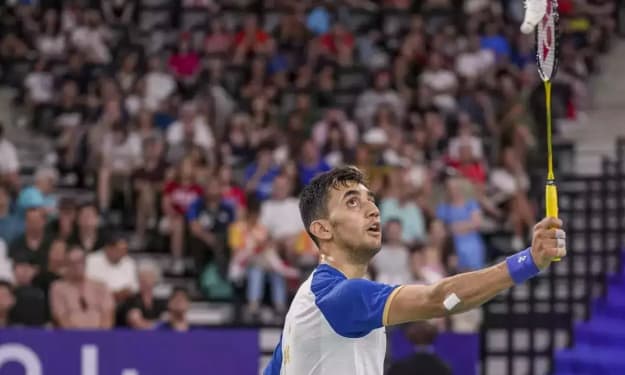
THE GROWING POPULARITY OF BADMINTON IN THE OLYMPICS
Badminton, a sport that combines agility, speed, precision, and endurance, has seen a remarkable rise in popularity on the global stage, particularly within the Olympics. Once perceived as a leisurely backyard game, badminton has transformed into a fiercely competitive sport that garners attention from millions of spectators worldwide. Its inclusion in the Olympic Games has not only elevated the sport's prestige but also broadened its global reach, inspiring countless athletes and fans alike. This essay delves into the factors contributing to badminton’s growing popularity in the Olympics, its impact on global sports culture, and the challenges it faces moving forward.
By Badhan Senabout a year ago in Gamers
How to Get the Vortex Beater in Palworld: Sealed Realm of Terraria Guide
The endgame of Palworld has evolved significantly with the introduction of the crossover-inspired dungeons, and nothing captures the imagination of players quite like the Sealed Realm of Terraria.
By Richard Bailey3 days ago in Gamers
Smart phones, Humans and Aliens.
WARNING. I will be tapping into one of your favorite creative tensions: The absurdity of humans worshipping their glowing rectangles as if they were tiny oracles. There’s something deliciously poetic about that contradiction, and it lends itself beautifully to an instructive proviso.
By Novel Allen4 days ago in Poets



Comments
There are no comments for this story
Be the first to respond and start the conversation.