
The Evolution of PlayStation: A Journey Through Five Generations of Gaming
From 3D Revolution to Cutting-Edge Technology: The Legacy and Impact of Sony’s PlayStation Across Five Generations

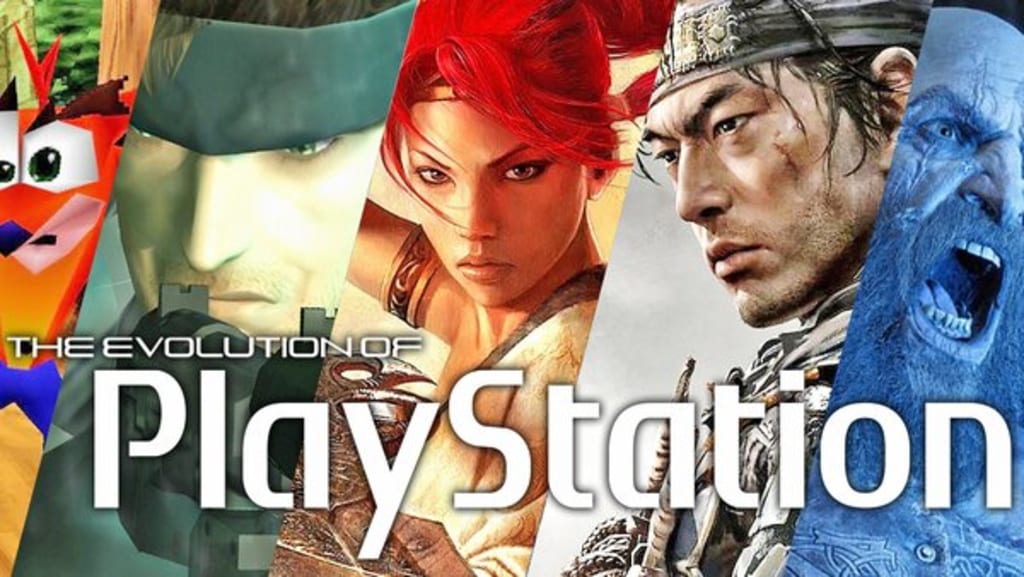
PlayStation 1 (PS1): The Birth of a Legend (1994–2006)
The Beginning
The PlayStation’s journey began with a failed partnership between Sony and Nintendo. In the early 1990s, Sony had been working with Nintendo to develop a CD-ROM add-on for the Super Nintendo Entertainment System (SNES). When that collaboration fell apart, Sony decided to go it alone and create its own console. This bold move would forever change the landscape of gaming.
Released in Japan in December 1994 and worldwide in 1995, the original PlayStation (PS1) was a game-changer, literally and figuratively. It was the first home console to sell over 100 million units, setting a new standard for the industry. More importantly, it marked the shift from 2D sprite-based games to 3D polygonal graphics, allowing developers to create more immersive and visually impressive worlds.
Key Features and Innovations
CD-ROM Format: Unlike its cartridge-based competitors like the SNES and Sega Genesis, the PlayStation used CDs, which were cheaper to produce and offered far more storage space. This allowed for larger, more detailed games with better audio and video quality.
3D Graphics: The PS1 was instrumental in making 3D gaming mainstream. Games like Final Fantasy VII, Metal Gear Solid, and Crash Bandicoot introduced players to fully realized 3D environments and characters.
Third-Party Support: Sony fostered strong relationships with third-party developers, resulting in a diverse library of games. Titles like Gran Turismo, Resident Evil, and Tekken became iconic franchises, helping the PlayStation brand cement its place in gaming history.
Memory Cards: The introduction of memory cards allowed players to save their progress, a vital feature as games grew longer and more complex.
Legacy
By the time production of the PS1 ended in 2006, it had sold over 102 million units worldwide. It also helped establish Sony as a major player in the gaming industry, setting the stage for the future of the PlayStation brand.
PlayStation 2 (PS2): The Best-Selling Console of All Time (2000–2013)
The Launch and Early Success
The PlayStation 2, released in March 2000, took everything that made the original PlayStation successful and amplified it. It remains the best-selling console of all time, with over 155 million units sold. This success can be attributed to its backward compatibility, innovative features, and an incredibly rich library of games.
Key Features and Innovations
Backward Compatibility: One of the most beloved features of the PS2 was its ability to play original PlayStation games, allowing players to enjoy their old favorites on the new console. This feature was revolutionary at the time and gave the PS2 an edge over its competitors.
DVD Player: The PS2’s inclusion of a built-in DVD player was a masterstroke. DVDs were becoming the dominant home media format, and for many people, the PS2 was their first DVD player, making it an attractive entertainment device beyond gaming.
Enhanced Graphics and Processing Power: The PS2 boasted significantly improved hardware over the PS1, enabling games to be more complex, detailed, and expansive. Titles like Grand Theft Auto: San Andreas, Shadow of the Colossus, and God of War pushed the limits of what was possible on the hardware.
Online Gaming: Although not as fully realized as on later consoles, the PS2 introduced online gaming through an Ethernet adapter. Games like Socom: U.S. Navy SEALs and Final Fantasy XI allowed players to compete or cooperate with others online.
Iconic Games
The PS2’s game library is often hailed as one of the best in console history. Franchises like Devil May Cry, Silent Hill, Kingdom Hearts, and Jak and Daxter were born on the PS2. It was also the platform where Grand Theft Auto III revolutionized open-world gaming, while Metal Gear Solid 2 set a new standard for cinematic storytelling in games.
Legacy
The PS2’s incredible lifespan and massive game library helped solidify Sony’s dominance in the gaming industry. Even after the launch of the PlayStation 3, the PS2 continued to sell well into the late 2000s, remaining relevant for over a decade.
PlayStation 3 (PS3): A Rocky Start, A Strong Finish (2006–2017)
The Challenges of the PS3
Released in November 2006, the PlayStation 3 faced a much tougher market than its predecessors. The PS3 had a rocky start due to its high launch price ($499 for the basic model, $599 for the premium model) and the complexity of its Cell architecture, which made game development more difficult. Early sales lagged behind Microsoft’s Xbox 360 and Nintendo’s Wii.
Key Features and Innovations
Blu-ray Disc Drive: The PS3’s use of Blu-ray discs allowed for greater storage capacity compared to DVDs, giving developers more room to create larger and more detailed games. Like the PS2’s DVD player, this helped establish Blu-ray as the dominant home media format.
Cell Processor: The PS3’s powerful Cell processor was cutting-edge but notoriously difficult to develop for. However, games that managed to harness its potential, like Uncharted 2 and The Last of Us, showcased the console’s impressive capabilities.
Free Online Play: Unlike its competitors, Sony initially offered free access to its PlayStation Network (PSN) for online gaming, though the service lagged behind Xbox Live in terms of stability and features. Later, PlayStation Plus was introduced, offering free games and other perks in exchange for a subscription.
PlayStation Home: Sony introduced PlayStation Home, a virtual world where players could create avatars, decorate personal spaces, and interact with others. Although it didn’t achieve massive success, it was an early experiment in social gaming.
Key Games
Despite its slow start, the PS3 ended up with an impressive library of games. The Last of Us and the Uncharted series, both developed by Naughty Dog, were some of the standout titles. Other iconic games include Metal Gear Solid 4: Guns of the Patriots, LittleBigPlanet, and Demon's Souls, the latter of which laid the groundwork for the popular Dark Souls series.
Legacy
By the end of its life cycle, the PS3 had sold over 87 million units. Although it never outsold the Wii or Xbox 360, it managed to recover from its early setbacks and deliver some of the best games of its generation. The introduction of the PlayStation Store, along with digital downloads, set the stage for the future of online gaming.
PlayStation 4 (PS4): Dominating the Generation (2013–2020)
The Comeback
Launched in November 2013, the PlayStation 4 marked a significant return to form for Sony. Learning from the missteps of the PS3, Sony focused on simplicity, ease of development, and affordability. The result was a console that dominated its generation, outselling its main competitor, the Xbox One, by a wide margin and amassing over 116 million units sold.
Key Features and Innovations
Focus on Gaming: Unlike the Xbox One, which initially focused on being an all-in-one entertainment system, the PS4 was marketed squarely as a gaming machine. This resonated with gamers, who appreciated the emphasis on performance and games over other features.
Share Play and Streaming: The PS4 introduced features like Share Play, allowing players to stream games to their friends and let them take control remotely. It also integrated streaming to platforms like Twitch and YouTube, reflecting the growing popularity of game streaming.
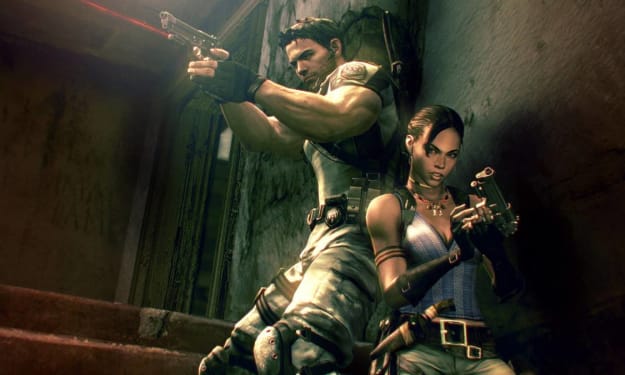
PlayStation VR: In 2016, Sony released the PlayStation VR headset, making virtual reality accessible to console players. While not as advanced as some PC-based VR systems, PlayStation VR brought a host of immersive experiences to the PS4, including Resident Evil 7 and Astro Bot Rescue Mission.
PlayStation Plus and PlayStation Now: PlayStation Plus became essential for online multiplayer gaming and offered monthly free games. PlayStation Now, Sony’s cloud gaming service, allowed users to stream older PlayStation games.
Iconic Games
The PS4 boasts a stellar library of exclusives, many of which pushed the boundaries of storytelling and technical achievement. The Witcher 3: Wild Hunt, God of War, Horizon Zero Dawn, and Spider-Man were some of the standout titles. Games like Bloodborne and Ghost of Tsushima
About the Creator
Surinder Kumar
I am a gaming writer.
Keep reading
More stories from Surinder Kumar and writers in Gamers and other communities.
The Rise of Indie Games: A New Era in Gaming
In recent years, the gaming landscape has undergone a profound transformation, thanks in large part to the rise of indie games. These independent titles, often created by small teams or even solo developers, have become a vibrant part of the industry, offering fresh ideas, innovative mechanics, and compelling narratives that challenge the status quo.
By Surinder Kumarabout a year ago in Gamers



Comments
There are no comments for this story
Be the first to respond and start the conversation.