
The Evolution of PlayStation: A Comprehensive Journey Through Gaming History
From 3D Revolution to Cutting-Edge Technology: The Legacy and Impact of Sony’s PlayStation Across Five Generations

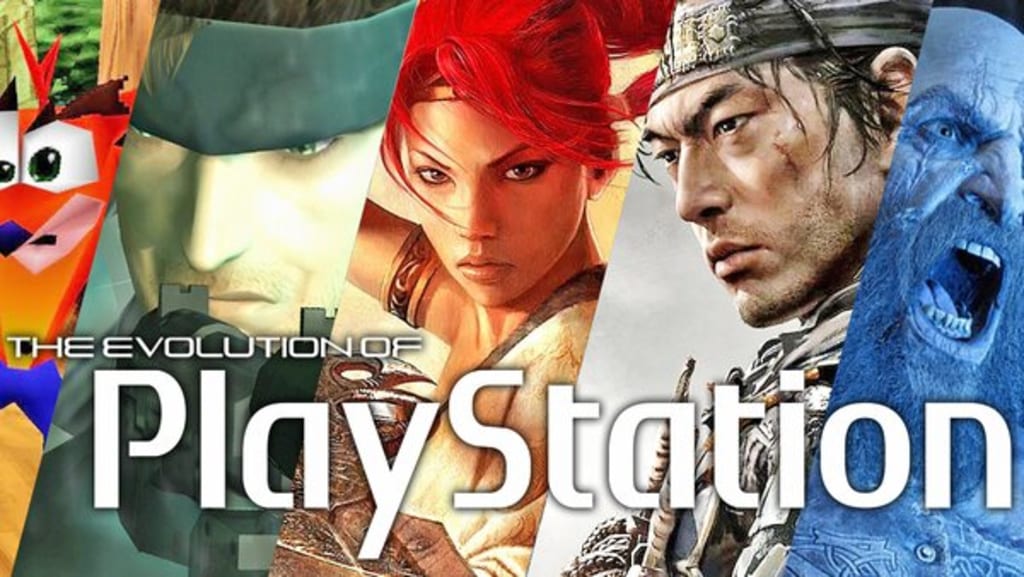
PlayStation 1 (PS1): The Birth of a Revolution (1994–2006)
Origins: Sony’s Leap into the Gaming Industry
The story of PlayStation begins with a failed partnership between Sony and Nintendo. In the early 1990s, Nintendo was planning to develop a CD-ROM add-on for its Super Nintendo Entertainment System (SNES), and Sony, with its expertise in audio and CD technology, was tasked with building it. However, the deal fell through, leading Sony to decide to create its own console. Thus, the PlayStation was born.
Released in December 1994 in Japan and in September 1995 globally, the PlayStation was a game-changing console that brought 3D polygonal graphics into the mainstream. While competing with consoles like the Sega Saturn and Nintendo 64, the PlayStation distinguished itself through a combination of affordability, developer-friendly hardware, and an innovative CD-based system that allowed for larger games.
Key Features and Innovations
CD-ROM Format: One of the most significant innovations of the PlayStation was its use of CDs instead of cartridges, which allowed for more data storage, enabling developers to create more complex games with better audio and video quality.
3D Graphics: The PS1 was the first major console to focus on 3D graphics, shifting away from the 2D sprites that dominated the 16-bit era. This was pivotal in creating immersive gaming experiences.
Iconic Controller Design: The original PlayStation controller, which eventually evolved into the DualShock controller, was the first to feature two analog sticks and a vibration feature, providing more precision and immersive feedback for players.
Iconic Games
The PS1's success was also driven by its incredible game library, which introduced players to some of the most beloved franchises in gaming history. Titles like Final Fantasy VII, Metal Gear Solid, Resident Evil, Crash Bandicoot, and Gran Turismo became instant classics and laid the foundation for future game design.
Final Fantasy VII (1997) was a milestone in the RPG genre, introducing cinematic storytelling and expansive 3D worlds that had never been seen before on a console.
Metal Gear Solid (1998) revolutionized the stealth-action genre with its emphasis on cinematic storytelling, complex characters, and innovative gameplay.
Cultural Impact and Legacy
The PlayStation became the first home console to sell over 100 million units globally. Its success positioned Sony as a dominant player in the gaming industry and marked the beginning of 3D gaming's rise to mainstream popularity. The console's focus on mature, cinematic games also expanded the gaming demographic, drawing in older audiences alongside the traditional younger gamer base.
PlayStation 2 (PS2): The Best-Selling Console of All Time (2000–2013)
Early Success and Features
Released in March 2000, the PlayStation 2 (PS2) built on the success of its predecessor but introduced a host of innovations that would make it the best-selling console of all time, with over 155 million units sold. Backward compatibility, a built-in DVD player, and more powerful hardware solidified the PS2's place in gaming history.
DVD Player: One of the biggest selling points of the PS2 was its ability to play DVDs. At the time, DVD players were relatively expensive, so the PS2 offered a budget-friendly way for consumers to watch movies and play games in one device.
Backward Compatibility: Sony made a smart move by allowing the PS2 to play original PlayStation games. This meant that early adopters had an extensive library of games from day one, making the transition to the new system smoother.
Improved Graphics and Processing Power: The PS2's enhanced capabilities allowed for larger, more complex game worlds and improved AI, physics, and graphical fidelity. Developers were able to create richer and more immersive experiences.
Iconic Games and Franchises
The PS2’s vast library included some of the most critically acclaimed games of all time. Major franchises like Grand Theft Auto, God of War, Devil May Cry, and Kingdom Hearts were either born or flourished on the PS2.
Grand Theft Auto: San Andreas (2004) pushed the boundaries of open-world gaming, giving players unprecedented freedom in a vast and richly detailed environment.
God of War (2005) set new standards for action games with its brutal combat mechanics and epic mythological storytelling.
Shadow of the Colossus (2005) was a visually stunning game that combined minimalist storytelling with intense, atmospheric gameplay, making it one of the most celebrated titles on the platform.
Cultural Impact and Longevity
The PS2 dominated the early 2000s, outpacing its competitors, the Nintendo GameCube and Microsoft’s Xbox. It played a major role in making gaming mainstream, particularly with the rise of narrative-driven games and the burgeoning popularity of open-world titles. The console was also supported for over a decade, with games being released well into the PS3’s lifecycle.
PlayStation 3 (PS3): The Struggles and Triumphs (2006–2017)
A Rocky Launch
The PlayStation 3, launched in November 2006, faced several challenges out of the gate. Its high price ($499 for the basic model and $599 for the premium model) and its complex Cell processor made it difficult for developers to harness the console's full potential early on. These issues caused Sony to initially lose ground to competitors like Microsoft’s Xbox 360 and Nintendo’s Wii.
Key Features and Innovations
Blu-ray Disc Drive: The PS3's use of Blu-ray discs allowed developers to include much more content in their games compared to DVDs. It also helped Blu-ray become the dominant physical media format for movies and TV shows.
Cell Processor: The PS3’s architecture, centered around its powerful Cell processor, was both a blessing and a curse. While it enabled highly detailed and technically advanced games like Uncharted 2: Among Thieves and The Last of Us, it was notoriously difficult for developers to optimize for, leading to some underperforming cross-platform games in the console's early years.
Free Online Gaming: Unlike its rival, the Xbox 360, the PS3 initially offered free online multiplayer through the PlayStation Network (PSN), although a subscription service (PlayStation Plus) was introduced later for premium content.
Iconic Games
Despite its rocky start, the PS3 became home to some of the most acclaimed games of its generation. Exclusive titles like Uncharted, The Last of Us, Metal Gear Solid 4: Guns of the Patriots, and LittleBigPlanet became synonymous with the console's later success.
The Last of Us (2013) became an instant classic for its emotionally powerful narrative, deep character development, and intense survival gameplay.
Uncharted 2: Among Thieves (2009) was a cinematic action-adventure game that set new standards for storytelling and presentation in video games.
Legacy
By the end of its lifecycle, the PS3 had sold over 87 million units, recovering from its slow start to become a beloved console with a strong library of exclusives. The introduction of the PlayStation Store, allowing players to buy and download games digitally, was a major step toward the all-digital future of gaming.
PlayStation 4 (PS4): Redefining Success (2013–2020)
The Road to Redemption
The PlayStation 4, launched in November 2013, marked a significant shift in Sony’s strategy. After the struggles of the PS3, Sony refocused on simplicity, ease of development, and catering directly to the needs of gamers. This approach paid off handsomely, as the PS4 went on to sell over 116 million units, making it one of the best-selling consoles of all time.
Key Features and Innovations
Social and Sharing Features: The PS4 emphasized social connectivity, introducing features like Share Play, which allowed players to broadcast their gameplay or let friends take over control remotely.
Game Streaming and Digital Downloads: The PS4 integrated streaming services like Twitch and YouTube, allowing players to easily stream their gameplay. The digital marketplace also expanded, making it easier than ever to buy and download games without needing physical discs.
PlayStation VR: Released in 2016, the PlayStation VR headset brought virtual reality to console players at a more affordable price than PC-based systems, offering unique experiences like Resident Evil 7: Biohazard in VR.
Iconic Games
The PS4’s game library is often hailed as one of the best in gaming history. Major exclusives like God of War (2018), Horizon Zero Dawn (2017), Spider-Man (2018), and Bloodborne (2015) demonstrated the console’s ability to deliver diverse, high-quality gaming experiences.
God of War (2018) reinvented a classic franchise with a new emotional depth, complex storytelling, and visceral combat mechanics.
Horizon Zero Dawn (2017) was praised for its expansive open world, deep lore, and innovative combat mechanics against robotic creatures.
Legacy and Cultural Impact
The PS4’s success can be attributed to its user-friendly design, strong game lineup, and affordability. It catered to gamers by delivering what they wanted: great games, a focus on performance, and robust online services. The console also marked the mainstream rise of digital gaming and streaming, which would only continue to grow.
PlayStation 5 (PS5): The Future of Gaming (2020–Present)
The Next Leap in Gaming
The PlayStation 5, released in November 2020, represents the culmination of decades of innovation. With lightning-fast SSD storage, ray tracing capabilities, and backward compatibility with PS4 titles, the PS5 is designed to offer the most immersive gaming experience yet.
Key Features and Innovations
Ultra-Fast SSD: The PS5’s solid-state drive (SSD) drastically reduces load times, allowing for near-instantaneous game startup and more fluid open-world experiences.
Ray Tracing and 4K Graphics: The PS5 is capable of delivering stunning visuals with real-time ray tracing, 4K resolution, and up to 120 frames per second in supported games.
DualSense Controller: The DualSense controller introduces adaptive triggers and haptic feedback, providing more immersive tactile sensations, such as feeling the tension in a bowstring or the resistance of different surfaces in games.
Early Games and Reception
The PS5 launched with several notable titles, including Demon’s Souls (a remake of the PS3 classic), Spider-Man: Miles Morales, and Ratchet & Clank: Rift Apart. These games showcased the console’s powerful hardware and advanced features, such as ray tracing and near-instant load times.
Spider-Man: Miles Morales (2020) was lauded for its stunning visuals and fluid gameplay, particularly when taking advantage of the PS5’s ray tracing capabilities.
Ratchet & Clank: Rift Apart (2021) highlighted the potential of the PS5’s SSD, offering seamless transitions between different worlds without any noticeable load times.
Impact and Future
While still early in its lifecycle, the PS5 is poised to define the future of gaming with its cutting-edge technology and features. With its robust lineup of exclusive titles and strong third-party support, the PS5 has already seen strong sales despite global supply chain issues.
Conclusion: The PlayStation Legacy
The evolution of PlayStation mirrors the growth of the gaming industry itself. From humble beginnings with the PS1’s leap into 3D gaming to the PS5’s cutting-edge technology, each PlayStation console has introduced groundbreaking features that pushed the boundaries of what games could achieve. As we look forward to the future of PlayStation and gaming in general, it’s clear that Sony’s influence on the medium will continue to shape how we play, create, and experience games.
Each generation of PlayStation has left its mark, not only with its technological advancements but also by nurturing some of the most iconic and beloved games in history. As the PlayStation brand continues to evolve, it remains a pillar of gaming innovation, bringing players together through unforgettable experiences across the globe.
About the Creator
Surinder Kumar
I am a gaming writer.
Keep reading
More stories from Surinder Kumar and writers in Gamers and other communities.
The Evolution of PlayStation: A Journey Through Five Generations of Gaming
PlayStation 1 (PS1): The Birth of a Legend (1994–2006) The Beginning The PlayStation’s journey began with a failed partnership between Sony and Nintendo. In the early 1990s, Sony had been working with Nintendo to develop a CD-ROM add-on for the Super Nintendo Entertainment System (SNES). When that collaboration fell apart, Sony decided to go it alone and create its own console. This bold move would forever change the landscape of gaming.
By Surinder Kumarabout a year ago in Gamers
Early Life: From the Streets of Madeira to Stardom
Cristiano Ronaldo: From Madeira to Football Immortality Cristiano Ronaldo dos Santos Aveiro is a name that has become synonymous with determination, ambition, and sporting excellence. Rising from humble beginnings on the Portuguese island of Madeira, Ronaldo transformed himself into one of the greatest football players in history and a global icon followed by hundreds of millions of fans. His story is not only about talent, but about discipline, resilience, and an unstoppable desire to improve.
By Reflective Stories3 days ago in Gamers


Comments
There are no comments for this story
Be the first to respond and start the conversation.