
THE ECONOMIC IMPACT OF HOSTING THE OLYMPICS ON THE HOST COUNTRY
Assessing the Financial Outcomes and Long-Term Benefits of Olympic Hosting.

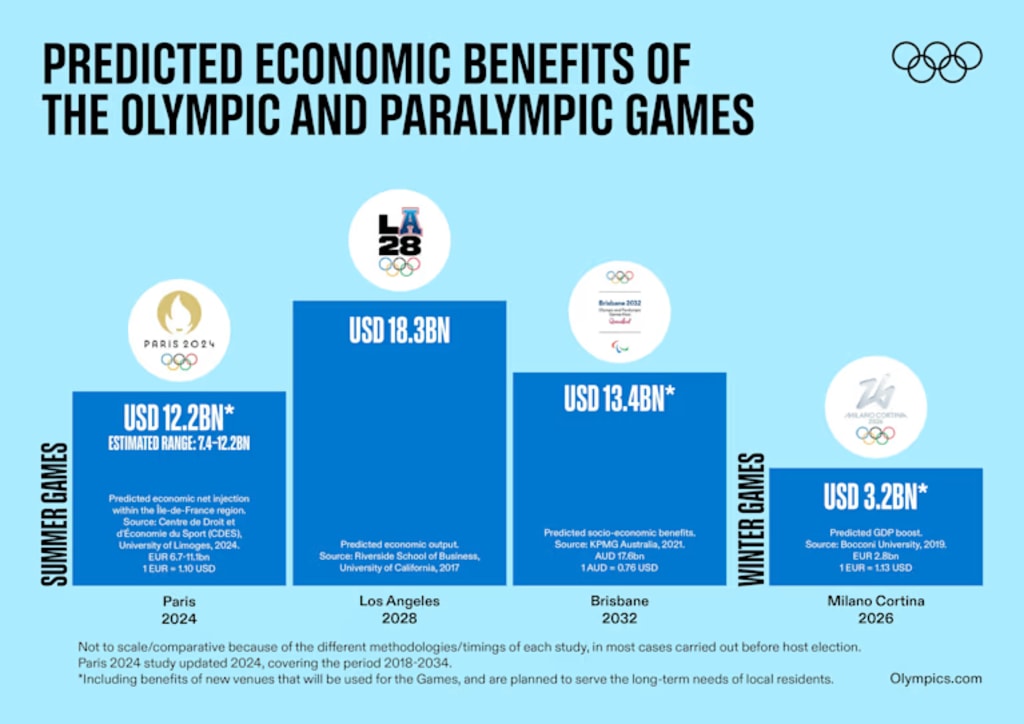
The Olympic Games are one of the most prestigious and widely viewed sporting events globally, and hosting them can have both significant benefits and challenges for the host country. While the event offers a unique opportunity for national pride, global exposure, and infrastructural development, the economic impact of hosting the Olympics is multifaceted. It affects a range of sectors, including tourism, construction, employment, and long-term economic growth. However, the financial benefits are often accompanied by substantial costs, and the true economic impact remains a subject of debate.
Tourism and Revenue Generation
One of the most immediate and visible economic benefits of hosting the Olympics is the influx of tourism. The Games attract tens of thousands of international visitors, ranging from athletes and officials to spectators, media, and corporate sponsors. This influx boosts sectors such as hospitality, transportation, retail, and entertainment, generating significant short-term revenue. Hotels, restaurants, and transport providers experience a surge in demand, and local businesses benefit from increased spending.
For instance, during the 2012 London Olympics, it was estimated that the Games contributed around £2.1 billion to the UK economy in tourism alone. Similarly, the 2016 Rio Olympics saw a significant increase in international visitors, though the economic impact was tempered by Brazil's ongoing economic crisis at the time.
Infrastructure Development
Another major economic consideration is the extensive infrastructure development required to host the Games. Cities must build or upgrade sports venues, transportation networks, and accommodation facilities to meet the requirements of the event. While these investments can be costly, they often lead to long-term improvements in urban infrastructure that benefit the local population.
For example, Beijing's 2008 Olympics led to the construction of the Bird’s Nest Stadium and an upgraded airport terminal, which continue to serve the city long after the event. Similarly, London's 2012 Olympics resulted in the regeneration of the East End, an area that had long been economically disadvantaged. Infrastructure improvements in transportation, such as the Jubilee Line Extension, also helped improve the city's long-term public transit system.
However, the costs associated with this infrastructure can be overwhelming. Hosting the Olympics often requires massive public investment, and the costs may exceed initial projections. For example, Sochi 2014 had one of the most expensive Olympic budgets in history, costing Russia around $51 billion, far exceeding initial estimates. Critics argue that these funds could have been better spent on public services, such as healthcare or education.
Job Creation and Employment
In the lead-up to the Games, the construction and operational phases create a large number of jobs. The construction of new sports venues, the building of new roads, and the expansion of airports and public transportation systems require labor. Additionally, the Games themselves generate employment opportunities in areas such as hospitality, event management, security, and transportation.
For instance, London 2012 created around 60,000 jobs directly related to the Games, while an estimated 100,000 additional temporary jobs were created across various sectors. The impact on employment, however, is often temporary, as many of these jobs are lost after the event concludes.
Moreover, while the Olympics create significant job opportunities in the short term, the long-term impact on employment is less clear. In some cases, host cities experience a rise in unemployment after the Games, as temporary jobs are phased out and industries that were buoyed by the Olympics (such as construction) slow down.
Legacy and Long-Term Economic Growth
The legacy of the Olympics is a key factor in determining its long-term economic impact. If the infrastructure and investments made during the Games lead to sustained economic growth, the event can be seen as a success. Many host cities expect that the new infrastructure, along with increased international visibility, will lead to a lasting boost in tourism, business investment, and global recognition.
For instance, Barcelona 1992 is often cited as a successful example of Olympic legacy. The city's transformation, driven by infrastructure investments and urban renewal, made it a major European tourist destination and a hub for international business.
However, the long-term benefits are not guaranteed. In some cases, the venues built for the Games remain underutilized, leading to a phenomenon often referred to as the "white elephant" effect. For example, after the Athens 2004 Olympics, many of the sports facilities were left unused or underutilized, and the Greek economy went into a deep recession shortly after the event.
Cost-Benefit Debate
The debate surrounding the economic impact of hosting the Olympics largely revolves around the balance between the costs and the benefits. While the Games bring short-term boosts to the economy, the long-term financial outcomes are less clear. Studies have shown that, in many cases, the expected economic benefits do not fully materialize. In fact, a report from the University of Oxford found that 9 out of 10 Olympics failed to produce the anticipated positive economic effects.
Moreover, the opportunity cost of hosting the Games—where resources are diverted from other potential uses, such as public services or social programs—adds to the argument that the Olympics might not be a worthwhile investment.
End
In conclusion, the economic impact of hosting the Olympics is complex and multifaceted. While the event generates significant short-term revenue through tourism and job creation, the high costs associated with infrastructure development and the risk of underutilized venues raise concerns about the overall financial benefits.Ultimately, while hosting the Olympics can offer substantial benefits, it requires careful planning, investment, and management to ensure that the economic impact is positive and sustainable.
About the Creator
Badhan Sen
Myself Badhan, I am a professional writer.I like to share some stories with my friends.
Keep reading
More stories from Badhan Sen and writers in Gamers and other communities.
THE OLYMPICS AND ITS INFLUENCE ON GLOBAL FASHION TRENDS
The Olympic Games are one of the most widely watched and anticipated events in the world, attracting millions of viewers and bringing together the most talented athletes from across the globe. While the Games are primarily about sportsmanship and international unity, they also have a profound influence on global fashion trends. From the opening ceremonies to the uniforms of athletes, the Olympics showcase cutting-edge design, innovative sportswear, and a fusion of cultural influences that resonate long after the Games end. This article explores how the Olympics have shaped global fashion trends, from sportswear to high fashion, and how the event has acted as a platform for creative designers and brands to influence the world’s fashion landscape.
By Badhan Senabout a year ago in Gamers
The Ever-Evolving World of PC Gaming
For more than thirty years, PC gaming has quietly shaped how people interact with digital worlds. What began as simple text commands typed into blinking screens has evolved into richly detailed universes filled with complex characters, competitive environments, and creative expression. While consoles and mobile devices continue to attract large audiences, PC gaming remains distinct because it grows alongside the technology that supports it rather than being limited by fixed hardware cycles.
By Hawaiian Malia6 days ago in Gamers
Anime Paradox Review – A Fresh Anime Tower Defense on Roblox
Anime Paradox is one of those Roblox games that quietly pulls you in and then suddenly you realize you’ve been playing for way longer than planned. At first glance, it looks like another anime-inspired tower defense, but after a few matches, it becomes clear that there’s more going on here. The mix of familiar anime vibes, strategic depth, and constant progression creates an experience that feels both comfortable and exciting. And yes, it’s worth mentioning right away that Anime Paradox has codes, which makes starting out and progressing much smoother, especially for new players.
By Serhii Biloshytskyi3 days ago in Gamers



Comments
There are no comments for this story
Be the first to respond and start the conversation.