
The Cloudy Future of Gaming
Exploring the Pros and Cons of Cloud Gaming"
Introduction
Definition of cloud gaming
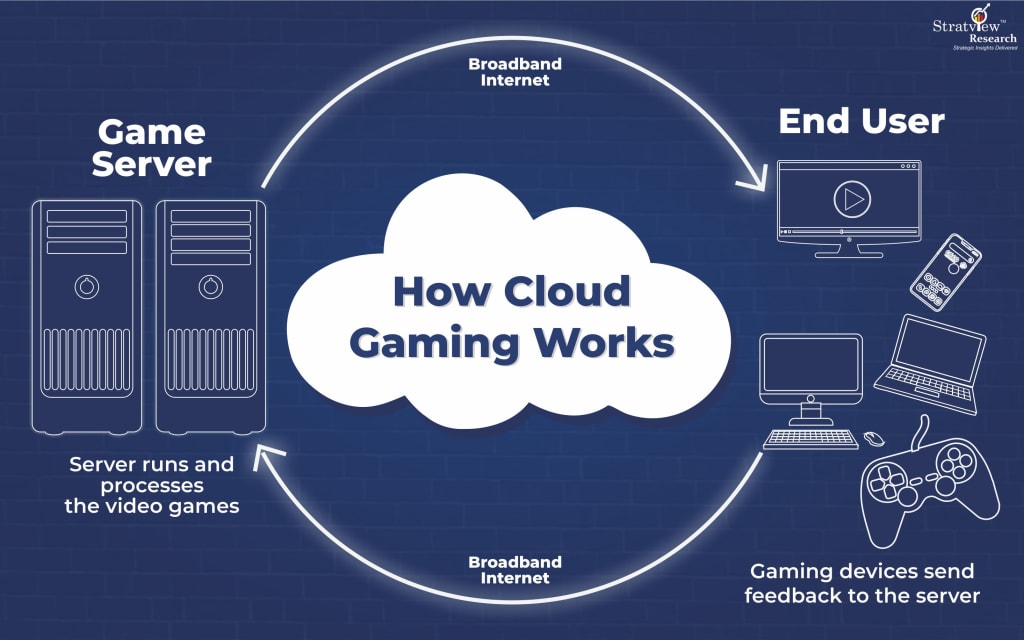
Cloud gaming is a technology that allows users to play video games on their devices, such as smartphones, laptops, or smart TVs, without the need for expensive hardware. Instead, games are run on remote servers (in the "cloud") and the video and audio are streamed to the player's device.
Brief history and evolution of cloud gaming
The concept of cloud gaming has been around for several decades, but it has only recently become more practical and accessible with the advent of faster internet speeds and more powerful cloud computing technology. Early cloud gaming services were limited and unreliable, but advances in technology have led to more sophisticated and user-friendly cloud gaming platforms.
Overview of the current state of cloud gaming
Today, cloud gaming is a rapidly growing market, with several major companies, including Google, Amazon, and Microsoft, offering cloud gaming platforms. However, the technology is still in its early stages and there are many challenges to overcome, such as ensuring stable, high-speed internet connections and reducing latency and input lag. Despite these challenges, the future of cloud gaming is bright, and it is expected to become an increasingly popular way to play video games in the years to come.
How Cloud Gaming Works
Explanation of cloud infrastructure
Cloud gaming relies on cloud computing infrastructure, which refers to a network of remote servers that are accessed over the internet. These servers are owned and maintained by cloud providers, who offer cloud computing services to businesses and individuals. In the context of cloud gaming, these servers run the games and stream the video and audio to the player's device.
Discussion of game streaming technology
Game streaming technology is the backbone of cloud gaming. This technology allows the video and audio of the game to be transmitted in real-time from the cloud server to the player's device. This requires low latency and high-bandwidth internet connections to ensure a smooth and responsive gaming experience. The quality of the game streaming is also influenced by the game compression and video codecs used.
Overview of the role of cloud providers in cloud gaming
Cloud providers play a critical role in cloud gaming by providing the servers, network infrastructure, and other resources needed to run games and stream them to players. They also handle the technical aspects of operating and maintaining the cloud infrastructure, such as security, scalability, and reliability. As a result, players can access a wide range of games from any device without the need for expensive hardware or software. Cloud providers also offer various pricing models, such as subscription-based services, to make cloud gaming more accessible to a wider range of users.
Benefits of Cloud Gaming
No need for high-end hardware
One of the biggest benefits of cloud gaming is that it eliminates the need for expensive, high-end hardware, such as gaming PCs or consoles. Players can use a wide range of devices, such as smartphones, laptops, or smart TVs, to access cloud gaming services. This makes cloud gaming more accessible to a wider range of users and eliminates the need for frequent hardware upgrades.
Instant access to a large library of games
Cloud gaming services offer access to a vast library of games, which players can access and play instantly. This eliminates the need for players to buy physical or digital copies of games, which can be expensive and time-consuming.
Better performance and graphics compared to traditional gaming
Cloud gaming services often use powerful servers and advanced technology, which can provide better performance and graphics compared to traditional gaming methods. This can lead to a more immersive and satisfying gaming experience, especially for demanding games that require high-end hardware.
Ability to play games anywhere, on any device
Cloud gaming services are accessible from any device with an internet connection, allowing players to play their favorite games from anywhere. This makes it easier for players to play games while on the go, or when traveling, without having to worry about carrying their gaming equipment.
Drawbacks of Cloud Gaming
Dependence on internet speed and stability
One of the biggest drawbacks of cloud gaming is that it requires a stable, high-speed internet connection to work properly. If the player's internet connection is slow or unreliable, it can lead to poor performance, including stuttering, lag, and disconnections. This can greatly impact the player's experience and reduce the overall quality of the game.
Latency and input lag
Another drawback of cloud gaming is latency, which is the time it takes for the player's input to be transmitted to the server and for the game's video and audio to be streamed back to the player's device. Latency and input lag can affect the responsiveness and precision of the game, which can be especially problematic for fast-paced or competitive games.
Limited availability of games
Although cloud gaming services offer a large library of games, they may not have every game that a player wants to play. Some games may be unavailable or may have limited functionality compared to traditional gaming methods. Additionally, some cloud gaming services may have geographical restrictions, which can limit the availability of games in certain regions.
Cost compared to traditional gaming
Another drawback of cloud gaming is that it can be more expensive compared to traditional gaming methods, especially for frequent or heavy users. Some cloud gaming services require a monthly subscription, while others charge a fee for each game played. This can add up over time and may not be an affordable option for everyone. Furthermore, some cloud gaming services may have hidden costs, such as data usage fees for playing games over mobile networks.
Popular Cloud Gaming Platforms
A. Google Stadia
B. Amazon Luna
C. Microsoft xCloud
D. Nvidia GeForce Now
Future of Cloud Gaming
Predictions for the growth and development of cloud gaming
This section covers predictions for the future of cloud gaming, including growth in terms of user base, market size, and technological advancements. It also discusses how cloud gaming may change the way people play games and interact with technology.
Discussion of potential challenges and obstacles
This section covers potential challenges that cloud gaming may face in the future, such as competition from other gaming platforms, the need for reliable internet infrastructure, and the potential for data privacy and security concerns.
Overview of current trends and advancements in cloud gaming technology
This section covers recent advancements and innovations in cloud gaming technology, including improvements in game streaming, virtual reality and augmented reality, and the development of new cloud gaming platforms and services. It also discusses how these advancements may shape the future of cloud gaming and impact the gaming industry as a whole.
Conclusion
Recap of key points
This section summarizes the main points discussed in the article, including the definition of cloud gaming, how it works, its benefits and drawbacks, and predictions for its future.
Final thoughts on cloud gaming
This section offers a personal perspective on cloud gaming and its potential impact on the gaming industry and society as a whole. It also discusses how cloud gaming may change the way people play games and interact with technology.
Recommendations for future exploration and investigation
This section provides suggestions for further research and investigation into cloud gaming, including areas such as technological advancements, market trends, and user preferences. It also suggests areas where additional data and analysis may be useful to better understand the potential of cloud gaming and its future impact on the gaming industry and society.
About the Creator
Keep reading
More stories from Logadheenan V M and writers in Gamers and other communities.
I Need to Tell You All About "Poppy Playtime"
Warning: Spoilers ahead! I have been a fan of video game play throughs, specifically horror game play throughs, since I was 16 years old. From the original Five Nights at Freddy's game to Emily Wants to Play to Resident Evil, I was intrigued by the lore of each game's unique story and it was thrilling to watch the stories unfold through a YouTuber's perspective. I've never really been a video-gamer myself, so I chose to live vicariously through those brave and experienced enough to play and beat the games.
By Madison "Maddy" Newton7 days ago in Gamers
Star Wars: TIE Fighter (1994)
So, earlier this year - around the second week or so of January - I reviewed Star Wars: X-Wing. That was my very first flight simulator, and to say I had a hard time with it would be...an understatement. As I said in my review, there was a lot of mucking about to get the thing to run, and even when I'd gotten it running, there were some significant problems.
By Greg Seebregts6 days ago in Gamers




Comments
There are no comments for this story
Be the first to respond and start the conversation.