
THE 2008 BEIJING OLYMPICS AND CONCERNS OVER HUMAN RIGHT
Subtle Diplomacy:The 2008 Beijing Olympics and the Global Scrutiny of China's Human Rights Record.

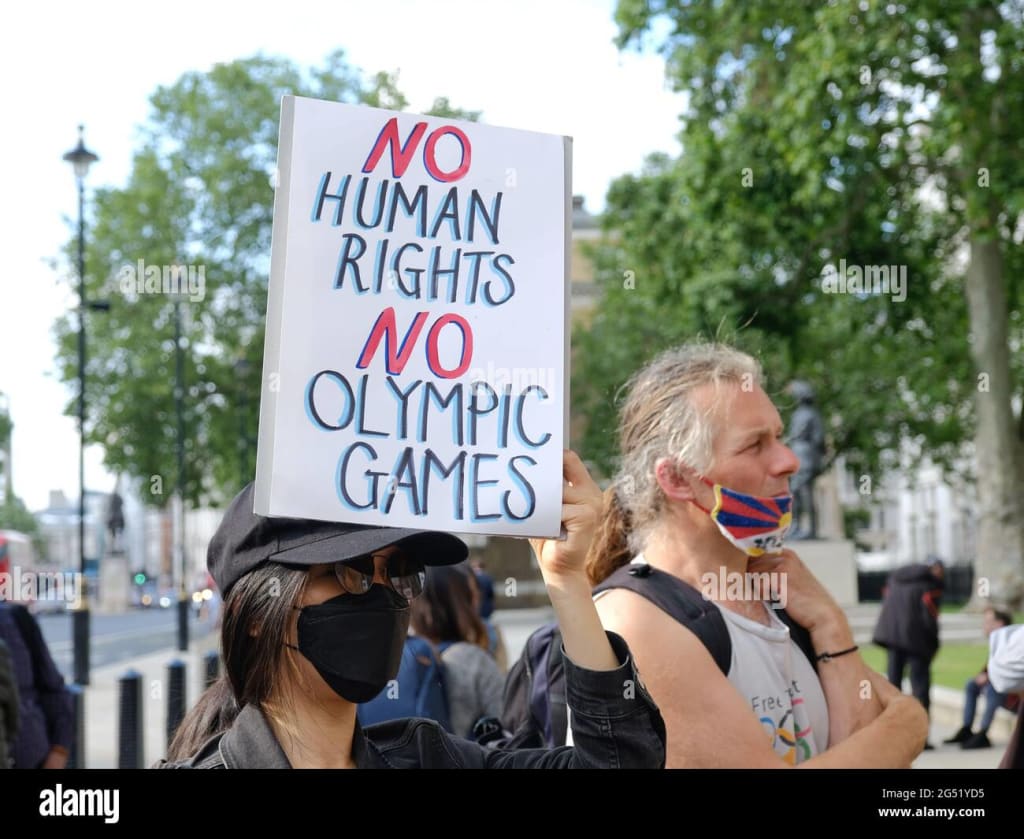
The 2008 Beijing Olympics, held from August 8 to August 24, 2008, were a monumental event in the history of the Olympic Games. As the first Olympics to be hosted by China, the event represented a significant achievement for the nation, which sought to showcase its economic and political rise on the global stage. However, the games were also marred by widespread concerns over human rights abuses in China, leading to a global debate about the role of the Olympics in promoting political and social values.
(I)The Significance of the 2008 Beijing Olympics
The Beijing Olympics were intended to be a celebration of China’s rapid modernization and growing influence in the international community. The event symbolized China's emergence as a global power, both economically and politically. The Chinese government invested heavily in building state-of-the-art infrastructure, including the iconic Bird's Nest stadium and the Water Cube aquatics center. The games were seen as an opportunity for China to demonstrate its capabilities to the world and to solidify its place as a leading Nation.
The 2008 Beijing Olympics were also notable for the high level of organization and execution. The opening ceremony, directed by renowned filmmaker Zhang Yimou, was a spectacular display of Chinese culture and history, captivating audiences worldwide. The games themselves were a resounding success in terms of athletic performance, with China emerging as the top medal-winning nation, and the world watching as the Olympic spirit brought together athletes from all corners of the globe.
(II)Human Rights Concerns and International Criticism
Despite the success of the games, the 2008 Beijing Olympics were overshadowed by significant human rights concerns. China’s human rights record, particularly in relation to freedom of expression, political dissent, and the treatment of ethnic minorities, came under intense scrutiny in the lead-up to the event. Critics argued that the Chinese government was using the Olympics as a way to deflect attention from its ongoing human rights abuses.
One of the most prominent issues was China’s handling of political dissent. Human rights organizations, such as Amnesty International and Human Rights Watch, raised alarms over the Chinese government's crackdown on activists and dissidents. Prior to the Olympics, there was a significant increase in the number of arrests and detentions of individuals who were seen as threats to the state. Many dissidents, journalists, and lawyers were silenced, and activists who spoke out against the government's policies were either jailed or placed under house arrest. The most high-profile case was that of human rights advocate and Nobel laureate Liu Xiaobo, who was later imprisoned for his pro-democracy activism.
Another major concern was the treatment of ethnic minorities, particularly Tibetans and Uighurs. In the months leading up to the Olympics, protests in Tibet erupted, demanding greater autonomy and religious freedom. The Chinese government responded with a heavy-handed military crackdown, resulting in a number of deaths and widespread human rights violations. Similarly, the Uighur population in the Xinjiang region faced restrictions on their religious practices and cultural expression, and reports of forced labor and detentions emerged during the same period. These actions drew international condemnation and led many activists to call for a boycott of the Beijing Games.
The Chinese government's stance on media freedom was also a point of contention. In the years leading up to the Olympics, China promised to ease restrictions on foreign journalists and provide greater access to the media. However, during the games, there were numerous reports of censorship, including restrictions on reporting in Tibet and the detention of journalists critical of the government. These actions further fueled criticism of the Chinese government's authoritarian nature and its attempts to control the narrative around the Olympics.
(III)The Role of the International Community
The human rights concerns surrounding the 2008 Beijing Olympics raised a fundamental question about the role of the international community in addressing human rights abuses. Should the Olympics be a platform for countries to showcase their political systems and achievements, or should they serve as a means of promoting universal human rights and values? This debate became particularly pronounced in the case of China, where the government’s control over its citizens’ rights seemed to clash with the ideals of freedom and equality espoused by the Olympic movement.
Several countries and human rights organizations called for a boycott of the Beijing Olympics, demanding that the games be used as an opportunity to hold China accountable for its human rights violations. While some governments, including the United States and European Union, made public statements criticizing China’s actions, there was no widespread boycott of the games. In the end, the international community largely allowed China to host the Olympics without significant repercussions for its human rights record.
(IV)The Legacy of the 2008 Beijing Olympics
In the aftermath of the 2008 Beijing Olympics, the debate over the intersection of sports and politics continued. While the games were a moment of pride for China and showcased the country’s growing global influence, the human rights issues that surrounded the event remain a significant part of its legacy. The games prompted a broader conversation about the role of international sporting events in promoting social change and the ethical responsibilities of countries hosting such events.
For China, the 2008 Olympics marked a moment of national pride, but the human rights criticisms continue to shape the country's relationship with the rest of the world. The Olympics may have highlighted China’s rise on the global stage, but it also brought attention to the significant challenges and controversies surrounding its political system and human rights practices. As a result, the 2008 Beijing Olympics remain a complex and contested chapter in the history of the Olympic Games.
About the Creator
Badhan Sen
Myself Badhan, I am a professional writer.I like to share some stories with my friends.
Keep reading
More stories from Badhan Sen and writers in Gamers and other communities.
ALLEGED SCANDALS SURROUNDING THE 1960 ROME OLYMPICS
The 1960 Summer Olympics in Rome, Italy, were a groundbreaking event in many ways. Not only did they mark the first time the Games were broadcast live on television, but they also introduced numerous innovations in the world of international sports. However, despite its success, the 1960 Olympics were not without their controversies and alleged scandals. These scandals revolved around a variety of issues, from corruption and politics to questionable decisions in the sporting events themselves.
By Badhan Senabout a year ago in Gamers
Level Up Your Life: How Gaming Builds Skills, Friends, and Succes
"Think gaming is just a way to kill time? Think again. Every quest you complete, every strategy you master, and every battle you fight is secretly leveling up your brain, your skills, and your real-life potential. Gaming isn’t just entertainment—it’s training for life."
By Zakir Ullah2 days ago in Gamers
My Top 25 NES Games
The Nintendo Entertainment System, or the Famicom in Japan, is the earliest console I have any direct experience of. We didn’t have a NES in our house when we were kids. I was a bit sniffy of it actually, viewing it as old-fashioned and before my time (I was born in 1984, between the Japanese and Western releases of the system). It was years later that I started to appreciate earlier games and hardware. I played the NES round friends’ houses and, eventually, well into adulthood, someone decided to get rid of theirs and now we had our own Family Computer.
By Daniel Tessier7 days ago in Gamers
Lycan Lore
As the students of my 10am mythology class take their seats, I decide to steer the day's curriculum away from Greek and dive into a Western European discourse on the misaligned beliefs of the Werewolf. A tale of truth or fiction. No one really knows.
By Lamar Wigginsabout 12 hours ago in Fiction



Comments
There are no comments for this story
Be the first to respond and start the conversation.