
My Top 25 NES Games
My favourite games for the classic Nintendo

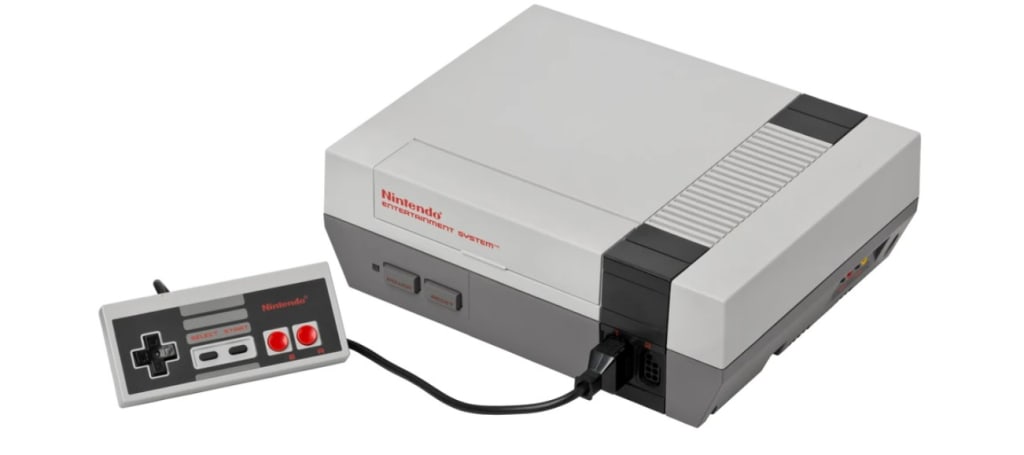
The Nintendo Entertainment System, or the Famicom in Japan, is the earliest console I have any direct experience of. We didn’t have a NES in our house when we were kids. I was a bit sniffy of it actually, viewing it as old-fashioned and before my time (I was born in 1984, between the Japanese and Western releases of the system). It was years later that I started to appreciate earlier games and hardware. I played the NES round friends’ houses and, eventually, well into adulthood, someone decided to get rid of theirs at now we had our own Family Computer.
Early NES games were simple affairs, usually ports of arcade titles both from Nintendo itself and other producers. With the arrival of the iconic Super Mario Bros., they started to become deeper and more elaborate. Yet there’s something appealing in being able to boot up a quick, straightforward game for a short playtime. I surprised myself in including a lot of scrolling shoot-em-ups in this list, something the NES was pretty good at, if not well known for.
Sadly, it’s difficult to play the NES today. My TV is too modern to work with it, and even if I could get it to feed correctly, there’s no way the Zapper light gun would work on a modern screen. Still, there are plenty of ways to play NES games today, either by legal means or otherwise. As before, I’ll include an availability note for each of my favourites below. As always, it’s the original release date I’ve noted, regardless of which territory that was in. I’ve also included the Japanese titles for these games, just because some of them are distinctly different to their English titles and I love a bit of trivia.
25) Bucky O’Hare (1993)
Japanese title: Bakkī Ohea
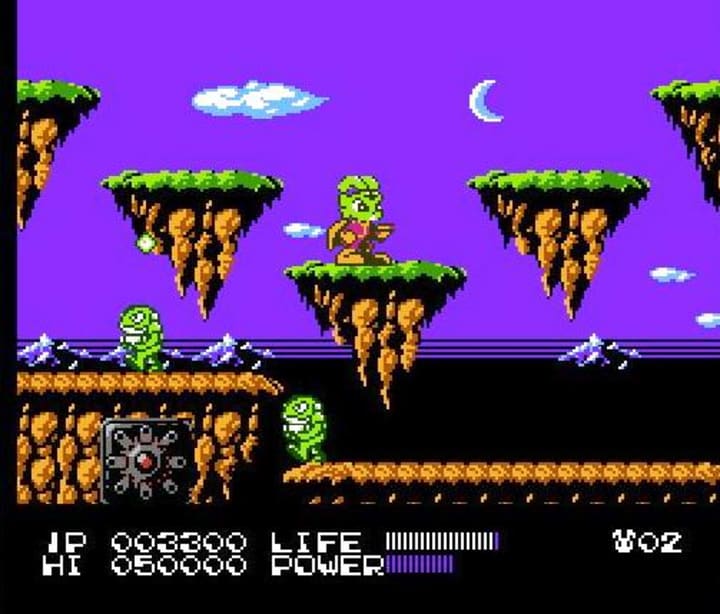
In the early 90s, Konami were the company to go to for cartoon tie-ins (unless it was Disney, then you went to Capcom). Bucky O’Hare is based on the original comic and the briefly popular animated series. It’s far better than it needs to be, with a great deal of variety in its platforming gameplay. There are four planets with different environments, which you can ostensibly play in any order. Like Mega Man, though, in practice there’s an optimal order to play, as at the end of each level you rescue a crewmate with their own useful abilities. It’s bloody difficult in places, but it’s generous enough to give you infinite continues that bring you back to the precise act that you’re on. Certainly one of the two best games I’ve played starring a green, anthropomorphic rabbit.
Availability: None officially so far as I can see, and if you’re looking for an original cart it’s going to set you back a few hundred. It’s one of the easier ROMs to find unofficially, though.
24) Devil World (1984)
Japanese title: Debiru Wārudo
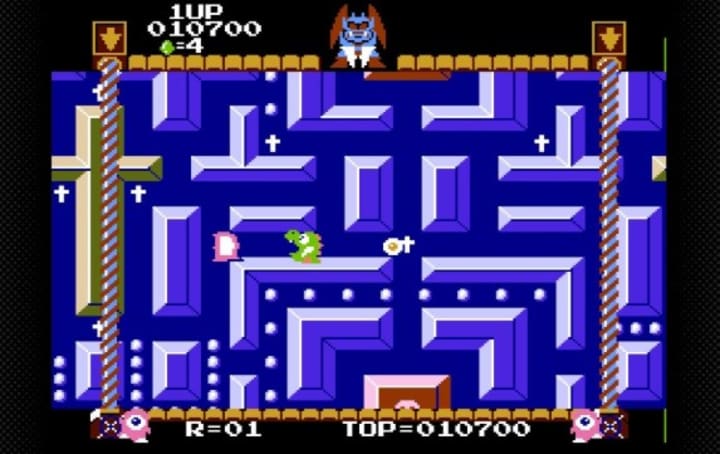
A curious oddity that I only first played quite recently. Devil World was Shigeru Miyamoto’s first console-exclusive game after his arcade hits with Donkey Kong and Mario Bros. It’s a Pac-Man-esque maze game where you play as a dragon called Tamagon, a sort of proto-Yoshi who moves his way around the course while a blue devil dances above him. Tamagon is empowered by collecting crucifixes which let him eat the little dots strewn about and breathe fire at the monsters chasing him. There’s an interesting twist on the genre in that there are other monsters in the corners who move the maze around randomly, threatening to crush the little dragon between the walls. It’s more of historical interest than anything to most, but there’s something about it that I find really appealing. There’s a myth that this was never released in the West, but it had European release in 1987. It was only in the US that it was held back due to Americans’ delicate Christian sensibilities.
Availability: It’s on the Nintendo Classic/Switch Online service, allowing Americans and Canadians the opportunity to play it legally for the first time.
23) The 3-D Battles of Worldrunner (1987)
Japanese title: Tobidase Daisakusen (Operation: Jump Out!)
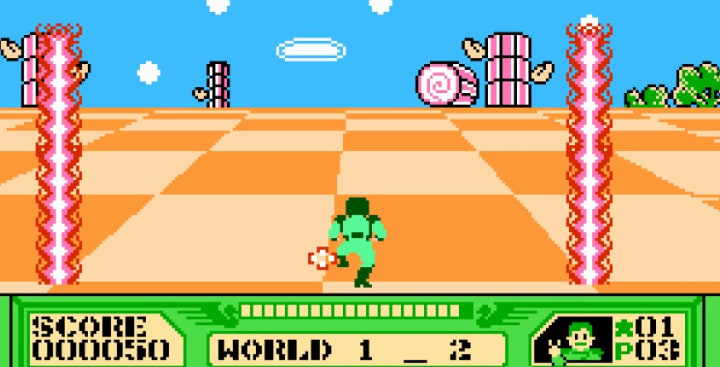
Also known simply as 3-D Worldrunner, this is a pseudo-3D autorunner game that combines elements of shoot-em-ups and platformers into something quite unique. You are positioned behind your character, Jack the Worldrunner, as he legs it across various planets in star system 517, saving them from the invading Serpentbeasts. There are definite similarities to the better-known Space Harrier, although the emphasis here is on dodging enemies and leaping over crevasses. As Jack constantly runs forward, you can only jump, move him from side-to-side, or increase and decrease his speed and jump distance by using the up and down direction controls. It also has an anaglyphic 3D mode that was designed for use with the Famicom 3D System headset, but also works with a pair of old-fashioned red-and-green 3D glasses.
Availability: I’m not aware of any official rerelease of this game, which is a shame. It would be an ideal choice for a mobile phone port.
22) Donkey Kong Classics (1988)
Japanese title: none (no Japanese release)
I’m cheating here: if I include this one, I get to include both Donkey Kong and Donkey Kong Jr. in one entry. Truth be told, I’m not the biggest fan of the original DK games as they stand. I enjoy them, obviously, or they wouldn’t be on this list, and they are hugely influential and important games. Donkey Kong is, depending how you define it, the first platformer, thereby ushering in my genre of choice. But I find both games in their original forms a bit clunky and frustrating to play sometimes. The NES version of Donkey Kong is missing the second level, and I rather enjoy DK Jr. more anyway. Both games are a lot of fun if I’m in the mood for some really old-school platforming.
Availability: While DK Classics has not been rereleased itself, both Donkey Kong and DK Jr. are on the Nintendo Classics/Switch Online service and the NES Classic Mini. Alternatively, the arcade versions are part of Hamster's Arcade Archives series, exclusively through the Nintendo eShop for Switch and Switch 2.
21) Gimmick!/Mr. Gimmick (1992)
Japanese title: Gimmuku!
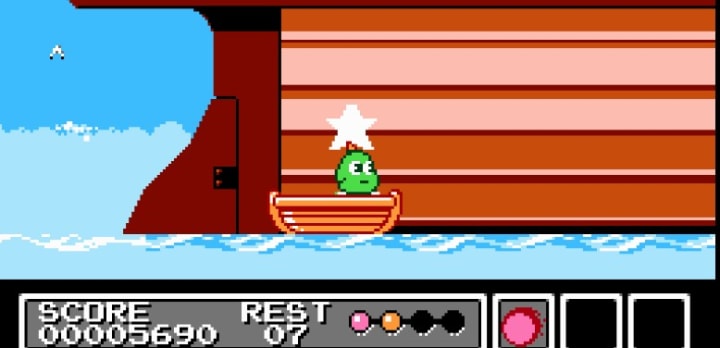
Gimmick! is an inventive platformer from Sunsoft, although it strikes me as what Capcom’s answer to Kirby would be. A late-in-the-day Famicom release, it was passed over in most western markets, only releasing in Japan and Scandinavia. You play as a weird green critter named Yumetaro, who goes to rescue a young girl after her toys abduct her to another dimension. The gimmick in question is his ability to shoot stars, which he can use either as weapons or as makeshift platforms allowing access to out-of-reach areas. Frustratingly difficult in the later levels but cleverly designed throughout, it pushes the graphical limits of the NES hardware and has a great soundtrack.
Availability: Gimmick! has enjoyed a renaissance lately. The original version is included as part of Sunsoft Collection 1 for the Blaze Evercade. An enhanced port under the name Gimmick! Special Edition is available for Switch, PS4, XBox One and their successors, and for PC via Steam. Clear River Games have published a physical version of the special edition for Switch and PS4.
20) Clash at Demonhead (1989)
Japanese title: Dengeki Big Bang! (Big Bang Blitz!)
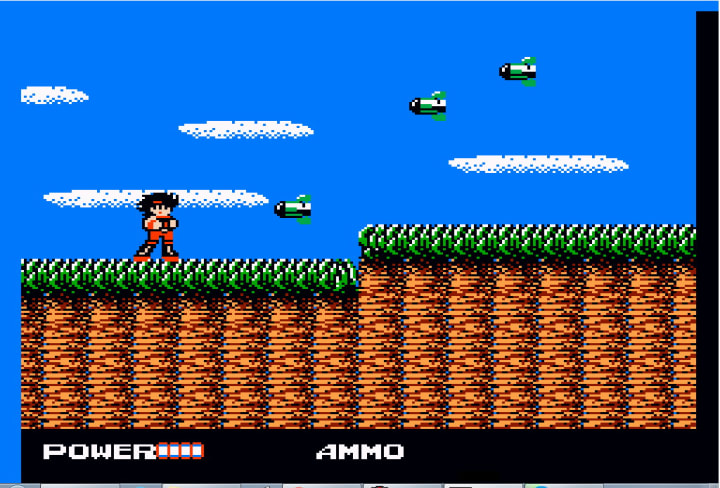
Thank goodness for emulators, or I’d never have played this little oddity. Released in Japan and North America but not the UK, Clash at Demonhead is unusual open-ended platformer with about two dozen levels, arranged together in a branching map. Most levels can be entered from either end and played through in either direction, and upon completing one you can choose which of the next few levels you want to try next. The result is a non-linear game with a gradually unfolding storyline. You play as a sort of super-ninja named Billy “Big Bang” Blitz, who fights his way through various odd monsters and aliens in his quest to save the world. There’s something oddly compelling about this one. Scott Pilgrim creator Bryan Lee O’Malley named Envy’s band after it.
Availability: I'm not aware of any official rerelease, I'm afraid.
19) Bionic Commando (1988)
Japanese title: Hittorā no Fukkatsu: Toppu Shīkuretto (Hitler’s Return: Top Secret)
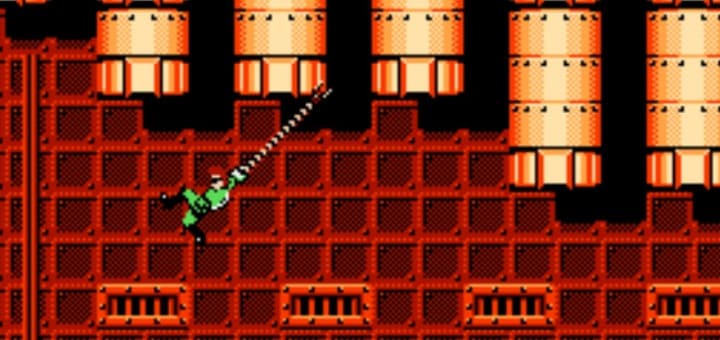
So I said that Donkey Kong was only arguably the first platformer? Another contender is 1980’s Space Panic, but some don’t count that because it has no jump mechanic. No one disagrees that Bionic Commando is a platformer, though, and that has no jump move either. Instead, you swing between or climb up platforms using your extendable bionic arm. Battling the evil imperial forces with a gun in one hand and a super-stretchy arm behind the other is a lot of fun, giving this game a really distinctive quality. Sadly, the Western version is a sanitised version of the Japanese, seeing the heroic agent Ladd up against the evil Master-D and not a resurrected Adolf Hitler.
Availability: Nothing for the original NES version beyond tracking down the cartridge, but the 2008 remake Bionic Commando Rearmed is available for the PC via Steam.
18) Blaster Master (1988)
Japanese title: Chō Wakusei Senki Metafight (Super Planetary War Chronicle: Meta Fight)
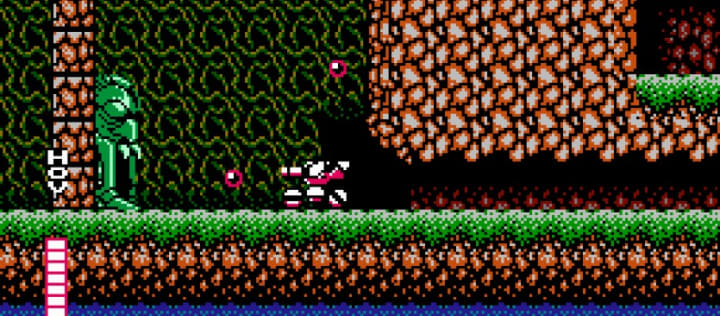
Don’t you hate it when your pet frog runs away and then gets mutated into a gigantic beast and falls through a hole into the bowels of the Earth? Fortunately for Jason, a mutant-fighting tank-robot named Sophia the 3rd is sitting about so you can go get your frog back. Blaster Master has tricky side-on platforming sections, and you have to keep in mind whether you want to proceed using your cumbersome but durable tank, or ditch it, which gives you more manoeuvrability but leaves you vulnerable. These sections are switched up with top-down sections which open up into new areas. It took me a moment to get the hang of this game, but once I did, I found it to be a fun, inventive, sprawling adventure.
Availability: It’s on the Nintendo Classics/Switch Online service, and is also part of Sunsoft Collection 1 for the Blaze Evercade.
17) Vice: Project Doom (1991)
Japanese title: Gun-Dec
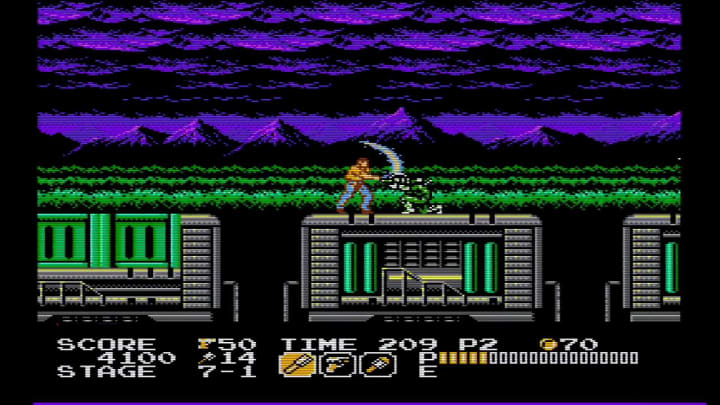
Vice: Project Doom might be the most ludicrously eighties action title ever, and it really suits this game. It’s predominantly a platformer with some fighting and shooting involved, not dissimilar to Ninja Gaiden, in which you play as Detective Hart, fighting his way through ninjas, monsters and aliens as he takes on a grand conspiracy. It switches up with overhead driving stages and FPS stages as well, intercut with story scenes that explain the increasingly elaborate, ridiculous plot. It doesn’t take long to burn through your lives, but there are limitless continues, so you can keep fighting on as you see fit.
Availability: It’s available through the Nintendo Classic/Switch Online service.
16) Monster in My Pocket (1992)
Japanese title: N/A (not released in Japan)
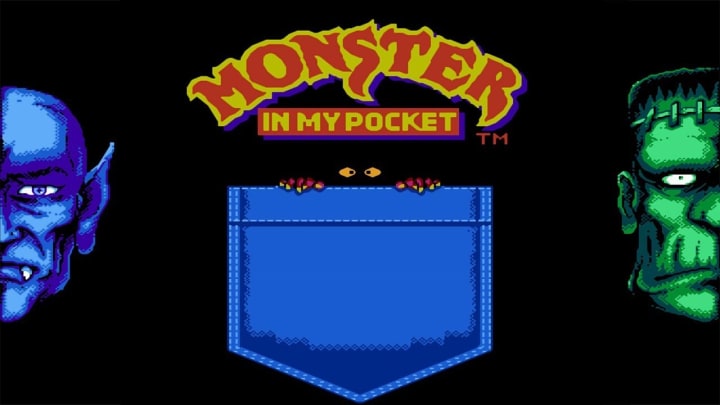
This one makes it onto my list purely because Monster in My Pocket remains my favourite toy line from my childhood, and I still collect the little plastic monsters today. Nothing to do with Pokemon, although it is why the Japanese game series wasn’t directly translated as Pocket Monsters in the West. A straightforward tie-in platformer from Konami, the MIMP game sees the famous monsters of the worlds shrunk by the evil Warlock and trapped in an ordinary house. You play as either Vampire or the Monster (i.e. Frankenstein’s Monster), battling through sundry other horrors with a simple attack move. It’s hardly a classic, but it’s certainly fun; I don’t think Konami could have made a bad platformer if they tried in those days. The two monsters have a double jump, which is par for the course these days but pretty unusual then, and the music is catchy as hell.
Availability: You’ll have to get your hands on an original cartridge to play this without nefarious means. I’d love to get hold of one still boxed with the exclusive figure, but I’m not made of money.
15) Excitebike (1984)
Japanese title: Ekisaitobaiku
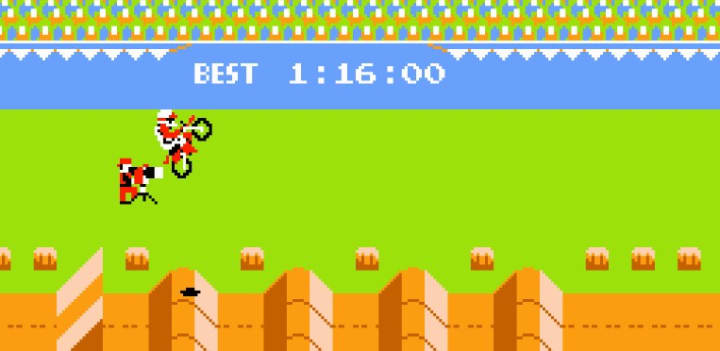
Excitebike is not actually very exciting, but it does provide a remarkably strong incentive to keep playing. While your bike never goes particularly fast in the game and you have to slow down frequently to avoid going over or overheating your engine, there’s something compelling about trying to beat your best times or win a pootling race against three computer-controlled riders. Groundbreaking in its use of smooth scrolling and acceleration, Excitebike is a racing game that’s more about balance and foresight than just flooring it. While I suspect the VS System version that was ported from arcades to the Famicom Disk System is better purely for including multiplayer, I’ve never played that so the original takes the spot.
Availability: Excitebike is one of those games that gets released over and over and even hidden inside other games. The original is on the NES Classic Mini and is available through the Nintendo Classics/Switch Online service, while the arcade version is part of Hamster’s Arcade Archives exclusively for the Switch/Switch 2.
14) Duck Hunt (1984)
Japanese title: Dakku Hanto
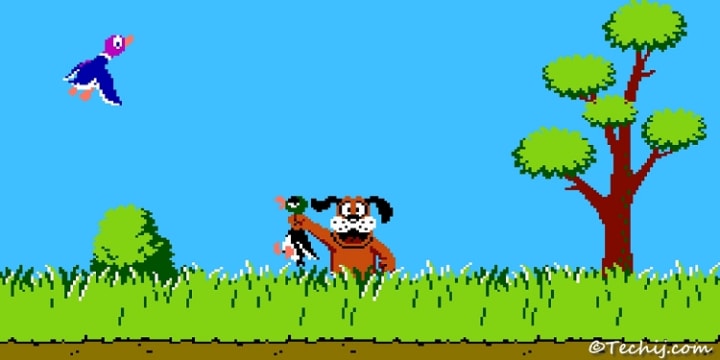
Duck Hunt is a game with a long and illustrious pedigree, arising from Nintendo’s Duck Hunt toy and laser-based mechanical arcade shooters, descending from the humble fairground shooting range. A launch title for the NES in the West as well as an arcade favourite, Duck Hunt used the Zapper light gun, an ingenious piece of kit that works only with now-obsolete CRT TV screens. I used to play this round friends’ houses and nostalgia is a big part of its inclusion here. Still, this is straightforward fun whatever your vintage. They should really bring the arcade version back so you can shoot that annoying dog. Git.
Availability: Sorely limited. It’s an easy enough cartridge to find second-hand thanks to it being a pack-in release, and if you have an original NES and an old enough TV you can play it just like in the old days. It simply won’t work with a modern TV screen though. The last official release was on the Wii Virtual Console, which bypassed the screen issue by using the Wii Remote sensor.
13) Mega Man 4 (1991)
Japanese title: Rokkuman 4 Aratanaru Yabou!! (Rockman 4: A New Evil Ambition!)
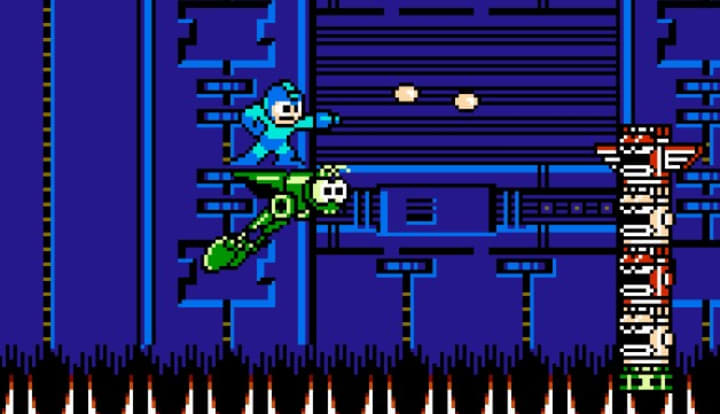
There’s a certain much-of-a-muchness to Mega Man games from Mega Man 2 (below) onwards, but Capcom went with an “if it ain’t broke, don’t fix it” attitude back in the NES days. I was tempted to put Mega Man 3 on here for introducing his faithful dog Rush, but he’s also present in Mega Man 4, along with helpful robot luggage “Flip Top” Eddie. More importantly, Mega Man 4 introduced the Mega Blaster, a new superpowered weapon which marked a small change to the gameplay and was carried forward to future titles.
Availability: The classic Mega Man titles have been released many times. Most recently, Mega Man 1 to 6 were released as the Mega Man Legacy Collection. You can get physical releases of this for the Switch, PS4, XBox One and even the 3DS, though the last was a limited collector’s edition and might set you back. You can also download it via Steam for PC, Nintendo eShop for Switch, PlayStation Store for PS4 and PS5, and for the XBox One on XBox Marketplace and Amazon.
12) Mega Man 2 (1988)
Japanese title: Rokkuman Tsū: Dr. Wairī no Nazo (Rockman 2: The Mystery of Dr. Wily)
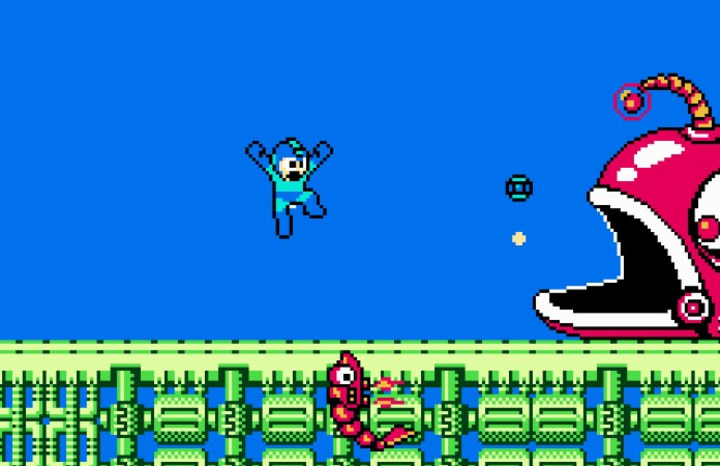
While the first Mega Man was reasonably well received, it was the second game that really set the standard for the series that is still going strong today. Mega Man is one of those series that defines “Nintendo hard,” but the second game makes some allowances, including a (still bloody hard) lower difficulty mode and energy tanks to refill your health. The archetypal eight Robot Masters, able to be tried in any order requiring experimentation to work out the best order to tackle them, begins here after a mere six in the first game. The nice thing about that is that you can at least try out each of the initial levels even if the game is too tough for you. Plus, using fan designs as the basis of the bosses started here. Tough as balls, but impeccably designed.
Availability: Mega Man 2 is on the NES Classic mini console, as well as part of the Mega Man Legacy Collection with the other five NES Mega Man games.
11) Darkwing Duck (1992)
Japanese name: N/A (not released in Japan)
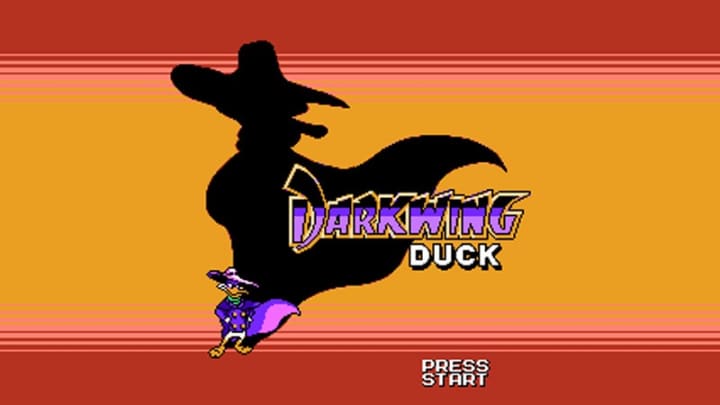
Many players point to DuckTales as one of the best games on the NES, but of all Capcom’s many Disney games for the platform, Darkwing Duck is the one that appeals to me most. It’s basically a Mega Man game with a ri-duck-ulous makeover, featuring similarly challenging platforming, with DWD taking out his foes with his gas gun. Being able to use his cape as a shield is a nice touch. Similarly to Mega Man, you can pick the order in which you play the stages, although you only get three of them at the beginning, the other three unlocking once you’ve beaten these. It’s not as tough as a Mega Man game, but it’s still a real challenge, with bosses that are on just the right side of frustrating.
Availability: Darkwing Duck is included in the Disney Afternoon Collection from Capcom for Switch/Switch 2, PS4, Xbox One and PC via Steam, along with DuckTales, DuckTales 2, TaleSpin and both Chip & Dale games. The Switch version also includes Bonkers and Goof Troop.
10) Donkey Kong 3 (1984)
Japanese title: Donkī Kongu 3
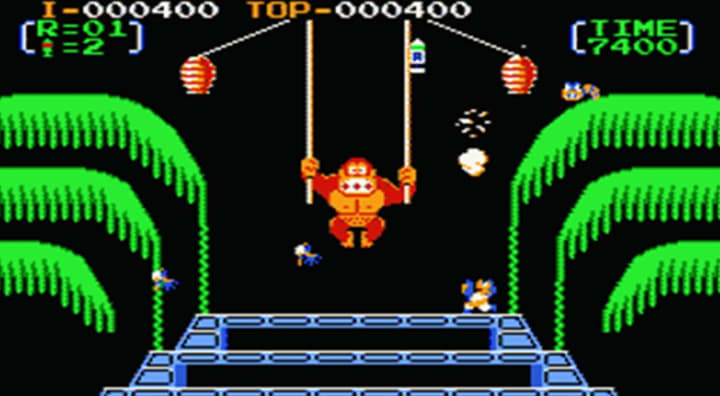
I am probably the only person who likes Donkey Kong 3 more than the first two DK games. It’s a strange addition to the series; the real sequel to DK Jr. is Mario Bros. DK3 is actually the arcade version of a Game & Watch game called Green House, which is why Mario is nowhere to be seen and instead you play as Stanley the Bugman. While there’s a slight platforming element, this is essentially a vertical shooter, where you fight off various insects and the mighty Kong himself with a canister of bug spray. It’s a very simplistic shooter but I really, really enjoy it.
Availability: The NES version is on the Nintendo Classics/Switch Online service, while the original arcade version is part of Hamster’s Arcade Archives service, exclusively for the Switch and Switch 2.
9) “Tengen Tetris” (1989)
Japanese title: Tetorisu
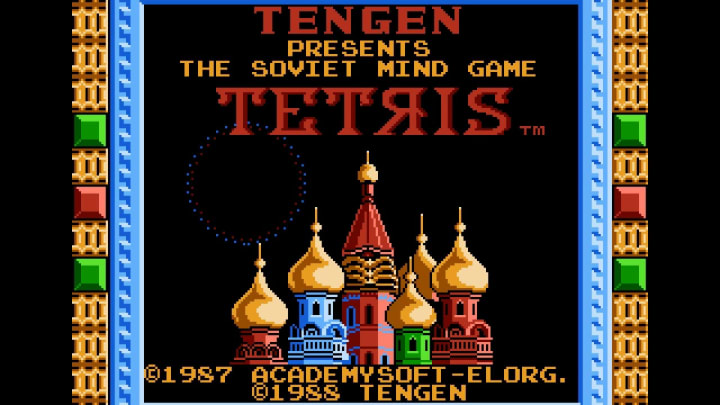
Described on the title screen as “Tengen Presents the Soviet Mind Game Tetris,” this is the arcade version of Tetris, ported to the NES in North America by Atari under a secondary brand. Due to a licencing disagreement this was recalled and thousands of cartridges destroyed, leaving Nintendo to release their own version. The Tengen version is far better than the in-house one, though, with better graphics, smoother play and the two-player mode actually active. Still not as good as the Game Boy version, though.
Availability: You couldn’t even buy this legally in 1989. You might find a cart on the collectors’ market if you’re lucky, but it’ll cost you.
8) Kirby’s Adventure (1993)
Japanese title: Hoshi no Kābī: Yume no Izumi no Monogatari (Kirby of the Stars: The Tale of the Fountain of Dreams)
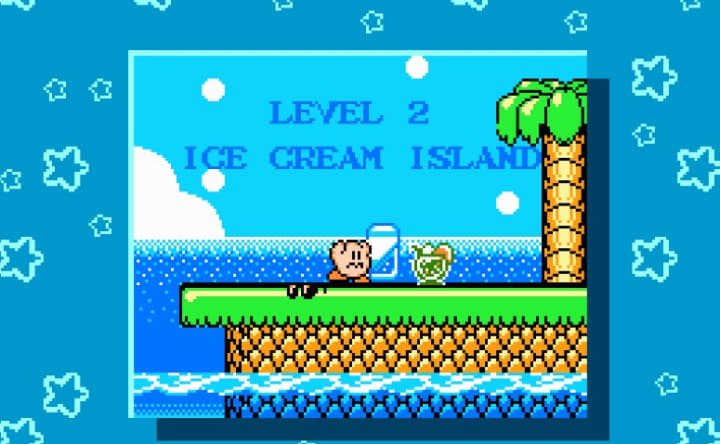
The second Kirby game and the first in colour, finally allowing Kirby to be appear in all his pink glory. Kirby’s Adventure is a massive step up from the lovely but simplistic Dream Land. This is game that gave Kirby his copy ability, adding a new dimension to the gameplay across a much larger selection of stages. A very late stage NES release, Kirby’s Adventure was a bit lost among games for newer systems at the time, but it’s a firm favourite of Kirby fans now.
Availability: The NES original is on the NES Classic Mini console and the Nintendo Classics/Switch Online service. There’s also the remake, Kirby’s Nightmare in Dream Land, for the Game Boy Advance, but that’s a subject for another day.
7) Xevious (1984)
Japanese title: Zebiusu
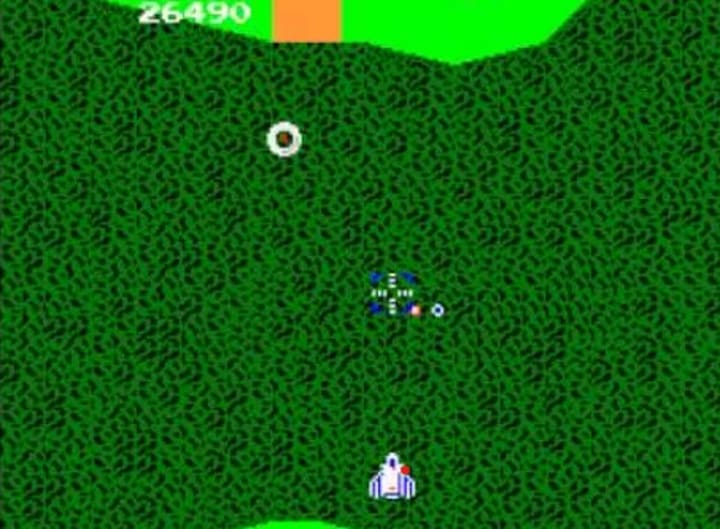
Namco’s hugely successful and influential vertical shooter got a Famicom port just a year after its arcade release. It sold out in days yet there wasn’t a western NES release for another four years. The NES version is rougher in terms of graphics and sound but actually plays a little better thanks to more generous hit detection. I enjoy a bit of pew-pew on the starship Solvalou.
Availability: The NES version is part of the Nintendo Classics line on Switch Online and Namco Museum Archives Vol. 1 for download to Switch, XBox One, PS4/5 and PC via Steam. The arcade version is part of Hamster’s Arcade Archives line for download to the Switch and PS4/5.
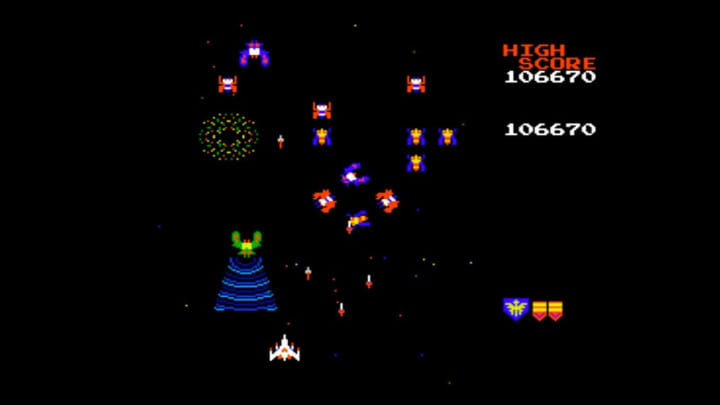
6) Galaga: Demons of Death (1985)
Japanese title: Gyaraga
The NES port of Namco’s 1981 arcade shooter Galaga, this didn’t actually release in the West until 1988, with a colourful, if unnecessary, subtitle. There’s not much to say on Galaga these days. It’s a stonking great vertical shooter that builds on its predecessor, Galaxian, as that built on its inspiration, Space Invaders. A lot of fun and very addictive; I can waste a lot of time shooting at space insects.
Availability: The NES version is on the NES Classic Mini. If you’d rather download it, the arcade version is available for PS4/5, XBox One or through Steam in the Arcade Game Series, either alone or as part of the 3-in-1 Pack (with Pac-Man and Dig Dug); for PS4/5 and Switch as part of Hamster’s Arcade Archives; and for Switch as part of that platform’s exclusive Namco Museum release. This last one is also availability as a physical release, bundled with Pac-Man Championship Edition 2 Plus, as the Namco Museum Arcade Pac.
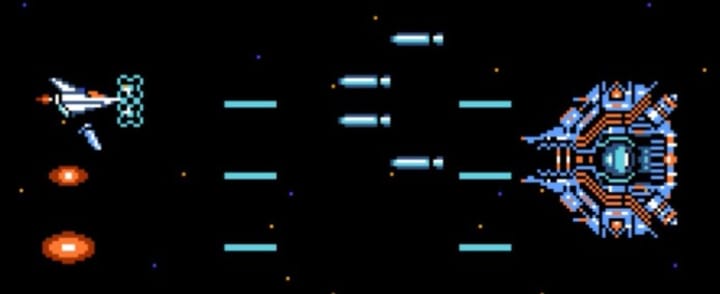
5) Gradius (1986)
Japanese title: Guradiusu
Also known as Nemesis and developed as Scramble 2, Gradius was Konami’s most groundbreaking entry into the shoot-em-up genre. The NES version is simplified, but it’s still a great shooter. You fly the Vic Viper through increasingly challenging courses, upgrading with power-ups and facing down enormous bosses. It’s a bloody tough game, but fortunately this version is the original holder of the Konami Code, which gives your ship a one-time boost with all weaponry unlocked.
Availability: Gradius is one of the thirty games included on the NES Classic Mini console, and is also available on the Nintendo Classics service through Switch Online. Hamster’s Arcade Archives online service on the Switch and PS4 also includes VS. Gradius, which is the arcade version of Nintendo’s home port. Or you could just play the original Konami arcade version through that instead. The arcade version is also in the compilation listed below under Life Force.
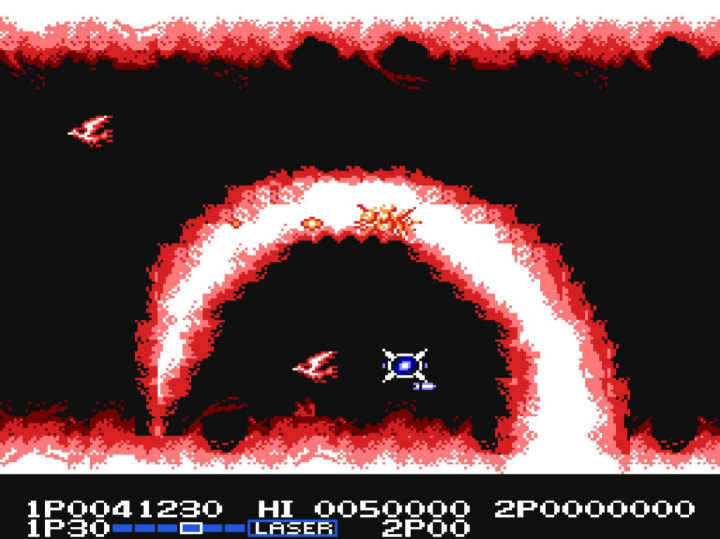
4) Life Force: Salamander (1987)
Japanese title: Saramanda
The names in the Gradius series get very confusing… this was Salamander in Japan, Life Force in North America, and Life Force: Salamander in Europe. Let’s not start on the variations of the arcade game it was based on. Anyway, this builds on Gradius to present a mix of horizontal and vertical levels, in some of the most bizarre video game environments ever, most of them unpleasantly biological. It’s tough as hell again, but the Konami code will give you a bunch of extra lives.
Availability: The NES version was available on the Virtual Console on the Wii, WiiU and 3DS, but if you haven’t downloaded it by now you’re out of luck as that service has been discontinued. The arcade versions have been included in a number of compilations, including Konami’s Arcade Classics Anniversary Collection on PS4, Xbox One, Switch and PC via Steam, and the Gradius Origins set on PS5, Xbox Series X and S, Switch and PC via Steam, along with the arcade version of Gradius, several other entries in the arcade series, and a brand new game, Salamander III.
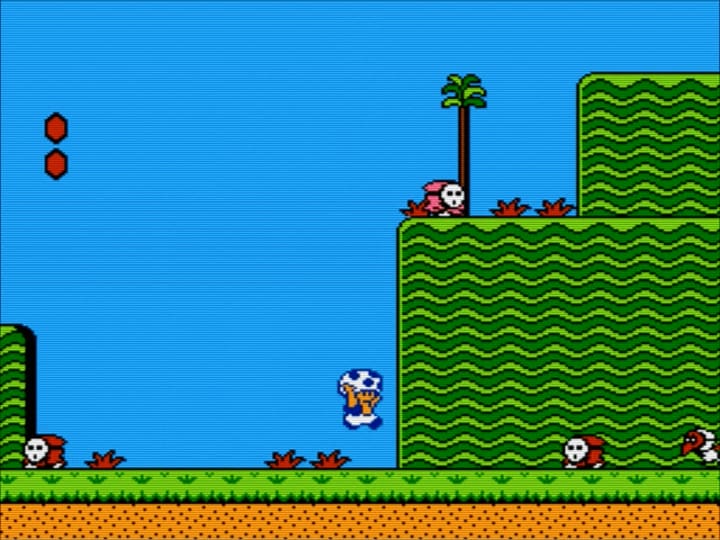
3) Super Mario Bros. 2 (1988)
Japanese title: Supa Mario USA
In case you don’t know the story, the Japanese Famicom game Super Mario Bros. 2 wasn’t released in the West back in the day. Instead, we got a reskinned version of a Japanese game, Yumi Kojo Doki Doki Panic. I’d really love to play that some day, but I doubt I’d love it as much as the Western Super Mario Bros. 2. Always the odd-one-out of the Mario family, it’s a charmingly strange game where you uproot vegetables and lob them at your enemies. There’s so much here to love: getting to play as Mario, Luigi, Toad and Peach with different abilities for each; broad, sprawling levels with areas of vertical play; shifting into the strange parallel plane of Subspace. Plus, this is the game that gave the Mario universe Shy Guys, Bob-Ombs and Birdo.
Availability: the NES version of the game is on the NES Classic Mini and the Nintendo Classics/Switch Online service. If you’d rather play a remake with better graphics, Super Mario All-Stars is on the SNES section of Nintendo Classics, and Super Mario Advance is on the Game Boy Advance section if you’ve signed up to the premium Expansion Pack service.
2) Super Mario Bros. 3 (1988)
Japanese title: Supa Mario Burazazu 3
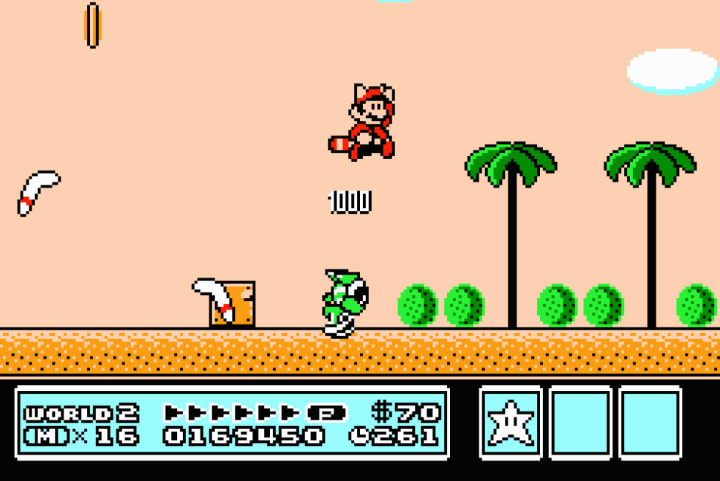
Widely regarded as one of the best, if not the best, games on the platform, Super Mario Bros. 3 is not my favourite Mario game by a fair way, but it is a great time. Endlessly inventive and challenging, SMB3 expands on the original Super Mario Bros. with vast worlds of short, snappy, challenging levels. With some of the best power-ups in a Super Mario game, and introducing the Koopalings (once upon a time considered to be Bowser’s raucous kids), SMB3 remains a huge influence on the Mario series today.
Availability: it’s on the NES Classic Mini and Nintendo Classics/ Switch Online. There’s a remake in Super Mario All-Stars on Switch Online, and another remake, Super Mario Advance 4, on the Expansion Pack premium sub.
1) Super Mario Bros. (1985)
Japanese title: Supa Mario Burazazu
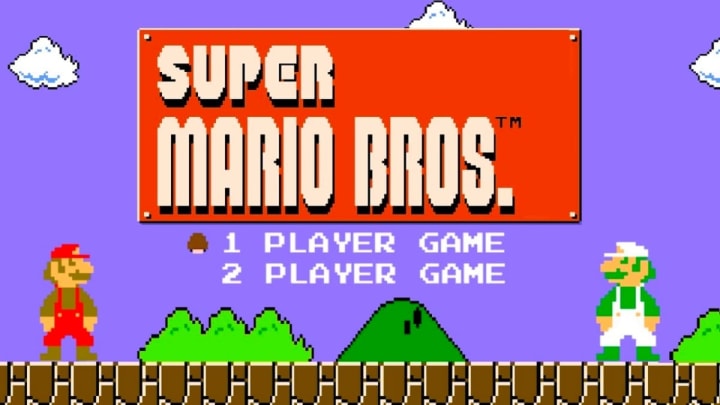
Completely revolutionary, Super Mario Bros. was the launch title for the NES in the West and revitalised the sales of the Famicom in the East. It’s been argued that its success saved the global game console market, and while that might be a touch hyperbolic, it was certainly an absolute smash hit and hugely influential for the industry. While games like Pitfall and Pac-Land moved the platform genre beyond single-screen gameplay, this was the first true side-scrolling platformer, setting the standard for 2D platforming to this day. As the first game in the Super Mario series, SMB1 introduced characters and concepts that are still essential to the series today, from the Fire Flower to the Piranha Plant, and from Bowser to Princess Peach (or Princess Toadstool as we called her back then). SMB3 might be the popular choice, but the original is the one I keep going back to, time and time again. Sure, the controls are a little slippery and the graphics primitive, but I can play this over and over. Iconic.
Availability: Naturally it’s on the NES Classic Mini and Nintendo Classics/Switch Online, the latter also hosting the SNES remake as part of Super Mario All-Stars.
About the Creator
Daniel Tessier
I'm a terrible geek living in sunny Brighton on the Sussex coast in England. I enjoy writing about TV, comics, movies, LGBTQ issues and science.
Keep reading
More stories from Daniel Tessier and writers in Gamers and other communities.
My Top 25 Game Boy Games
I've been getting very much back into my games over the last year or so (hooray, hyperfixation!). Not just playing, but reading about, learning about, and, of course, reminiscing about. I've recently been ensconced in Shaun Musgrave's Patreon, and particularly enjoyed his lists of favourite games for various consoles. So I thought to myself, why not have a crack at that myself?
By Daniel Tessier18 days ago in Gamers
Rsvsr Fallout 76’s Backwoods Update: Bigfoot, Uninvited Guests, and a Wilder Appalachia
Fallout 76 has always been a world of danger and unpredictability. From radiation storms to roaming super mutants, Appalachia is full of surprises—but the “The Backwoods” update (Patch 66) makes the wasteland feel more alive, wild, and deadly than ever.
By Dangyc Dingabout 14 hours ago in Gamers
Fortnite Will Totally Change How You Play Battle Royale and Build Your Victory
Few games have had as profound an impact on modern gaming culture as Fortnite. Developed by Epic Games and released on Xbox, Fortnite combines fast-paced combat, creative building mechanics, and constantly changing environments to create a battle royale experience unlike any other. Its unique blend of action and construction has made it a cultural phenomenon, attracting millions of players worldwide.
By Lukáš Hrdlička3 days ago in Gamers


Comments
There are no comments for this story
Be the first to respond and start the conversation.