
THE 1980 MOSCOW OLYMPICS BOYCOTT:POLITICAL IMPLICATIONS
The 1980 Moscow Olympics Boycott:Political Implications Explores the Impact of the U.S.-led Boycott on International Relations and The Cold war.

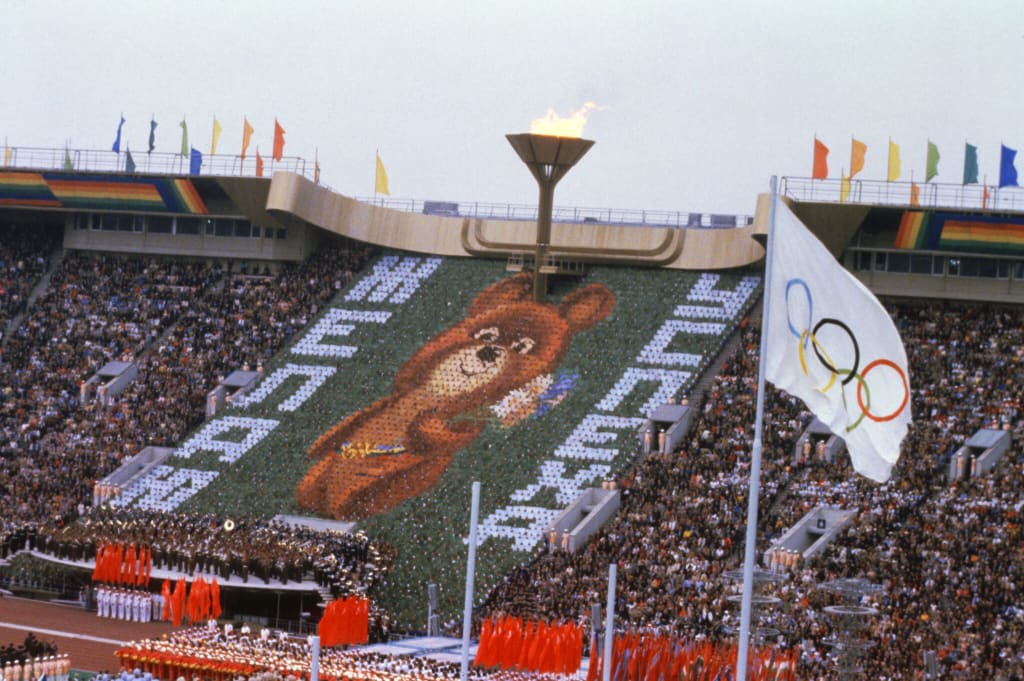
The 1980 Moscow Olympics were marked by one of the most significant political boycotts in the history of the Olympic Games. A total of 65 nations, led by the United States, decided to abstain from participating in the Games as a protest against the Soviet Union’s invasion of Afghanistan in December 1979. The boycott had far-reaching political, diplomatic, and social implications that resonated throughout the world, affecting not only international sports but also the broader geopolitical landscape during the Cold War.
(I)The Context: The Soviet Invasion of Afghanistan
The catalyst for the 1980 Moscow Olympics boycott was the Soviet Union’s military intervention in Afghanistan, which began in December 1979. The Soviet government, led by Leonid Brezhnev, justified the invasion as a way to support the communist government of Afghanistan against insurgent forces. However, the international community viewed this as an aggressive act of expansionism and a violation of Afghanistan's sovereignty.
The United States, under President Jimmy Carter, strongly condemned the invasion, describing it as a breach of international law and an affront to peace in the region. Carter’s administration quickly sought to lead a diplomatic and political response to the Soviet actions, including economic sanctions and a call for a boycott of the Moscow Olympics, which were scheduled for the summer of 1980.
(II)The Call for Boycott
The United States was the primary advocate for the boycott, with President Carter urging American athletes and other countries to refuse to attend the Moscow Olympics in protest of the Soviet invasion. Carter argued that participation in the Games would amount to condoning Soviet aggression and undermining the international condemnation of the invasion.
The call for a boycott quickly gained traction in the West, and several countries aligned themselves with the U.S. stance. By the time the Games were to begin, more than 60 countries had joined the boycott, including Canada, Japan, West Germany, and a host of nations from the Western bloc. The boycott was supported by countries that had strong political and military ties to the United States, but it was particularly notable for the absence of some traditional allies, including some European nations.
(III)Political Implications of the Boycott
The 1980 Olympic boycott had profound political implications, influencing both the global sports community and international relations during the Cold War.
- Cold War Tensions: The boycott exacerbated the already tense relations between the United States and the Soviet Union. Both superpowers used the Olympics as a platform for political demonstration. The U.S. and its allies viewed the Soviet invasion of Afghanistan as a reflection of Soviet expansionist ambitions, while the Soviet Union saw the boycott as an unfair attempt to undermine their legitimacy and prestige. This division symbolized the ideological and political divide between the two blocs, marking the Olympics as a battleground for Cold War politics rather than a celebration of international unity through sport.
- Impact on the Olympic Movement: The Olympic Games, intended to bring athletes together in a spirit of global unity and peace, were instead transformed into a political arena. The boycott drew attention to the increasing politicization of the Games, setting a precedent for future boycotts. The most notable example would be the 1984 Los Angeles Olympics, where the Soviet Union and its allies retaliated with a boycott of their own. The political nature of the 1980 boycott raised questions about the purity of the Olympic ideal and whether the Games could remain immune to international politics in the future.
- Effect on Athletes: The boycott had a devastating impact on athletes, particularly American and other Western competitors who had trained for years to participate in the Games. Many athletes saw the boycott as an injustice to their hard work and sacrifice. The emotional and psychological toll of being deprived of the opportunity to compete at the highest level was immense, and in many cases, athletes’ careers were forever altered. For some, the 1980 Olympics marked the pinnacle of their athletic careers, and the boycott robbed them of that moment.
- Diplomatic Consequences: On the diplomatic front, the boycott further strained U.S.-Soviet relations, which were already fragile due to the ongoing Cold War conflict. The boycott served as an additional irritant in an already tense geopolitical environment. However, it also highlighted the global impact of the Cold War, as countries aligned themselves either with the Soviet Union or the United States, demonstrating the far-reaching consequences of their ideological and political stances.
- International Perception of the Soviet Union: The Soviet Union faced significant international criticism as a result of the boycott. While the Soviet government presented the Olympics as an opportunity to showcase the strength and unity of socialism, the absence of key countries, particularly the United States, cast a shadow over the event. The boycott tarnished the global image of the Soviet Union and sent a message that their actions in Afghanistan were unacceptable to much of the world.
In The End
The 1980 Moscow Olympics boycott was a pivotal moment in the Cold War era, reflecting the intense geopolitical rivalry between the United States and the Soviet Union. While it undoubtedly impacted the Games and the athletes involved, the boycott also had broader implications for international diplomacy, the Olympic movement, and the political landscape of the time. The legacy of the boycott serves as a reminder of the ways in which sport can intersect with global politics, and how international events can become powerful symbols of ideological conflict.
About the Creator
Badhan Sen
Myself Badhan, I am a professional writer.I like to share some stories with my friends.
Keep reading
More stories from Badhan Sen and writers in Gamers and other communities.
THE ROLE OF THE OLYMPICS IN INTERNATIONAL POLITICS
The Olympic Games have long been a symbol of global unity, sportsmanship, and international cooperation. However, they have also played a significant role in international politics, influencing the relationships between nations, shaping global identities, and reflecting the political dynamics of the time. The Olympic Games, held every four years, have not only showcased athletic excellence but have also served as a platform for countries to project power, engage in diplomatic struggles, and express political ideologies.
By Badhan Senabout a year ago in Gamers
Master the Mists: The Ultimate Enshrouded Console Starter Guide
Embervale is a world buried under a corrupting fog, and as a Flameborn, you are the only thing standing between humanity and extinction. With the official console launch finally here in 2026, players on PlayStation 5 and Xbox Series X|S are stepping into the Shroud for the first time.
By Richard Bailey6 days ago in Gamers


Comments (1)
Hey, just wanna let you know that this is more suitable to be posted in the Unbalanced community 😊