
Single-Player Only in World War Z VR: The Impact of Losing Co-Op Gameplay
Exploring How the Lack of Multiplayer Changes Immersion, Gameplay, and Replayability in World War Z VR

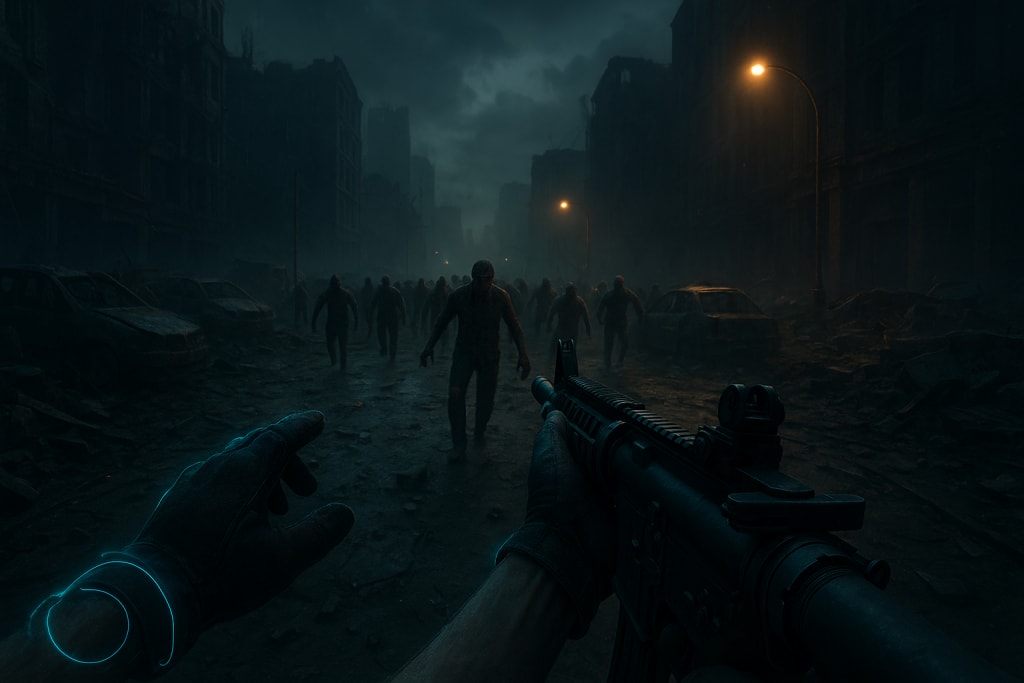
When Saber Interactive announced World War Z VR, excitement surged. Fans expected the same chaotic, squad-based experience that defined the original World War Z. Yet, one critical change separated this VR title from its predecessor: it launched without co-op multiplayer, restricting the game to single-player only. This shift reshaped both how players approach the action and how the community perceives the game’s longevity.
In this breakdown, we’ll explore how the absence of co-op affects immersion, pacing, replayability, and overall design in World War Z VR.
Why Co-Op Was a Pillar in World War Z
The original World War Z thrived on teamwork. Four-player squads relied on coordination, communication, and resource sharing to survive swarms of hundreds of undead. Every mission felt unpredictable because success hinged on how well players meshed together.
In co-op play:
- Roles mattered. One teammate might focus on defense, another on supply distribution.
- Replayability expanded. Different team compositions made every run unique.
- Difficulty spiked organically. More players meant more chances for mistakes, which made tension soar.
Removing this system for VR alters not only the mechanics but also the emotional stakes of survival.
The Immersion Trade-Off
VR gaming thrives on immersion. By stepping into the shoes of a survivor, you feel the claustrophobic panic of a collapsing city firsthand. In single-player mode, the developers aimed to strengthen this immersion by keeping the focus on you alone against the horde.
That choice has benefits:
- Atmosphere feels heavier. Isolation amplifies tension.
- Story pacing becomes controlled. Cutscenes and scripted events hit harder when they aren’t disrupted by other players.
- Performance stabilizes. Fewer network demands mean smoother gameplay.
However, the cost is significant. VR naturally leans toward social connection. Fighting shoulder-to-shoulder with a friend makes danger more thrilling. Without it, the immersion risks tipping into loneliness rather than shared survival.
How the Absence of Co-Op Affects Gameplay
The most noticeable change comes in how players tackle missions. In co-op World War Z, team synergy often determined whether you lived or died. In VR, the weight falls entirely on individual skill.
Here’s what changes in single-player mode:
- Strategy shrinks. There’s no tactical discussion, no dividing roles. Every task is yours.
- Replayability drops. Without co-op, missions feel more scripted after repeated runs.
- Difficulty fluctuates. AI companions fill the gap, but they lack the unpredictability of human allies.
- Pacing slows. Moments designed for coordinated chaos now unfold in a more methodical rhythm.
For some, this brings clarity and focus. For others, it strips away the frantic unpredictability that made World War Z unforgettable.
Player Reception and Community Divide
Fans have split into two camps. Some argue that single-player enhances the VR survival-horror fantasy by making every decision feel personal. Others see the absence of co-op as a missed opportunity that weakens long-term appeal.
Key community perspectives include:
- Immersion lovers: Thrilled by the solitude and intensity.
- Social players: Disappointed that they can’t share the experience with friends.
- Competitive gamers: Feel the lack of co-op undercuts replayability and progression systems.
What’s clear is that the absence of multiplayer has become a defining talking point around the game’s identity.
The Bigger Picture: VR’s Ongoing Struggle with Co-Op
It’s worth noting that co-op in VR isn’t always straightforward. Stability, synchronization, and comfort all create development hurdles. Handling hundreds of zombies in real-time multiplayer VR would push both hardware and software limits.
By choosing single-player only, Saber Interactive prioritized stability over ambition. That decision highlights a broader trend in VR development: many studios experiment with immersive solo campaigns before attempting large-scale multiplayer.
Could Co-Op Arrive Later?
While nothing is guaranteed, players continue to speculate about potential updates. Adding co-op would dramatically change the game’s dynamic, but it would also require:
- Rebalancing missions for multiple players.
- Optimizing swarm AI for synchronized VR sessions.
- Server infrastructure capable of handling the chaos.
If future updates bring co-op, World War Z VR could shift from a niche single-player experience into one of VR’s most ambitious survival shooters. Until then, it remains a solitary fight against the horde.
World War Z VR’s single-player only approach is bold but divisive. On one hand, it delivers a focused survival experience where every choice is yours alone. On the other, it removes the camaraderie that made the original game thrive.
Whether this decision strengthens or weakens the franchise depends entirely on what players value more: immersion through isolation, or chaos through cooperation. For now, the absence of co-op leaves World War Z VR in a unique, if somewhat controversial, position in the growing VR landscape.
About the Creator
Richard Bailey
I am currently working on expanding my writing topics and exploring different areas and topics of writing. I have a personal history with a very severe form of treatment-resistant major depressive disorder.
Keep reading
More stories from Richard Bailey and writers in Gamers and other communities.
How to End a D&D Campaign in a Satisfying Way: A Dungeon Master’s Guide
Every Dungeons & Dragons campaign eventually reaches a conclusion. Maybe your adventurers have defeated the great villain, uncovered the last secret of the world, or simply reached a natural stopping point.
By Richard Bailey5 months ago in Gamers
All Valorant Gameplay Guide 2026
Valorant remains one of the most played and searched competitive shooters in the United States, and in 2026 it continues to attract both new and returning players. Developed by Riot Games, Valorant combines precise gunplay with tactical abilities, rewarding discipline, teamwork, and thoughtful decision-making rather than reckless action.
By Games Mode Ona day ago in Gamers


Comments
There are no comments for this story
Be the first to respond and start the conversation.