
Resident Evil Requiem Full Story
Resident Evil Requim Has Untold story


Resident Evil: Requiem is often discussed by fans as a conceptual continuation of Capcom’s long-running survival-horror universe. While not an official title, the idea of Requiem has inspired deep discussion about where the Resident Evil narrative could move after the events of recent games. This article presents a professional, truthful, and respectful summary of how such a story is commonly imagined—without claiming it exists as real canon.
At its core, Requiem is viewed as a symbolic reflection on the franchise’s enduring themes: human ambition, biological experimentation, and the moral consequences that follow. The word “Requiem” implies remembrance, mourning, and the closure of a long struggle. This makes it a fitting concept for a potential storyline that seeks to tie together decades of biohazard catastrophes caused by corporations like Umbrella, Neo-Umbrella, and The Connections.
Setting the Stage: A World in Recovery
In fan interpretations, Requiem takes place several years after the collapse of major bioterror organizations. Nations have strengthened oversight on biotechnology, and global health agencies attempt to rebuild trust. However, the scars of past outbreaks remain fresh. Cities destroyed by viral incidents stand as grim reminders of the consequences of unethical science.
This imagined world is quieter, but not free from danger. Hidden laboratories, forgotten research stations, and rogue scientists still exist—guarding knowledge capable of causing another catastrophe. The story begins when a mysterious signal emerges from one such abandoned Umbrella facility, suggesting that a dormant B.O.W. (Bio-Organic Weapon) project has reactivated on its own.
The Protagonists: Veterans and New Faces
A Requiem concept often brings together iconic characters such as Leon S. Kennedy, Claire Redfield, and Jill Valentine, portraying them not as action stereotypes but as survivors who carry emotional weight. Each of them has witnessed widespread suffering and understands the responsibility that comes with confronting new threats.
Leon represents resilience; despite decades of battles, he refuses to allow another outbreak on his watch.
Claire, committed to humanitarian relief work, embodies compassion and justice.
Jill, once controlled by the enemy through the P30 drug, symbolizes recovery and the struggle to reclaim one’s identity.
Alongside them, new characters—often researchers or field operatives—explore the ethical dimension of biotechnology. Their presence highlights the moral question at the heart of the narrative: If you have the knowledge to create life, do you also bear the full responsibility for what it becomes?
The Central Threat: Project Requiem
The core of the story revolves around Project Requiem, a theoretical Umbrella initiative designed as a failsafe. Its purpose was not to unleash a virus, but to erase evidence of past experiments through self-producing bio-organisms capable of dissolving organic material. Over time, this system mutates and becomes uncontrollable, threatening to consume entire ecosystems.
Unlike typical Resident Evil antagonists, Project Requiem has no central villain—no mad scientist or tyrannical CEO. Instead, it is a manifestation of humanity’s accumulated mistakes. This aligns with the franchise’s long-standing message: the greatest dangers are often created through human arrogance, not malice.
Themes of Accountability and Redemption
A key reason Requiem resonates with audiences is its emphasis on moral accountability. Instead of glorifying violence or chaos, it encourages reflection on responsibility. This approach aligns with Islamic values that emphasize honesty, justice, humility, and preservation of life.
Characters question the ethics of biotechnology and confront the consequences of secrecy and corruption. The story presents a balanced perspective: science itself is not evil, but unethical use of knowledge leads to suffering. This mirrors real-world principles found in Islamic teachings on stewardship and moral behavior.
The Climactic Resolution
In the conceptual storyline, the protagonists infiltrate the facility generating the destructive organisms. Rather than relying solely on combat, the resolution involves shutting down the system using scientific understanding and cooperation. This shift from pure action to thoughtful problem-solving reinforces the idea that wisdom and responsibility, not violence, prevent future tragedies.
The ending is often imagined as bittersweet. The immediate threat is stopped, but the characters recognize that humanity must remain vigilant. They honor those lost to previous outbreaks and commit themselves to ensuring history does not repeat itself. This tone of remembrance perfectly aligns with the term “Requiem.”
Conclusion: Why Requiem Captures the Imagination
Although Resident Evil: Requiem is not an official installment, the concept captures the spirit of the franchise while presenting deeper emotional and ethical dimensions. It imagines a story that respects human life, confronts the dangers of unchecked ambition, and emphasizes responsibility—values that resonate strongly with audiences, including those who seek narratives consistent with Islamic ethical principles.
In the end, Requiem symbolizes closure, reflection, and the hope that humanity can learn from its past and build a safer future.d
About the Creator
Keep reading
More stories from Games Tale and writers in Gamers and other communities.
Forza Horizon 6 Japan Map
Forza Horizon 6 is finally taking the Horizon Festival to Japan, and the map is already one of the most talked-about parts of the entire game. Fans have asked for a Japan setting for more than a decade, and Playground Games has responded with what looks to be the most diverse, atmospheric, and culturally rich map in the franchise so far.
By Games Tale2 months ago in Gamers
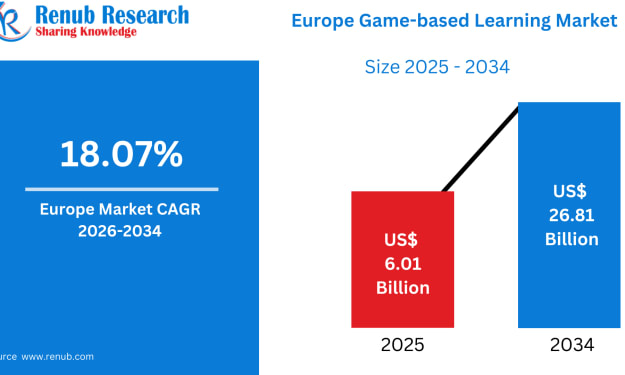
Europe Game-Based Learning Market Size & Forecast 2026–2034
The Europe game-based learning market is set to experience remarkable expansion in the coming decade, growing from US$ 6.01 billion in 2025 to US$ 26.81 billion by 2034, according to Renub Research. This represents a strong compound annual growth rate (CAGR) of 18.07% from 2026 to 2034, driven by the rapid digitalization of education systems, increased adoption of e-learning platforms, and the rising demand for interactive, outcome-oriented learning solutions.
By Aaina Oberoi5 days ago in Gamers
FPS: The Last Flame Challenge Winners
Welcome to our first Winners Announcement of the year and to the final challenge in the Fall Poetry Series. The Last Flame invited writers to sit with endings, using fire as a central image to consider what remains when something burns out: ash, warmth, memory, silence, or the faint promise of what comes next. The strongest pieces treated endings as gradual rather than sudden, allowing them to flicker, dim, and linger.
By Vocal Curation Team6 days ago in Resources



Comments
There are no comments for this story
Be the first to respond and start the conversation.