
My Journey Into Battlefield 6 Exploring Weapons Maps and Tactical Play
My Journey Into Battlefield 6 Exploring Weapons Maps and Tactical Play
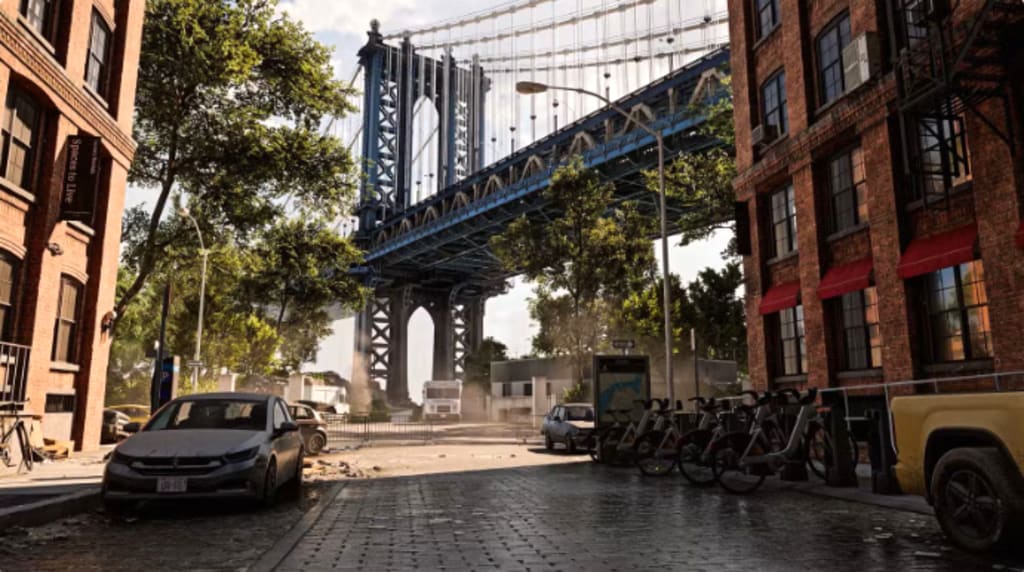
Starting my adventure in Battlefield 6 was both exciting and challenging as I dived into its new maps, weapons, gadgets, and vehicles. I chose the Support class initially, taking a slower, more careful approach by using a light machine gun (LMG) mounted on my deployable barrier. While LMGs aren’t usually considered the most powerful weapons in the game, I found that with thoughtful positioning and teamwork, they can play a valuable role. Their sustained firepower helps control key points on the battlefield, and I believe that in the future, some specific loadouts might make these ‘chunky’ guns even more effective.
Battlefield 6 offers four main classes in multiplayer: Assault, Engineer, Recon, and Support. What sets this game apart is the new freedom it gives players to mix and match weapons and gadgets across classes. For example, during the review period, I played in modes where weapons were completely unlocked regardless of class. This means a Recon player can use an assault rifle or a Support player can decide to take a sniper rifle, which was traditionally impossible. You are also free to use gadgets from each class without sticking to preset weapon types. This change is quite divisive. As a traditionalist, I was initially sceptical, but I came to appreciate the creative options it introduces.
One of the biggest joys has been the ability to resupply myself with ammo even while sniping from a rooftop as a Recon, or using the Assault class’s iconic ladder to access new angles of attack. The possibility to carry out demolition tactics like blowing up buildings with C4 while rushing with a submachine gun gives a fresh twist to how the game is played. However, this freedom comes with trade-offs: mixing weapons means losing class-specific perks such as faster aiming when using an Assault rifle. This means you have to weigh the upside of flexibility against some loss in specialist advantages.
My concern is how quickly this unlocked system can be exploited, especially by coordinated teams knowing the game’s mechanics well. I can already imagine strategies where an Assault player carries both a deploy beacon and a sniper rifle, supported by a Support player resupplying ammo while sniping at enemies far away, and an Engineer launching rocket attacks on vehicles—this combination could get quite overwhelming if not carefully balanced. Thankfully, EA has also kept weapon-restricted modes available, letting the community pick their preferred style. Still, unrestricted mode is the default, which suggests the developers are playing it safe instead of committing to a clear design direction. I’m curious to see how this will evolve post-release u4gm Battlefield 6 Boosting.
Turning to the maps themselves, I have mixed feelings. Battlefield 6’s maps are generally stunning and atmospheric, with my personal favourite being Sobek City. It’s a sprawling scene of dusty ruins and industrial pipes with detailed effects like tarpaulins flapping in the breeze and tanks rumbling across battle-scarred ground. However, the maps are noticeably smaller and tighter-paced compared to previous Battlefield entries. Unlike the vast open spaces and rolling dunes of games like Battlefield 1’s Sinai Desert or Battlefield 2’s Dragon Valley, here you are often funnelled into narrow corridors and chokepoints. The game’s faster pace feels more aligned with younger players used to the rapid action of Call of Duty, which may alienate old-school Battlefield purists.
Map balance becomes a real problem especially in the Breakthrough mode. Defenders seem to have a huge advantage, making attacking frustratingly difficult. Maps like Liberation Peak and Manhattan Bridge felt almost impossible to crack during my sessions, a disappointing experience overall. It’s reassuring that a day-one patch aims to improve balance, and I’m also hopeful that the Portal mode will enable players to adjust or create better-balanced maps.
Despite these issues, Battlefield 6 still offers a variety of playstyles. You don’t have to be a frantic ‘run-and-gun’ player; the game rewards tactics like repairing tanks, holding strategic points, and patiently defending positions. Only the most skilled players will move freely without constantly being targeted, so there remains plenty of room for tactical depth and skillful play buy Battlefield 6 Boosting.
In conclusion, Battlefield 6 offers an intriguing mix of innovation and tradition. Its open weapon and class system provides freedom but also raises questions about balance and class identity. The maps are beautifully designed but sometimes feel too cramped for classic Battlefield fans. Still, the game’s combination of vehicles, gadgets, and diverse roles means there’s something here for everyone—from careful support players like me to aggressive frontline soldiers. I’m excited to see how the game grows after launch and how players adapt to its unique style of warfare.
About the Creator
The Honed Ashlar, Part 1 of 5
Part 1: The Scaffolding of Ruin The bus ride into the city had felt like being swallowed by a cold, metallic throat. Silas leaned his forehead against the vibrating window of the Greyhound, watching the California coastline transform from a dream of salt and gold into a nightmare of concrete ribs. To everyone else on the bus, the skyline of Tinseltown was a promise—a soaring monument to ambition. To Silas, it was a Structural Failure.
By Nathan McAllister5 days ago in Gamers



Comments
There are no comments for this story
Be the first to respond and start the conversation.