
LONG-TERM ECONOMIC BENEFITS OF HOSTING THE OLYMPICS
Exploring the Lasting Economic Advantages of Hosting the Olympic Games for Cities and Nations.

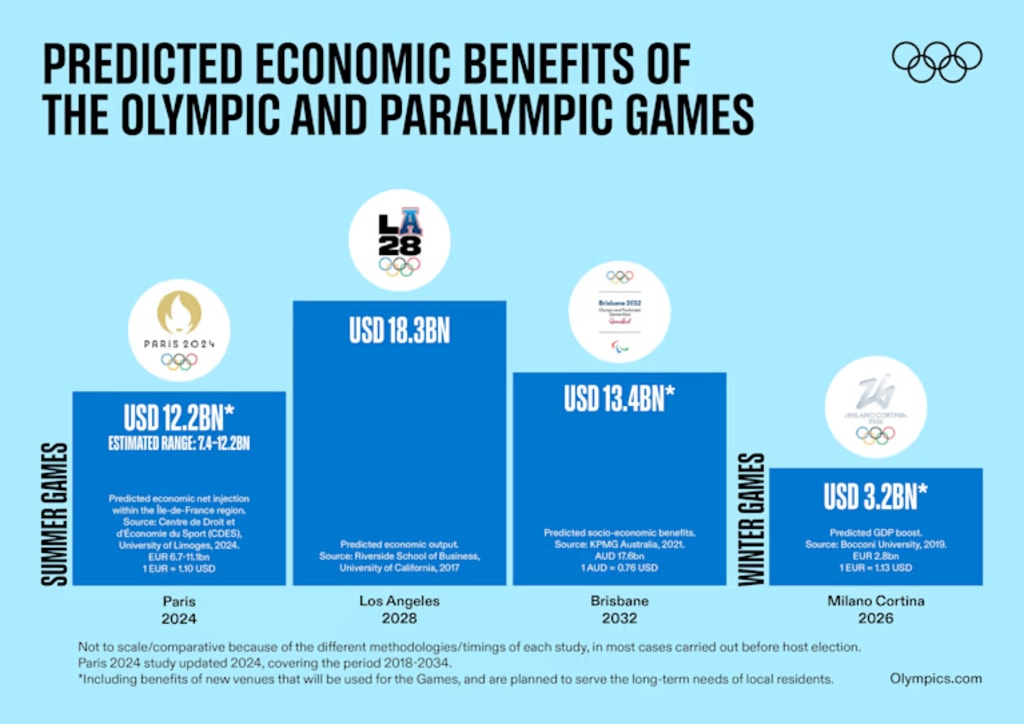
Hosting the Olympics is a prestigious event that offers countries the opportunity to showcase their culture, infrastructure, and global presence. While the financial costs of hosting such a grand event are substantial, the long-term economic benefits can be significant if managed effectively. From infrastructure development to tourism, job creation, and global visibility, the Olympics can create lasting economic advantages for the host city and country. Below are some key long-term economic benefits associated with hosting the Olympic Games.
(I)Infrastructure Development
One of the most notable long-term economic benefits of hosting the Olympics is the extensive infrastructure development. To accommodate the influx of athletes, spectators, and media, host cities often invest in new sports venues, transportation systems, and utilities. These developments can leave a lasting legacy that benefits the city and its residents long after the Games are over.
For example, the 2008 Beijing Olympics resulted in the construction of the Bird’s Nest stadium, which became a major architectural and tourist landmark. Similarly, London’s 2012 Olympics spurred the regeneration of East London, including the construction of the Queen Elizabeth Olympic Park, which now hosts numerous cultural, sports, and leisure events. Such infrastructure projects often serve as catalysts for urban renewal, increasing property values and spurring private investment in the surrounding areas.
(II)Tourism Boost
The Olympics significantly boost tourism in the host city and country. The Games attract millions of visitors, both domestic and international, who come to witness the competition, participate in cultural events, and explore the host city. The immediate economic impact includes spending on hotels, restaurants, transportation, and entertainment.
However, the long-term benefits of this tourism boom extend well beyond the Games themselves. The exposure from hosting the Olympics often leads to increased global awareness of the city and its attractions, resulting in a sustained increase in international visitors. For instance, after the 1992 Barcelona Olympics, the city became one of the most popular tourist destinations in Europe. This influx of visitors often leads to a sustainable tourism industry, which continues to generate revenue for the local economy for years to come.
(III)Job Creation and Economic Activity
Hosting the Olympics creates numerous direct and indirect jobs. During the preparation phase, there is an increase in demand for construction workers, architects, engineers, and various other professionals involved in building the infrastructure and organizing the event. Once the Games begin, there is also a surge in demand for workers in hospitality, security, logistics, and other service industries.
Even after the Games are completed, many of these jobs transition into permanent roles, particularly in the tourism and sports sectors. Additionally, the long-term economic activity surrounding tourism, hospitality, and local businesses remains high. Studies have shown that cities that have hosted the Olympics have often experienced significant job creation, leading to a more robust and diversified economy. For example, Sydney’s 2000 Olympics resulted in a permanent increase in jobs, particularly in tourism and construction sectors.
(IV)Boost to Local Businesses
The Olympics provide a unique opportunity for local businesses to thrive, as both the Games and the increased tourism create high demand for goods and services. From local shops and restaurants to service providers in construction and technology, the event opens up new markets and opportunities. This economic stimulation is particularly beneficial for small businesses in the host city.
Additionally, the global exposure of the Olympics can act as a marketing platform for local brands, helping them to expand their reach. For example, businesses that provide merchandise, local products, or even catering services can attract attention from international consumers, establishing a global presence.
(V)Increased Foreign Investment
Hosting the Olympics provides the host country with enhanced visibility on the world stage, which can attract foreign investment in various sectors. International investors often look for stable and dynamic economies, and hosting the Olympics signals that a city or country has the infrastructure, governance, and economic stability to manage such a large-scale event.
For instance, China’s 2008 Beijing Olympics led to a significant rise in foreign investment in the country. The event was perceived as an opportunity to enter a rapidly developing market, and many multinational companies used the Games as a platform to expand their operations in China. Similarly, the 2016 Rio Olympics showcased Brazil’s potential, despite facing some challenges, and sparked interest in sectors such as infrastructure, energy, and tourism.
(VI)Cultural and National Pride
Though not directly related to economic impact, the cultural and national pride generated by hosting the Olympics can have indirect economic benefits. The Games can unite the country, fostering a sense of shared identity and pride, which often translates into increased consumer spending and civic engagement. In the long run, this can boost the country's economic stability and social cohesion, providing an environment conducive to investment and growth.
In The End
Hosting the Olympics provides both immediate and long-term economic benefits to the host city and country. From infrastructure development and job creation to increased tourism and foreign investment, the Olympics can be a powerful catalyst for sustained economic growth. However, these benefits are most likely to be realized if the host city plans and manages the event with long-term goals in mind, ensuring that the investments made during the Games continue to generate returns well into the future. Proper planning, investment in lasting infrastructure, and leveraging global exposure are key to maximizing the economic legacy of hosting the Olympics.
About the Creator
Badhan Sen
Myself Badhan, I am a professional writer.I like to share some stories with my friends.
Keep reading
More stories from Badhan Sen and writers in Gamers and other communities.
THE OLYMPIC CEREMONIES AS A REFLECTION OF POLITICAL CHANGE
The Olympic Games, a global sporting event rooted in ancient traditions, have evolved into a stage for political expression and cultural identity. The opening and closing ceremonies, in particular, serve as a reflection of the host nation's political ideologies, cultural values, and aspirations. Over time, these ceremonies have mirrored significant global political changes, from the rise and fall of empires to the end of colonialism, the Cold War, and the ongoing discourse on globalization. This essay explores how Olympic ceremonies encapsulate political change, emphasizing their role as a lens to understand historical and contemporary shifts.
By Badhan Senabout a year ago in Gamers
How Fan Translations Keep Games Alive After Official Support Ends
A video game translation company usually enters a project at the cleanest moment, when budget is great and source files are organized. Developers answer questions. Everyone assumes the game has a future.
By CCJK Technologies5 days ago in Gamers
U4gm How Negative Rarity Farming Is Changing PoE 2 Endgame
Path of Exile 2 is all about loot, but not all loot is equal. Recently, an unusual strategy has gained traction among endgame players: Negative Rarity farming. At first glance, it seems counterintuitive—why would anyone want fewer rare drops? The answer lies in efficiency, crafting control, and consistent profit. Negative Rarity farming in PoE 2 turns seemingly worthless white items into a reliable and strategic source of crafting materials and steady endgame profit.
By Billo Nali4 days ago in Gamers




Comments (1)
What a great economic geography lecture. Good work.