
HOW THE OLYMPICS SHAPE NATIONAL IDENTIFY AND PRIDE
Exploring the Intersection of Sport,Culture,and Nationalism on the Global Stage

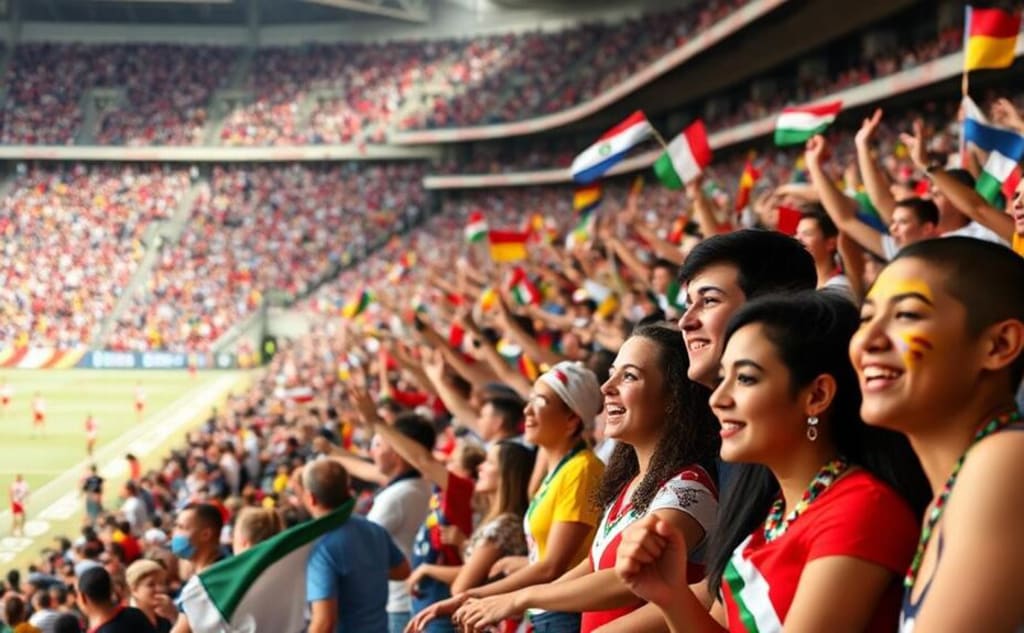
The Olympic Games, first held in 1896 in Athens, have evolved into one of the world's most prestigious sporting events, bringing together athletes from across the globe to compete for gold, silver, and bronze. While the primary focus of the Olympics is to celebrate athletic excellence, the Games also serve a larger cultural and social function — notably in shaping national identity and fostering national pride. For many countries, the Olympics become a platform not only to showcase athletic talent but to assert a sense of cultural unity and power on the global stage.
Building National Identity through Sporting Excellence
One of the most significant ways the Olympics shape national identity is through the achievements of athletes. The presence of an athlete on the podium, especially in a sport where a country has little historical dominance, fosters a sense of national pride and achievement. A country's performance can bolster a sense of shared identity among its citizens. When nations win medals, especially gold, it often creates an intense emotional connection between the country’s people and the athlete. This feeling of unity and pride is particularly evident when athletes become symbols of their nation's values, spirit, and aspirations.
For instance, when Jesse Owens won four gold medals in the 1936 Berlin Olympics, he became a symbol not only of athleticism but also of resistance to Nazi ideology and racial superiority. Owens' victory allowed African Americans to demonstrate their strength in the face of racial adversity, and his achievements are still celebrated in the United States as a defining moment in both Olympic history and the civil rights movement.
Similarly, in the 1980 Moscow Olympics, the United States’ boycott in protest of the Soviet invasion of Afghanistan highlighted how the Olympics could also serve as a battleground for political and ideological conflict. This instance was not just about sport but about asserting national values and the importance of global diplomacy.
A Global Platform for Cultural Expression
The Olympics provide an avenue for nations to express their cultural uniqueness. The opening ceremony, which includes music, dance, and visual representations of the host nation's heritage, is often a spectacular display of national pride and identity. Countries use the event to showcase their traditions, history, and values to the world. This global platform enhances cultural awareness and strengthens national pride.
In 2008, the Beijing Olympics offered China the chance to present its rich cultural history and technological advancements. The opening ceremony, directed by Zhang Yimou, was a meticulously choreographed performance that celebrated China’s ancient history, its dynastic past, and its emergence as a modern global power. The elaborate ceremony, seen by billions of people worldwide, made China’s national identity visible to the world in a way that was both awe-inspiring and humbling.
Similarly, in London 2012, the ceremony featured a fusion of British history and contemporary British culture, incorporating everything from the industrial revolution to the Beatles, to Harry Potter, and the contributions of the NHS (National Health Service). This celebration not only showcased Britain’s proud history but also conveyed the country's modern, diverse, and progressive spirit.
The Role of National Teams and Heroes
The Olympics also shape national identity through the creation of national heroes. These athletes often transcend the boundaries of sport to become symbols of the country’s resilience, determination, and ambition. Their victories, struggles, and personalities offer a mirror through which citizens can reflect on their collective identity. A country's athletes, especially those with compelling personal stories, become cultural icons who embody the nation’s hopes, dreams, and values.
Take, for example, the American swimmer Michael Phelps, whose unprecedented success at the 2008 Beijing Olympics (winning 8 gold medals) made him not only a household name but a national hero. Phelps' triumphs symbolized the pursuit of excellence, discipline, and hard work, qualities central to the American ethos. He became more than just an athlete; he became a source of national pride, inspiring millions of young Americans.
In South Africa, the 2010 World Cup was a significant moment for the country’s national identity, but the Olympic Games have similarly been a stage for figures like Caster Semenya, who won the 800-meter gold in 2016, challenging global norms and standing as a symbol of pride for South Africa, especially in the context of the country's history of racial and gender struggles.
Uniting and Inspiring the Nation
Perhaps the most profound way the Olympics shape national identity is by uniting the people of a nation. The spectacle of the Games, with millions watching across the world, brings together citizens who may have little in common but who find common ground in their pride for their country’s athletes. The Olympics become a unifying force in a country, allowing people to momentarily transcend political, social, and economic divisions.
In India, the 2008 Olympics marked a turning point for the country’s engagement with the Games. With Abhinav Bindra’s gold medal in shooting, India was able to showcase its growing prowess in sports beyond cricket. This success helped nurture a sense of pride and ambition, especially among young Indians, who began to identify more strongly with the Olympic spirit.
Moreover, the Olympic Games often become a symbol of a nation’s recovery, transformation, or future potential. The 2016 Rio Olympics were not only a platform for Brazil’s athletes but also a statement of the country’s emerging place on the world stage despite facing political and economic turmoil. The event brought hope to many Brazilians, and the moment of success became a powerful rallying point for the nation.
End
In conclusion, the Olympics serve as a powerful catalyst for shaping national identity and pride. Through the achievements of athletes, the global stage for cultural expression, and the emergence of national heroes, the Games provide an unparalleled opportunity for nations to celebrate their uniqueness, resilience, and aspirations. The Olympics are not just about sports; they are about what it means to belong to a country, to be part of a collective identity, and to take pride in the journey of becoming.
About the Creator
Badhan Sen
Myself Badhan, I am a professional writer.I like to share some stories with my friends.
Keep reading
More stories from Badhan Sen and writers in Gamers and other communities.
THE IMPORTANCE OF CULTURAL EXHIBITIONS AT THE OLYMPIC GAMES
The Olympic Games are not just a platform for athletic excellence but also a celebration of global culture, unity, and peace. While the primary focus is on sporting events, cultural exhibitions have played an increasingly significant role in enriching the Olympic experience. These exhibitions, whether through art, music, dance, or other forms of cultural expression, offer a unique opportunity for nations to showcase their heritage, foster mutual understanding, and bridge the gap between diverse peoples. Here’s why cultural exhibitions are crucial at the Olympic Games:
By Badhan Senabout a year ago in Gamers
Rsvsr CoD BO7: Nightmare Skills Challenge
If you’re a veteran of Call of Duty: Black Ops 7, you know that Endgame combat is all about timing, strategy, and pure reflexes. You’ve memorized maps, perfected your loadouts, and learned how to coordinate with your squad down to the second. But the latest update has flipped the script entirely. Now, even the familiar CoD BO7 Bot Lobby is hiding a challenge that will test your skills like never before: the Glitch Fracture and Nightmare Skills system.
By Billo Nali4 days ago in Gamers
I See Nothing But Dead People: The Ghostspeaker Wizard Sublcass
Xubachithl looked at the restrained wizard in front of him as he completed the ritual. The mage had secured his defenses with his physical presence; his body was his passkey. In moments, he would wear the mage’s skin as his own while the mage’s soul was trapped in the jar before him; the mage’s bastion would be his. Undead swarmed around them, the mage’s servants trying to rescue him, but as long as they were within the circle, he was safe. He had already animated some zombies to act as a distraction, but they were long gone.
By Jamais Jochim2 days ago in Gamers
Why Didn't Anyone Tell Us
Men, move along. This is not for you. This is for the women. I was forty-five when I began menopause. It is pretty young for that to be going on in a woman’s life, but I had undiagnosed PCOS, my entire life. Thank you to all the gynecologists I had seen my entire life. That in itself should encourage women to keep seeking second opinions, especially when you are not getting correct answers or any at all.
By Alexandra Grant3 days ago in Humans



Comments (1)
Good article and the Olympics are a good way to show national and international pride in the individual countries, but of course there are downfalls every once in a while, when someone gets to carried away.