
HOW THE OLYMPICS HAVE UNITED OR DIVIDED NATIONS POLITICALLY
Exploring the Olympics Role in Bridging Political Divides Among Nations

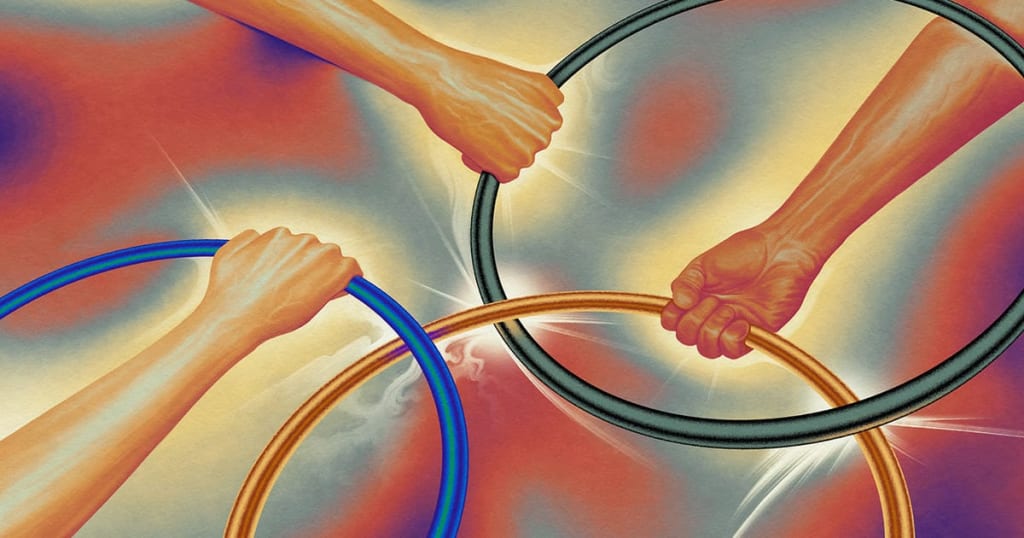
The Olympic Games, since their modern inception in 1896, have served as a global platform for athletic excellence, fostering a spirit of international camaraderie and competition. However, beyond their sporting dimension, the Olympics have also become a stage for political expressions, rivalries, and resolutions. While the Games often promote unity and understanding among nations, they have also been a flashpoint for political divisions and controversies. This duality underscores the complex role the Olympics play in global geopolitics.
The Olympics as a Symbol of Unity
One of the central ideals of the Olympics is to unite people from diverse backgrounds under the banner of sportsmanship. This principle is embodied in the Olympic motto, “Faster, Higher, Stronger – Together.” Historically, the Games have brought countries together, providing opportunities for dialogue and cultural exchange that transcend political boundaries.
The 1992 Summer Olympics in Barcelona is a prime example of the unifying potential of the Games. Following the end of the Cold War, the Olympics symbolized a new era of global cooperation. Athletes from former Soviet republics competed as a unified team under the Olympic flag, representing a fragile but significant moment of reconciliation.
Similarly, the 2018 Winter Olympics in Pyeongchang demonstrated how sports could bridge deep political divides. North and South Korea marched together under a unified flag during the opening ceremony, showcasing a rare moment of solidarity amidst decades of hostility. The joint Korean women’s ice hockey team, though not victorious in competition, became a powerful symbol of hope for reconciliation on the Korean Peninsula.
On a broader scale, the Olympics often highlight shared human values and aspirations. Moments of sportsmanship, such as athletes helping each other despite competing for different nations, resonate deeply with global audiences. These acts reinforce the idea that the Games are not just about winning but about fostering a sense of global community.
The Olympics as a Stage for Political Division
Despite its ideals, the Olympics have frequently been a venue for political disputes and rivalries. These divisions often mirror broader geopolitical tensions, with nations using the Games to assert their ideologies or protest against adversaries.
The Cold War era exemplified how the Olympics could become a battleground for political ideologies. The 1980 Moscow Olympics and the 1984 Los Angeles Olympics were marred by boycotts. The United States and its allies boycotted the 1980 Games to protest the Soviet invasion of Afghanistan, while the Soviet Union and its allies retaliated by boycotting the 1984 Games. These actions underscored how global politics could overshadow the spirit of unity the Olympics aim to promote.
The 1936 Berlin Olympics, hosted by Nazi Germany, remain a stark reminder of how the Games can be manipulated for propaganda purposes. Adolf Hitler used the event to promote his regime’s ideology of Aryan supremacy, despite being challenged by the remarkable performance of African-American athlete Jesse Owens, who won four gold medals. The Games, in this case, became a stage for both political propaganda and resistance.
In recent years, political controversies surrounding the Olympics have continued. The Beijing 2008 and 2022 Games were criticized for human rights abuses and authoritarian policies in China, sparking calls for boycotts and raising questions about the ethical implications of awarding the Games to controversial host nations. The ongoing geopolitical disputes over Taiwan and Hong Kong have also cast a shadow over China’s participation and hosting of the Olympics.
Balancing Unity and Division
The dual role of the Olympics in uniting and dividing nations reflects the complex interplay between sports and politics. While the Games are inherently non-political in their mission, they exist within a world deeply shaped by political forces. This tension is both a challenge and an opportunity for the Olympic movement.
To preserve the unifying spirit of the Games, the International Olympic Committee (IOC) has taken measures to minimize political interference. The Olympic Charter explicitly prohibits political demonstrations during the Games. However, enforcing this neutrality is often challenging, as the lines between sports and politics are frequently blurred.
At the same time, the Olympics provide a platform for addressing global issues. The inclusion of refugee athletes in the 2016 and 2020 Games highlighted the plight of displaced individuals, drawing global attention to humanitarian crises. Such initiatives demonstrate how the Olympics can inspire not only athletic excellence but also social and political change.
In The End
The Olympics have a unique ability to unite and divide nations politically. While they often succeed in fostering a spirit of global unity and cultural exchange, they are not immune to the political tensions and conflicts that define the world. From Cold War boycotts to moments of reconciliation on the Korean Peninsula, the Games have reflected both the best and the worst of international politics.
Ultimately, the Olympics serve as a mirror of the world, showcasing its aspirations for unity and its struggles with division. By striving to uphold their founding ideals, the Games continue to offer hope that even in a divided world, sports can serve as a bridge to understanding and cooperation. The challenge lies in ensuring that this vision remains at the forefront, even amidst the inevitable complexities of global politics.
About the Creator
Badhan Sen
Myself Badhan, I am a professional writer.I like to share some stories with my friends.
Keep reading
More stories from Badhan Sen and writers in Gamers and other communities.
THE OLYMPIC TRUCE AND ITS SYMBOLIC ROLE IN PROMOTING WORLD PEACE
The Olympic Games, celebrated globally as a showcase of athletic prowess and unity, hold a deeper symbolic significance through the tradition of the Olympic Truce. Rooted in ancient history, the Olympic Truce represents a call for global peace, cooperation, and understanding. This tradition has evolved over centuries to serve as a beacon of hope, fostering dialogue and collaboration in a world often fragmented by conflict. In this essay, we explore the origins, development, and modern significance of the Olympic Truce, highlighting its role as a symbol of world peace.
By Badhan Senabout a year ago in Gamers
Mastering Polytrack Physics: How to Build the Perfect Loop Every Time
Building a track in Polytrack is an exercise in both creative freedom and grueling physics management. While the low-poly aesthetic might suggest a simple arcade experience, the underlying engine is surprisingly sensitive to velocity and geometric precision.
By Richard Baileyabout an hour ago in Gamers
How Fan Translations Keep Games Alive After Official Support Ends
A video game translation company usually enters a project at the cleanest moment, when budget is great and source files are organized. Developers answer questions. Everyone assumes the game has a future.
By CCJK Technologies7 days ago in Gamers
How to Succeed at the Benson Directory®
Congratulations and welcome to the Benson Directory® employee #22391! As our newest call handler, you will have the privilege of speaking with dozens of unique and interesting people on a daily basis as well as the opportunity to earn bonuses for high performance. Contained within this handbook you will find a set of ease to follow instructions designed to help you settle in to your new role and begin paving the way to success.
By S. A. Crawford3 days ago in Fiction



Comments (1)
What a good review and summary of the political issues that affected the Olympic games over the years.