
HOW THE OLYMPICS BRING SOCIAL CHANGE TO HOST NATIONS
Exploring the Transformative Impact of the Olympics on the Social,Economic,and Cultural Fabric of Host Nations.


The Olympics, one of the most prestigious and widely watched sporting events in the world, hold far more significance than just athletic competition. Hosting the Olympics has the power to bring about substantial social change in the host nation. From infrastructural development to cultural exchange, economic boost to national pride, the Olympic Games can have lasting effects that ripple through society long after the closing ceremony. This essay explores how the Olympics bring about social change in the host nations, focusing on aspects such as infrastructure, economy, culture, national identity, and international relations.
(I)Infrastructure Development
One of the most visible and immediate impacts of hosting the Olympics is the significant investment in infrastructure. Cities that win the bid to host the Games are required to build or upgrade facilities, including sports venues, transportation networks, and public amenities. These improvements often have long-lasting benefits for the local population. For instance, the construction of airports, roads, and public transit systems may alleviate traffic congestion, improve mobility, and increase accessibility for citizens long after the Games end.
A prime example of this is the transformation seen in Beijing, China, in the lead-up to the 2008 Summer Olympics. The city invested heavily in infrastructure, constructing new subway lines, highways, and sports venues such as the iconic Bird's Nest stadium. These developments provided better living standards for local residents, facilitated urban renewal, and significantly enhanced the city’s global standing as a modern metropolis.
(II)Economic Impact
The economic benefits of hosting the Olympics are widely debated, but there is no doubt that the Games can bring about significant changes in a nation’s economy. On one hand, the influx of tourists and international visitors generates substantial revenue through tourism, ticket sales, and sponsorships. The Olympic Games also create thousands of temporary jobs in construction, event management, and hospitality, providing short-term employment opportunities to a wide range of people.
However, the long-term economic impact can be mixed. Some host nations, such as Greece in the aftermath of the 2004 Olympics, experienced a heavy financial burden due to the cost of building and maintaining infrastructure. Despite this, the Games also foster a sense of economic pride and unity, as citizens witness their country's progress on the global stage.
(III)Cultural Exchange and Globalization
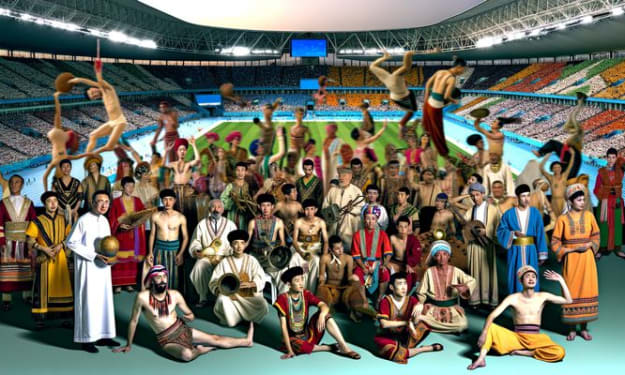
The Olympics serve as a platform for cultural exchange, where people from diverse nations come together to celebrate not only athletic achievement but also cultural diversity. For the host nation, this presents an opportunity to showcase its culture, traditions, and values to a global audience. Whether it’s through the opening ceremony, which often highlights the host country’s history and arts, or through the exposure of local cuisine, fashion, and music, the Olympics provide a stage for cultural diplomacy.
For example, the 2016 Summer Olympics in Rio de Janeiro, Brazil, highlighted the rich cultural heritage of Brazil, including samba music, capoeira (a traditional Brazilian martial art), and Carnival-inspired celebrations. By sharing these aspects of Brazilian culture, the Games helped enhance Brazil’s image as a vibrant and culturally diverse nation, fostering pride among its citizens.
(IV)National Pride and Identity
Hosting the Olympics can be a source of immense national pride. For many countries, the Games offer a chance to show the world their progress and achievements, fostering a sense of unity and collective identity among citizens. The Olympics can also act as a unifying event for a country, as people from diverse backgrounds come together to cheer for their athletes and celebrate their national achievements.
For example, when India hosted the Commonwealth Games in 2010, despite the controversies surrounding the event, it was seen as a milestone for the nation, symbolizing India’s emergence as a global player. The Games ignited a sense of pride and identity for many Indians, particularly in the younger generation, who saw the event as a sign of India’s growing prominence on the world stage.
(V)International Relations and Soft Power
Hosting the Olympics provides an opportunity for countries to strengthen their international relationships and enhance their soft power. Soft power refers to a country’s ability to influence others through attraction and persuasion rather than coercion. By hosting a global event like the Olympics, nations can boost their diplomatic standing, build relationships with other countries, and engage in cultural and political exchanges.
The 2000 Sydney Olympics, for example, showcased Australia as a modern, progressive nation with strong international ties. The Games helped enhance Australia's reputation globally, increasing its ability to forge economic and diplomatic partnerships in the years following the event.
(VI)Legacy and Long-Term Social Change
The social change brought about by the Olympics extends beyond the immediate event and can have a lasting legacy. A successful Olympic Games can leave a lasting impact on the social fabric of the host nation, inspiring future generations to pursue sports, engage in community activities, and take pride in their country’s achievements. The Olympic Games also often spur investments in social programs, particularly in education, health, and youth development.
For instance, the 1992 Barcelona Olympics is credited with transforming the city’s image from an industrial hub to a tourist destination and cultural center. The Games left a lasting legacy in the form of regenerated urban areas, increased tourism, and a strengthened local economy. The Olympics also played a role in encouraging local youth participation in sports, thereby fostering a long-term cultural shift towards health and fitness.
In The End
The Olympic Games have the potential to bring about significant social change in host nations. Through infrastructure development, economic stimulation, cultural exchange, national pride, and strengthened international relations, the Games leave a lasting legacy. While the short-term costs and challenges are often substantial, the long-term benefits for the host nation can be transformative, creating opportunities for growth, unity, and global recognition. By embracing the spirit of the Olympics, nations not only elevate their athletic achievements but also their social, cultural, and economic standing in the global community.
About the Creator
Badhan Sen
Myself Badhan, I am a professional writer.I like to share some stories with my friends.
Keep reading
More stories from Badhan Sen and writers in Gamers and other communities.
THE ROLE OF THE OLYMPICS IN SHAPING GLOBAL SPORTS CULTURE
The Olympics have long stood as the pinnacle of international sports competitions, symbolizing more than just athletic achievement. As one of the most widely viewed and celebrated events globally, the Olympics play a crucial role in shaping sports culture worldwide. They bring together athletes from different nations, fostering unity, competition, and cultural exchange. Beyond mere sports, the Olympics have become a powerful platform for influencing global sports culture, promoting values of fairness, excellence, and diversity. This article explores the significant impact of the Olympic Games on global sports culture.
By Badhan Senabout a year ago in Gamers
Unstoppable F2P Decks: How to Win in Rush Royale Without Spending Gems
In the ever-evolving arena of Rush Royale, the divide between whale accounts and free-to-play (F2P) enthusiasts often feels like a canyon. Most players assume that without a stash of purple gems or a platinum credit card, hitting the high leagues is a pipe dream. This is a misconception. Success in this game is not just about the rarity of your cards but the synergy of your deck and the efficiency of your resource management.
By Richard Bailey7 days ago in Gamers
U4gm Diablo IV Season 11: Secrets, Uber Gates, and the Cost of Power
Diablo IV Season 11 is not just about overt seasonal mechanics or climbing leaderboards. Beneath the surface lies a layer of secret challenges, designed for players who thrive on exploration, risk, and discovery. From Uber Lesser Evil Gates to hidden rewards tucked away in the world, these encounters test mastery, strategy, and patience. They aren’t explained in tutorials—they’re meant to be earned, not handed out.
By Dangyc Ding6 days ago in Gamers


Comments
There are no comments for this story
Be the first to respond and start the conversation.