
How Blockchain Interoperability Enhances the Web3 Ecosystem
“Breaking Barriers Between Blockchains for a Seamless Decentralized Future”
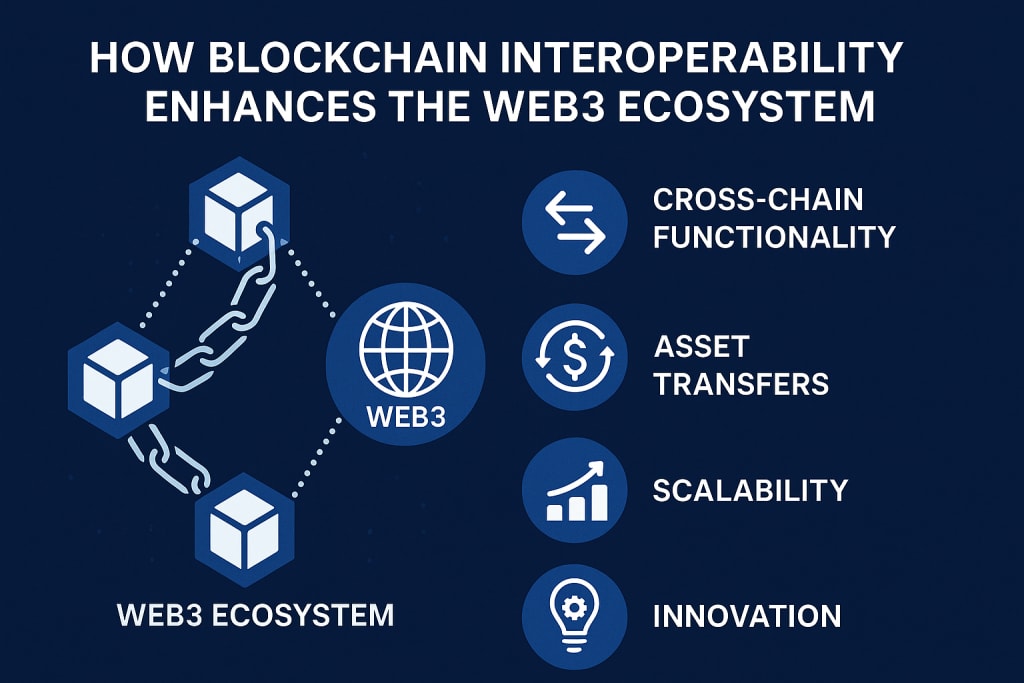
In the rapidly evolving world of Web3, blockchain interoperability has emerged as a game-changer. It’s a key factor that powers innovation, enhances user experiences, and accelerates the adoption of decentralized applications, including Web3 game development. But what exactly is blockchain interoperability, and why does it matter so much for the Web3 ecosystem? Let’s dive deep to understand how this technology is reshaping the future of decentralized networks.
What is Blockchain Interoperability?
Blockchain interoperability refers to the ability of different blockchain networks to communicate, share data, and interact with one another seamlessly. Think of it like the internet of blockchains—where multiple independent chains can exchange information and value without needing a middleman.
Without interoperability, blockchains remain isolated silos, limiting their potential. Interoperability breaks these barriers, allowing decentralized apps (dApps), tokens, and smart contracts to operate across different chains effortlessly.
Why Blockchain Interoperability Matters for Web3
Web3 is all about decentralization, user empowerment, and building an internet owned and controlled by users rather than centralized entities. Here’s why interoperability is vital:
Enhanced User Experience: Users can transfer assets and data across different platforms without hassle, making Web3 services more accessible and user-friendly.
Increased Liquidity and Utility: Interoperability boosts liquidity by enabling assets like cryptocurrencies and NFTs to move freely between ecosystems, increasing their value and use cases.
Faster Innovation: Developers in Web3 game development and other sectors can leverage multiple blockchains’ unique features, fostering innovation without being limited to one platform.
Stronger Security: By connecting blockchains, interoperability can improve security models through shared verification and validation processes.
Blockchain Interoperability in Web3 Game Development
Gaming is one of the most exciting frontiers of Web3. Imagine a world where gamers can carry their in-game assets, achievements, or NFTs across different games and platforms — this is no longer a fantasy, thanks to blockchain interoperability.
Cross-Chain Asset Transfers: Players can move rare items or characters between games on different blockchains.
Unified Wallets and Identities: Gamers can use a single wallet or digital identity across multiple gaming ecosystems.
Shared Economies: Developers can build interconnected game economies where value flows seamlessly, encouraging more vibrant player communities.
Improved Scalability: Developers can distribute game logic and assets across various blockchains, reducing congestion and improving performance.
For Web3 game developers, interoperability opens up new horizons for creating immersive, player-centric experiences that combine the best of multiple blockchain networks.
Key Technologies Driving Blockchain Interoperability
Several technologies are powering this interoperability revolution:
Cross-chain Bridges: Connect different blockchains, allowing tokens and data to flow freely.
Layer 2 Solutions: Enhance scalability and interoperability by building secondary frameworks on top of primary blockchains.
Polkadot & Cosmos: Platforms designed specifically for blockchain interoperability through shared protocols and hubs.
Oracles: Enable smart contracts to access external data, ensuring interoperability with real-world information.
Challenges and the Road Ahead
Despite its promise, blockchain interoperability faces challenges like security risks in bridges, complexity of cross-chain communication, and standardization issues. However, ongoing research and innovation are steadily overcoming these obstacles.
As the Web3 ecosystem matures, interoperability will be crucial in connecting isolated blockchains into a unified digital universe — making decentralized services more robust, scalable, and user-friendly.
Conclusion
Blockchain interoperability is not just a technical upgrade; it’s a fundamental step towards realizing the true potential of Web3. By enabling seamless communication and collaboration between blockchains, it fuels innovation in Web3 game development and beyond, creating an inclusive, efficient, and connected decentralized world.
If you're a developer, gamer, or enthusiast eager to explore the future of Web3, understanding and leveraging interoperability is key to staying ahead in this transformative landscape.
About the Creator
How Streaming and Esports Changed Gaming Forever—For Better or Worse
Gaming has never been just about pressing buttons. It has always been about challenge, imagination, and escape. But in the last decade, gaming has gone through its biggest transformation yet. Thanks to streaming platforms and the rise of esports, games are no longer only played—they are performed, watched, monetized, and judged in real time.
By Games Mode On4 days ago in Gamers



Comments
There are no comments for this story
Be the first to respond and start the conversation.