
How Assassin’s Creed Shadows Handles Dual Protagonists – Switching Between Yasuke and Naoe
Explore how Assassin’s Creed Shadows seamlessly blends two unique playstyles by letting players switch between Yasuke the Samurai and Naoe the Shinobi.

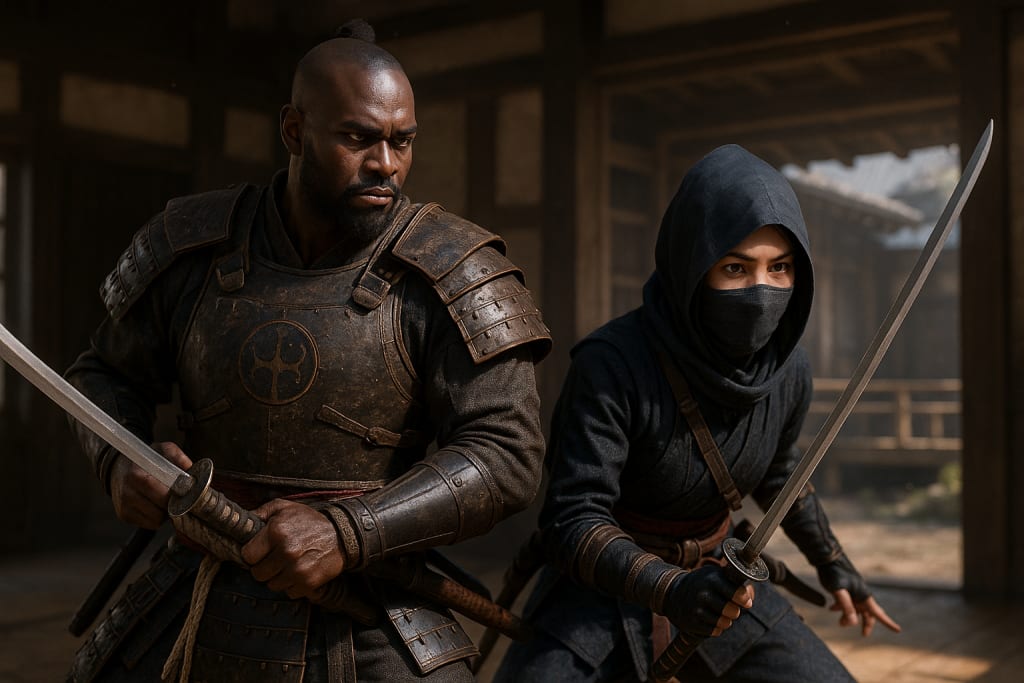
Assassin’s Creed Shadows breaks new ground for the franchise by introducing two fully distinct protagonists—Yasuke, the historical African samurai, and Naoe, a fictional female shinobi trained in stealth. This dual-character design isn’t just a gimmick. It’s a fundamental shift in how the player interacts with the open world, missions, and gameplay systems. Ubisoft has experimented with multiple protagonists in the past, but never with this level of separation between their identities, skills, and playstyles.
In this article, we’ll explore in depth how Assassin’s Creed Shadows handles dual protagonists, how switching between Yasuke and Naoe works, and what that means for players in terms of immersion, story progression, and strategy.
A Drastic Shift from Past Assassin’s Creed Titles
Previous entries such as Assassin’s Creed Syndicate or Odyssey offered protagonist choice or quick-switch options. But those systems lacked the deep narrative and mechanical divergence that Shadows promises.
Here, you’re not just switching outfits or voices. You’re swapping entire philosophies of combat and identity.
Yasuke is a powerhouse. He fights head-on, armored, and with the strength of a tank. Naoe, in contrast, is elusive, quiet, and surgically efficient in the shadows. They don’t share skill trees. They don’t share weapons. They don’t even share the same mission approach. This is not a skin-deep change. It’s baked into the DNA of the game.
How Switching Works in Assassin’s Creed Shadows
Unlike GTA V, where you can switch protagonists at nearly any time, Shadows uses a more situational and story-driven approach. You can switch freely when exploring the open world, but specific story missions lock you into one character, depending on narrative relevance.
For example, infiltration missions often default to Naoe, whose agility, grappling hook, and silent takedowns make her ideal for stealth-based objectives. Conversely, a village under siege might call for Yasuke, who can shoulder through enemies, break through barricades, and even knock opponents back with a single swing.
Switching is done manually via the map menu when not in combat or scripted sequences. There’s no cooldown, but switching isn’t instantaneous. The game takes a cinematic pause to show the transition, often shifting the camera to your new protagonist’s location in the world.
This keeps the pacing immersive, grounded, and thematic. You're never breaking the fourth wall.
Differences in Combat and Gear
Combat style defines the experience of each protagonist.
Yasuke’s Mechanics:
- Heavy weapons like kanabōs, katanas, and matchlocks.
- Armor-based gear that absorbs damage.
- Brutal finishing moves.
- Cannot crouch or hide in foliage.
- Loud, intimidating, frontal assault gameplay.
Naoe’s Mechanics:
- Tools like shuriken, kunai, smoke bombs.
- Light armor focused on evasion and agility.
- Assassinations from walls, ceilings, and crawlspaces.
- Can use a grappling hook for vertical movement.
- Stealth-centric gameplay that punishes detection.
While some traversal and exploration tools are shared (like climbing), their use cases are contextually different. Yasuke uses brute strength to open pathways. Naoe uses finesse to sneak past guards.
You’ll find gear separately for each character. Armor sets and weapons are character-locked. Progression is independent too—leveling Yasuke doesn’t give you abilities for Naoe, and vice versa. This creates a constant incentive to switch and maintain balance between the two.
Storytelling Through Two Perspectives
The narrative structure of Shadows cleverly uses its dual protagonists to reflect different views on war, honor, and revenge.
Yasuke, an outsider accepted into Japanese society, sees conflict through a warrior’s code. His story is about loyalty, justice, and confronting the horrors of rebellion with strength.
Naoe, meanwhile, is born into the chaos. Her father was an assassin. Her skills come from necessity. She represents rebellion, subterfuge, and the assassin’s creed in its rawest form. Her missions often focus on espionage, liberation, and dismantling power from within.
Sometimes, their goals align. Other times, they don’t. You’ll face missions where tension between Yasuke and Naoe bubbles beneath the surface. This isn’t a buddy-cop partnership. It’s a fragile alliance shaped by circumstance.
Strategic Depth and Replayability
By giving players two dramatically different ways to approach every encounter, Ubisoft is enriching the series’ tactical depth. You can plan your approach based on who you’re playing. A castle guarded by a hundred samurai? Yasuke might charge through the front gate. Naoe might scale the rear tower and eliminate the leader silently.
The freedom to switch between brute force and subtle infiltration is a game-changer. It encourages experimentation. Want to ghost through an outpost without killing anyone? Choose Naoe. Want to burn it to the ground? Yasuke’s your man.
There’s also a meta-layer of replayability. You might return to missions and solve them using the other character’s toolkit, discovering alternate routes, story beats, or even hidden collectibles that one protagonist couldn’t access.
Managing Progression and Side Content
Side quests, collectibles, and world activities also adapt to who you’re playing. Some NPCs will only speak to Yasuke. Others may trust Naoe more. Certain side stories are tied to character-specific motivations, which means that if you ignore one protagonist, you’ll miss major parts of the narrative.
Additionally, their influence on the world is different. Yasuke’s presence might intimidate NPCs, while Naoe can blend in. The way you interact with settlements, allies, or enemy forces changes organically depending on your chosen character.
Ubisoft has also confirmed that certain upgrades and base-building features tie into this duality. For example, crafting and improving your hideout may involve unique roles for each protagonist, based on their personality and skillset.
Why This Dual Protagonist System Matters
This isn’t just a new mechanic—it’s a thematic statement. Assassin’s Creed Shadows isn’t just about killing targets in feudal Japan. It’s about two visions of justice. Two weapons forged in different fires. Two souls navigating a fractured land from opposite ends of the moral spectrum.
Ubisoft has always toyed with dualities: templar vs assassin, order vs chaos, power vs freedom. In Shadows, that duality lives inside the player’s hands. You’re not choosing one side—you’re embodying both.
And the friction between Yasuke’s honor and Naoe’s pragmatism gives the story weight. It forces you to think—not just about how you play, but why.
The decision to implement two protagonists with such radically different gameplay philosophies is one of the most ambitious moves Ubisoft has made in the Assassin’s Creed series. Rather than diluting the experience, it deepens it. You’re no longer confined to a single viewpoint or playstyle. Instead, you’re given tools to shape the world as both a sword and a shadow.
Assassin’s Creed Shadows is a game that demands you pay attention—to the character, to the world, and to the consequences of every approach. Whether you prefer Yasuke’s strength or Naoe’s subtlety, you’ll find a path that suits your style. But to see the full picture? You’ll need to walk in both of their shoes.
About the Creator
Richard Bailey
I am currently working on expanding my writing topics and exploring different areas and topics of writing. I have a personal history with a very severe form of treatment-resistant major depressive disorder.
Keep reading
More stories from Richard Bailey and writers in Gamers and other communities.
Dungeon Map Templates: Plug-and-Play Layouts for Fast Session Prep
When you're staring down the barrel of a game night and haven't prepped a dungeon yet, panic tends to set in. You want something that feels unique, but you don’t have hours to spend drawing perfect corridors or inventing a clever layout. That’s where dungeon map templates come in—ready-made, modular maps designed to drop into your campaign with minimal effort. Whether you're a veteran Dungeon Master running multiple campaigns or a new DM trying to survive your first one-shot, plug-and-play dungeon layouts can be a true lifesaver.
By Richard Bailey7 months ago in Gamers
10 Things Cloud Computing Solutions Simplify Server Control
Managing physical servers often feels like a never-ending battle against tangled wires and heat. You spend hours monitoring blinking lights in a cold room. Traditional setups demand constant attention and manual updates. Cloud computing solutions change this entire dynamic for modern businesses. It moves your digital assets to a flexible virtual space. This shift grants you total authority without the physical burden. The cloud transforms complex technical chores into simple clicks. It allows you to focus on growth rather than hardware maintenance.
By Arthur Leo5 days ago in Gamers



Comments
There are no comments for this story
Be the first to respond and start the conversation.