
"Genesis of the Titan: The Dark Rise of Thanos
Born in Darkness: The Relentless Rise of a Mad Titan

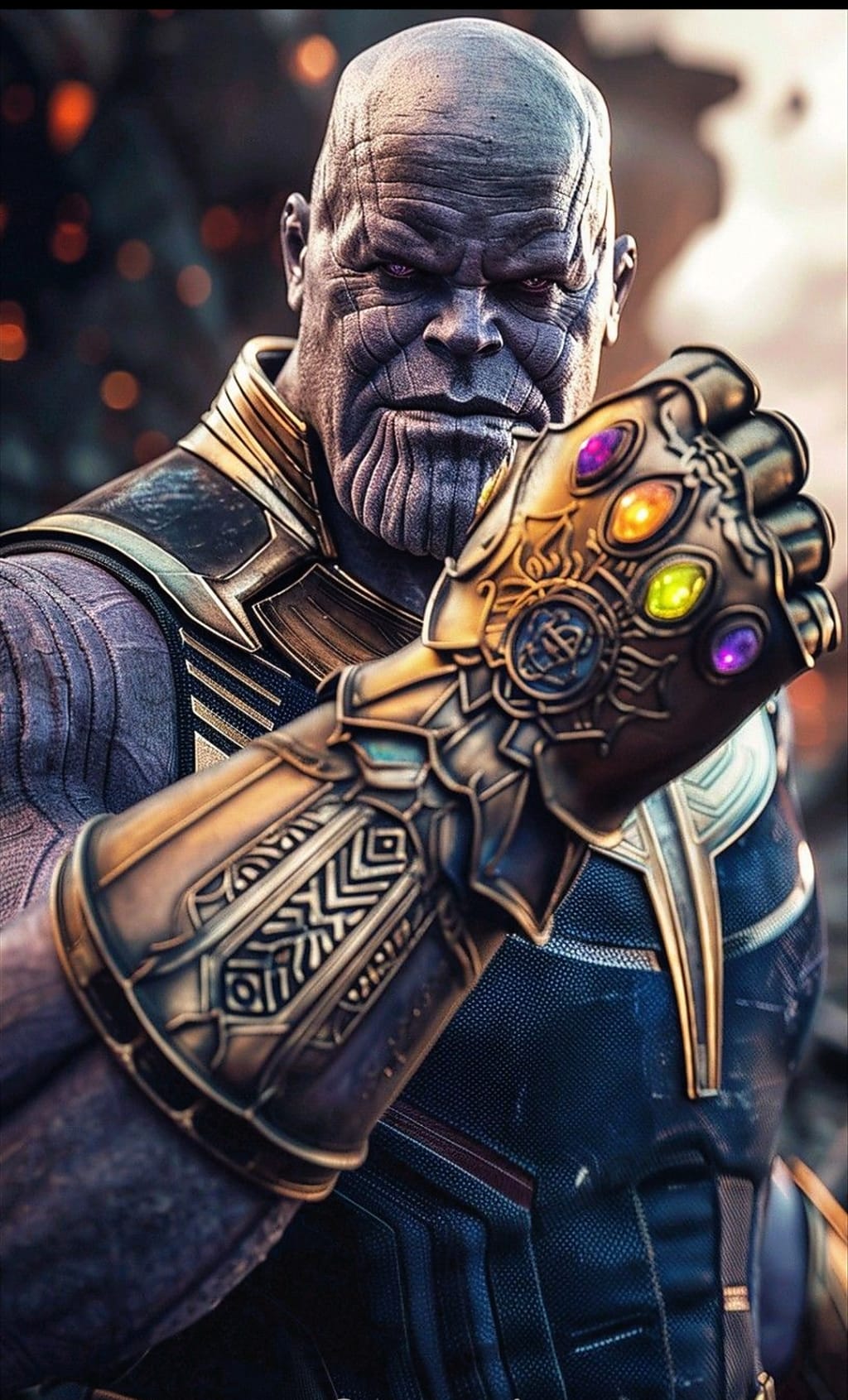
The origin of Thanos, one of Marvel's most iconic villains, is a tale deeply rooted in the cosmic and philosophical underpinnings of the Marvel Universe. Thanos was created by writer-artist Jim Starlin and first appeared in Iron Man #55 in 1973. Starlin was heavily inspired by various cosmic themes, psychology, and mythology, which influenced the complex nature of Thanos.
Early Life on Titan
Thanos was born on Titan, one of Saturn's moons, a technologically advanced and utopian society. He is the son of A'Lars, also known as Mentor, and Sui-San, who were members of the Eternals. The Eternals were a race of near-immortal beings created by the Celestials, ancient god-like entities that had experimented on early humans millions of years ago. Thanos, however, was born with a rare genetic mutation known as the "Deviant Syndrome," which caused him to have a grotesque, hulking appearance resembling the Eternals' destructive counterparts, the Deviants. This physical difference set Thanos apart from the rest of the Eternals on Titan, leading to his emotional isolation from a young age.
Despite being an outcast due to his appearance, Thanos was highly intelligent and curious. As a child, he was fascinated by the concept of death and would often contemplate the universe’s balance and existence. His mother, Sui-San, sensing something deeply wrong in Thanos at birth, tried to kill him, but she was restrained. Her attempted murder left an indelible mark on Thanos, fueling his emotional turmoil and philosophical musings about life, death, and existence.
Descent into Madness
As Thanos grew older, his fascination with death only deepened. His intellectual pursuits led him to explore forbidden subjects and eventually to become obsessed with Death herself, personified in the Marvel Universe as a female entity. Unlike other beings who feared death, Thanos embraced it, seeing it as the ultimate truth of the universe. He became enamored with Mistress Death and sought to gain her favor by bringing more death to the universe.
During this period, Thanos began experimenting with genetics and weapons, growing in power and ambition. He fathered children across the galaxy but ultimately murdered them, seeing them as weak and unworthy. His desire for more power and his twisted love for Death led him to commit atrocities that alienated him from Titan and his people, who could no longer tolerate his escalating cruelty.
Thanos left Titan, assembling a crew of like-minded criminals and misfits. His thirst for power and destruction grew, and he eventually sought out the ultimate sources of power in the universe, such as the Cosmic Cube and later the Infinity Stones.
The Quest for the Infinity Stones
Thanos’ obsession with power reached its peak when he set his sights on the six Infinity Stones (or Gems, as they were initially called): Mind, Power, Reality, Time, Space, and Soul. Each stone held unimaginable power, and together they granted god-like control over all aspects of existence. Thanos believed that with the Infinity Gauntlet (the glove designed to harness the stones' power), he could reshape the universe according to his vision of balance.
In the famous Infinity Gauntlet storyline (1991), written by Jim Starlin with art by George Pérez and Ron Lim, Thanos successfully collected all six Infinity Stones. With a snap of his fingers, he wiped out half of all life in the universe to prove his love for Mistress Death, believing that reducing the population would bring balance and end suffering. However, despite his near-omnipotence, Thanos was ultimately defeated by a coalition of Marvel’s greatest heroes, led by Adam Warlock and the Silver Surfer.
Thanos’ Philosophy and Character
Thanos is not a typical villain motivated solely by power or greed. He is deeply philosophical, believing in the necessity of death and destruction to maintain universal balance. His quest for power is not for personal gain but to fulfill what he sees as a higher purpose: bringing balance to an overpopulated and chaotic universe. Thanos often views himself as a savior rather than a destroyer, though his methods are extreme and horrifying.
At his core, Thanos’ character is driven by a profound sense of existentialism. He grapples with the meaning of life, death, and the universe’s inherent chaos. His love for Mistress Death is symbolic of his acceptance of death as the ultimate truth, and his genocidal actions are his way of imposing what he believes is necessary order.
Post-Infinity Gauntlet
Even after his defeat in The Infinity Gauntlet, Thanos remained a significant figure in the Marvel Universe. His character evolved, sometimes appearing as a reluctant ally to heroes and at other times returning to his villainous ways. His complexity as a character grew as writers explored his motivations, backstory, and relationships, particularly with figures like his adoptive daughter, Gamora, and his nemesis, Adam Warlock.
Thanos has appeared in various major Marvel storylines, including Infinity War and Annihilation, solidifying his role as one of Marvel's greatest antagonists. His portrayal in the Marvel Cinematic Universe (MCU) brought him mainstream popularity, particularly in Avengers: Infinity War (2018) and Avengers: Endgame (2019), where he was depicted as a formidable and philosophically driven villain, much like his comic book counterpart.
In essence, Thanos is not just a power-hungry villain but a character driven by complex motivations and a desire to impose his view of universal balance, making him one of the most intriguing and enduring figures in comic book history.
About the Creator
King Great
Together we gain knowledge from each other,still a young and active boy
Keep reading
More stories from King Great and writers in Gamers and other communities.
"Connected Hearts: A Journey Through Time and Tech"
In the year 2084, humanity had reached the pinnacle of technological advancement. Cities hovered in the sky, and artificial intelligence had become so advanced that it could read human emotions better than humans themselves. But amidst all this progress, one thing had remained elusive: the ability to preserve the essence of human connection across time. For many, the world felt more isolated than ever, where relationships were fleeting, and virtual reality stood in place of face-to-face conversations.
By King Great 2 years ago in Earth
The Real Life of a Professional Poker Player: Myths and Reality
The life of a professional poker player often looks exciting from the outside. Television broadcasts show dramatic all-in moments, massive tournament prizes, and players celebrating victories under bright casino lights. Social media also contributes to this image by highlighting success stories, luxury travel, and high-stakes games. Because of this exposure, many people believe that professional poker players live an easy and glamorous life.
By Micah Raskin Poker 8 days ago in Gamers
Winning the Deal: Sports Tactics That Strengthen Lending Strategy
Every great sports team begins with preparation. Baseball managers study pitchers, hitters, and field positions before the game starts. Football coaches review game film and plan plays based on the opponent’s defense. In the same way, lenders should prepare carefully before any negotiation begins. Preparation builds clarity and confidence. It also helps lenders see risks early and avoid costly mistakes. For this reason, many successful professionals rely on a clear lending negotiation strategy before entering a financial discussion.
By James Cretella7 days ago in Gamers


Comments
There are no comments for this story
Be the first to respond and start the conversation.