
Diablo IV: Vessel of Fools
A Frustrated Literary Analysis of Diablo IV and its Expansion

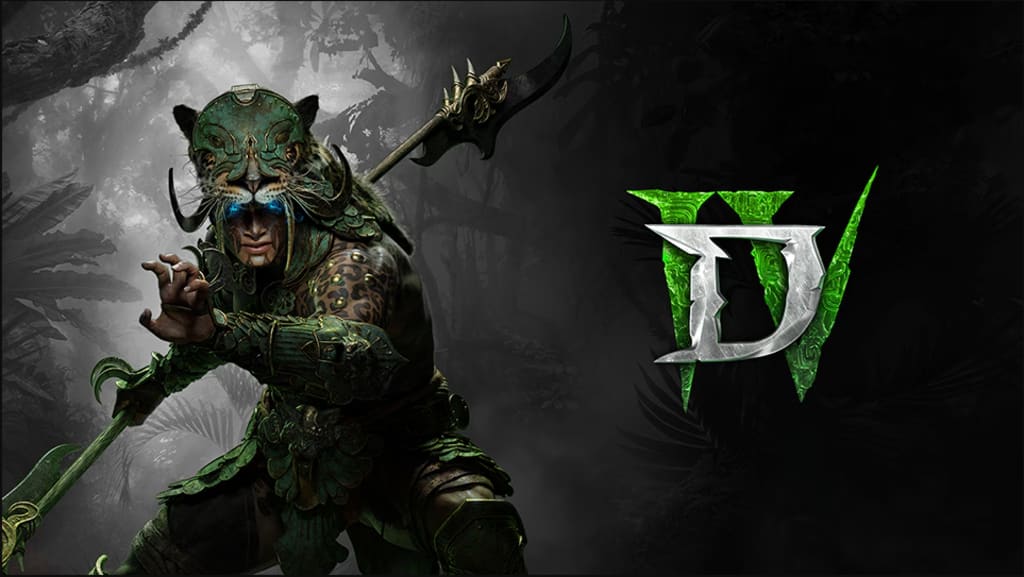
Look, I have a lot of love for the Diablo franchise.
I remember watching my older brother beat Diablo and Diablo II on his iMac. When I got my very own PC, I spent untold hours in Sanctuary – listening to every line of dialogue, and reading every scrap of lore. To this day, the opening chords of the Tristram theme send nostalgic shivers down my spine.
I had so much goodwill toward the franchise that it took me several playthroughs of its much-maligned third entry before I finally started to see its flaws. The story pulled on lore established in the previous games and tie-in novels to lay out a conflict that was undeniably grand in scope, but it was crippled at every turn by absolutely terrible dialogue. The gameplay was smooth and satisfying, but the build customization was nearly non-existent. The environments had a beautiful, hand-painted aesthetic, but that aesthetic was completely at odds with the previous installments of the franchise.
Given the bungled execution of Diablo III’s plot and the scandal-ridden, pay-to-win abomination that was Diablo Immortal, I initially received news of Diablo IV’s development with very tempered expectations. Then the theatrical trailer came out, and my enthusiasm was reignited. The trailer promised us a Diablo returning to its action/horror roots with the benefit of stunning modern visuals. The base game not only delivered on that promised atmosphere, but it did so while delivering what seemed to be a competently written and voice-acted story.
When Diablo IV’s engaging story ended on a cliffhanger, I naturally awaited news of an expansion with impatience. When Vessel of Hatred was announced, I pre-ordered it as soon as I was able. When the expansion finally released, I braved the delays and release-day patches and glacial download speeds with every expectation that the continuation of Diablo IV’s story would be worth the rough launch. Alas.
The story of Diablo IV: Vessel of Hatred is an idiot plot so bad that it retroactively reveals the idiot plot hidden at the core of the base game.
****SPOILERS BELOW - YOU’VE BEEN WARNED****
So, let’s talk about the soulstones. In the Diablo universe, soulstones are artifacts originally fashioned by the Horadrim, an order of mages in league with the Archangel Tyrael, to imprison the three Prime Evils: Diablo, Mephisto, and Baal. Once these three archdemons – unkillable manifestations of Terror, Hatred, and Destruction – were imprisoned, their soulstones were hidden away in secure locations. Diablo’s stone was hidden in a dangerous labyrinth constructed beneath a remote monastery. Mephisto was kept beneath the holy city of Travincal, at the heart of the militant Zakarum faith. Baal’s soulstone was damaged in the process of subduing the Lord of Destruction, so he had to be trapped both in the stone and in the living body of a mage. Said mage arranged for himself to be entombed deep in the Anauroch desert – hidden from interlopers by ward and sand. Sounds like a victory for the forces of good, right?
Wrong.
In the first Diablo, the titular Lord of Terror managed to drive the local king to madness, and to corrupt the archbishop of the monastery above his labyrinthine prison – all while ‘trapped’ within his soulstone. The archbishop then kidnaps the local prince, and shoves the soulstone into his forehead, which allows the Lord of Terror to possess and transform his physical body. The prince’s older brother ventures into the labyrinth and slays Diablo, only to succumb to the soulstone’s corruptive influence. Tricked into thinking he can contain Diablo, the hero crams the soulstone into his own forehead, becoming his new vessel.
Diablo II reinforces the fallibility of the soulstones by revealing that a rogue angel, Izual, secretly divulged the inner workings of the soulstones to the Prime Evils. From the start, the soulstones were designed to fail, and fail they did. Mephisto corrupted the Zakarum faith and transformed the holy city of Travincal into a jungle hellscape. Baal overcame the mind of his mage captor and was freed from his tomb with Diablo’s help – a Diablo that spread death and destruction in his wake even while ‘trapped’ within his human host. In the final act of the game, Tyrael – one of the architects of the soulstones – tasks you with destroying them with a special hammer.
Diablo II ends with two out of three soulstones destroyed, with only Baal and his soulstone at large. When you finally catch up to and defeat Baal in the expansion, he’s already corrupted the worldstone – the hitherto unmentioned artifact from which the soulstones were derived. Evidently the prospect of a corrupted worldstone is so dangerous that Tyrael feels compelled to destroy it.
Despite the fact that the worldstone was somehow integral to the creation of Sanctuary, destroying it does not destroy or harm the world (apart from blowing up the mountain it was contained within), so that’s good. We’ll circle back to the worldstone later.
In Diablo III, a ‘black soulstone’ was introduced. Crafted by a rogue Horadrim, this new soulstone was designed to imprison not just one Prime Evil, but all of them – and the Lesser Evils too. We were told that THIS soulstone was the answer to all of Sanctuary’s problems, and that evil can finally be imprisoned forever within its facets. Psych! This soulstone was subverted by an evil witch who used it to combine and amplify the powers of all seven Evils so they could manifest through her daughter and finally conquer the Heavens.
Diablo III ended with the black soulstone being destroyed by a demigod hero, but not before it was used by a mad archangel to murder an entire nation.
By this point we’ve established that soulstones are not just inadequate prisons, but are tools of evil that actively enhance the powers of any Evil ‘contained’ within. We’ve also established that the primordial source of all soulstones – the worldstone – was corrupted so badly that it had to be destroyed. So why is it that when evil once again walks Sanctuary in the form of Lilith – daughter of Mephisto, and one of Sanctuary’s creators – the first recourse of the remaining Horadrim is to try using another goddamn soulstone?
Now in spite of the above, when I originally played through Diablo IV, the continued use of a soulstone did not immediately leap out at me as the baffling decision that it was for two reasons: The short time skip between Diablo III and IV, and the characters’ own stated doubts.
Regarding the time skip: Diablo IV features the character of Lorath Nahr as the eldest of the remaining Horadrim, and Lorath was present and an active part of Diablo III’s expansion, Reaper of Souls. Given that Lorath is an adult in Reaper of Souls, and given that he is still fit enough to be swinging a halberd and carrying a fully-grown dead deer by the events of Diablo IV – despite frequently being called an ‘old man’ by other characters – I’d say between 30 and 40 years have passed between games. This lets the player argue that maybe this wasn’t enough time to come up with a better method of trapping or defeating demons. We’ll circle back to the problems presented by this short time skip between Diablo III and IV.
Regarding the characters’ doubts: Donan, the stated Horadric expert on all things demon and soulstone, repeatedly expresses his doubts that the soulstone he used to – by all appearances, successfully – contain the demon Asteroth will work on Lilith. The preparation and attunement of the stone for use against Lilith is framed as a desperate act by knowledgeable characters who are short on options. Sure, okay.
Even with the above justifications, the way Asteroth’s soulstone behaves starts to unravel the internal integrity of the narrative upon close inspection. When a Prime Evil is possessing a mortal body by means of an embedded soulstone, and that body is slain, the Evil remains ‘contained’ within the stone. We see this both consistently and explicitly in Diablo, Diablo II, and Diablo III. In Diablo IV, when Donan’s son is possessed by means of Asteroth’s soulstone being jammed into his forehead, upon Asteroth’s defeat the soulstone is treated as immediately empty and available for reuse. This fact is later confirmed when, quite possibly mere hours later in the narrative, we see Asteroth alive and well in the Burning Hells.
Well, maybe this soulstone is different from its predecessors, and that’s why it doesn’t follow the established rules? This is never, ever, stated or implied by any character or piece of in-game lore. Maybe Asteroth was able to escape from the stone at the last moment? Then why are the characters under the impression that it might work on Lilith – who is heavily implied to be more powerful than Asteroth? Maybe Asteroth was special? Again, this is never stated.
I’m inclined to say that this was just sloppy writing, deployed to allow the narrative to make use of the soulstone on Lilith when it should have been shattered or otherwise occupied by Asteroth. This conclusion is reinforced by the sheer inanity of the ‘attunement’ questline. Very briefly, once the soulstone is ‘empty’, Donan asserts that it needs to be attuned to Lilith’s energy in order for it to work on her. This is accomplished by finding a tomb desecrated by Mephisto and performing a ritual there, with the stated logic being that Lilith comes from Mephisto’s realm – being his daughter – and thus attuning the stone to his energy will make it more suitable for her. You know who else hails from Mephisto’s realm, and serves as one of his lieutenants? Asteroth. So why was additional attunement needed? Because the writers wanted an opportunity to put Donan’s expertise, grief, and mettle on display – and to be fair, his voice acting here was excellent. You know what else might have accomplished that narrative goal? Having him repair Asteroth’s broken soulstone. Better yet, have him forge a new one – improved by his craft, maybe with the stated hope that it might be free of the flaws that plagued the previous stones. Instead, we got sloppy writing disguised by excellent execution.
Let’s talk about Mephisto and Lilith for a moment. Mephisto is the cold-blooded manipulator and mastermind of the Prime Evils, and the only Prime Evil with a documented history of negotiating with the Heavens and sort of sticking to his agreements. In D&D terms, he’s very much characterized as Lawful Evil. Lilith is the rebellious daughter who tired of her father’s schemes and wars, and eloped with a rogue angel, Inarius, to create Sanctuary and give birth to humanity – we’ll get back to that.
In Diablo IV, we eventually learn that Lilith plans to kill and devour her father – who is currently recovering from his defeat in Diablo III – in order to usurp his position as a Prime Evil. Lilith also apparently wants humanity to prevail against her uncles and father, but given that alliance with her usually involves a rapid descent into violence and depravity, this is not an option the game expects you to consider desirable.
So when a lesser manifestation of Mephisto approaches you and proposes to become Lilith’s eternal jailer, provided you are able to trap her with the soulstone you’ve prepared for this purpose, this really does seem like a reasonable solution to the problem at hand. Again, we know that Mephisto has a habit of negotiating in reasonably good faith, and we know that he has a vested interest in seeing Lilith imprisoned. We also know that he's so evil that Lilith corrupting him from within the soulstone – the main flaw of using a soulstone – is not a concern. It’s not a perfect solution – Mephisto might, after all, turn her loose at a later date as part of some unfathomable scheme or another – but it at least would buy Sanctuary some breathing room to come up with a better means of combating the Evils.
Neyrelle, a plucky young Horadrim-in-training, poses a simple counterargument to Mephisto’s proposal: Lilith is, quite literally, the lesser of two Evils here. So what does Neyrelle suggest that we, as the player, do? Does she suggest bargaining with Lilith to the tune of ‘we help you defeat Mephisto, and in turn you leave Sanctuary alone for a few centuries’? Remember, ‘just kill both of them’ isn’t an option here. Mephisto is still reforming from the last time he was ‘killed’, and Asteroth – again, implied to be subordinate to Lilith – is stated and proven to be beyond permanent death.
No, Neyrelle’s plan was to use the soulstone prepared for Lilith to imprison Mephisto, and to take that soulstone back to Sanctuary, leaving you to kill Lilith. Surely when Lorath – who again we must remember was not only present for the events of Diablo III, but was also in direct personal contact with Tyrael – heard of this, he cursed the child’s foolishness and implored the main character to find her no matter what?
Nope. Lorath didn’t react with much alarm, nor was he filled with a sense of urgency. He went off to bury Donan – who died during all of this – and tasked you with seeing if you can find Neyrelle. When we found the letter Neyrelle left at one of your meeting spots, wherein she informs us that she plans to repeat the mistakes of the fallen prince at the end of Diablo, the attitude isn’t ‘oh man, what an idiotic child who clearly is ignorant of the history of the soulstones, we need to find her right-the-fuck-now before entire nations are corrupted and destroyed by her folly’, it’s ‘oh well, she’s beyond our reach for now…we’ll be on the lookout if she pops up again, but in the meantime, lets kill some monsters in the endgame.’
It’d be one thing if Neyrelle’s actions were treated by the narrative – and by characters who should, by rights, know better – as foolish, or borne from Mephisto’s corruptive influence and trickery. Instead, she is treated by the narrative and the other characters as a hero who made the right, but hard decision.
Neyrelle’s decision and Lorath’s reaction to it might make sense if Diablo IV took place centuries after the first three games, and it was conveyed to us that proper knowledge of the soulstones – the knowledge that they are flawed, corrupted tools abjured by their own creators – had been lost over the years. Instead, the integrity of Diablo IV’s narrative is crippled by one of the factors that initially convinced me to excuse these issues: the time skip(s).
Deckard Cain, initially described as the last living Horadrim, took part in the events of Diablo, Diablo II, and the first act of Diablo III. Deckard Cain died as an old man, but his presence throughout the narrative tells us that Diablo, Diablo II, and Diablo III all took place within the span of a single human life. In fact, given that Cain was already a mostly bald adult by the time of Diablo, we can reasonably cap the timeframe of the first three games at 50 years. Taken together with my estimates of Lorath’s age as of Diablo IV, we’ve got a total timeline of roughly 80-90 years. The events of the previous games are not ancient history.
Deckard Cain also, crucially, wrote down everything he saw, thought, and theorized about the Prime Evils and the soulstones. The Book of Cain not only existed as a promotional tool for Diablo III, it existed in-universe, and was almost certainly read by Lorath Nahr. Making matters even more silly, The Book of Lorath was used as a framing device to get new players up to speed on the lore of the series leading up to Diablo IV, so we know for a fact that Lorath is aware of every event leading up to Diablo IV.
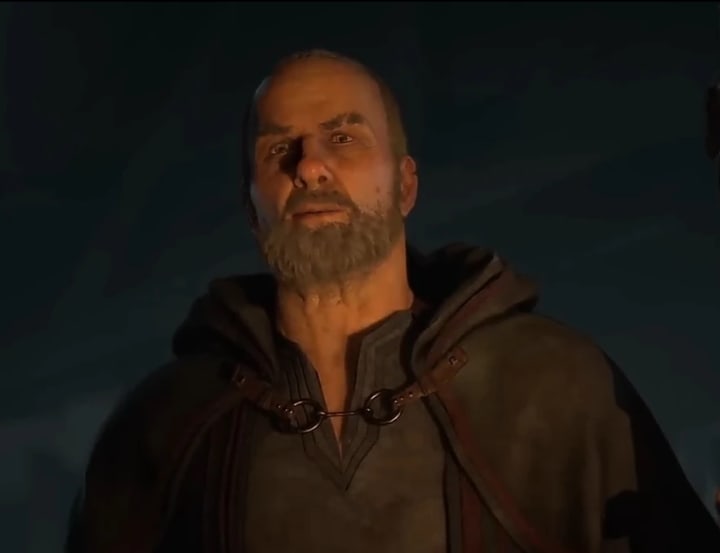
To summarize: Lorath definitely should have known better than to think using a soulstone on Lilith – much less Mephisto – was a good idea. Donan should have known better than to use a soulstone on Asteroth, much less on Lilith or Mephisto. Neyrelle, someone we are introduced to as having studied the Horadrim all her life, probably should have known better than to use the soulstone on Mephisto. Yet all of these supposedly intelligent characters acted like idiots, because that was what was required to move the plot along its predetermined trajectory.
Diablo IV: Vessel of Hatred unveils the idiot plot at the heart of the base game by being less adept at concealing its own idiot plot.
When the main character finally catches up with Neyrelle – Lorath is completely absent in the expansion – she’s in a predictable state, struggling to contain the power and corruption of Mephisto. We are also told that she and the soulstone are bound together inextricably, despite the fact that no one has crammed it into her forehead.
Having the stone be bonded to Neyrelle without being embedded is a strange narrative decision, once again at odds with the established lore of soulstones. The only other time we see a soulstone being carried by a human, is when Marius – a mortal companion of the second prince possessed by Diablo – dashes off with a fragment of Baal’s broken soulstone. While even this small fragment of a corrupted stone visibly ages and harms him, he later gives up this stone quite willingly. This is honestly a minor detail, but I still felt it was worth examining. Let’s move on.
Neyrelle tells you and the spirit shaman you’ve allied with, named Eru, that she’s heard about a powerful well of holy light within the Spirit Realm – a part of the cosmology which has never before been mentioned, but whatever – where her bond with Mephisto’s stone can be severed, and where it surely can be stored safely. She is told this by the spirit of an ancient holy prophet, known to and respected by Eru, so we might take this revelation at face value. We might think that this, at long last, is the game-changer – the incorruptible prison into which the Evils can be thrown.
We might think these things if we, the player, suffer from amnesia.
Because we literally just finished venturing into the Spirit Realm, where we saw that the corruption of Mephisto’s soulstone – which is still in the physical world – is already driving ancient and powerful spirits to madness. Yet no one protests that bringing the stone to the beating heart of the Spirit Realm is surely courting disaster – not even Eru, at first. Eru only decides that you and Neyrelle are being morons after his friend, Maka, is accidentally killed by Neyrelle during one of her struggling-to-contain-the-demon-outbursts. After that, Eru makes a deal with Mephisto off-screen: He’ll help you and Neyrelle reach the aforementioned holy place in the Spirit Realm so that Mephisto can make off with the magically-preserved body of the aforementioned prophet, in exchange for Mephisto killing you and Neyrelle and promising not to harm Eru’s homeland.
Eru’s actions are treated by the narrative and the characters in it as a great betrayal, fueled by grief, hatred, and fear. In actuality, Eru realized that he was part of an idiot plot, and made a completely understandable decision given the options available to him. We have been shown that the Spirit Realm is vulnerable to Mephisto’s corruption, and we know that Mephisto has been able to corrupt otherwise unusually holy sites in the past – you literally traipse through the ruins of the holy city of Travincal multiple times during this game. We are shown that the prophet’s spirit wasn’t so holy or powerful as to counteract Mephisto’s corruption – the spirit has to sacrifice itself to give you the chance to defeat one of Mephisto’s lesser manifestations. So, why did the prophet’s spirit think this was a good idea? Why did the main character think this was a good idea? Why did Eru need Maka to die and Mephisto to talk to him to decide that this was a bad idea, when he of all people should have known better?
Because the writers – for whatever reason – wanted the plot to play out this way, and they were willing to let the characters behave like idiots in order to make that happen.
To reiterate, my criticism comes from a place of love. I really, really wanted Diablo IV and its expansion to be good, and there are definitely excellent moments in both installments. The cinematic fight between Inarius and Lilith in Hell is one that I’ve gone back to watch over and over again. I loved how Lilith was portrayed as having both a sympathetic motive and being a font of eldritch horror whose very presence can sway lesser minds to madness.
I’m also not one to criticize without offering suggestions, so I’ll lay out a few small changes that I think could have dramatically improved the stories told by both games and I’ll close with a vision for how the narrative might redeem itself moving forward.
The simplest way they could have avoided the idiot plot of Diablo IV, would have been to make the time skip between Diablo III and IV much longer. If it’s been 200 or 400 years since the events of Diablo III, and the Horadrim have gone extinct with much of their knowledge lost to the ages, then you no longer have an idiot plot: You have dramatic irony. You have characters fumbling in the dark, banking on half-destroyed old tomes they can barely read, yet which hint at a weapon which might hold the Prime Evils at bay: the soulstones. We know they’re doomed, but they have no reason to know this. The story becomes a tragedy, rather than a farce.
If, however, you want to keep the truncated timeline in order to satisfy the sorts of fans who want to see the same cast of characters and the same plot devices over and over again – which seems to be a common strategy among corporate stewards of long-running franchises – you can still do so without resorting to an idiot plot: Tell us that the new soulstone is different or improved from the old ones. Have Donan say that he studied the works of Zoltan Khulle (the architect of Diablo III’s black soulstone) and improved upon his craft. Have Donan’s voice actor record a few lines to that effect and have them trigger while he’s leading you around the Horadric vault, airing his doubts about whether even his new and improved stone will hold up against Lilith.
Just a few recorded lines, retroactively added to Diablo IV – not even in a cut scene, mind you – would more or less eliminate the idiot plot from the base game. Now let's turn to Vessel of Hatred.
If I was to completely re-work the plot of Vessel of Hatred from the ground up, while leaving the now-improved plot of the base game intact, I’d do it as follows: Neyrelle is fighting to hold Mephisto’s corruption at bay while she searches for the heroes of Diablo III, the Nephalem.
Let’s back up a bit. Remember when I said that Lilith and Inarius got together, made Sanctuary, and gave birth to humanity? Well, Diablo borrows a bit from early Judeo-Christian mythology, and tells us that the first generation of humans were mighty beings known as Nephalem, who possessed the demonstrated potential to be more powerful than the Hells and Heavens. Inarius eventually used the worldstone to somehow nerf the Nephalem into modern humanity, but this power limiting effect was undone when Tyrael destroyed the worldstone at the end of Diablo II. Thus, the main characters of Diablo III are revealed to be a new generation of Nephalem, handily explaining their godlike power and ability to beat the Evils and a rogue archangel into submission.
Remember, only about 30-40 years have passed since Diablo III. Those 7 Nephalem (it’s canonically acknowledged that one of each class exists) almost certainly still live, and are likely the most powerful beings alive on Sanctuary at that time. Maybe, just maybe, in the intervening years since Diablo III they’ve been huddled together somewhere secluded, trying to come up with exactly what Neyrelle is searching for: a permanent (or at least better) prison for the Evils.
This would not only handily explain why the Nephalem didn’t intervene in the main conflict of Diablo IV, but it would retroactively frame Neyrelle’s still-questionable decision to use the stone on Mephisto in a more positive light. It would make sense that, rather than bargaining with one Evil or another, she might choose to risk her own wellbeing on a hail-Mary to deliver the greater Evil into the custody of the most powerful beings known to Sanctuary.
Now, Vessel of Hatred has been released – there’s no going back and completely re-writing its plot. How might the existing story of Vessel of Hatred be redeemed? It's a bit of a heavier lift than with the base game, but I think it’s still doable.
First, give us hints that Lorath’s absence is due to his search for the Nephalem. He wants to find them so that he can then locate Neyrelle and guide her to them. At one point we visit the Horadric Vault with Neyrelle, and we see a bunch of his papers scattered about. Have one of them mention the Nephalem – even if it’s limited to something like ‘the text is mostly unreadable, save for one word: Nephalem.’ No voice acting required, just a few lines of text added.
Secondly, Akarat – the holy prophet spirit guiding Neyrelle – states that he didn’t want to be immortal or immortalized by his followers. Lean into that. Make it clear with a few new lines of recorded dialogue that Akarat views this immortality and worship as a form of betrayal. Have the main character express some doubt about delivering the stone to Akarat, but resolve to do so anyway to save Neyrelle’s life. Then, when you and Neyrelle deliver Mephisto’s stone to his tomb – you discover that Eru is acting on the wishes of both Akarat and Mephisto in stealing his body and the soulstone away from the Spirit Realm. Akarat – already a little mad – has already been corrupted by Mephisto and poisoned by his hatred. Akarat wants to serve as Mephisto’s vessel – both to revenge himself on his followers for the immortality he never wanted, and to eventually be slain.
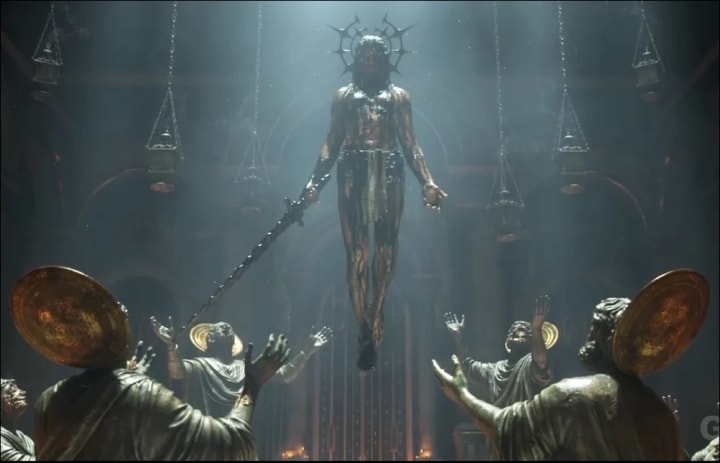
This way, Neyrelle is reframed as a desperate-if-naive young girl being led astray by an equally desperate spirit, which is a much more sympathetic portrayal than her current ‘dumb-girl-doing-dumb-things-helped-by-dumber-companions’ iteration. You also still get the future fight against the Mephisto-possessed Diablo-Jesus.
Now, where might the franchise go from here? Lorath returns from his sabbatical and tells us that he’s found the Nephalem, and that they might hold the key to defeating Mephisto. Maybe he berates the main character and Neyrelle for the stupidity of their plan in Vessel of Hatred, and maybe we receive some insight into their decision-making. Neyrelle’s desperation and pain-addled decision-making might easily be excused if we’ve already amended the idiot plot of Diablo IV, but the main character’s thought process is a bit harder to justify. Maybe, for Neyrelle’s sake and despite all the evidence, you really wanted to believe Akarat when he said that he had a solution? Anyway, we venture forth in search of the Nephalem, fighting Mephisto’s minions as they try to hinder our search. We find the Nephalem anyway, and they inform us that they’ve devised one of the following: A new and improved soulstone (if they really want to keep milking that plot device), or an improved version of the spell or ritual Inarius used to banish Lilith to the void.
Yeah, Inarius banished Lilith to some nebulous ‘void’ long before the events of any of the Diablo games, and that seemed to work really well. There was no creeping corruption and no powers being enhanced by corrupted soulstones, she was just gone. Maybe this was only possible because she was not a Prime or Lesser Evil, but the Nephalem are more powerful than Inarius. Granted, someone found a way to bring Lilith back, and someone might do so again if you repeat this process with Mephisto, but this would still be a massive improvement over the current status quo.
I like the idea of improving upon Inarius’ methods, because maybe the Nephalem would need you to fetch some relic of his, or an artifact from his Cathedral of Light to complete the spell. This would allow the generally antagonistic Cathedral of Light – and its leader, Reverend Mother Prava – to play a positive, redemptive role in the narrative.
Having the Nephalem be present for the story does present the question of why they aren’t fighting the Evils directly themselves. This question fortunately has many plausible answers. Maybe the new soulstone requires that they all sacrifice their lives in its creation. Maybe the banishing spell will only work and remain in effect if all 7 of the Nephalem remain at the ritual site, constantly reinforcing the spell and preventing interlopers from undoing their work. Maybe they remain in isolation because they fear the consequences of one of their number having a moment of weakness and becoming an immeasurably powerful vessel for one of the Evils. The writers have options.
Where does all of this leave us?
We live in the age of games undergoing near-constant development and improvement after their release. Usually this process has been limited to bug-fixes and technical upgrades, but there have been exceptions. Even the critically-acclaimed Baldur’s Gate III has added new lines of dialogue and whole new endings to their game post-release.
Diablo IV: Vessel of Hatred was a narrative misstep so severe that it highlighted the base game’s missteps. This could be a blessing in disguise if the writers over at Blizzard use this as an opportunity to fix their mistakes and to move forward with a clear vision based on a strong narrative foundation.
Or they can hope we’ll ignore their idiot plots and pay $40.00 to fight Mephisto-Possessed Diablo-Jesus in a few years’ time.
About the Creator
T. A. Bres
A writer and aspiring author hoping to build an audience by filling this page with short stories, video game reviews/rants, history infodumps, and comparative mythology conspiracy theories.
Come find me @tabrescia.bsky.social
Keep reading
More stories from T. A. Bres and writers in Gamers and other communities.
The Common Tongue
Bimpe and Papa Legba had been walking together for three hours when they crossed paths with another traveler – a merchant driving his cart. The beast pulling his cart looked like a buffalo, but Bimpe didn’t think any merchant was crazy enough to try and yoke a widow-maker to their wares. But, if the beast pulling the merchant’s cart was strange, the merchant himself was stranger.
By T. A. Bres12 months ago in Fiction
30k Tressure Hunt Forza Horizon 5
Forza Horizon 5 has become one of the most popular open-world racing games in the world, not only for its stunning visuals and realistic driving mechanics but also for its engaging side content, like Treasure Hunts. One of the most talked-about challenges in the game is the “30K Is The Game” Treasure Hunt, which rewards players with Forzathon Points and progression toward seasonal rewards.
By Games Mode On2 days ago in Gamers
Rsvsr Mega Evolutions Are Coming to Pokémon TCG Pocket – Get Ready!
If you’re a Pokémon fan, chances are you’ve been hooked on Pokémon TCG Pocket, the digital card game that lets you collect, trade, and battle Pokémon right from your phone. Well, there’s exciting news: the game is about to get a major update with Mega Evolution cards! And yes, that means Pokémon like Mega Gyarados, Mega Blaziken, and Mega Altaria are coming to your decks.
By Dangyc Ding7 days ago in Gamers




Comments
There are no comments for this story
Be the first to respond and start the conversation.