


Chess, a game of intellect and strategy, has captivated minds for centuries. Its origins trace back to ancient India around the 6th century, where it was known as chaturanga. The game eventually spread to Persia, where it became known as shatranj, and from there, it made its way to Europe through the Islamic world, evolving into the modern chess we know today.
The chessboard, a battlefield of 64 squares, is divided into two armies, one white and one black. Each army comprises 16 pieces: a king, a queen, two rooks, two knights, two bishops, and eight pawns. The objective is simple yet profound: checkmate the opponent’s king, rendering it unable to escape capture.
A game of chess begins with a standard setup: the rooks on the corners, knights next to them, followed by bishops, and the queen and king in the center, with the queen always on her color. Pawns stand ready in front of the main pieces, like soldiers on the front lines. White moves first, a tradition that sets the pace for the intricate dance of tactics and strategy that follows.
The pawn, though the smallest piece, plays a crucial role. It moves forward one square but captures diagonally. Its promotion, upon reaching the eighth rank, can transform it into any other piece, usually a queen, significantly impacting the game’s dynamic. The knights, with their unique L-shaped moves, can jump over other pieces, making them versatile and unpredictable. Bishops, moving diagonally, control long lines and work best in pairs, complementing each other’s strengths.
Rooks, moving horizontally or vertically, dominate open files and ranks. They become particularly powerful in the endgame, often working in tandem to control vast swaths of the board. The queen, combining the powers of the rook and bishop, is the most powerful piece, capable of controlling multiple directions at once. However, its early deployment can be risky, as premature aggression might lead to vulnerability.
The king, the game’s linchpin, must be protected at all costs. It moves one square in any direction, embodying a balance between caution and control. Castling, a special move involving the king and a rook, enhances the king’s safety while developing the rook, showcasing the game’s blend of strategy and tactics.
Chess is not merely about moving pieces; it is a battle of minds, where each move must be calculated, considering the opponent’s potential responses. Opening theory, the study of initial moves, lays the groundwork for a strong position. Famous openings like the Ruy-Lopez, Sicilian Defense, and Queen’s Gambit provide structured paths that have been analyzed for centuries. Yet, within these frameworks, creativity flourishes, as players deviate to gain an edge.
The middlegame is where strategies unfold and tactics come into play. Players aim to control the center, develop their pieces, and launch attacks while safeguarding their king. Tactical motifs like forks, pins, and skewers become tools in the player’s arsenal, demanding sharp calculation and foresight.
The endgame, often reached after much attrition, is a test of precision and technique. With fewer pieces on the board, the focus shifts to pawn promotion and king activity. Endgame principles, such as opposition, zugzwang, and triangulation, guide players toward victory or stalemate.
Chess has produced countless legends, from Paul Morphy and José Raúl Capablanca to Bobby Fischer and Garry Kasparov. These grandmasters have pushed the boundaries of the game, demonstrating the depth and beauty of chess. Modern technology, particularly computer engines like Stockfish and AlphaZero, has further expanded our understanding, introducing new insights and strategies.
Today, chess is more accessible than ever, with online platforms allowing players from around the world to compete and learn. It remains a timeless pursuit, blending art, science, and sport, challenging minds, and offering endless possibilities within the confines of 64 squares. Whether played casually or at the highest levels, chess continues to be a testament to the power of human intellect and the joy of strategic thinking.
About the Creator
Brian
just want to share my thoughts through words
The Tragic Decline of Call of Duty
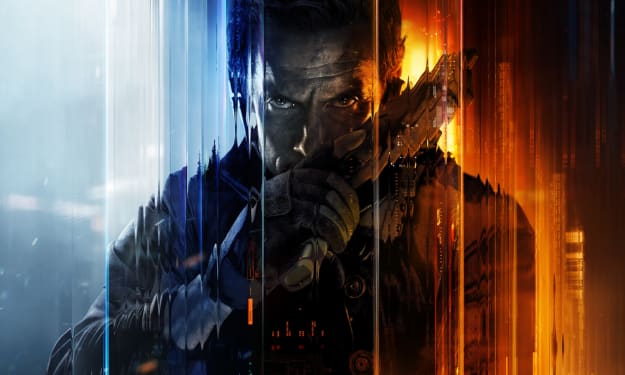
Introduction At the time of my writing this, I have only just finished playing a little bit of the campaign in Battlefield 6. I broadcasted this gameplay in a live stream on Twitch, where I create guides for how to achieve the platinum trophies for the games I play. What is important to note here is that I made the conscious and unconscious decision to play the most recent Battlefield title over the latest version of Call of Duty. I still can’t believe that I’m writing these words. Never in a million years could I have fathomed that I would prefer to play a game developed by Battlefield Studios over a military game made by Activision and Infinity Ward. If I could tell you anything about me, it’s the fact that I have been loyal to the Call of Duty franchise since the first game came out for the PC, on October 29th, 2003. Even in it’s infancy, Call of Duty had emerged as a military game that could rival the likes of games like Medal of Honor, which were considered the apex of combat style first person shooters at the time. That seems like a lifetime ago. I’m still loyal to the game that has created so many great memories for me, but I will admit that the game has lost a considerable part of its appeal. Playing it just doesn’t feel the same anymore. This is a thought shared throughout the gaming community, and it is reflected in the fact that, as of present, Battlefield 6 boasts itself not only as the number one first person shooter on a global level, but also as the number one selling game of 2025, while Call of Duty Black Ops 7 ranks in at seventh place. These figures unquestionably illustrate the tragic decline of the video game Call of Duty. Now there are many factors that have resulted in this games fall from grace, all of which we will explore in great detail, but first some context is needed. In order that we may fully understand exactly how far this giant has fallen, it is crucial that the history of Call of Duty at it’s peak is provided.
By Aaron M. Weis6 days ago in Gamers



Comments
There are no comments for this story
Be the first to respond and start the conversation.