
The Tragic Decline of Call of Duty
An In-Depth Examination


Introduction
At the time of my writing this, I have only just finished playing a little bit of the campaign in Battlefield 6. I broadcasted this gameplay in a live stream on Twitch, where I create guides for how to achieve the platinum trophies for the games I play. What is important to note here is that I made the conscious and unconscious decision to play the most recent Battlefield title over the latest version of Call of Duty. I still can’t believe that I’m writing these words. Never in a million years could I have fathomed that I would prefer to play a game developed by Battlefield Studios over a military game made by Activision and Infinity Ward. If I could tell you anything about me, it’s the fact that I have been loyal to the Call of Duty franchise since the first game came out for the PC, on October 29th, 2003. Even in it’s infancy, Call of Duty had emerged as a military game that could rival the likes of games like Medal of Honor, which were considered the apex of combat style first person shooters at the time. That seems like a lifetime ago. I’m still loyal to the game that has created so many great memories for me, but I will admit that the game has lost a considerable part of its appeal. Playing it just doesn’t feel the same anymore. This is a thought shared throughout the gaming community, and it is reflected in the fact that, as of present, Battlefield 6 boasts itself not only as the number one first person shooter on a global level, but also as the number one selling game of 2025, while Call of Duty Black Ops 7 ranks in at seventh place. These figures unquestionably illustrate the tragic decline of the video game Call of Duty. Now there are many factors that have resulted in this games fall from grace, all of which we will explore in great detail, but first some context is needed. In order that we may fully understand exactly how far this giant has fallen, it is crucial that the history of Call of Duty at it’s peak is provided.

Call of Duty: A Brief History
There was a time where Call of Duty was a cultural phenomenon. In the gaming community, it is generally agreed upon that these were the years between 2007 and 2012. This timespan is commonly referred to as the “golden age” of Call of Duty. It is an understatement to say that this is when the franchise was at it’s peak performance. Fans and critics alike agree that this was a time when, “Activision and Infinity Ward could seemingly do no wrong.” It was an amazing time to be alive if you were a gamer. We were gifted a rare gem unlike we had ever seen before, and unlike anything we’ll ever probably see again. I’m talking about something almost ineffable, in the way that you had to be there to fully understand what it was like. It all began with one of the most significant watershed moments in gaming history when these game developers brought on the genius of Vince Zampella and Jason West to work on their upcoming releases. The result was a series of five annual games that were the stuff of history books. What we saw was the release of the groundbreaking and extremely revolutionary Call of Duty 4: Modern Warfare, followed promptly by Call of Duty: World at War, Call of Duty: Modern Warfare 2, Call of Duty Black Ops, Call of Duty: Modern Warfare 3, and Call of Duty Black Ops 2, which many consider the absolute zenith or ceiling to the Call of Duty franchise. This was more than a series of military games. When these games came on the scene, their impact was felt globally. When I say that it was the stuff for the history books, I mean it very literally. To this day, this series of video games holds a Guinness Book World Record for the most successful video game series of all time. Let me try to put this into perspective for those readers that might not be aware of exactly how these five games redefined an industry. When Call of Duty 4: Modern Warfare came out, it introduced us to the new standard of first-person-shooters. It was as if it had made its sole objective to dethrone every game of royalty, in order to make itself king of the market. This game that we were given went against the status quo, and everything that we had ever known. Most games in the genre typically did a portrayal of one of the World Wars. Call of Duty modernized warfare as the title suggests. Wrapped up in a beautiful package, it presented to the global market for the first time, things like customizable military classes and weapons; features that are incorporated in almost all first-person-shooters today. When Call of Duty 4: Modern Warfare came out, it shattered a laundry list full of records, and staggeringly so. But what was truly remarkable about this series of games was the way that each one outperformed the game that came before it, despite tremendous pressure and extremely unlikely odds. Call of Duty 4: Modern Warfare sold something like 15.9 million units. Five years later, Call of Duty: Black Ops 2 sold roughly 30 million copies at its height. The effect was felt everywhere. The amount of hours of online play for one of these games was in the billions. Yes that’s right, billions with a,’b.’ Two of these titles saw profits also in the billion dollar range. These games outperformed titans of the industry at the time such as Halo 3 and Grand Theft Auto IV. Call of Duty had become synonymous with entertainment. Not only was it outshining the best games at the time, but it also saw more profit that major blockbuster hits such as the Harry Potter Series, Avatar, and Star Wars. When one of these games came out, more than 16,000 store fronts held midnight reveals just to meet the demand for this one product alone, and everyone went. Not only was everyone in attendance, but people ditched school and missed work to be the first to play the online multiplayer. I am so very blessed that I can say that I got to experience this cultural phenomenon for myself first hand. It makes me think of how I used to rush home from work so that I could play with my coworkers online on the iconic Shipment map for the first time. Or I could tell you how my grandmother, bless her heart, was very poor, but she would always get me a video game for my birthday, and it almost always was Call of Duty. So what happened to truly remarkable franchise that we have now reached the point where insiders are tweeting things like, “Call of Duty is dead?” Let us now examine the numerous reasons for Call of Duty’s noticeable decline.
“It’s Killing Video Games”: The Skill-Based Matchmaking Controversy
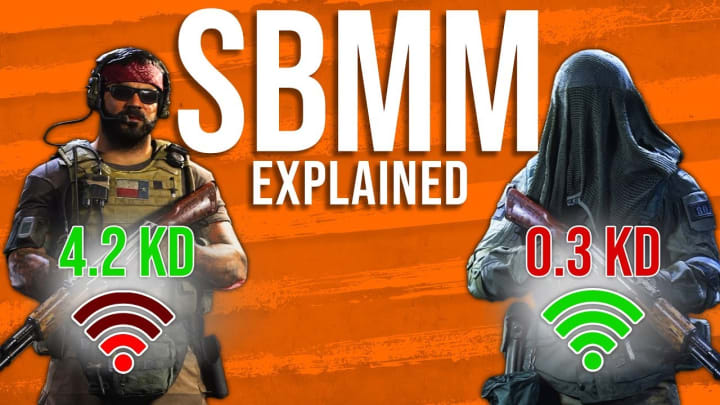
Online multiplayer used to be a defining characteristic of Call of Duty, especially during the years of its golden age. The old adage used to be that player’s bought Call of Duty for the campaign, but they stayed around for the multiplayer experience. As a gamer, I can personally testify to this reality. As a fan that’s been ever loyal to this game, I’m not afraid to admit that I have an embarrassing amount of hours of Call of Duty played with only twenty percent game completion simply due to the fact that I mostly play multiplayer. What I can tell you from personal experience is that in days of old, at about the time of the golden age, it used to be that players signed into a server, and they were directed to a lobby. These lobbies created communities. Some of Call of Duty’s greatest rivalries and relationships came from these lobbies. Someone would host the lobby you were assigned to, and the same players would face off against each other, match after match for hours on end. The result was that you weren’t just learning the multiplayer maps you were playing on, you were also learning about your fellow teammates and their strategies. It gave amateur players a realistic opportunity to beat someone that was far more skilled than them at least once. Things have changed a lot since those days, and not for the better. In recent years, video game developers like Activision and Infinity Ward have tried to implement something called Skill-Based Matchmaking. Skill-based Matchmaking (SBMM) is a system in multiplayer games that tries to pair players with similar skill levels, using metrics like kill to death ratios, win rate, or performance percentiles to create balanced matches. The verdict? Players loath it entirely. One could say that Call of Duty first incorporated this idea at the time that Advanced Warfare came out, but it didn’t really become the full blown problem that it is now until the second adaptation of Modern Warfare II came out. In a kind of bittersweet irony, this was a decision that was made that was supposed to improve player engagement, but it’s done just the opposite. It’s become a nightmare. There has been tremendous backlash in the community because of this decision. According to sources at Game Rant, “Fans feel this consistent effort to pair similarly skilled players makes casual matches too competitive.” So how bad is this whole SBMM controversy? Let’s just say this: you know you sort of have a problem when your most loyal and battle-heartened fans, you know the one’s that play professionally, are the most viewed streamers, and content creators, are the one’s telling audiences everywhere not to play because of this single feature, saying that it’s, killing video games.” Many noticeable voices in this community have spoken out about this primary complaint amongst Call of Duty players. Did you know that there is such a thing as professional Call of Duty players. Yeah, that’s a thing. Imagine how nice it would be to get paid for playing CoD. Seth “Scump” Abner has actualized what is essentially every kids dream job. He is practically the Michael Jordan of CoD, praised as one of the most successful and well-known personalities to have played the game professionally. Recently, Seth vented his frustration in what became an infamous tweet, where he commented, “SBMM doesn’t belong in Call of Duty. There should be a ranked playlist for people to sweat in.” Seriously risking his relationship with Activision the content creator who boasts over fifty-hundred thousand followers went on to say in an OpTic podcast, “It’s my opinion, but I think SBMM this year is super cranked. I don’t know if it’s because the player base is going down, but this year feels worst than any other year.” Abner is by no means the only one that harbors these feelings. Many other individuals of note have made similar comments. In conversation with GameSpot, Dr. DisRespect, the sensational streamer known for his Call of Duty content went on to say, “It’s the one thing that is outstanding to me in this game, and it bothers the hell out of me. (SBMM) it is ruining the game for me.” What it boils down to is that players are frustrated that it seems that they are being punished for doing well in the game. There is no longer a moment where you can pop off in a game. Players are disappointed that there is a huge divide between casual and competitive veteran players. The algorithms that these SBMM lobbies run off of seem to push away the casual player. But they are not the only one’s disappointed by SBMM. Veteran’s of the game don’t like the fact that even the most skilled players have a kill/death ratio of one, leaving them feeling that they want everyone to be on the same page, as if Activision is handing out participation trophies. Interestingly enough, Activision has spoken out on this issue. They report that they disabled SBMM in the game, and found that it was during this time that more people quit, and that there was less engagement, suggesting that players don’t know what they actually want. This brings up another larger issue causing Call of Duty’s decline, which is the companies obvious identity crisis, which we will discuss next.

A Company’s Identity Crisis
You know those spiritualist sentiments where you're supposed to go off to some retreat and go find yourself? That pretty much summarizes the state of Call of Duty at present. Call of Duty has been suffering from an identity crisis for quite sometime now, and everybody knows it. Activision gave into temptation. Where they went horribly wrong is that they strived and fawned to please everyone, and instead they pleased no one. Activision established it’s identity with the games of the golden age, and then after that period they completed dismantled it, and they’ve never truly recovered from it. It’s hard to pinpoint when exactly this started to take place. There are some proponents that argue that it began six years ago, although there are others that will swear up and down that it started with Call of Duty: Ghosts, just after Black Ops 2. I for one am more inclined to say that this has been going on a lot longer than six years. For me, the most clear-cut example of Call of Duty not exactly knowing what it was anymore can be traced back to games like Advanced Warfare. It was every bit apart of Call of Duty’s identity to have this gritty experience, where you felt every click-clack of you reloading your weapon, and it was realistic. Then Call of Duty Advanced warfare came out, and it seemed that they tried to go all in on the whole futuristic military idea that was started with Modern Warfare. The thing was it wasn’t Call of Duty to it’s core. What we got was a game that seemed to try to incorporate things that we were seeing in games like Titanfall. Suddenly, a Call of Duty game had exoskeletons and jet packs. Not only that, but gameplay was more focused on movements, and we saw players jumping off of walls for the first time. What was even more awkward about all of this was that you had the veterans from the golden age playing against a new generation of players, and they were both learning to play a new style of game. What’s worst, is that that’s only the tip of the iceberg. Call of Duty was just a few short years away from having it’s identity completely fragmented. I will say this. Call of Duty is not the only game that completely strayed away from it’s working model because of another game. Now there are some people that will say that recent additions like Warzone have brought new players to the game, and these people will say mostly positive things about it. I am not one of those people. What we experienced a few years ago was that games like Fortnite were wildly successful with their Battle Royale mode, and suddenly everyone in the sandbox tried emulating that formula. I mean we had a Call of Duty Battle Royale, a Halo Battle Royale, and the list just goes on. There is no questioning that this is Activision’s attempt to please everyone. At least that’s my honest opinion on the matter. They had a working formula, that there loyal fan base liked, and they felt the need to join the bandwagon and switch things up. They were doing what everyone else was doing. That’s not innovative at all. All of a sudden, it was as if Call of Duty thought it was Fortnite or Apex Legends. The militaristic style that we had all grown to love was replaced by cartoonish Fallout and Squid Game costumes, with flamboyant weapons that were a hot pink, leaving fans asking, “Are you trying to be a militaristic game, or a Fortnite like game focuses on aesthetics?” Another example of the games identity crisis comes in the form of its campaign which is the next thing that we will be looking at.
Campaign Chaos
This is another one of those instances where you had to be part of the movement to understand it, and that’s what the golden age of CoD was; a movement. Call of Duty is a game that every dude has played at some point in there game. For a while it was the most play game. It defined a generation of gamers. For those of you that don’t know, the Call of Duty campaign was an integral part of the Call of Duty experience. When gamers purchased Call of Duty, it was almost an unwritten rule that you played the campaign as soon as you opened it, and you only hopped onto multiplayer when you were finished with it. That was the experience you were purchasing. It was as much a part of Call of Duty’s identity as everything else we have discussed thus far. It was an immersive experience. Players loved the cinematic quality to the games campaign. I’m not exaggerating when I say that we had a bonding experience with the games main characters. We relished in their achievements, just as we cried whenever we encountered a downed soldier in arms. Gamers marveled at the way that Captain Price seemingly never aged over forty years of battle. Fast forward to this current epoch in human history and Activision has strayed far away from what established Call of Duty as one of the most dominant games in the market. If you look campaigns in recent years, you’re not even sure what your looking at. In recent years, we’ve had Call of Duty ties where the game lacked a campaign entirely as was the case with the mainline title Call of Duty Black Ops 4. This was not the only case that Activision completely abandoned their campaign model. With Call of Duty: Modern Warfare III, the second installment of the same title, we saw another instance of Activision trying to please everyone, as they made a desperate attempt to create an open world game with their open world missions. That game was like their weird foster child. It strayed so far away from the game that we all grew up loving. We’ve even seen this campaign chaos with the most recent CoD title. I no longer recognize the game that I’m playing. For Call of Duty Black Ops 7, Activision created from some abomination where the campaign has to be played as part of a co-op. I can say this about that one small fact: I own the game but it makes it so that I don’t even want to touch that part of the game. I can understand why there are people online saying that they absolutely refuse to purchase the game. These mistakes aren’t the only reasons that Call of Duty is facing a decline in player engagement. As we will discuss in the next section, these recent titles have faced seriously stiff competition.

The Competitive Market
When talking about how an entire market has been transformed, PC Gamer writes, “This part of the industry hasn’t been this competitive for twenty years.” Since 2006, we have been so accustomed to Call of Duty being the best-selling shooter. In 2025, when it came to shooters, we saw a volatile market unlike anything that we have ever seen. At a time when Call of Duty is facing serious issues, it seems like all of their competitors are cranking out the best games they have ever made. In 2025, we saw a Cinderella-like redemption story in the case of Battlefield Studios. The overwhelming consensus was that Battlefield 2042 was a major disappointment, even after they worked out all the bugs. It seems that Battlefield Studios listened to those critiques as a bit of constructive criticism, and delivered Battlefield 6 as an apology letter. Battlefield 6’s multiplayer is an amazing experience; an absolute masterpiece. One could make a few critiques of their own about the multiplayer, but even so, they rightfully deserve their spot as the number one game of 2025. Again, Call of Duty ranks in at lucky number seven. Battlefield is not the only example of the stiff competition that Call of Duty faces. By no means was Battlefield 6 the only contender to steal away a portion of Call of Duty’s fan base. It would have taken an amazing psychic with one hell of a crystal ball to have predicted the surprise phenom that we saw with Arc Raiders. I mean this game came out of left field. I am reminded of how wildly successful the game has been every time I log onto Twitch, and see it competing as one of the most heavily saturated game being broadcasted on this one live stream. Everywhere I go, people are talking about it. When I browse my various game communities online, I see at least one person promoting their live stream of the game on a daily basis. We also see stiff competition in the form of the free to play Delta Force. And even though the game came out last year, we can’t overlook the fact that Hell Divers II has a significant following. What is most interesting about this competitive market that we are observing at present, is that we aren’t seeing one clear cut case where one game dominates the market. Instead, it has allowed for each of these games to share a spot in the spotlight, with each one having significant success of it’s own.

Monetization and MTX
Activision faces a fourteen hundred dollar problem. For Black Ops 6 alone, fourteen hundred dollars is the cost to purchase every bundle that the game has to offer. Players everywhere are outraged by the fact that a full price seventy dollar AAA game comes complete with its own micro-transaction nightmare. Micro-transactions (MTX) are small, virtual purchases within apps and games allowing players to buy digital items like skins, power-ups, currency, or loot boxes with real money. When you log onto the Call of Duty, you are given an option to browse the store where you can buy any one of the twenty to thirty dollar bundles which give players various perks. What seems to be the real breaking point for a lot of players is that a full-priced AAA game of seventy dollars comes with ads for the many MTX’s that the game has to offer. This covert and aggressive monetization of products leaves many players, especially the games most loyal fanbase, feeling extremely alienated and disrespected. They are beginning to feel less like the games players, and more and more like Activision’s coin purse. The thing that disgusts most players - players like me for instance - is the way that Activision is double-dipping to make a quick buck. Usually pay to play walls are more commonly reserved for pay to play games, like you would expect from a game like World of Tanks. Activision is benefiting from perks of selling a premium game at full price, just as they are taking advantage of it as if it were a free to play game. It is a little unknown fact that free-to-play games are notoriously the most expensive, as they were designed to sell the in game materials once the free game has been downloaded. Activision is acting as if Call of Duty is both a premium title, as well as a free-to-play game, making a quick buck however they can. One veteran went so far as to make a financial breakdown of the most recent title, saying how absurd it was that the average player in 2025 pays seventy to eighty dollars for the game, a hundred dollars for the vault edition, fifty to sixty dollars a year for the PlayStation plus membership to be able to play online, ten dollars for the battle pass, and bundles, plus whatever micro-transactions the player my be tempted into playing. For instance, one weapon in Black-cell can cost as much as sixteen to twenty dollars. That brings up another issue as it relates to this topic of monetization and micro-transactions, and that is what players are commonly referring to as the pay-to-win creep. Many people in the community feel that players who can afford better weapons, kill streaks, operators, and other pay-to-play perks gives them an unfair advantage, leading to murmurs of cheating. This turns away casual and veteran players alike who feel that the game has become less skill-based, and instead rewards those who have more to invest into the game, kind of like what has happened with Magic: The Gather. That’s a joke, but no really. It’s something that Activision should look into if they don’t want to see a further decline in even more players.
Summary
The brighter a star burns, the faster it is to burn out. Has Call of Duty reached a point where it has reached a kind of metaphorical supernova? Once upon a time, Call of Duty was a dynasty all of its own. For more than half a decade, Activision’s games top every chart. Those day’s are long gone. There is no denying that Call of Duty is going through a steep decline. When we look to it’s history, we see how this giant has fallen so incredibly far. An in-depth examination reveals to us that the contributing factors causing this include, but are by no means limited to the fact that players are dissatisfied with the games new Skill-based Matchmaking, the series is going through an ugly identity crisis in multiple ways, the campaigns that Activision offers us aren’t what they used to be, the franchise faces stiff competition, in addition to the fact that the company needs to address its aggressive and greedy monetization and micro-transactions. There are other reasons for this steep decline that we have not mentioned in course of this article. For instance, many players are reporting to feeling fatigue and burnout over the game. There is a general consensus that Activision lacks innovation with it’s yearly games of the same title that seem like a rehashing of the same old material. Similarly, a considerable portion of players dislike minor issues like the way that the game takes up over 200 GB of storage, often taking up most of a consoles total storage, or the way that you can’t receive a platinum trophy for most of their games, all of which are minor inconveniences, but they are inconveniences nonetheless. It will be interesting to see if Call of Duty can find a way in the near future to restore its former glory, although most critics are doubtful.
Writing and Research: Aaron M. Weis
I create chill, educational trophy hunting streams. I break down platinum runs, missables, collectibles, and optimal paths - live. Horror, FPS, and completionist pain. Currently: Battlefield 6 20/43. Follow me @: https://www.twitch.tv/lilweisy222
About the Creator
Aaron M. Weis
Aaron M. Weis is an online journalist, web content writer, and avid blogger who specializes in spirituality, science, and technology.
Keep reading
More stories from Aaron M. Weis and writers in Gamers and other communities.
Is PlayStation 5 Sony’s Worst Console to Date?
What gaming system should I get? That is the question every serious gamer has to ask themselves at one point or another. It is a rudimentary inquiry that, on a surface level, seems to be one that has a simple answer. In this day and age, there are essentially three tech giants that dominate this market, with those being Sony, Microsoft, and Nintendo, who make the Playstation, Xbox, and Nintendo consoles, respectively. At least, those are the options unless you want to go with a gaming PC. I have only very recently stumbled across a revelation. It has only now dawned on me that there is another question that everyone who prides themselves as a gamer should be asking themselves. When did the quality of gaming systems begin to decline?
By Aaron M. Weis2 months ago in Gamers
‘I Belong to Saudi Arabia’ – Ronaldo Committed to Al-Nassr
Football icon Cristiano Ronaldo has declared his long-term commitment to Al‑Nassr, stating, “I belong to Saudi Arabia,” in a powerful affirmation of loyalty that signals his intention to continue shaping the future of football in the kingdom. Speaking after a decisive league victory, Ronaldo addressed growing speculation about a possible return to Europe or a move to another global league. Instead, the five-time Ballon d’Or winner made it clear that his focus remains firmly with Al-Nassr and the Saudi football project he has helped elevate onto the world stage. “I feel at home here,” Ronaldo said. “This club gave me trust, and Saudi Arabia gave me a new challenge. I belong to Saudi Arabia now, and I want to build something special with Al-Nassr.” A New Chapter of Legacy Since arriving in Riyadh, Ronaldo has transformed not only Al-Nassr’s profile but also the international perception of the Saudi Pro League. His presence has attracted worldwide media attention, new sponsorships, and a wave of elite players who followed him into the league. Club officials credit Ronaldo with raising professional standards both on and off the pitch. Training intensity, fan engagement, and commercial visibility have all increased significantly since his signing. “Cristiano changed everything,” said an Al-Nassr executive. “He didn’t come here to retire. He came to compete and to lead.” Ronaldo has continued to deliver on the field, scoring consistently and guiding younger teammates through his relentless discipline and experience. More Than Football Ronaldo’s statement goes beyond sporting commitment. He has repeatedly praised Saudi Arabia’s culture, hospitality, and ambition to grow football as part of its wider national development plans. In interviews, he has spoken positively about life in Riyadh, describing it as safe, welcoming, and family-oriented. His children now attend school in the city, and he has become a familiar public figure beyond the stadium. “People here respect me and my family,” Ronaldo said. “That matters more than trophies.” His message aligns with Saudi Arabia’s broader strategy to position itself as a major destination for global sport, hosting high-profile football matches, boxing events, and motorsport competitions. Silencing Transfer Rumors Recent months saw rumors linking Ronaldo to clubs in Europe and North America, with speculation that he might seek one last Champions League run. His declaration effectively shuts down those stories, at least for the foreseeable future. Football analysts believe Ronaldo’s commitment offers stability to Al-Nassr and strengthens the Saudi league’s credibility. “Ronaldo staying sends a message to the football world,” said sports analyst Marco Silva. “It shows that Saudi football is not a temporary stop but a serious long-term project.” Mentor and Leader Inside the dressing room, Ronaldo has taken on a mentorship role, particularly with young Saudi players. Coaches say his influence is visible in their professionalism and confidence. One teammate noted, “He pushes everyone. If you arrive late, he notices. If you train badly, he challenges you. He makes us better.” This leadership has helped Al-Nassr remain competitive domestically and in regional tournaments, even as expectations continue to rise. Looking to the Future Ronaldo has hinted that his future plans may extend beyond playing. He has expressed interest in football development and possible ambassadorial roles within Saudi sports structures once his career ends. “I want to help grow football here,” he said. “Not only for today, but for the next generation.” For Al-Nassr supporters, his commitment brings renewed optimism. Fans filled the stadium chanting his name after the match, waving banners that read, “Our legend, our future.” A Defining Statement Ronaldo’s declaration, “I belong to Saudi Arabia,” marks a defining moment in his late-career journey. Once seen as a controversial move, his transfer to Al-Nassr now appears central to his evolving legacy — not just as a footballer, but as a global sporting figure shaping new frontiers. As the season continues, Ronaldo’s message is clear: his story with Al-Nassr is far from over.
By Fiaz Ahmed 6 days ago in Gamers
FC 26: King of the Knockouts Unleashed – Meta Evolutions and SBC Hits & Misses
The latest King of the Knockouts promo has officially landed in FC 26, bringing a massive wave of live cards, legendary Icons, and a game-changing "Double Gold" Evolution system. While the community is buzzing over 12-million-coin pulls like Ultimate Dynasty Hamm, the tactical meta is shifting toward specific SBCs and high-value Evolution paths. Here is the full breakdown of the February 14th content and how to optimize your squad.
By hasan zidana day ago in Gamers
I was in a Toxic Relationship, with my Workplace
“You got that?” My ex yelled. His hands were balled into fists at his side. At six foot three, he towered over me. A normal person would have been afraid, but I looked up a video of George Lopez repeatedly saying, “I got this,” and showed it to him. I had grown used to this treatment, so much so that I didn’t blink when he ripped the phone from my hand and threw it across the room.
By Jade M.2 days ago in Confessions



Comments
There are no comments for this story
Be the first to respond and start the conversation.