
A Personal Retrospective: The Games That Defined a Generation
Back to 90s
From the pixelated landscapes of my earliest memories to the sprawling, photorealistic worlds I inhabit today, my life has been a continuous journey through the evolution of video games. Born in 1989, I had the unique privilege of witnessing, and participating in, the industry's most transformative decades. This article isn't just a chronological recounting of consoles and titles; it's a deeply personal narrative—a testament to how these digital realms shaped my understanding of perseverance, problem-solving, and even language itself. Join me as we revisit the controllers, cartridges, and characters that didn't just entertain, but profoundly defined a generation, one frame at a time.
The Sega Era and Physical Media
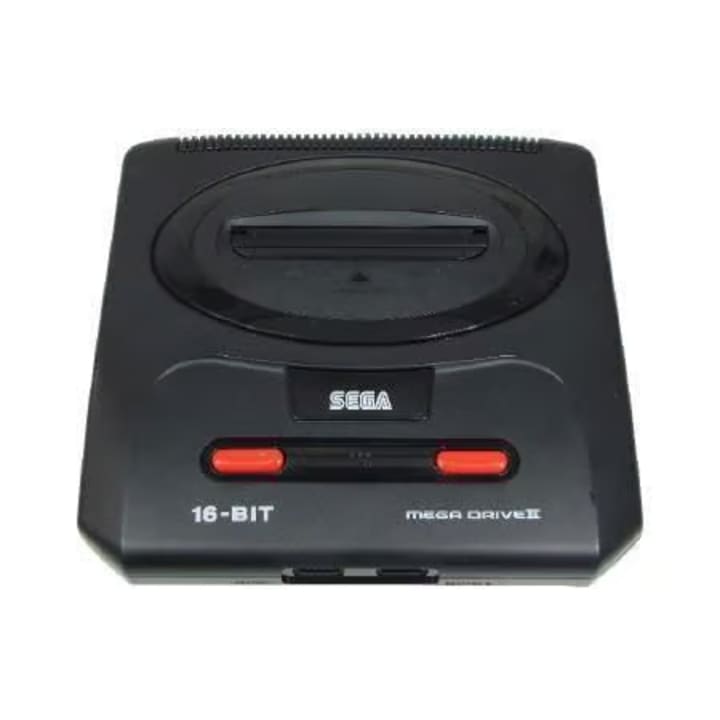
The first console I explored to its full potential was the Sega Mega Drive . The beauty of this system lay in the affordable "multicarts"—disks containing dozens of games—that were widely available in my region. This allowed us as young boys to trade games without constantly burdening our parents for new purchases. This early culture of trading is why I still value physical copies today and why I struggled with the industry's shift toward a digital-only marketplace.
Sega defined my early years, and video games quickly became my primary source of entertainment. At one point, our household contained most of Sega's hardware. As children, we didn't realize that many of the games we played—such as Super Mario Bros. —were unofficial ports. Ironically, it was this "Sega version" that caused me to fall in love with Nintendo's iconic character.
"Spread Gun!"
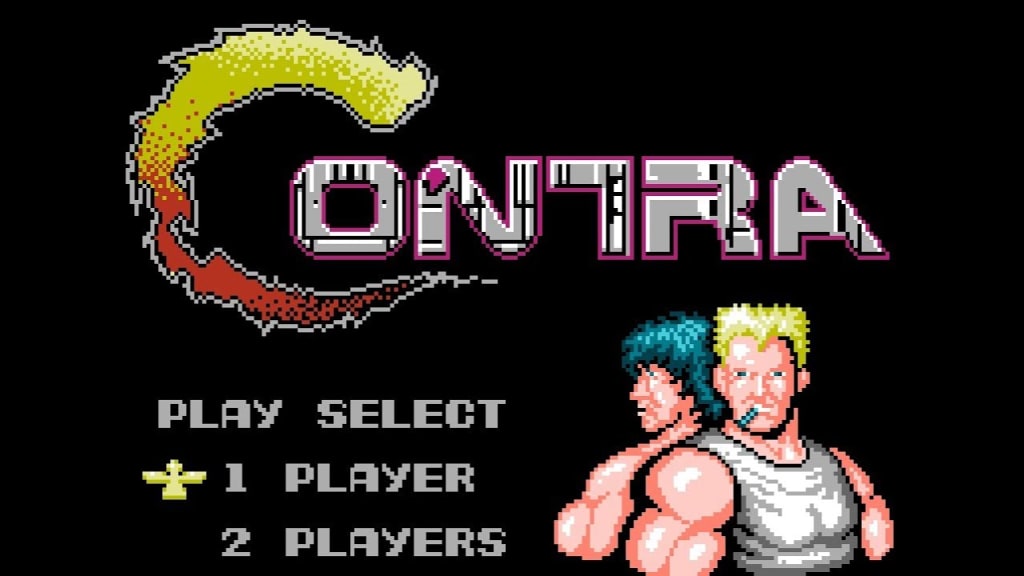
Aside from Mario, many games left an indelible mark on my childhood. Duck Hunt was a staple; we used the pistol-shaped gamepad to shoot at ducks, and that dog's "evil" laughter when I missed was likely the moment my first "gamer rage" was born. Another essential title was Contra . To a young boy, Contra was more than a shooter; it was a blend of action and, at times, horror. It was amazing to witness in its era. Whether playing solo or with friends, the game was notoriously challenging, teaching us to never give up and to try again after every failure. I cannot recall if I ever officially finished it, but the countless hours spent with friends and family trying to advance just one level further are deeply engraved in my memory.
The Handheld Turning Point

"BUT VERILY, IT BE THE NATURE OF DREAMS TO END! WHEN I WAKEN, KOHOLINT WILL DISAPPEAR..."
Fast-forwarding past systems like the Atari (pictured below), I eventually reached the game that convinced me I would never stop playing: The Legend of Zelda: Link's Awakening for the Game Boy. There was nothing like it. I was mesmerized by the atmosphere, which felt unparalleled at the time. Since my friends and I didn't yet speak English, we would write down sentences from the screen and translate them with a dictionary to understand the NPCs. Back then, I never played without a notebook and a dictionary; Link's Awakening is where that discipline begins. I vividly remember the frustration of being stuck on a puzzle, yet that confusion only fueled my determination to prove I could solve it. It took months to finish it the first time, but I eventually played it so often that I could "speedrun" it from memory. This game transformed me, sparking an addiction to exploration and teaching me that games could be more than just fun—they were rewarding, even helping me learn a second language.

The Evolution of Zelda
"The Hero triumphs, and on his feet he leaves the Master Sword in his pedestal... forever."

If you wanted a "mind-blower" during that era, look no further than The Legend of Zelda: A Link to the Past (SNES). While the original was amazing, this remains my second-favorite Zelda title and one of the best games ever made. Replaying it recently in 2026, I found I loved it just as much. The complexity was a significant step up, but that was only one fragment of the adventure. It is difficult to put into words how important this game was, introducing iconic elements like the Master Sword and the Ocarina. Visually, it was miles ahead of anything I had played, and the sheer nostalgia ensures I could play it over and over again.
"Hey! Listen!"
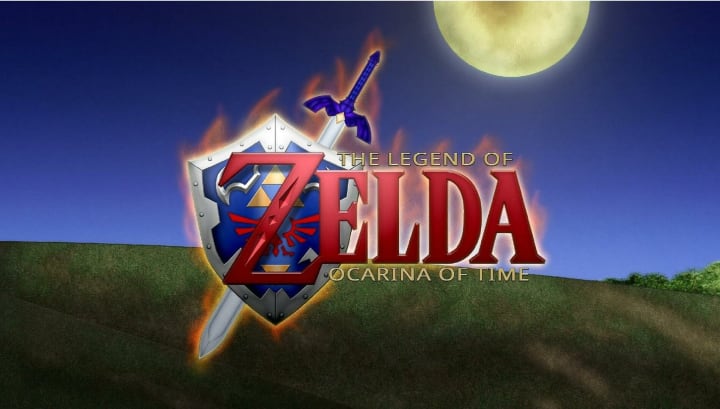
However, The Legend of Zelda: Ocarina of Time is my all-time favorite. It is widely hailed as one of the greatest games ever made, and for good reason. It defined the Nintendo 64 for me, making it my favorite console. In Ocarina , we start as young Link being woken from a nightmare by a fairy companion. The mechanics of exploring the world, remembering obstacles, and returning later with a new gadget or song were brilliant. It made backtracking fun and exploration rewarding. A standout feature was using the Ocarina to change the environment; you had to actually memorize the button inputs on the controller to play the right tune. The time-travel element also added deep layers to the gameplay, as certain tasks were only possible in specific timelines. For its time, it exceeded every expectation.
Handheld Excellence

"Gotta catch 'em all!"
I've grouped the Game Boy Color and Game Boy Advance together for brevity, but I must highlight Pokémon Crystal . It remains my favorite in the series. It brought the Pokémon to life with animations and cries that made them feel real. The legendary Pokémon Suicune was a highlight—nearly impossible to catch but a trophy for persistent players. The most impressive part was that the cartridge contained two full maps, each with its own gyms and trainers. It was an incredible amount of content for a handheld device.

The PlayStation Era

The PlayStation 1 is a favorite for many, including myself. While I preferred the N64 due to nostalgia, the PlayStation had a massive library of modern IPs that are still active today. It is hard to pick just a few without feeling like I'm doing an injustice to the rest. We had Gran Turismo , which became a racing staple; Final Fantasy VII , the first 3D entry in the series; and Tekken 3 , which provided endless fun during arcade runs or sessions with friends.
"How do you prove that you exist...? Maybe we don't exist..." - Vivi
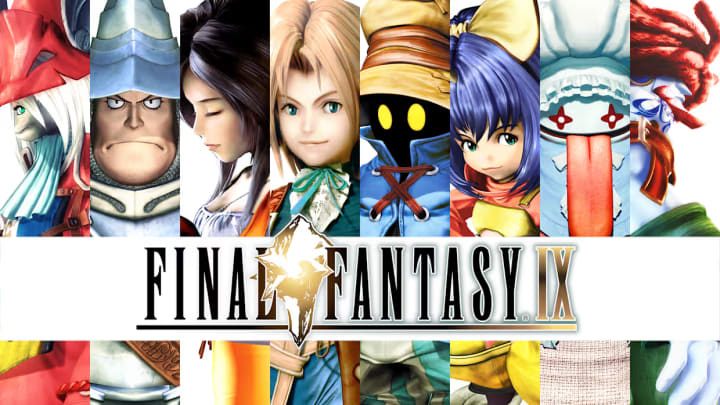
I cannot overlook Resident Evil , Silent Hill , Spyro , Crash Bandicoot , Tomb Raider , or Tony Hawk's Pro Skater . However, my personal favorite was Final Fantasy IX . I am one of those who prefer IX over VII. Despite my love for Sci-Fi and Cyberpunk, the fantasy art design and atmosphere of IX won me over. I spent countless hours soaking in the story and combat, still using my dictionary to translate the complex quest texts.
"The fear of blood tends to create fear for the flesh."

Silent Hill still sends chills down my spine. While the dated graphics might lessen the "scare factor" today, the riddles and storyline were amazing. I was scared to death—especially by that cat in the locker—but I always came back for more. Similarly, Resident Evil was a different kind of horror. Unlike the survival-focused Silent Hill where ammo was scarce, Resident Evil felt more like an action-horror hybrid. I loved the concept of the virus mutating living beings into more than just zombies and the overarching lore of the Umbrella Corporation. While the N64 was my childhood favorite, the PlayStation established the foundation for my generation of gamers.
The PC and Modern Classics

Finally, there is the PC . While we often used it to emulate older consoles (as kids), we also enjoyed dedicated PC titles, especially during LAN parties. Counter-Strike was an absolute phenomenon that remains popular today, with roots stretching back to our childhoods. However, I spent more time in Unreal Tournament . I loved the sci-fi setting, the movement, and the mods; it remains my favorite multiplayer shooter. Quake 2 also deserves mention, although I often played it on consoles in split-screen mode with friends.
"Stay a while and listen!"

Diablo 2 (and its expansion, Lord of Destruction ) was another masterpiece. Its five acts were increasingly brutal and gory, blending adventure with horror. It defines the "ARPG" genre to the point that every similar game since is called a "Diablo clone." Whether playing seasons online or unbalanced PVP, it offered so much. If Warcraft 3 hadn't come along, it would likely be Blizzard's most popular game.
"Until the day the sky rained fire... and a new enemy came among us."

Speaking of Warcraft III: Reign of Chaos , it brought storytelling to the RTS genre in an unprecedented way. The tragic fall of Arthas is a script worthy of a Hollywood movie. The community was so involved that they created the "DOTA" map, which influenced the entire industry.
"The Drums of War Thunder Once Again"

However, it was World of Warcraft (2004) that changed my life. When "Vanilla" WoW launched, I lost interest in almost everything else. Our characters became our identities and our guildmates became our closest friends. It was the ultimate adventure; the slow leveling and challenging quests forced us to communicate, which rapidly improved my English skills. It is a game I still play today, and as it is for millions of others, it is an inseparable part of my life.
Conclusion
These are the games I grew up with. While everyone's list is different, these are my personal preferences. Looking back, it is incredible to see how fast technology has advanced—from the shadowless, pixelated sprites of my youth to the ray-traced, lifelike graphics and cinematic scores of today.
About the Creator
josip
I'm a gamer who likes to write, talk and record video games. Being an introvert person with little to no hobbies or interest in world outside of my house I try to leave my mark online with my gameplay videos, written text and so on.
Schoolgirl Indra Brown Soars as Freeski’s Superstar Predicts 16-Year-Old’s ‘Time Will Come’
Sixteen-year-old British freeski prospect Indra Brown is quickly becoming one of the most exciting young names in winter sports after delivering a breakthrough performance that caught the attention of the world’s top athletes — including Olympic champion Eileen Gu, who predicted that Brown’s “time will come.” Competing against older and more experienced rivals, Brown displayed remarkable confidence and technical precision in a recent international freeski event, landing complex tricks in the slopestyle and halfpipe disciplines that belied her age. Her runs earned standing ovations from spectators and praise from judges, confirming her arrival as a serious future contender in elite competition. A Rising Star in British Freeskiing Brown, still balancing school exams with elite training schedules, has been part of Britain’s youth development system for several years. Coaches say her rapid progress has been driven by relentless work ethic and a fearless approach to difficult terrain features. “She doesn’t ski like a junior athlete,” said one team official. “She skis like someone who already belongs on the world stage. Her technical foundation is incredibly strong, and mentally she’s far ahead of her years.” Her recent performance included a series of clean landings on high-risk aerial rotations that placed her among the top finishers despite competing against seasoned professionals. For a teenager facing athletes in their twenties and thirties, the achievement marked a major milestone. Recognition From the Sport’s Biggest Name The moment that truly elevated Brown’s profile came when Eileen Gu, the dominant figure in women’s freeskiing, publicly praised her after watching her competition run. “She’s so talented,” Gu said. “You can see it in her style and her confidence. Her time will come — she just needs to keep believing in herself and enjoying the sport.” For Brown, the words carried enormous weight. “It means everything,” she later said. “She’s someone I’ve watched and admired for years. Hearing that from her makes me feel like I’m on the right path.” Balancing School and Stardom Unlike many elite athletes, Brown still attends school full-time, fitting training around homework and exams. Her parents and coaches have worked closely with her teachers to create a flexible schedule that allows her to pursue her sporting dream without sacrificing education. “It’s definitely challenging,” Brown admitted. “Some days I go from class straight to the slope and train for hours. But I love it, and I don’t want to choose one over the other.” This balance has made her story especially compelling to fans and young athletes across the UK, where winter sports often struggle for visibility compared with football or athletics. Future Olympic Potential Experts believe Brown has the raw talent to become a future Olympic medal contender if her development continues steadily. Freeskiing requires not only physical skill but mental resilience, and Brown’s calm under pressure has impressed veteran observers. Sports analyst Laura Henderson noted, “What stands out is her consistency. Young athletes often flash brilliance but lack control. Indra is already showing maturity in how she plans her runs and adapts when things don’t go perfectly.” With major youth championships and World Cup appearances now within reach, Brown is expected to gain more exposure and experience over the next two seasons. A New Generation Emerges Brown’s rise reflects a broader shift in freeskiing, where younger athletes are entering elite competition earlier than ever before. Inspired by stars like Gu, teenage skiers are pushing technical boundaries while redefining what is possible at such a young age. For now, Brown remains focused on enjoying the journey. “I just want to keep learning and getting better,” she said. “If one day I can compete at the Olympics, that would be a dream.” As one of freeskiing’s biggest names has already predicted, that dream may be closer than anyone expects.
By Fiaz Ahmed 5 days ago in Gamers
U4gm Season 12 Turns Momentum into Power in Diablo IV
Every season of Diablo IV experiments with how players grow stronger, but Season 12 feels different. Instead of handing out power through larger numbers or isolated bonuses, it introduces a new idea: power should be earned moment by moment.
By Billo Nalia day ago in Gamers




Comments
There are no comments for this story
Be the first to respond and start the conversation.