


Wow so far we have covered two slices of life, educators and entertainers, that women have been a great part of but whom most of us probably have never heard of. I know bring you a third.... writers

Author Harriet E. Wilson is believed to be the first African American woman to publish a novel in the United States. Her fictional autobiography Our Nig; or, Sketches from the Life of a Free Black, in a Two-story White House, North. Showing that Slavery’s Shadows Fall Even There was printed in 1859 by the Boston, Massachusetts publisher George C. Rand and Avery.
Born Harriet E. "Hattie" Adams on March 15, 1825 in Milford, New Hampshire, she was the mixed-race daughter of Margaret Ann (or Adams) Smith, a washerwoman of Irish ancestry, and Joshua Green, an African-American "hooper of barrels" of mixed African and Indian ancestry. After her father died when Hattie was young, her mother abandoned Hattie at the farm of Nehemiah Hayward Jr. As an orphan, Adams was bound by the courts as an indentured servant to the Hayward family, in exchange for room, board and training in life skills, so that she could later make her way in society. After the end of her indenture at the age of 18, Hattie Adams (as she was then known), worked as a house servant and a seamstress in households in southern New Hampshire.
Adams married Thomas Wilson in Milford on October 6, 1851 but he abandoned Harriet soon after they married. Pregnant and ill, Harriet Wilson was sent to the Hillsborough County, New Hampshire Poor Farm in Goffstown, where her only son, George Mason Wilson, was born. His probable birth date was June 15, 1852. Wilson reappeared after George's birth,and took the two away from the Poor Farm. He returned to sea, where he served as a sailor, and died soon after.
Now a widow, Harriet returned her son to the care of the Poor Farm,because she could not make enough money to support them both and provide for his care while she worked.While living in Boston, Wilson wrote Our Nig. On August 14, 1859, she copyrighted it, and deposited a copy of the novel in the Office of the Clerk of the U.S. District Court of Massachusetts. On September 5, 1859, the novel was published anonymously by George C. Rand and Avery, a publishing firm in Boston. Wilson says in the book's preface she wrote the novel to raise money to help care for her sick child, George. However, George died at the age of seven on February 16, 1860 of bilious fever. In 1863, Harriet Wilson appeared on the "Report of the Overseers of the Poor" for the town of Milford, New Hampshire.
After that, Wilson moved back to Boston, hoping for more work opportunities. In 1867, when she was listed in the Boston Spiritualist newspaper, Banner of Light, as living in East Cambridge, Massachusetts. She subsequently moved across the Charles River to the city of Boston, where she became known in Spiritualist circles as "the colored medium." From 1867 to 1897, "Mrs. Hattie E. Wilson" was listed in the Banner of Light as a trance reader and lecturer. In 1870 Wilson traveled as far as Chicago, Illinois as a delegate to the American Association of Spiritualists convention. Wilson delivered lectures on labor reform, and children's education. Although the texts of her talks have not survived, newspaper reports imply that she often spoke about her life experiences, providing sometimes trenchant and often humorous commentary.
Wilson worked as a Spiritualist nurse and healer ("clairvoyant physician"); and she was also available for medical consultations and would make house calls. She was active in the organization and operation of Children's Progressive Lyceums, which served as Sunday Schools for the children of Spiritualists; she organized Christmas celebrations; she participated in skits and playlets; and at meetings she sometimes sang as part of a quartet. She was long remembered for her floral centerpieces and the candies she would make for the children. From 1879 to 1897, she was the housekeeper of a boarding house in a two-story dwelling at 15 Village Street (near the present corner of East Berkeley Street and Tremont Streets in the South End.) Some of her duties consisted of renting out rooms, collecting rents and providing basic maintenance.In Wilson's active and fruitful life after Our Nig, there is no evidence that she wrote anything else for publication.Unfortunately, the book did not provide much financial success and was lost to obscurity until its resurrection by Gates over a century later.
On June 28, 1900, Hattie E. Wilson died in the Quincy Hospital in Quincy, Massachusetts.She was buried in the Cobb family plot in that town's Mount Wollaston Cemetery. Her plot number is listed as 1337, "old section.”
*Originally the book about the life of Harriet Wilson which up until the early 1980s was considered the work of a white author. In 1981, the scholar Henry Louis Gates, Jr. was shown the original edition in a Manhattan, New York bookstore and republished it in 1983 with his discoveries that the author was African American and that the story was largely autobiographical. It turned the literary world on its end, as up to that point it had been widely accepted that the first African American published novelist had been Frances Ellen Watkins Harper with Iola Leroy, or, Shadows Uplifted (1892). ( i found this part interesting because i was also on of those that though Miss Harper was the first to have a published novel.)
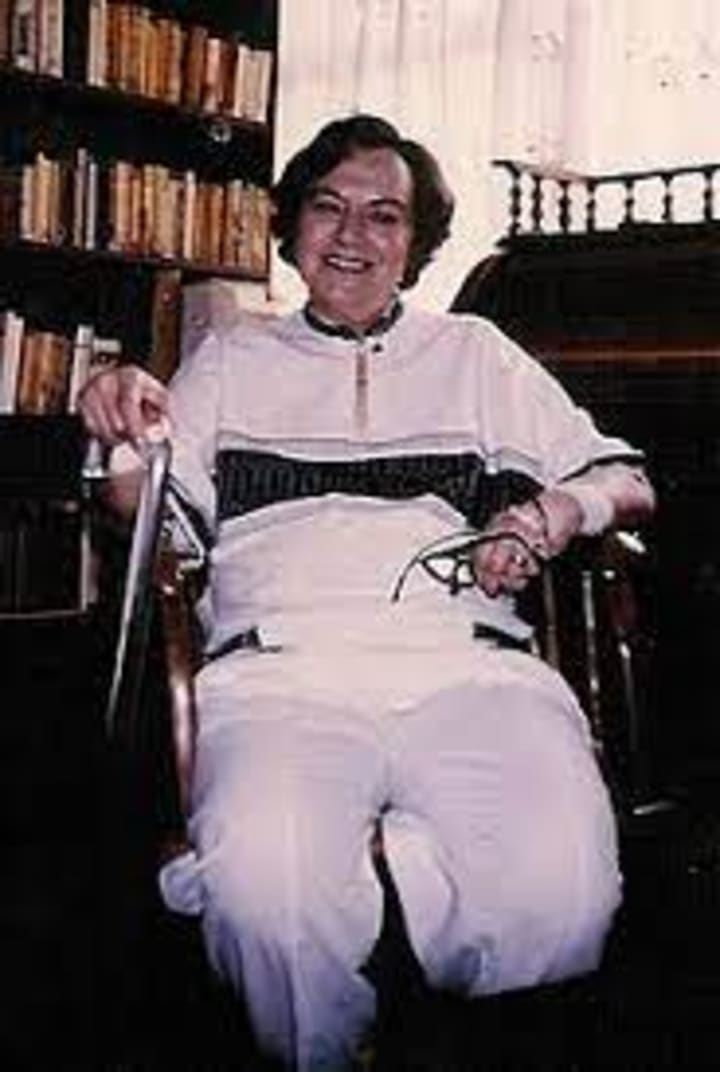
Inés Arrendondo’s work was a turning point for Mexican literature, especially that written by women due to taboo topics.. Her main focus was family and partner relationships. Her stories questioned roles and the status quo. Not only did she expand on eroticism, madness, death, perversion, love, passion, voyeurism, loss of innocence, infidelity and betrayal, but she also denounced hidden secrets in Mexican families, such as sexual abuse, the abuse between parents to their children, authoritarianism, machismo, abortion, incest and bullying.
Born on March 20, 1928 in Culiacán, Sinaloa to a middle class family that grew poor later on; her father, Mario Camelo y Vega, was a liberal doctor, and Arredondo was the oldest of nine.She passed a large part of her childhood in the sugar plantation called "Eldorado" of her maternal grandfather Francisco Arredondo. From 1936-1944 she studied at the Colegio Montferrant in Culiacán, a school run by Spanish nuns.Then from 1945 to 1946 she studied at the Colegio Aquiles Serdán in Guadalajara.
In 1947, she enrolled in the National Autonomous University of Mexico in Mexico City, for degree in Philosophy ,however she experienced a spiritual crisis as a result of reading Friedrich Nietzsche and Søren Kierkegaard and due to the skeptical and atheist environment that surrounded her. She became suicidal causing her doctor to advise she change her area of study. So, in 1948 she began studying Hispanic Literature. After finishing her studies in 1950 with a thesis on "Political and social ideas and feelings in Mexican theater, 1900–1950" she studied drama until 1952.
In 1953 she took a Library Science course. During her studies she came to know many people who had been exiled during the Spanish Civil War. During this period, she also discovered French existentialism, surrealism, the Generation of 27, and the writing of Juan Rulfo and Juan José Arreola. She lived with classmates Rosario Castellanos, Jaime Sabines and Rubén Bonifaz Nuño, and her teachers included Julio Torri, Francisco Monterde and Carlos Pellicer. Between 1952 and 1955 she worked in the National Library; later, she took the position of Emilio Carballido in the School of Fine Arts for Theater. She collaborated on the drafting of the Dictionary of Latin American Literature edited by UNESCO.
She married writer Tomás Segovia, in 1958, and had a daughter, Inés, but her second child, José, who was stillborn, led to another spiritual crisis. Between 1959–1961 she edited the Dictionary of Mexican History and Biographies. She also wrote for radio and television shows and worked as a translator. Her translation work led to the idea for her first original work, "El membrillo" ( which had been published in 1957 in the university magazine). From that point on, she did not stop writing.
She gave birth to two more children, Ana and Francisco Segovia, and worked with her husband on the Mexican Literature Review but not receiving credit till they separated. Several of her stories were published in the Review. Then in 1961 she received a scholarship from the Mexican Center for Writers and later in 1962 she received another one from the Fairfield Foundation in New York.
Despite their marital troubles, she and her husband decided to wipe the slate clean and move to Montevideo (Uruguay), where she worked in the Latin American Free Trade Association (LAFTA). However, in 1962 they separated with Inés returning to Mexico. Their divorce would become official in 1965. As a divorced mother, she held the following positions to support her children:
Member of the editing committee for the Mexican Literature Review until its end in 1965
Investigator in the Coordination of the Humanities (1965-1975)
Invited to conferences at Indiana University and Purdue University in 1966
Professor at the National Autonomous University of Mexico (UNAM), teaching courses on the Golden Age and literature (1965-1968)
Critic in the review section of "México en la cultura", supplement to the magazine Siempre! (1965-1967)
Collaborator in the University Radio of UNAM (1965-1970)
Collaborator in the Dictionary of Mexican Writers in the Center for Literary Studies at UNAM (1967)
Professor in the School of Theater in the National Institute of Fine Arts (1965-1967)
Editor in the Department of Information and Press, UNAM (1965-1968)
Co-wrote the feature-length film Mariana with Juan García Ponce (1967)
Professor of History of Theater in the Iberoamerican University (1970)
Researcher in the Center for Historical Studies of Mexico, CONDUMEX (1966-1973)
In 1965 she published her first book of short stories, La Señal (The Signal). From this point on, the short story became her preferred style. During this time she began to have issues with her spinal column undergoing five operations and spending many years in a wheelchair. In 1972 she remarried the surgeon Carlos Ruiz Sánchez. She picked up her literary studies again writing her masters thesis on the Mexican poet and essayist, Jorge Cuesta. In 1980 she finished her studies with an honorable mention.
In 1979 she published her second book, Río subterráneo (Underground River), which won the Xavier Villaurrutia Award and critical praise. Also in 1979 the US Library of Congress in Washington, DC made recordings of three of her stories for the series Voz Viva de México (Live voice of Mexico). In 1983 the editorial Oasis published Opus 123, which could be considered a short novel. In 1984, her children's story Historia Verdadera de una Princesa (True Story of a Princess) was published. In 1988, her final book of short stories, Los espejos (The Mirrors) was published. That same year she edited her Obras Completas (Complete Works) with the publisher Siglo XXI while receiving an honorary degree from the Autonomous University of Sinaloa on May 27, 1988. In November 1988, a festival dedicated to her was organized in Culiacán.
She spent the last years of her life confined to her bed and on November 2, 1989 she died in her apartment in Mexico City.
About the Creator
Kia T Cooper-Erbst
Writer, poet, author. submissive. Mom of three wonderful human beings. These are the first things that come to mind when I think of myself besides being the obvious.... which is daughter, wife,etc.
Keep reading
More stories from Kia T Cooper-Erbst and writers in FYI and other communities.
Strategic Importance of Domestic Aerospace Manufacturing Capacity
Domestic aerospace manufacturing capacity plays a vital role in maintaining national security, economic stability, and technological leadership. In an era where global supply chains are increasingly complex and geopolitical uncertainties continue to grow, the ability to produce critical aerospace components within national borders has become more important than ever. For countries like the United States, maintaining a strong domestic aerospace manufacturing base ensures operational readiness, supply chain resilience, and long-term industrial competitiveness.
By Beckett Dowhan5 days ago in FYI


Comments
There are no comments for this story
Be the first to respond and start the conversation.