
Women pt 1~ Educators
In Honor of Women's Month


In honor of women’s month. I am going to spotlight two women from each slice of life. Some you may know and some you might not have heard of. Let's start with:
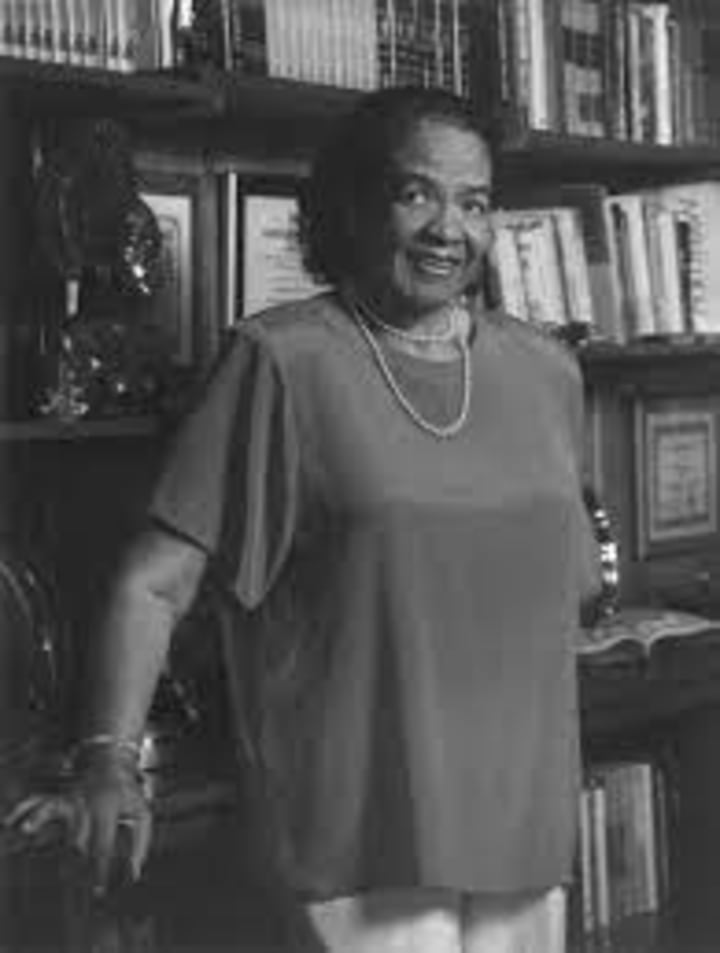
Dr. Dorothy Lavinia Brown was a medical pioneer, educator, and community leader.
3.1956 Brown became the first unmarried woman in Tennessee authorized to be an adoptive parent. She named her daughter Lola Denise Brown.
4.1966 she became the first black woman representative to the state legislature in Tennessee.
Brown was born in Philadelphia, Pennsylvania on January 7, 1919. Within weeks after she was born, Brown’s unmarried mother Edna Brown moved to upstate New York and placed her five-month-old baby daughter in the predominantly white Troy Orphan Asylum (later renamed Vanderhyden Hall) in Troy, New York. Brown was a demonstrably bright child, and becoming interested in medicine after she had a tonsillectomy at age five. When Brown was 13 years old, her estranged mother reclaimed her. Subsequently, Brown would run away from her mother five times, returning to the orphanage each time. During her teenage years Brown worked at a Chinese laundry, and also as a mother’s helper for Mrs. W.F. Jarrett, who encouraged her desire to become a physician.
At age 15, the last time Brown ran away from her mother, she enrolled herself at Troy High School where the principal arranged for Brown to live with Lola and Samuel Wesley Redmon, foster parents who became a major influence in her life and from whom Brown received the security and support she needed until she graduated at the top of her high school class in 1937. In 1941 Brown graduated second in her class from Bennett College in Greensboro, North Carolina where she had been admitted into the American College of Surgeons and earned her BA degree after being awarded a four-year scholarship by the Troy Conference Methodist Women.
During World War II Brown worked as an inspector for the Army Ordnance Department in Rochester, New York. In 1944 Brown began studying medicine at the Meharry Medical College in Nashville, Tennessee, receiving her Medical Degree in 1948. After serving a year-long residency internship at Harlem Hospital in New York City, Brown returned to Meharry’s George Hubbard Hospital in 1949 for her five-year residency. From 1966 to 1968 Brown served in the Tennessee House of Representatives, where she introduced a controversial bill to reform the state’s abortion law to allow legalized abortions in cases of incest and rape. Brown also co-sponsored legislation that recognized Negro History Week, which later expanded to Black History Month. Brown served on the Joint Committee on Opportunities for Women in Medicine, sponsored by the American Medical Association. Along with supporting women in medicine, Brown also had a major influence in the fight for the rights of people of color, and was a lifelong member of the National Association for the Advancement of Colored People (NAACP).
Brown served as Nashville Riverside Hospital’s Chief of Surgery and as Meharry’s Clinical Professor of Surgery from 1959 until 1983.In 1970 the Dorothy L. Brown Women’s Residence at Meharry Medical College was named in her honor.In 1971, she was named director of student health services at Fisk University and joined Meharry's faculty as a clinical professor of surgery. In 1982 Brown also consulted for the National Institutes of Health.
She also received honorary doctorate degrees from the Russell Sage College in Troy, New York, and also from Bennett College in Greensboro, North Carolina. In particular, she received her honorary degrees in the Humanities from Bennett College and Cumberland University.[5]Brown was a member of the board of trustees at Bennett College and of the Delta Sigma Theta sorority. She participated as a speaker on panels that discussed scientific, religious, medical, and political issues.In 1993 Brown received a humanitarian award from the Carnegie Foundation for her work on behalf of women, children, and health. In 1994 Brown received the prestigious Horatio Alger Award.
On June 13, 2004, in Nashville, Tennessee, Dr. Dorothy L. Brown died of congestive heart failure at the age of 85. She is survived by her daughter, Lola Brown, and son, Kevin Brown, and five grandchildren, all of Nashville.
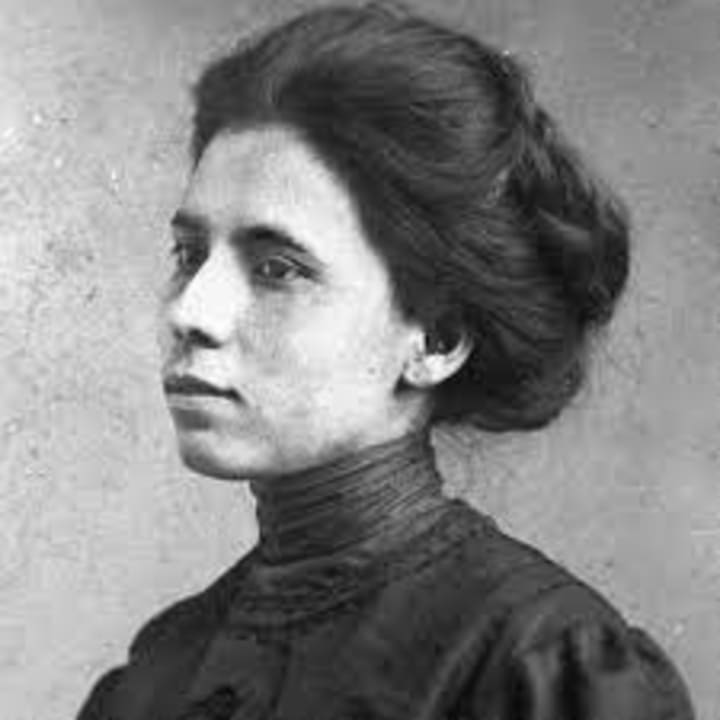
Then we have Journalist and activist Jovita Idár. She was born in Laredo on September 7, 1885. Idar attended Methodist schools, and in 1903 earned her teaching certificate from Laredo Seminary. She was an early civil rights defender fighting against lynching and other forms of extralegal violence and for better educational opportunities for children, gender equity, and labor rights. She also established a Democratic club and was involved in state politics As a young woman, she abandoned a teaching career to write for her father's weekly newspaper, La Crónica. In her articles, Idár denounced the dismal social, educational, and economic conditions of Texas Mexicans.
She defied the odds, becoming an educator in rural south Texas at the turn of the twentieth century, using her medical expertise to aid troops during the 1910 Mexican Revolution, and writing bilingual political, social, and economic commentaries on issues of international importance.In 1911, when the First Mexican Congress met to address civil rights in Texas, Idár and other women were active participants. Idár became the first president of the League of Mexican Women, an offshoot of the Congress. She mobilized League efforts to provide free education to poor children.In 1914, during the Mexican Revolution, Idar and her friend Leonor Villegas de Magnón, joined a nursing unit, La Cruz Blanca (White Cross).
After her service in the White Cross, Idar returned to journalism, and wrote for several newspapers, including El Progreso. It was at El Progreso’s printing shop, where she was confronted by the Texas Rangers, who were sent to destroy the press after publication of an editorial criticizing Woodrow Wilson’s administration for military intervention at Veracruz, Mexico. When the Texas Rangers arrived, they found Jovita Idar blocking the entrance. The Rangers left, but they returned the next morning and destroyed everything. These efforts set the tone for the rest of Idár's life and work. As an educated Tejana, she felt duty-bound to promote civil rights—including women's rights—and education. "Educate a woman," Idár often said, "and you educate a family."When she returned to Laredo, she continued to write newspaper articles condemning racial prejudice and acts of violence against Mexicans and Tejanos.
In 1916, Idar started her own newspaper, Evolución. In 1917, Idár met and married Bartolo Juárez, before handing the operations of Evolución to her brother Eduardo, when she and her husband moved north to San Antonio in 1921. Where she worked as a translator, an English teacher, and a tutor for elementary school students. She also worked with immigrant communities, teaching them to read and write, and helping undocumented workers obtain naturalization papers after the U.S. Border Patrol was created in 1924.Becoming active in politics, helping to establish a free kindergarten, and continuing to write and promote social justice. In 1940 she co-edited the journal El Heraldo Cristiano.
Idár remained in San Antonio until her death June 15, 1946 which reportedly was caused by a pulmonary hemorrhage.
About the Creator
Kia T Cooper-Erbst
Writer, poet, author. submissive. Mom of three wonderful human beings. These are the first things that come to mind when I think of myself besides being the obvious.... which is daughter, wife,etc.
Keep reading
More stories from Kia T Cooper-Erbst and writers in FYI and other communities.
Finale~Black Major First
As we wrap up Black History month, I wanted this last one to highlight two major first by black americans. Black history touches every aspect of American history but the truth of Slavery is rarely taught and it usually goes straight to the civil rights movement of the 60’s while covering certain people such as Harriet Tubman, Martin Luther King Jr, and Rosa Parks because they are considered safe to teach about in schools.
By Kia T Cooper-Erbst4 years ago in FYI



Comments
There are no comments for this story
Be the first to respond and start the conversation.