

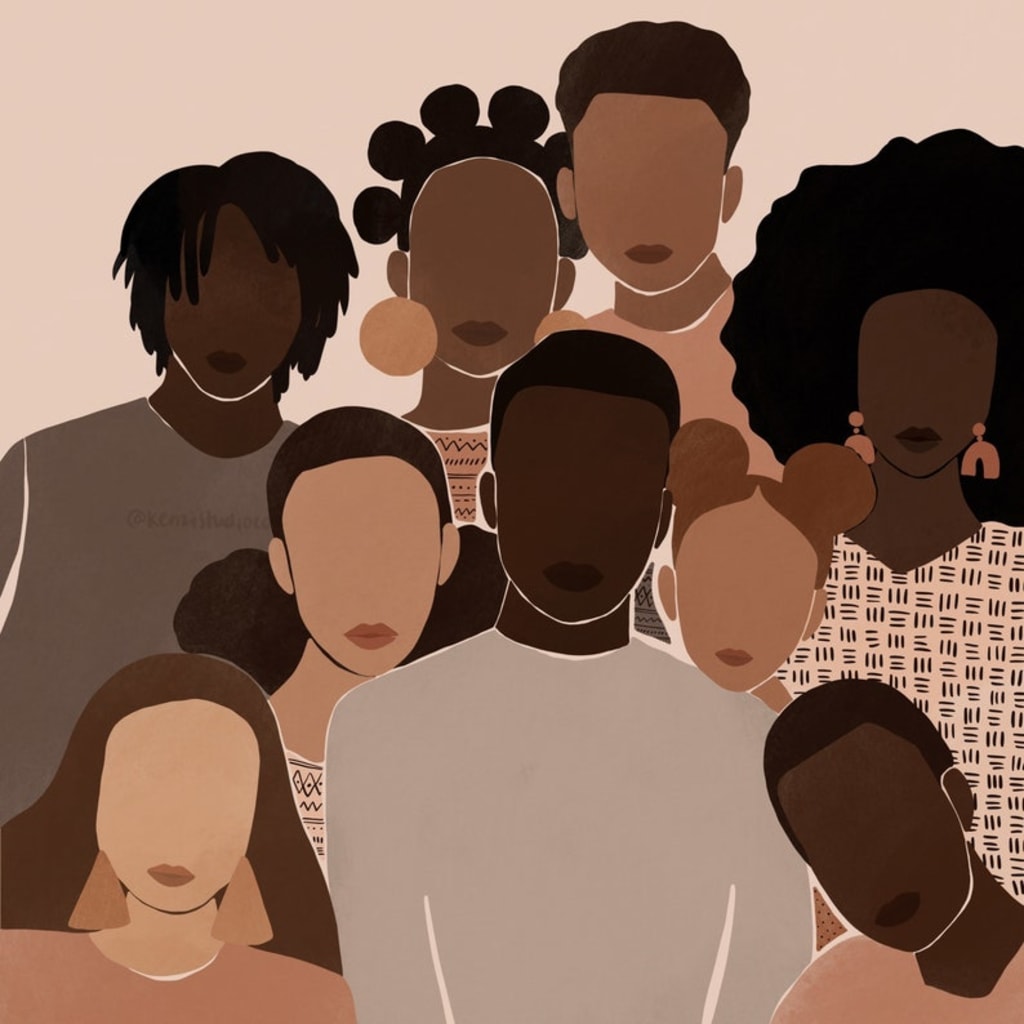
As we wrap up Black History month, I wanted this last one to highlight two major first by black americans. Black history touches every aspect of American history but the truth of Slavery is rarely taught and it usually goes straight to the civil rights movement of the 60’s while covering certain people such as Harriet Tubman, Martin Luther King Jr, and Rosa Parks because they are considered safe to teach about in schools.
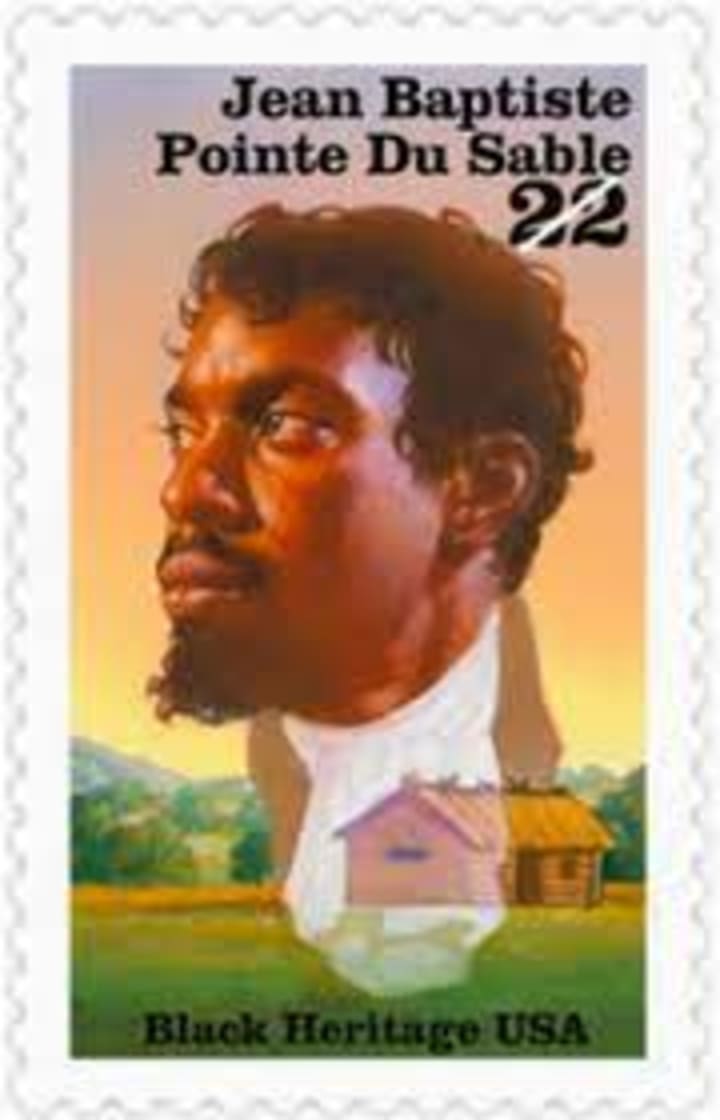
Jean Baptiste Point du Sable a frontier trader, trapper and farmer is generally regarded as the first resident of what is now Chicago, Illinois.
It is believed that he was born free around 1745 in St. Marc, Saint-Dominique (Haiti). His mother was an African slave, his father a French mariner. DuSable traveled with his father to France, receiving some education. Through this education and the work that he performed for his father on his ships,he was able to learn languages which included French, Spanish, English, and many Indian dialects. Arriving back in New Orleans, Louisiana in 1765, he learned the colony had become a Spanish possession. DuSable was almost enslaved after having lost his identification papers and being injured on the voyage to New Orleans but French Jesuit priests protected him until he was healthy enough to travel. He then migrated north, up the Mississippi river, settling in an area near present-day Peoria, Illinois. He also lived in what is now Michigan and Indiana as well during the 1770s.
Sometime in the late 1770s DuSable married a Pottawatomie Indian woman, Kitihawa who was also called Catherine in a traditional Pottawatomie ceremony. The couple had a daughter, Susanne, and a son, Jean.In 1779, He was arrested at what is now Michigan City, Indiana by British troops who considered him a spy and was imprisoned briefly at Fort Michilimackinac before being released to manage a tract of woodlands claimed by British Lt. Patrick Sinclair on the St. Clair River in Eastern Michigan.
Sometime in the early 1780s the DuSables settled on the shore of Lake Michigan in a marshy area the Indians called Eschikagu, “the place of bad smells.” He built a home on the north bank of the Chicago River, claimed about 800 acres of land and established a thriving trading post which included a mill, smokehouse, workshop, barn and other smaller buildings. The post became a major supply station for other traders in the Great Lakes region. The DuSable cabin was filled with fine furniture and paintings indicating that the family had become prosperous for the time and region and he was described as a large man who was also a wealthy trader. DuSable and Catherine married again in a Catholic ceremony in Cahokia on the Mississippi River on October 27, 1788.
In 1796 their grand-daughter became the first child born in what would become Chicago.On May 7, 1800, DuSable sold his trading post for $1,200 to Chicago resident John Kinzie and moved to St. Charles, Missouri which at the time was part of French Louisiana. He was commissioned by the French governor in Missouri to operate a ferry across the Missouri River.
DuSable, however, never prospered as he did in what would become Chicago. In 1818 he died almost penniless and was buried in a Catholic cemetery in St. Charles.
Later Chicago would honor its first citizen. A high school, museum, harbor, park and bridge in Chicago have been named or renamed after him and the place where he settled at the mouth of the Chicago River is recognized as a National Historical Landmark.
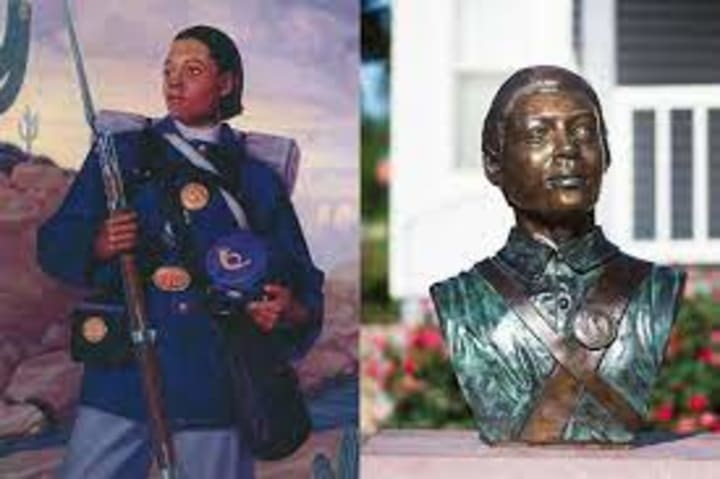
Though over 400 women served in the Civil War posing as male soldiers, Williams was the first African American woman to enlist and the only documented woman to serve in the United States Army, while disguised as a man, during the Indian Wars. Williams is also the only known female Buffalo Soldier. Williams' determination to serve her country demonstrates the extraordinary feats women have accomplished simply trying to live their lives.
Cathay Williams was born to an enslaved mother and a free father in Independence, Missouri in 1844. During her adolescence, she worked as a house slave on the Johnson plantation on the outskirts of Jefferson City, Missouri. In 1861, Union forces occupied Jefferson City during the early stages of the Civil War. At this time, captured slaves were officially designated as contraband and were forced to serve in military support roles such as cooks, laundresses, or nurses. Before her voluntary enlistment, at just 17 years old, Williams served as an Army cook and a washerwoman accompanying the infantry all over the country. Williams served under the service of General Philip Sheridan and witnessed the Red River Campaign and the Battle of Pea Ridge.
Despite the prohibition against women serving in the military, Williams enlisted for a three-year engagement in the U.S. Regular Army under the name of "William Cathay" on November 15, 1866 passing herself off as a man Williams was assigned to the 38th U.S. Infantry Regiment after she passed the cursory medical examination because at this time the army did not require full medical exams.There were only two people that knew her true identity– a cousin and a friend, who faithfully kept her secret. She informed her recruiting officer that she was a 22-year-old cook. He described her as 5′ 9″, with black eyes, black hair, and black complexion.
On February 13, 1867, Williams was sent to Jefferson Barracks, Missouri and a few months later, in April, the troops marched to Fort Riley, Kansas. By June, they were on the march again, this time to Fort Harker, Kansas, and the next month, on to Fort Union, New Mexico, more than 500 miles away. On September 7, the regiment moved on to Fort Cummings, New Mexico, arriving on October 1st. They were stationed there for eight months, protecting miners and traveling immigrants from Apache attack. While she was there, a brief mutiny broke out in December 1867 when a camp follower was expelled for stealing money. Several men were brought up on charges or jailed, but Williams was not among them.
Shortly after her enlistment, she contracted smallpox and was hospitalized. Williams rejoined her unit in New Mexico where her body began to show signs of strain possibly due to the effects of smallpox, the heat, or the years of marching. Due to her frequent hospitalizations, the post surgeon finally discovered she was a woman and informed the post commander. On October 14, 1868 she was honorably discharged by her commanding officer, Captain Charles E. Clarke stated that Williams had been under his command since May 20, 1867 “… and has been feeble both physically and mentally, and much of the time quite unfit for duty. The origin of his infirmities is unknown to me.”
Though her disability discharge meant the end of her tenure with the Army, her adventure continued when she signed up with an emerging all-black regiment that would eventually become part of the legendary Buffalo Soldiers. Following her discharge, Williams went on to work as a cook at Fort Union, New Mexico (now Fort Union National Monument)in 1869 and 1870 and later moved to Pueblo, Colorado where she worked as a laundress . She then moved to Trinidad, Colorado, where she worked as a laundress and part-time nurse. It was during this time that her story first became public. A reporter from St. Louis heard rumors of a female African-American who had served in the army and came to interview her. Her life and military service narrative was published in the St. Louis Daily Times on January 2, 1876.
Around 1889 or 1890, Williams entered a local hospital for nearly a year and a half and by the time she left the hospital, she was completely without funds. In June 1891 she filed for a disability pension based on her military service. Her application claimed that she was suffering from deafness, rheumatism, and neuralgia, all of which she had contracted while in the army but her request was denied.
Though there was a precedent for granting pension to female soldiers, (Deborah Sampson, Anna Maria Lane and Molly Williams disguised themselves as men in the Revolutionary War). In September 1893, a doctor examined Williams. She suffered from neuralgia and diabetes, and had all her toes amputated and walked with a crutch. The doctor and the Pension Bureau after several exams and investigation, rejected her claim on medical grounds, stating that no disability existed. Further, they found that her discharge certificate indicated her feeble condition pre-dated enlistment and was not due to service. Lastly, and most obviously, her service in the Army was not legal, and any type of pension, disability or otherwise, was denied.
The exact date of her death is unknown since there was no further mention of her after the denial in 1893.
About the Creator
Kia T Cooper-Erbst
Writer, poet, author. submissive. Mom of three wonderful human beings. These are the first things that come to mind when I think of myself besides being the obvious.... which is daughter, wife,etc.
Keep reading
More stories from Kia T Cooper-Erbst and writers in FYI and other communities.
Sport's figures
Whenever black history is taught in schools we only cover certain topics or even people such as Harriet Tubman, Martin Luther King Jr, and Rosa Parks because they are considered safe to teach about. Slavery is rarely taught and it usually goes straight to the civil rights movement of the 60’s. Black history is more than that because every aspect of American history has been touched and built up on by a black person. Lets go hang with some forgotten heroes.
By Kia T Cooper-Erbst4 years ago in FYI
Why Sustainable Packaging Is the Future of Branding
In recent years, there has been a significant shift in consumer expectations. Gone are the days when businesses could thrive solely on product quality and customer service. Today, customers want brands that align with their values. Millennials and Gen Z are showing a stronger commitment towards sustainable practices. The younger generation is endorsing buying products from businesses using green packaging solutions. This shift is particularly evident in the packaging world, where eco-friendly practices are no longer just a trend but a growing expectation. So, if your business’s packaging solution is far from eco-friendly, then you need to work on a sustainable packaging strategy to future proof your business. Lets start the blog and understand why eco-friendly packing trends are increasingly seen as the future of branding.
By Hazel Taylor4 days ago in FYI


Comments
There are no comments for this story
Be the first to respond and start the conversation.