
Why no one can visit this Dangerous Island ?
A true story of North Sentinel Island—where ancient tribes still live, and no outsider has ever returned alive.

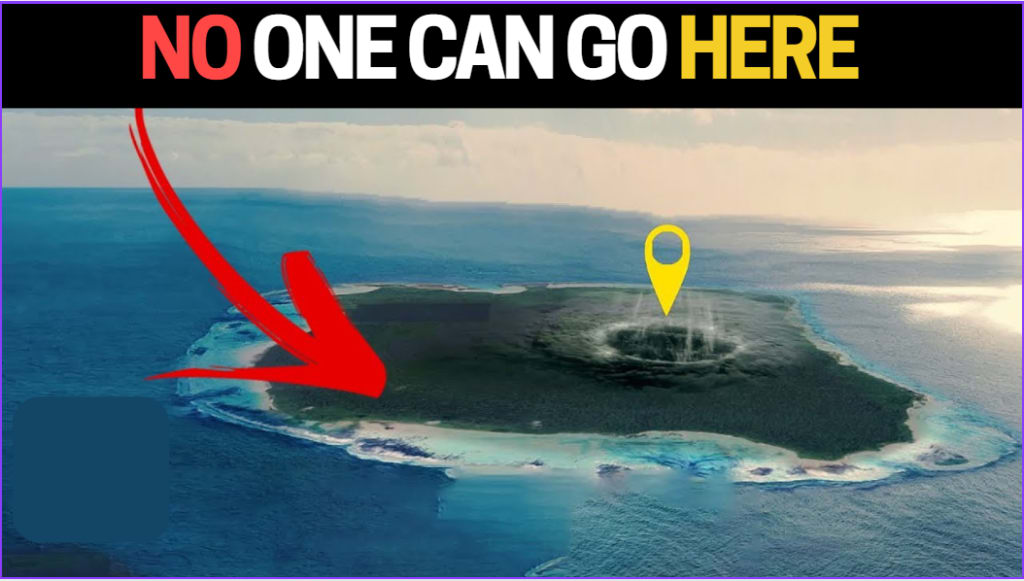
The National Geographic team was preparing to shoot a documentary for the first time on a remote island from where no one had ever returned alive. As they approached the shore, strange, unclothed figures emerged from the jungle and launched a rain of arrows at the National Geographic ship. The director’s leg was injured in the attack, and the crew was forced to retreat in panic. But what is this island, and why, despite all our advanced technology, have we humans never been able to truly reach it?
Located about 1,400 kilometers east of India are the Andaman Islands, a part of Indian territory with several small and large villages. If you look on the map, the most populated city here is Port Blair, which also has an airport. This airport plays a vital role in connecting the Andaman Islands with the rest of the world. Ships and flights land here daily. However, just 50 kilometers away from this bustling city lies an island where a civilization exists entirely isolated from the modern world.
Known as North Sentinel Island, it is just about 50 square kilometers in size, completely hidden by dense forest. That’s why it is nearly impossible to see anything inside the island even with satellites or drones. Who lives on this island? What secrets are buried within? No one has ever found out.
Throughout history, many attempts have been made to reach this place, but the tribe living here does not tolerate outsiders in any form. They become aggressive, shoot arrows, and taking a life means nothing to them. It’s believed they have built a world within a world and have lived here for thousands of years.
Just 50 kilometers from the modern city of Port Blair, it’s as if this island is still in the Stone Age. But why? Why do these people refuse to have any contact with the outside world? To understand this, we need to look into the history of North Sentinel Island.
For centuries, it is believed that the tribe living on North Sentinel Island is a part of human civilization that got left behind. Around 26,000 years ago, sea levels were much lower, and this island was once a part of the Asian continent. Due to global warming, sea levels rose and isolated North Sentinel and the surrounding islands from the rest of the world. While the world advanced, these islanders remained locked in time.
Our knowledge of their existence began in 1789, when a British ship arrived in the Andaman Islands. However, they didn’t visit North Sentinel because it was too small and had no strategic value. This isolation continued for 78 years. In 1867, during British rule in India, a ship en route to the Andamans broke down near North Sentinel Island. There were 106 people on board—British and Indians—who assumed the island was uninhabited. While waiting for rescue, they camped on the shore, but on the third day, the hidden tribe attacked them with arrows. Several were killed, and the rest were rescued by the Royal Navy. This was the first violent contact between the outside world and North Sentinel.
For the next 13 years, no one dared return. Then in 1880, British officer Maurice Vidal Portman, who had been appointed Crown Administrator of the Andamans, decided to explore the island. He planned to kidnap a few tribal members, bring them to the Andamans, treat them well, and return them as a gesture of goodwill, hoping to build a peaceful relationship.
Portman managed to avoid detection for a few days and then found a family—an adult couple and four children. He kidnapped them and brought them to the Andamans. Unfortunately, the adult couple soon died of diseases their immune systems couldn't handle. Feeling guilty and fearing failure, Portman gave gifts to the children and sent them back. In his journal, he wrote that the mission had failed and that they had only deepened the tribe's fear and hatred of outsiders. He recommended leaving them alone. It's possible that the returning children brought disease back to the tribe, leading to more deaths, or that they blamed the outsiders for their parents’ death. From that day on, the tribe's hostility toward the outside world intensified.
For decades after, anyone who accidentally arrived at the island would be killed, and their bodies left on the shore as a warning. In 1947, when India gained independence, the Andaman Islands became part of Indian territory. Although the Sentinelese tribe had no idea what India even was, they were technically Indian citizens.
The Indian government decided to try peaceful contact. In 1967, anthropologist Triloknath Pandit took on this task. He circled the island by boat, throwing gifts toward the shore—his goal was only to win their trust. In 1974, National Geographic attempted to make a documentary titled Man in Search of Man. The team, including Pandit, security personnel, and the film crew, planned to get closer to the island to leave gifts on the shore and eventually film. They threw gifts for three days, but as they neared the shore, their plan backfired. The tribe broke the gifts and unleashed a barrage of arrows. One arrow struck the director’s leg. The team had no choice but to retreat, and the mission was canceled. Some distant footage was captured—this remains the only visual evidence we have of the island.
Pandit, however, continued his efforts. He kept visiting and leaving gifts from a distance. Years later, he finally managed to establish a friendly connection. Photos were captured showing tribal members accepting gifts. Pandit later involved junior anthropologist Madhumala, who was also seen interacting peacefully with the tribe.
This friendly contact lasted for years. But in 1981, a Panama-registered ship called MV Primrose ran aground on the island. There were 30 people aboard, who waited for rescue. Days later, they saw more than 50 tribespeople approaching and attacking with arrows. The crew contacted their company, and helicopters eventually rescued them. The ship still lies wrecked off the island’s coast, visible on satellite imagery.
One thing is clear—if the tribe has ever shown mercy, it has been to Triloknath Pandit and Madhumala. When Pandit retired, the Indian government banned all future visits and sealed the island. Indian Navy ships now patrol the waters, and no one is allowed within 10 kilometers of the island.
But the story doesn’t end there. In 2006, two fishermen accidentally drifted into the restricted area. Other fishermen nearby watched in horror as the tribespeople killed them and hung their bodies on the shore. For the next 12 years, no one dared go near the island.
Then in 2018, an American missionary named John Allen Chau secretly made his way to the island. He bribed fishermen to take him there. His mission was to preach Christianity to the tribe. He somehow reached the island, but sadly, he too was killed. His body, like many others before him, was never recovered.
The Indian government has given the Sentinelese complete autonomy over their island and has prohibited anyone from entering their territory. North Sentinel Island remains the only place on Earth where setting foot is practically a death sentence. Are the people there truly seeking isolation, or are they hiding something far greater? That remains a mystery to this day.
About the Creator
Keep reading
More stories from Jehanzeb Khan and writers in FYI and other communities.
How KFC Was Born After 65: The Real Story Behind Colonel Sanders
The man seen on the logo of the world’s most famous fast-food chain, KFC, is named Colonel Harland Sanders. He worked hard his entire life and faced many hardships. But what happened at the age of 65 that changed his destiny? What struggles did he go through on his journey to success, and why did his own company, KFC Corporation, file a court case against him?
By Jehanzeb Khan8 months ago in FYI
The Politics of Playing Dress-Up
Well, to start off I'd like to say a happy world book day to all who celebrate. I know I haven't really posted anything on my socials about it but I'm not a jubilant kind of person. I lay low most of the time. Let's start off with a popular anecdote from the vaults...
By Annie Kapur5 days ago in Geeks


Comments (3)
good bro
Awesome
Wow so good I never heard before that place