
Why did the earth choose carbon-based life instead of silicon-based life? What does silicon-based life look like?
Earth chooses carbon-based life
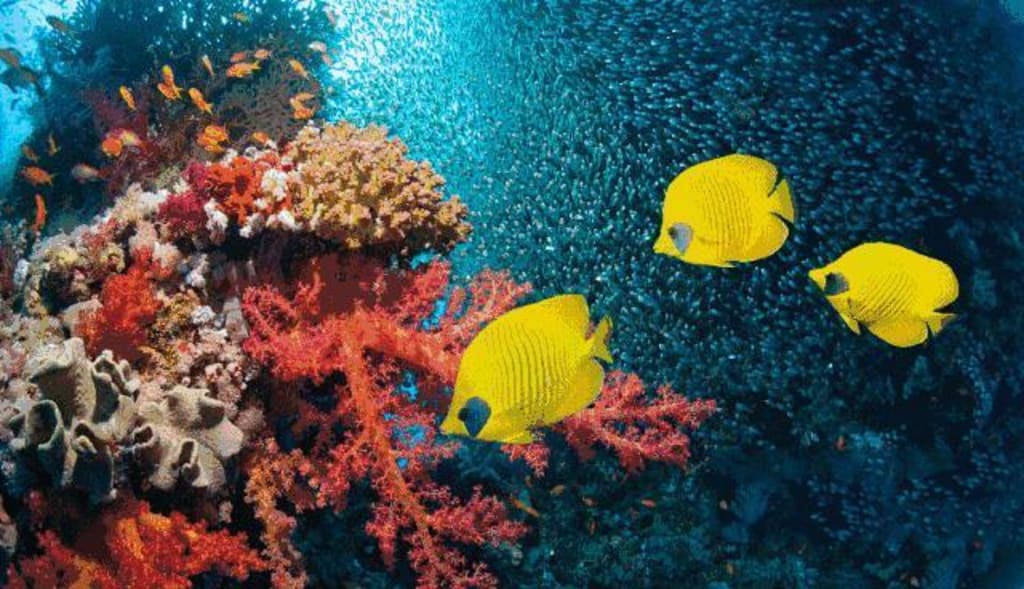
"Is this what carbon-based organisms can think of?" This sentence is a praise for the imagination. The carbon-based organisms mentioned in it are all the organic life on earth, including you and me.
Humans cannot explain whether life chose carbon, or carbon chose life.
Because there is no carbon, let alone life, even organic matter cannot be born.
All organic matter is dominated by carbon chains, and other atoms are combined with them. Such arrangement and combination have formed rich organic chemistry, which in turn has formed our earth's ecology today.
Why is it carbon? Why not silicon of the same main group as carbon? Does silicon-based life really exist? What other life forms?
Why did Earth choose carbon-based life instead of silicon-based life? What does silicon-based life look like?
Carbon's "Smooth Way"
Why is life on Earth based on carbon chains and not other elements?
If we take a closer look at the properties of the elements of the periodic table, we may know why.
First of all, carbon atom is the most abundant element in the universe, and its atomic number is 6.
That is to say, it is the sixth element in the universe to be born, from the nuclear fusion of atoms smaller than it.
We all know that the entire periodic table of elements actually starts with hydrogen atoms, and it becomes more difficult to form as it goes on, because the fusion reaction is difficult to carry out, and the reaction conditions become more and more severe.
From this point, carbon is ahead of many elements.
Secondly, atoms are composed of nuclei and extranuclear electrons. Except for the two elements of the first period, all other elements have two or more electron layers.
Not all electrons belong to the nucleus, they will be disturbed by the outside world, which will cause the atom to lose electrons or be jammed with electrons.
The outermost layer requires 8 electrons to be the most stable, and others cannot take it away, and other electrons cannot squeeze in.
Generally speaking, those with less than 4 electrons in the outermost shell are more inclined to lose electrons, and those with more than 4 electrons in the outermost shell are more inclined to gain electrons.
So what about exactly 4 outermost electrons? Then it depends on the element, either it actively loses electrons, or it gains electrons, or it shares electrons with other elements.
Carbon is such an element, and with its "smooth" way of life, it can not only form compounds with other elements.
And it can also join hands with other carbon atoms, and other atoms can participate in the vacated position.
They are not here to break up this family, but to join this family. The name of the family is called organic matter, and the hands of carbon atoms are getting longer and longer, and there are more and more seats on the carbon chain, and the family is constantly expanding.
In the end, the organic matter combined and began to clearly divide the labor, and the first life on earth, Luca, was born.
All creatures on the earth today are descendants of Luca, and it is it that laid the carbon-based life structure for life.
The most abundant element in the human body is oxygen, but just looking at cells, the most abundant element is carbon. We can say that without carbon, there is no cell.
However, carbon is not the only "smooth" element in the periodic table. Silicon, which is in the same main group as it, also adheres to this set. Moreover, silicon is also the second most abundant element on the earth, accounting for 26.3%. Why can't it become The "foundation" of life?
Where did silicon lose?
Scientists have tried to synthesize hydrocarbons and alkanes with silicon, but they have found that the connection ability of silicon atoms is very poor.
In addition, silicon-silicon bonds and silicon-hydrogen bonds are particularly easy to be destroyed in water. To know that life originated from water, silicon will fail because of fear of water.
Why is one main group element, silicon and carbon so far apart? Because silicon has one more electron layer than carbon, it has three electron layers, while carbon has only two.
As a result, the nucleus of silicon has less control over the outermost electrons than carbon, so silicon is also "smooth", but not as flexible and "smooth" as carbon atoms.
In addition, carbon-based life produces carbon dioxide when it breathes, and at the same time relies on food to maintain the carbon balance in the body.
If a silicon-based organism were to breathe, the product would be silica, a solid that could block the airway directly.
Even if it is excreted in other ways, how to replenish silicon atoms?
Early life on Earth could use substances such as methane in the atmosphere, so silicon-based life could only eat the sand and rocks of the Earth.
Compare is it easier to eat methane, or is it easier to eat sand?
In this way, even if silicon-based life once existed on Earth, it could not compete with the efficient metabolic rate of carbon-based life.
Silicon-based life cannot exist on a planet like Earth.
But in the vast universe, everything is possible, and silicon-based life may exist.
Does silicon-based life really exist?
Scientists believe that they use silicon atoms to synthesize silicon hydrocarbons or silanes, and the environment they are in is still on the earth. Failure to succeed can only mean that silicon-based organics are not suitable for existence on earth.
However, the number of planets in the universe is hundreds of millions. It cannot be denied that there may be some planets where silicon-based life is very suitable for its environment.
So what will silicon-based organisms look like? First of all, it must be different from carbon-based organisms, because its lifestyle cannot be the same as carbon-based organisms.
The metabolism of silicon-based organisms is slower than that of carbon-based organisms, so their movement speed is very slow, which may be hard objects with silicon crystals on the surface.
Secondly, silicon-based life can not breathe oxygen, they can use harmful gases such as carbon dioxide and sulfur dioxide as breathing gases.
Therefore, they can live on planets with relatively harsh environments, such as places with very high temperatures, so high that silica becomes a gas, so that silicon-based organisms can breathe smoothly.
Finally, silicon-based life may be more suitable for subterranean life, especially in the mantle below the crust of a planet, because silicon is easier to obtain there, and it is likely to be in a molten state, which is convenient for organisms to absorb silicon.
And the body of silicon-based life tends to be crystalline, and can withstand high pressures that carbon-based life cannot withstand.
If you have to say which part of the earth meets the above conditions, it may be the core of the earth, that is, the center of the earth, where the temperature reaches 4,000 to 6,000 degrees Celsius, and the pressure is as high as more than 2 million atmospheres.
No wonder some people suspect that there is another kind of human living in the core of the earth, which may be the legendary "Silicon Man".
In recent years, with the rise of artificial intelligence, they are called new "silicon-based life" because the main raw material of various electronic components is silicon.
However, this idea has been opposed by many people, thinking that artificial intelligence cannot be counted as life, because it does not even have cell results, and it can only be counted as a silicon-based product at most.
So in addition to silicon-based life, what other life forms are we unexpected?
other life forms
In the element table, carbon has formed today's carbon-based organisms, and silicon may form life on other planets. In addition, there are boron-based life based on boron element, and even metal-based life forms .
Some scientists have mentioned boron-based life, they live in an environment without water, so substances such as ammonia, hydrogen fluoride or hydrogen sulfide replace the function of water.
They also don't exhale with oxygen, but with sulfur dioxide, or no respiration at all.
All the positions that should have been oxygen atoms were replaced by sulfur atoms. In addition, boron-centered hydrocarbon alkanes are more stable than carbon-based life.
Whether it is carbon, silicon or boron, they are all non-metallic elements, and metals are also possible to form life forms.
Scientists have synthesized a "metal cell" in the laboratory, which is a heteropolyacid anion of the metal tungsten.
Biologically speaking, this "cell" has no genetic material or even the characteristics of life; chemically speaking, the substances formed by metals belong to inorganic substances, which are vastly different from organic substances.
But who knows what's going on in the universe? There may be a "metal man" on any planet.
Perhaps the knowledge of life chemistry learned by human beings is only a small part of the life form in the universe. Maybe in the universe, any element can be used as the basis of life, but it just happens to be carbon-based organisms that appear on the earth.
About the Creator
nally norris
Science needs fantasy, invention is expensive
Keep reading
More stories from nally norris and writers in FYI and other communities.
Eating monkeys, drinking cow blood, and washing your face with cow urine is why Africa, the birthplace of mankind, is still uncivilized
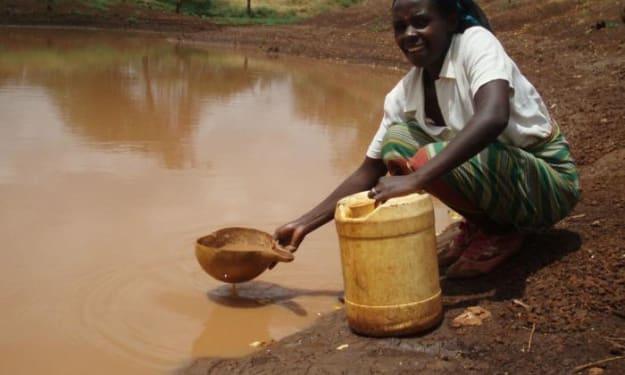
Where is the poorest place in the world? It is estimated that many people will say that it is Africa. Because many people in Africa live in primitive grass shacks, people living in the streets and alleys full of sewage are becoming poorer and poorer in the abyss of poverty. Especially in rural areas of Africa, it is very difficult for the local people to use water for their lives. They need to go to places more than ten miles away to fetch water with buckets. Not only that, but there are no roads, railways and communication signals here. Why is Africa, the birthplace of mankind, still uncivilized?
By nally norris3 years ago in FYI
The Neuroscience of Ritual: Bridging Ancient Practice and Modern Science
The Lesser Banishing Ritual of the Pentagram (LBRP) traces its lineage to a Hebrew prayer for protection. Over centuries, this modest invocation transformed into a formalized practice within the Hermetic Order of the Golden Dawn in the late nineteenth century — a practice that now resonates in esoteric traditions and neuroscience.
By Vongani Bandi5 days ago in FYI



Comments
There are no comments for this story
Be the first to respond and start the conversation.