
The Neuroscience of Ritual: Bridging Ancient Practice and Modern Science
“How the Lesser Banishing Ritual of the Pentagram reshapes the brain to regulate fear and build resilience”
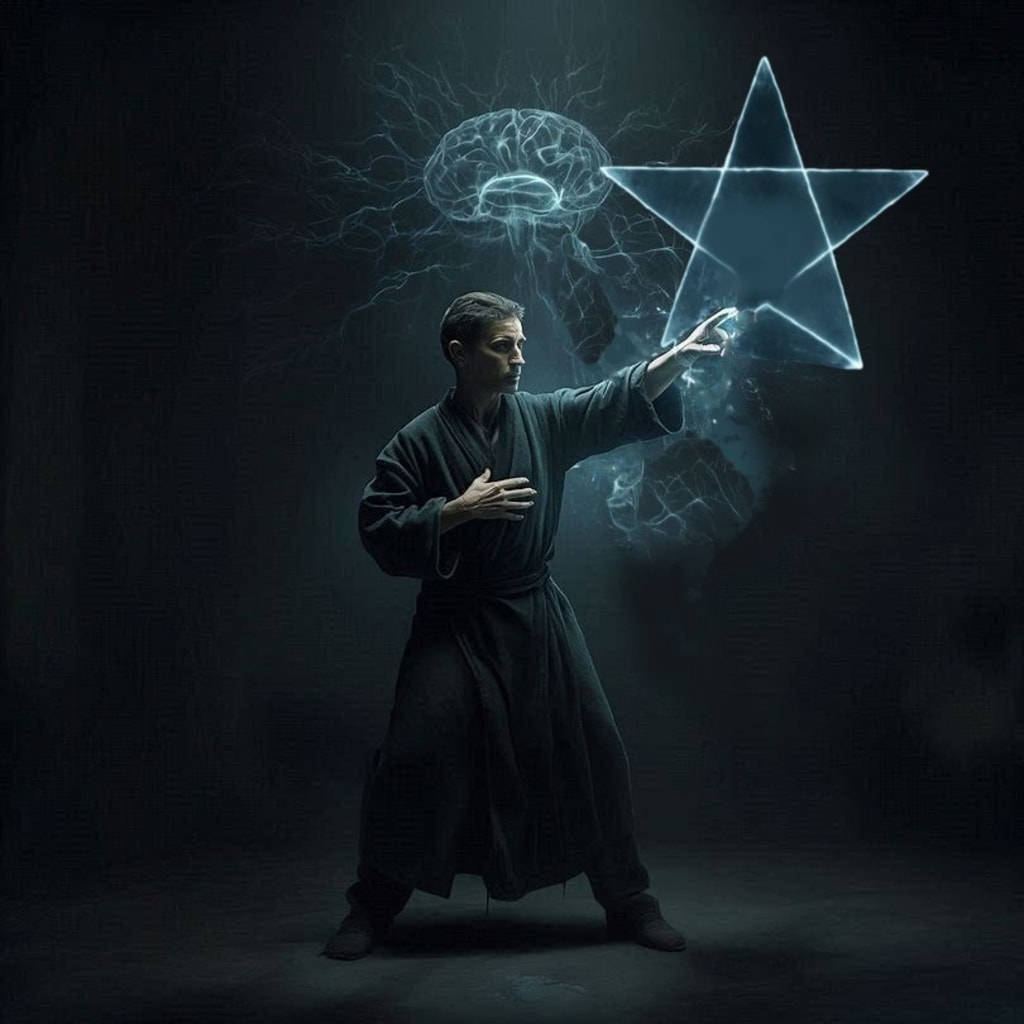
The Lesser Banishing Ritual of the Pentagram (LBRP) traces its lineage to a Hebrew prayer for protection. Over centuries, this modest invocation transformed into a formalized practice within the Hermetic Order of the Golden Dawn in the late nineteenth century — a practice that now resonates in esoteric traditions and neuroscience.
The ritual’s endurance across cultures highlights its adaptability. What was once a simple prayer became ceremonial technology, blending symbolism, movement, and language into a coherent system of psychological defense. Today, scholars and practitioners recognize the LBRP as both a mystical act and a cognitive exercise.
The LBRP functions as a multi-modal exercise integrating body, speech, and imagination. Gestural movements activate motor pathways, embedding intention into physical memory. Invocations stimulate linguistic centers, sharpening verbal focus. Visualization of pentagrams and spheres of light recruits visual and spatial regions, while invoking protective figures calms the limbic system, reducing fear and anxiety.
This integration enhances neuroplasticity, allowing the brain to rewire itself toward states of calm, focus, and empowerment. Each repetition strengthens neural circuits, conditioning practitioners to link ritual with safety. Combining movement, language, and imagery creates a layered experience that is both symbolic and neurological.
Protection rituals interact directly with the amygdala, the brain’s threat detector. When fear arises, the amygdala triggers fight-or-flight responses. By performing the LBRP, practitioners symbolically assert control over their environment. Gestures and invocations signal safety, reducing amygdala hyperactivity and activating the parasympathetic nervous system.
This shift fosters relaxation and resilience, echoing findings from studies on prayer and meditation. In effect, the ritual becomes a dialogue with the brain’s alarm system. Instead of succumbing to fear, the practitioner reprograms the response, cultivating agency. This neurological reframing explains why protection rituals persist across cultures: they provide reassurance and measurable psychological benefit.
Neuroscience shows that mental imagery activates many of the same pathways as actual perception. When practitioners visualize glowing pentagrams or archangelic presences, the brain responds as if these stimuli were real. Repetition strengthens neural circuits, conditioning the brain to associate the ritual with safety — a clear example of neuroplasticity at work.
This principle is observed in sports psychology and cognitive therapy, where visualization enhances performance and resilience. The LBRP applies the same mechanism to spiritual practice, transforming imagined symbols into neurological anchors. Over time, the ritual becomes not just symbolic but a lived experience of protection encoded in the brain’s wiring.
The ritual’s effectiveness is amplified by meaning-making. Belief in the protective power of the LBRP engages the brain’s reward system, releasing dopamine and reinforcing motivation. The ritual works best when imbued with genuine intention, transforming symbolic gestures into lived experiences of safety and empowerment.
Meaning provides the emotional charge that makes ritual memorable. Without belief, gestures risk becoming empty performance. With belief, they become transformative acts that reshape perception and physiology. This interplay of symbolism and conviction underscores the ritual’s dual nature: psychological technology and spiritual invocation.
The integration of neuroscience and the LBRP demonstrates that ancient practices can function as sophisticated psychological technologies. What may have begun as a Hebrew prayer evolved into a Golden Dawn ritual and now resonates with modern brain science. The LBRP’s blend of movement, language, visualization, and meaning aligns with how the brain regulates fear, builds resilience, and cultivates well-being.
For practitioners, the LBRP can be appreciated not only as a mystical act but also as a scientifically grounded method of self-protection. In a world where threats often feel overwhelming, the marriage of neuroscience and esoteric ritual offers a reminder: protection is not only spiritual but neurological. The ritual becomes a bridge between ancient wisdom and modern science, affirming that traditional practices remain powerful tools for psychological health.
About the Creator
Keep reading
More stories from Vongani Bandi and writers in FYI and other communities.
A Modern African Tarot
The fourteenth card in A Modern African Tarot marks a profound turning point. Where XII HANGED MAN invites surrender and new perspective, XIII DEATH brings closure, transformation, and the sacred necessity of letting go. This card reimagines the traditional Death archetype through African mourning rituals, ancestral reverence, and the cyclical nature of life.
By Vongani Bandi2 months ago in Art
Top 10 Luxury Travel Experiences Around the World for 2026
Luxury travel in 2026 is no longer just about opulence; it’s about immersive, transformative experiences that combine comfort, adventure, and cultural depth. For seasoned travellers seeking something beyond ordinary vacations, the world offers a rich tapestry of unique journeys—from private islands to cultural explorations with personal guides. Below, we explore ten luxury travel experiences that promise exclusivity, personalization, and unforgettable memories.
By All 4 Season6 days ago in FYI



Comments
There are no comments for this story
Be the first to respond and start the conversation.