
Whispers of Fire: The Day the Amazon Wept
An eyewitness account of survival, sacrifice, and the silence of the world's lungs.

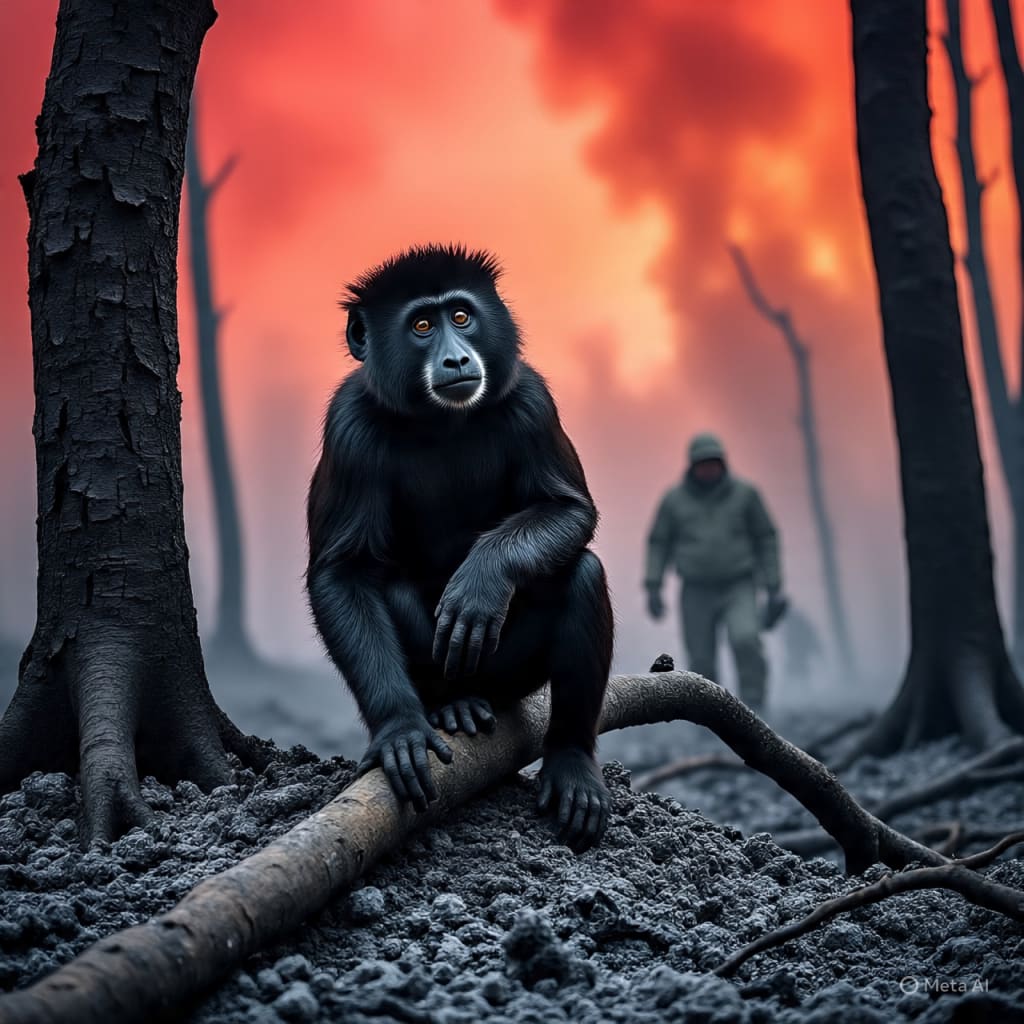
The first I saw was the sky.
It was no longer blue. Nor gray.
It was red — an appalling, suffocating crimson that engulfed the sun and choked the light.
I was in the Amazon rainforest — not as a tourist, but as part of a volunteer environmental research team working with a local NGO called Guardians of the Green. Our job was simple in theory: monitor plant life, photograph rare species, and record illegal logging activity. But nothing prepared us for the horror we’d face in August 2019 — the year the Amazon burned like never before.
We were stationed along the Acre region, at the border of the Brazil-Peru. It was a 3-month study. Within our first week, the forest was already sending us signs. Leaves curled beneath our feet. Birds, which would normally be cheeping at dawn, were ghostly quiet. And that odor — initially faint, like smoldering leaves in a neighbor's garden.
But on the tenth day, it could no longer be denied.
We were making our way back from the edge of a cleared plot when we saw it: a boiling column of smoke, way to the north, heavy and resentful. One of the Brazilian locals, João, a former logger turned conservationist, turned pale.
"They've burned again," he growled.
It wasn't uncommon. Cattle ranchers and illicit farmers would often set fires through patches of woods to deforest — what was locally known as slash-and-burn. Something did feel off this time, though. Something didn't feel. in control.
We phoned in the call and began to pack to depart — a standard drill when there are fires. The nearest safe location was a four-hour walk over heavy ground, and we were out of satellite range. Our best choice was to follow the river.
But the fire moved faster than any of us could have dreamed.
By night, the fire had spread. The tall trees stood as dry shadows. The air was dense and unbreathable. My lungs would sear with every pace. Ash fell like snow, covering our gear, sticking to our sweat-soaked flesh. Animals darted by in terror — monkeys shrieking, parrots abandoning their nests, snakes fleeing into the river.
It was not fire. It was carnage.
João led us along a lesser-used route he had walked when he logged. He said to us, "If we don't hurry up, we'll get caught. Fire comes in close around you like an hunter."
I remember clutching my notebook -- stupid, maybe, but it had weeks of sketches, notes about plants, and birds spotted. Memories of a forest vanishing by the minute.
By the second night, we hadn't eaten much. Not much water. Two of our volunteers were coughing blood. The smoke was so thick it felt like we were breathing in death itself. And yet, we went on.
On the third day, we came upon a little village of native people. Half of it had been destroyed by fire. Huts converted into charred wood. An upturned canoe in the river. A child's sandal drifting alongside it.
We found one elderly person and two women, dazed and coughing. João spoke to them in a mix of Portuguese and their own language. One of the women had wounds on her arms. We treated the wounds as best we could. They told us other individuals had run further into the woods.
We all ate and took turns sleeping that night. The older man, his tone harsh, said to us, "The forest is crying. And the world cannot hear her."
Those words still linger in my thoughts.
On the fifth day, we finally reached the edge of the forest where emergency workers had set up base. Helicopters whizzed by overhead. Newsmen thronged. But they came too late. Thousands of acres of land were already burned to ashes. Over 3 million plant and animal species were at risk. And the fire was still not brought under control.
We received treatment for inhalation of smoke. I was hospitalized in a mobile unit for 24 hours. I hardly recognized myself when I caught a glimpse in the mirror — bloodshot eyes, face covered with black grime, shaking fingers.
But the real pain was in store for me when I flipped open my notebook. It was half smudged, edges blackened. The writing was thin, drawings smudged. It was a representation of the entire forest — beautiful, precious, shattered into fragments.
---
The people were shocked when I returned home. They queried, "Was it so bad?"
I took their hands and brought them to the pictures. To the videos. I told them about the birds that refused to sing. The trees that fell like giants on their knees. The heat that was alive, as if it was hungry to consume us.
But what hurt the most was the apathy. The way people scrolled past headlines. The way governments hesitated to act. The way corporations made statements but continued to do the same thing.
That fire was not merely a tragedy.
It was a warning.
The Amazon produces 20% of the world’s oxygen. It stores billions of tons of carbon. It is home to more species than any other ecosystem on Earth. But in 2019, fires in the Amazon increased by over 80% compared to the previous year. It wasn’t just climate change — it was greed, politics, and human neglect.
We nearly lost the forest. And we’re still losing it.
---
It's been years now. I still keep the charred notebook with me. I've written essays. Delivered lectures. Planted trees. Protested pipelines.
But every so often, I'll close my eyes and return to that third night — ash clogging the air, stillness all around, and a dying forest begging to be saved.
And I wonder:
When the planet's lungs are gasping to breathe, how long do we imagine we will survive?
About the Creator
Muhammad Usama
Welcome 😊
Keep reading
More stories from Muhammad Usama and writers in FYI and other communities.
The Long Walk Back
In August 2018, a 37-year-old freelance photographer named John Mallory set out on what he believed would be a routine journey. He was in the Mojave Desert, seeking to capture the haunting beauty of an abandoned mining town for a personal photo essay. But what unfolded over the next three days would turn into the most terrifying and transformative experience of his life.
By Muhammad Usama6 months ago in FYI
Silver Screen Magic with Mae West
American actress and singer Mae West became a popular film actress during the Great Depression. She started entertaining in vaudeville, then performed on Broadway, and finally went to Hollywood. She signed up with Paramount Pictures and made her debut in the 1932 film “Night After Night.” She also starred in musicals, comedies, and crime dramas. The American Film Institute named her one of the best classic Hollywood actresses.
By Rasma Raisters3 days ago in Geeks




Comments
There are no comments for this story
Be the first to respond and start the conversation.